Cisco Learning Network Store Promotions Page
Showing posts with label iPhone 7 Plus. Show all posts

10.15.2016

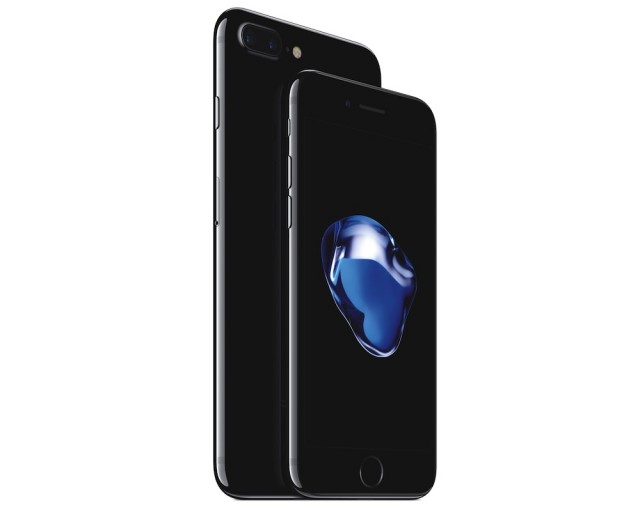
Apple now sells unlocked iPhone 7 and iPhone 7 Plus in US

 
Nearly a month after releasing the iPhone 7 and iPhone 7 Plus, Apple is giving consumers the option of purchasing the unlocked versions of its latest flagships in US. The "SIM-free" models are available in all the color and storage configurations as their carrier counterparts, with prices starting at the same $649 for the iPhone 7 and $769 for the iPhone 7 Plus.
 
The unlocked iPhone 7 and iPhone 7 Plus models carry the designation A1778 and A1784, and support the same LTE bands as the AT&T, Sprint, T-Mobile and Verizon versions. But what are the differences?
 
The main difference between the unlocked and carrier versions of the iPhone 7 and iPhone 7 Plus, as Apple explains on its website, is that the SIM-free versions do not ship with a carrier SIM card and "work with any carrier".
 
Meanwhile, Apple notes, the iPhone 7 and iPhone 7 Plus models designed for AT&T and T-Mobile will be limited to 3G for voice services while data can be "either 3G or 4G LTE", when connected to a CDMA network. However, the Sprint and Verizon versions can work on AT&T and T-Mobile as well.
 
If you are thinking of buying the unlocked version to get an iPhone 7 or iPhone 7 Plus faster you should know that shipping times range between a couple of days to a whole month, depending on the configuration that you want.
 
~ Mihăiță Bamburic

9.16.2016

The most popular iPhone 7 is the Plus model

 
When Apple said that iPhone 7 sales will be determined by supply and not demand it meant it. Earlier this week it issued a statement saying that all iPhone 7 Plus versions and the Jet Black iPhone 7 sold out quickly after going up for pre-order -- and they will not be available to walk-in customers, as a result.
 
While we do not know how many iPhone 7 and iPhone 7 Plus units Apple had available for the pre-order round, a Slice Intelligence report claims that the bigger model is more popular with early adopters. Last year, it was the iPhone 6s which enjoyed the biggest success during pre-orders.
 
The iPhone 7 Plus is the better model on paper, boasting a bigger, higher resolution screen, dual camera setup at the back, and larger battery. Still, its success comes as somewhat of a surprise, because phablets used to be less popular than their smaller counterparts.
 
Slice Intelligence says that 55 percent of the iPhone 7 units Apple moved during the pre-order round were Plus models, with the remaining 45 percent of pre-orders being for the smaller version. Most folks (55.9 percent) who purchased one of Apple's latest flagships came from an older iPhone.
 
The report says that 34 percent of the customers haven't purchased a smartphone online since 2014. Few came from a rival brand, like Samsung (2.1 percent), LG (0.6 percent) or Motorola (0.5 percent) -- those numbers may go up after the iPhone 7 and iPhone 7 Plus are officially available in stores.
 
When it comes to colors, most buyers opted for black (46 percent), followed by jet black (23 percent), rose gold (15 percent), gold (nine percent), and silver (eight percent). The most popular storage option is 128GB (67 percent), followed by 256GB (19 percent) and 32GB (14 percent).
 
It is interesting to see that the range-topping 256GB versions were more popular than the entry-level 32GB models, seeing as they are $200 more expensive in US. The mid-range, 128GB versions, are the best buy, as they offer much more storage capacity over the 32GB model for $100 more.

~ Mihăiță Bamburic

9.15.2016

Removing the headphone jack from future MacBooks would be a mistake

 
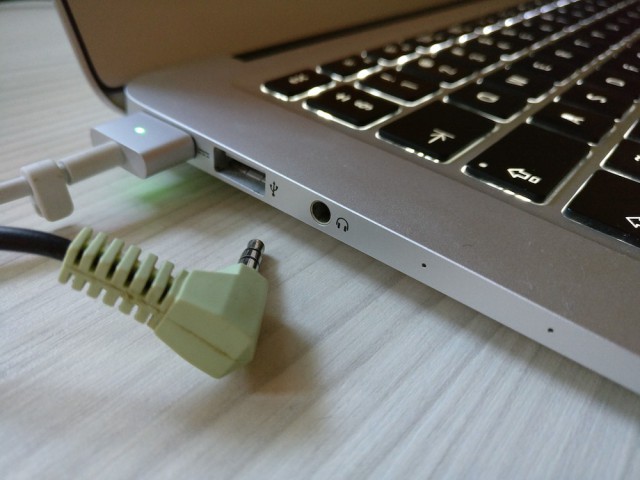
I can understand the logic behind Apple's decision to remove the headphone jack from its latest iPhones. Some folks may not like it, but fact of the matter is that space is at a premium on such small devices. If a manufacturer can add meaningful features that improve the user experience by dropping the headphone jack then it is well worth it -- despite the fact that you can no longer charge your iPhone 7 or iPhone 7 Plus and use the headphones at the same time without buying a dongle.
 
But Apple is testing the waters to see if it could drop the headphone jack on other devices as well, as it is now asking users of the MacBook Pro with Retina display if they "ever use the headphone port". This is no longer about "courage". It would be change for change's sake.
 
The main argument for removing the headphone jack on an iPhone is that it takes quite a bit of space, which could be put to better use. And Apple has introduced some changes over the previous generation -- like a bigger battery, a home sensor with haptic feedback instead of a clicky button, extra speaker, optical image stabilization or dual-camera setup -- that are meaningful improvements that do not change the overall dimensions of the iPhone 7 and iPhone 7 Plus compared to the old generation.
 
However, MacBooks aren't iPhones. People expect to have a certain degree of flexibility on laptops as powerful as the MacBook Pro, and that means being able to plug different things in, like, you guessed it, speakers. The headphone jack on a MacBook Pro is not only useful for plugging in headphones but also full-fledged speakers.
 
You could replace wired headphones with wireless ones because MacBooks have Bluetooth, and you could even get used to the fact that they'll involve an extra expense (on top of what you'll pay for a new MacBook) and require charging. But if you have proper speakers, like I do, then you really do not want to find workarounds to keep using them.
 
Apple could throw an adaptor in the box or come up with some sort of dongle, but that would not really be all that necessary considering that MacBooks don't have to be that thin or space-challenged inside to go that far. Not to mention the fact that you do need a bit of thickness to make sure there is enough travel in the keyboard, and ensure that you can fit a large enough battery underneath.
 
Apple hasn't shied away from removing things that were deemed super popular and important in the past, but it did that to offer something better in return or because there was a better alternative available. For instance, I am sure that no one really mourns the loss of the built-in DVD player these days, as not a lot of people have to use DVDs anymore. You could be better served by a USB flash drive, no doubt.
 
But the headphone jack is still very relevant in the PC space primarily because there are lots of users who have purchased (pricey) speaker setups that require it to be there. Meanwhile, manufacturers haven't come up with a better alternative or felt the need to do so, because, like I said above, space isn't really an issue on devices like desktops, laptops or even tablets. And not to mention that the backlash would be huge.
 
Perhaps Apple could surprise us by revealing a MacBook design so good that users could forget about the lack of a headphone jack, but personally I doubt that it could happen. Quite likely, we'd be looking at a thinner profile and USB Type-C ports that few people could use without adaptors. And I wouldn't be surprised if there's also an adaptor in the accessory list, that would rob users of a port just so they could continue to enjoy their speakers.
 
Realistically speaking, desktop speakers aren't things that you want to replace. In the consumer space there is not much progress -- if any -- because all the improvements have long taken place. Manufacturers are adding small tweaks here and there to improve their audio offerings, but really, their offerings from today aren't all that different to those that shipped a decade ago.
 
Some folks that I know, like me, have speakers purchased in the last decade, that still work great today -- and they expect them to continue working for years to come. I assume that is the case with lots of MacBook users who use speakers while at the desk. Apple probably knows how many of them there are but, no matter, the number is unlikely to be small.
 
If Apple comes to the conclusion that it could get away with dropping the headphone jack then it'll probably be right. It is not the end of the world. People will continue buying MacBooks, but it would no doubt be a change for the worse, not the better.
 
~ Mihăiță Bamburic

1.09.2016

iPhone 7 Plus rumored to include larger battery, 256GB storage option


Could 2016 finally be the year that Apple caves to customer demand and delivers a smartphone
with a larger battery? At least one publication thinks that'll be the case when the next iPhone
debuts later this year.

Chinese technology site MyDrivers (via Apple Insider) claims the iPhone 7 Plus will ship with a 3,100mAh battery. The current iPhone 6s Plus features a battery with a capacity of 2,750mAh. If true, the iPhone 7 Plus would have a 12 percent larger battery which the publication says would result in up to three additional hours of use.

It's worth pointing out that Apple actually reduced the size of the battery from the iPhone 6 Plus to the iPhone 6s Plus (the former packed a 2,915mAh unit). The more efficient A9 processor allowed the handset to retain the same usage ratings.


MyDrivers also claims the iPhone 7 Plus (notably, not the standard iPhone 7) will include an option for 256GB of local flash storage. Up to this point, the most storage you can get on an iPhone is 128GB. The site added that the 256GB option will be in addition to "the normal ones" which would mean 16GB, 64GB and 128GB variants. It'd make a lot more sense for Apple to finally drop the 16GB offering and bump the 64GB model down to the entry-level slot but I digress.

As always, it's recommended that you take this information with a bit of skepticism. It's still pretty early for rumors of this magnitude, especially considering that we haven't heard anything about Apple's A10 SoC and iOS 10.

~ Shawn Knight