Cisco Learning Network Store Promotions Page
Showing posts with label Nexus. Show all posts

6.22.2016

Google reveals end-of-life dates for Nexus devices

 
One of the advantages of buying a Nexus device is the guarantee that you're in line to receive updates for longer than devices from most other manufacturers. Google issues not only Android updates, but also monthly security patches for Nexus phones and tablets, and the company has just published its latest end-of-life list.
 
Next in line to drop off the support list are the Nexus 6 and Nexus 9. These devices will not receive "guaranteed Android version updates" (such as updates to Android N and Android O) after October 2016, but Google has also revealed when the Nexus6P and Nexus 5X will drop off the radar.
 
Google has always been fairly upfront about the length of time its devices are supported for -- something other companies should really consider aping. When it comes to Android version updates, Google says that these will be provided "For at least two years from when the device became available on the Google Store". Security patches are made available for even longer: "For the longer of 3 years from availability or 18 months from when the Google Store last sold the device".
 
The Nexus support page shows that both the Nexus6P and Nexus 5X support cycle comes to an end in October 2017. Here's the full list:
Google's approach is slightly vague, and the use of the word 'guaranteed' is important. After the dates listed above, you probably won't get any more update -- but you might.
 
~ Mark Wilson

10.21.2015

HTC launches the One A9 with iPhone-like design and Android 6.0 software, priced at $399

 
At an event on Tuesday, HTC announced the launch of One A9, "the best HTC smartphone in years", according to the company. The handset comes with a big promise. HTC claims that it will deliver the latest version of Android to the One A9 within 15 days of its availability.
 
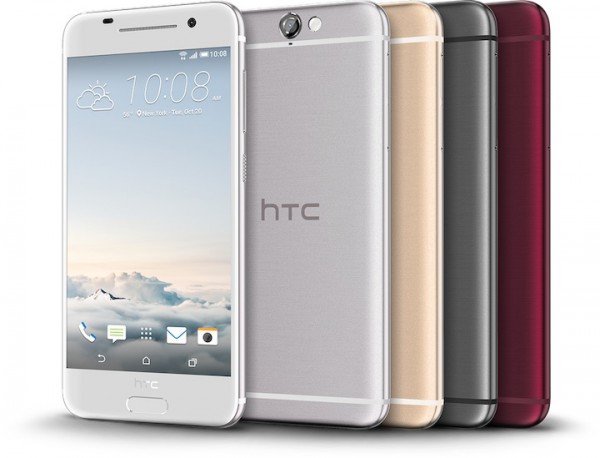
The metal-clad HTC One A9, which looks very similar to the iPhone, comes with a 5-inch Full HD 2.5D AMOLED display with Corning Gorilla Glass 4 protecting the screen. It is powered by a Snapdragon 617 octa-core processor with integrated X8 LTE, and offers users a choice between a 2GB or 3GB of RAM. For storage, users get to pick between 16GB and 32GB, with both variants supporting microSD card for external storage.
 
On the camera front, there’s a 13-megapixel sensor at the back with OIS, and an UltraPixel shooter on the front. The company says that the selfie camera can capture 300 percent more light than conventional smartphone cameras.
 
The company also spent several minutes explaining the audio capability of the One A9. The handset comes with HTC BoomSound integrated into the headset combined with Dolby Audio.
 
On the connectivity front, the handset comes with support for optional HTC Rapid Charger 2.0 which can offer up to 75 percent faster charging. These are just numbers without the much needed context, so we will have to check the device ourselves to see how accurate the company’s claims are.
 
The biggest attraction of the handset is its Android 6.0 Marshmallow software. It is the third handset after Google’s Nexus 6P and the Nexus 5X to ship with the latest version of Google’s mobile operating system. The company also mentioned that it would offer the latest Android software version within 15 days of its release.
 
The HTC One A9 comes in Opal Silver and Carbon Gray, Deep Garnet, and Topaz Gold color options and starts at $399 and will start shipping beginning November 2015.
 
~ Max Nottingham

1.16.2015

Android 5.0.2 Lollipop now available for 2013 Nexus 7, 10 -- here's how you can install and update

 
Android 5.0 Lollipop is far from perfect, arriving with nasty bugs that have affected battery life, performance, Wi-Fi and more. The first update that Google launched, version 5.0.1, managed to fix some of the problems users have reported, but some major ones persist even to this day. Personally, I am seeing my 2013 Wi-Fi Nexus 7 running excruciatingly slow at times, even with the first update in tow.
 
Fortunately, Google also launched a second update not long after the first, which fixes even more bugs, however it only launched it for the first-generation Nexus 7. Now, the search giant is making Android 5.0.2 Lollipop available for the 2013 Wi-Fi Nexus 7 and Nexus 10 as well, in the form of new factory images.
 
The latest factory images for the second-generation Wi-Fi Nexus 7 and Nexus 10 seem to be based off the same Android 5.0.2 build as the Android 5.0.2 Lollipop Nexus 7 factory image, which has the LRX22G build number.
 
But, one of the first things you likely want to know is what changed in Android 5.0.2 Lollipop. While Google does not provide an official changelog -- which it should have, since users want to know -- some important changes have been discovered by analyzing the commits to the source-code.
 
First off, TRIM should work as expected now. The built-in cleaner will do its thing no matter if the device is charging during the night or during the day or whether it is turned on or not. Before, this feature was only triggered during night charges. Hopefully, this will result in a noticeable boost in responsiveness.
 
There are also changes pertaining to how alarms work (not the alarms you are thinking of, but CPU-related functionality) when waking the CPU and compete for system resources. This should improve stability and responsiveness. There are other changes as well, but less noteworthy in comparison.
 
You can grab the factory images from Google Developers, but, to save some time, here are the direct links:
So what can you do with those factory images? Well, you have two options, both of which I covered in this detailed how-to guide. One, you can perform a clean install of Android 5.0.2 Lollipop, which is the best way you can get the latest version up and running. However, this may entail losing some personal data in the process.
 
And, two, you can update to Android 5.0.2 Lollipop. However, this option is not guaranteed to work as you may expect it to, and it may force you to perform a clean install after all. Google does not stand behind this option as far as I know, so results are sure to vary.
 
That said, I just used the factory image, without any problems, to update to Android 5.0.2 Lollipop on my 2013 Wi-Fi Nexus 7, so there is a (good) chance it'll work the same for you as well. If you wish to go down this route, share the results with us in the comments section below (or hit me up on social networks).
 
~ Mihaita Bamburic

10.16.2014

Google unveils Nexus 6 phablet, Nexus 9 tablet; lands with Android Lollipop

Summary: Google finally catches up with the rest of the smartphone space by offering its home-brew phablet, along with the next iteration of its tablet and Android operating system.
 
(Image: Google)
Despite little fanfare and a muted announcement, Google said on Wednesday it was ready to lift the veil on its latest Nexus devices.
 
Meet the Nexus 6 "phablet" smartphone, and the Nexus 9 tablet. Both will run the latest version of Android, dubbed "Lollipop," in line with its candy-themed naming scheme.
 
In a blog post announcing the new devices, Android chief Sundar Pichai said: "Lollipop is designed to be flexible, to work on all your devices and to be customized for you the way you see fit."
 
According to recent reports, the quiet unveiling was due to a scramble in the last few days to get the final bits ready for the next-generation Android release. That softened any announcement Google was gunning for, said Forbes on Tuesday.
 
Google's Nexus 6 "phablet" phone, built by Motorola, which this year was sold off to Lenovo, features a 5.9-inch quad-HD display with a resolution of 1,440 x 2,560 pixels, or 493 pixels-per-inch. It also comes with a Snapdragon 805 quad-core 2.7Ghz processor, and Adreno 420 graphics.
 
The Nexus 6 boasts a 13-megapixel rear-facing camera and a 2-megapixel front-facing camera. The phone requires just 15 minutes of charging for six hours use. Google says that it's ready for 24 hours of use from a full charge.
 
With dual-front facing speakers, the phone offers stereo sound.


The Nexus 6 will be available for pre-order in late October, and will be out in stores in November. It's available on AT&T, Sprint, Verizon, T-Mobile, and US Cellular, but subject to carrier release times.
 
Unlocked versions will be available through the Google Play Store.
 
Meanwhile, the Nexus 9 tablet includes an 8.9-inch IPS LCD display. Weighing in at just over one pound, it's powered by a 64-bit dual-core Nvidia Tegra K1 processor and an Nvidia Kepler graphics chip.
 
It has an 8-megapixel rear-facing camera, and a 1.6-megapixel front-facing camera for video calls. The tablet also comes with 16GB or 32GB storage options.
 
Google's Nexus 9 tablet, developed by HTC despite little experience in the space, comes in a brushed aluminum frame, instead of the anticipated all-metal design, which helps keep the price of the device down.
 
There is no expandable storage, so choose your model wisely.
 
The Nexus 9 will be available on October 17 for pre-order.
 
The long-awaited revamped tablet arrives a day after Apple is expected to reveal its latest iPads, which are slated to include with a beefed up A8X processor — slightly better than the iPhone 6's chip, along with its Touch ID fingerprint sensor.
 
Both devices, the Nexus 6 phablet and the Nexus 9 tablet, will run the latest version of Android Lollipop.
 
Android Lollipop boasts a number of new features, including a universal user interface and experience across devices, better multitasking, and better enterprise features. The Android operating system also comes with device encryption, just like Apple's iOS 8. Both Apple and Google implemented this in the wake of government intrusions.
 
The latest version of Android will be initially available on Google's latest own-model Nexus devices, including the older Nexus 5, and will roll out to other manufacturers from there.
 
~ Zack Whittaker

6.04.2014

Android 4.4.3 KitKat available now, here's how you can install it

 
Google Nexus 4, 5, 7 and 10 users are in for a treat, as Android 4.4.3 KitKat is now rolling out. The latest version of the operating system is also available to customers of US mobile operator T-Mobile, which has revealed the sort of changes users can expect from the upgrade.
 
Android 4.4.3 KitKat is not a major upgrade over its predecessor, as T-Mobile says there are no new features in tow, but only improvements related to security and the customary fixing of bugs. The US mobile operator lists the upgrade as rolling out starting June 2, for its Nexus-toting customers.

As Nexus fans may know, shortly after the roll-out commences, links for the OTA (Over-The-Air) upgrade files are usually captured. At the time of writing this article, the only Android 4.4.3 KitKat OTA link that we are aware of -- courtesy of Android Police -- is for the 2013 Wi-Fi Nexus 7. It is meant to be used to upgrade the slate from Android 4.4.2 build number KOT49H. The new build number is KTU84L.
 
Android 4.4.3 KitKat is also available via Google's factory images and AOSP (Android Open-Source Project), the former of which have been released for the Nexus 4, Nexus 5, 2012 Wi-Fi Nexus 7, 2012 3G Nexus 7, 2013 Wi-Fi Nexus 7 and Nexus 10. The 2013 4G LTE Nexus 7 still awaits an Android 4.4.3 KitKat factory image release.
 
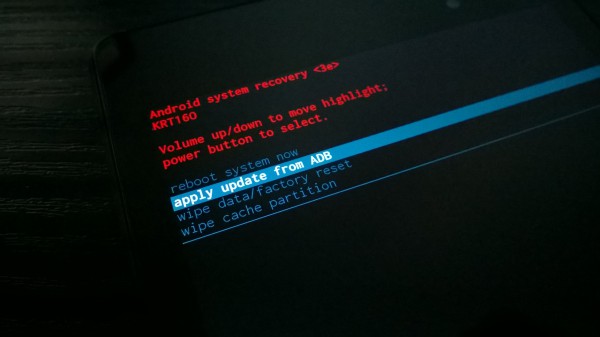
If you want to install Android 4.4.3 KitKat on your compatible Nexus device, via a factory image, you can follow this step-by-step guide. To achieve the same effect, but by making use of an OTA file, check out this other step-by-step guide. Using the latter method, I just upgraded my 2013 Wi-Fi Nexus 7. As far as I can tell, the upgrade is indeed more of a under-the-hood one.
 
Photo Credit: Mihaita Bamburic
 
~ Mihaita Bamburic