Cisco Learning Network Store Promotions Page
Showing posts with label Samsung. Show all posts

10.15.2016

Samsung releases Galaxy TabPro S Gold Edition 2-in-1 Windows 10 tablet/laptop PC

 
Windows 10 is a great desktop operating system. It also works wonderfully on tablets. That is what makes Microsoft's OS so attractive -- versatility. It still doesn't scale very well on smartphones, but I digress.
  
Whether you are a home user, college student, or professional, a 2-in-1 Windows 10 device can be a really rewarding experience. Not only does it save you money by not needing to buy both a laptop and a tablet, but it is one less thing to carry too. Today, Samsung releases the Galaxy TabPro S Gold Edition 2-in-1 Windows 10 tablet/laptop hybrid. The gold-colored PC features an impressive AMOLED screen and other great specifications. Unlike the Surface devices, the keyboard case is included -- nice! Best of all? It costs less than $1,000.
 
"The Galaxy TabPro S Gold Edition delivers a wealth of productivity features available through the Windows 10 operating system, resulting in one of the most advanced 2-in-1 experiences on the market. With 8GB of RAM and a 256GB Solid State Drive (double the memory and storage of the previous model), consumers are able to work more efficiently, store more and enjoy their favorite content no matter where they are", says Samsung.
 
The company further shares, "this 2-in-1 incorporates advanced technology to maximize performance and power efficiency. With enhanced fast charging features, the Samsung Galaxy TabPro S's battery can fully charge in as little as 2.5 hours, and offers up to 10.5 hours of battery life on a single charge. For power-driven performance, the Galaxy TabPro S is equipped with a 6th generation Intel Core M processor, designed for a fanless 2-in-1 to deliver the slimmest profile".
 
Samsung shares the following specifications.
 
Model

SM-W700NZDBXAR
Display 12 inch Super AMOLED Full HD+: 2160 × 1440 Resolution
Processor Intel Core M3 Processor 2.2 GHz
OS Windows 10 Home
Connectivity Wi-Fi (802.11 a/b/g/n/ac 2.4G+5GHz, VHT80 MIMO), Bluetooth v4.1, USB C 3.1
Camera Front: 5MP/Rear: 5MP with Auto Focus
4× Digital Zoom, 1920×1080 Full HD Video Recording
Memory/Storage 8GB RAM/ 256GB Solid State Drive
Battery 5200mAh/ 10.5 hours of video play time
Weight 1.53 pounds (without keyboard)
Dimension 11.43 inch x 7.83 inch x 0.25 inch (without keyboard)
Colors Gold
Price $999.99
All of the hardware specifications are quite good, with the exception of the processor (arguably). Intel's M3 chip is quite capable, but hardly a powerhouse; if you do CPU-intensive tasks like video-editing, this would not be a good choice. Also, because this has Windows 10 Home and not Pro, you cannot leverage BitLocker.
 
On the bright side, however, unlike a Core processor, this is fanless, meaning it is silent. For typical tasks like word processing, web browsing, and consuming media, this PC should be quite brilliant. You can do all of these things without hearing an annoying fan 'whir' sound.
 
If you are interested in buying it, it can be had today for $999.99 from Samsung directly or from BestBuy. An optional USB-C multi-port dock ($89.99) and stylus ($79.99) can be purchased too. Will you buy this PC? Tell me in the comments.
 
~ Brian Fagioli

10.11.2016

Samsung permanently discontinues Galaxy Note7

 
The troubled Galaxy Note7 is being killed off completely. The news comes after Samsung's statement yesterday that it was asking carriers and retail partners to cease sales and exchanges while an investigation is carried out into handsets catching fire or exploding.
 
But now the company has filed papers with South Korean regulators in which it says it will permanently cease sales of the beleaguered smartphone. The decision follows earlier reports that production was on hold temporarily.
 
Samsung is already counting the cost of one of the most disastrous smartphone launches we have seen. The company had already seen billions of dollars wiped off its market value, and shares plummeted by a further 8 percent yesterday -- the biggest drop in eight years.
 
The phone manufacturer had already issued a recall of 2.5 million handsets, but on-going problems ultimately led to the decision to cut its losses. Samsung said:
Taking our customer's safety as our highest priority, we have decided to halt sales and production of the Galaxy Note 7.
With numerous cases of phones exploding or catching fire and harming customers -- including replacement handsets -- Samsung's reputation on the global stage has been damaged by the seemingly endless debacle. While killing of such a high profile phone will undoubtedly be costly, it could be the best move for Samsung in the long run.
 
~ Mark Wilson

8.29.2016

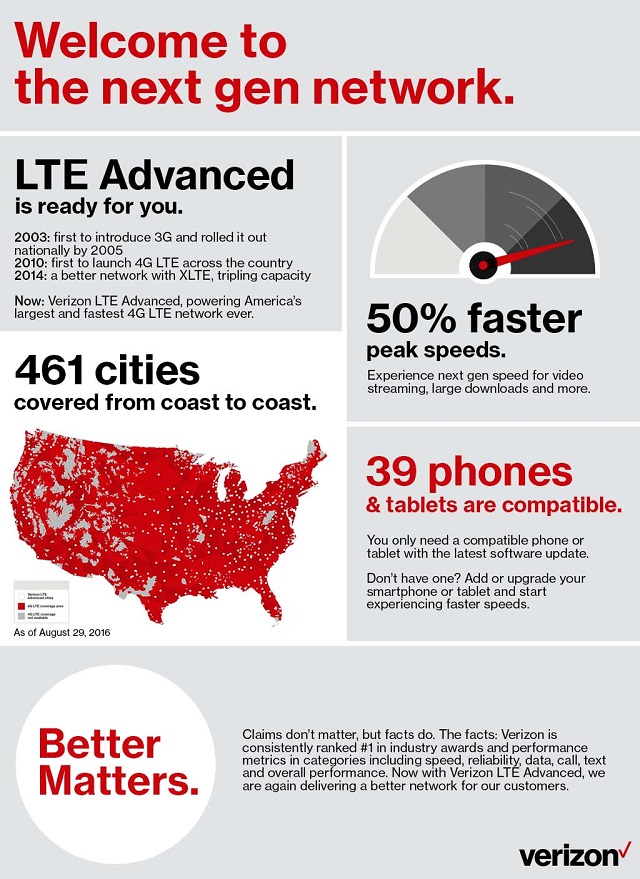
Verizon switches on LTE Advanced in 461 cities -- is your phone compatible?

 
Verizon Wireless is what I consider to be the best cellphone carrier in the USA. Yes, it is expensive comparatively, but you get what you pay for. Both coverage and speed is top notch across the country, meaning you should have a solid experience in many places where you travel.
 
Today, the carrier announces that its LTE is getting much faster. In 461 cities across the USA, it switches on the speedier "LTE Advanced" (LTE-A). Best of all, many existing devices are compatible. Wondering if your phone, tablet, or hotspot can take advantage? Read on for the list.
 
"Verizon LTE Advanced uses software that combines multiple channels to speed mobile data over the network more quickly than ever before. The result is 50 percent faster peak speeds in cities nationwide for Verizon customers using one of the 39 LTE Advanced-capable phones and tablets already on Verizon's network -- including top-selling Samsung Galaxy S6 and S7 smartphones, Moto Droids and Apple iPhones. As new devices from Apple, Samsung, LG and other manufacturers are introduced, they will be LTE Advanced-capable right out of the box", says Verizon.
 
The wireless carrier further says, "LTE Advanced currently uses a combination of two- and three-carrier aggregation. Customers will continue to enjoy typical download speeds of 5 - 12 Mbps, but two-channel carrier aggregation has shown peak download speeds of up to 225 Mbps, far exceeding the current speeds being experienced by wireless data networks nationwide. While the speeds of two channel carrier aggregation provide a leap forward, three-channel carrier aggregation provides even greater efficiency. Verizon engineers deploying three-channel carrier aggregation have experienced speeds greater than 300 Mbps".
 
Wondering if your phone, hotspot, or tablet is compatible? Please see the list below.
  • Apple iPhone 6
  • Apple iPhone 6 Plus
  • Apple iPhone 6s
  • Apple iPhone 6s Plus
  • Apple iPhone 5 SE
  • Apple iPad Pro
  • Apple iPad Pro 9.7
  • Apple iPad Air 2
  • Apple iPad Mini 4
  • Asus Zenpad Z8
  • Blackberry PRIV
  • HTC 10
  • HTC Desire 626
  • HTC One M9
  • LG V10
  • LG G4
  • LG G5
  • Motorola Nexus 6
  • Moto X
  • Moto Z Force Droid
  • Moto Z Droid
  • Motorola Droid Turbo 2
  • Motorola Droid Turbo
  • Netgear MHS AC791L
  • Novatel MiFi i6620L
  • Novatel MiFi USB620L
  • Samsung Galaxy S6 Edge Plus
  • Samsung Note 5
  • Samsung Galaxy S6
  • Samsung Galaxy S6 Edge
  • Samsung Galaxy S7 Edge
  • Samsung Galaxy S7
  • Samsung Galaxy View
  • Samsung Galaxy Tab S2
  • Samsung Galaxy Tab E 8.0
  • Samsung Galaxy Note 7
  • Sony Xperia Z3v
  • Sony Xperia Z2 Tablet
 
I reached out to Verizon to find out how a customer can tell when they are on LTE-A. Unfortunately, it will not be displayed on your device. In other words, whether you are on regular LTE or LTE-A, the device will just display "LTE". The only way to tell if you are getting the faster speed is to run a speed test using an app or website. This is a bit disappointing, but since it carries no additional cost, I am OK with it. Hopefully it can be more apparent in the future.
 
Are you excited for this Verizon LTE roll-out? Check out the infographic below and tell me your thoughts in the comments.
 
 
Photo Credit: siiixth/Shutterstock
 
~ Brian Fagioli

8.22.2016

Samsung is planning an Apple-style refurbished phone program

 
If you want to get your hands on cheaper Apple products, you can opt for the secondhand market on eBay, or you could go for an official refurbished device from the company itself. Not wanting to miss out on a trick, Samsung looks set to launch its own refurbished smartphone program.
 
Citing "a person with direct knowledge of the matter", Reuters says the program could launch as early as next year. With Samsung hardware selling for something of a premium -- particularly flagships like the Galaxy Note7 -- consumers are as keen to seek out a saving as Samsung is to ensure ongoing profit in an ever-competitive market.
 
Reuters reports that the handsets of those signing up for a one year upgrade program could be sold on in a bid to maintain profit margins. At the moment it is not clear how much of a discount Samsung might offer on refurbished handsets, and the company is yet to issue an official statement about the program.
 
As with Apple, any refurbishment program run by Samsung is likely to prove popular with people who are keen to get their hands on a premium brand, but find that they can't afford to buy the very latest handsets. For anyone who is willing to wait a year, the program will offer a cheaper jumping on point that benefits customers and Samsung alike.
 
~ Mark Wilson

7.13.2016

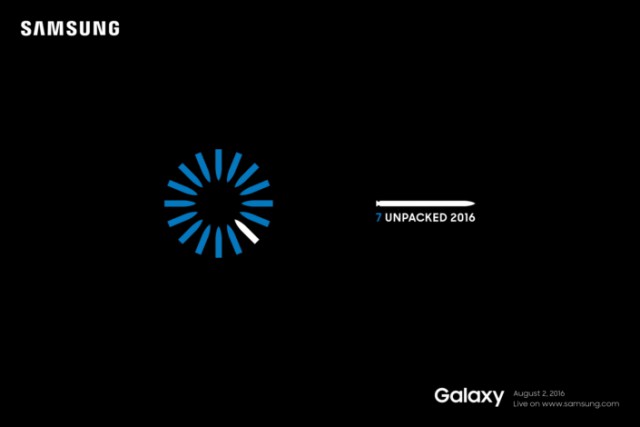
Samsung officially reveals the name, launch date of next Galaxy Note

 
Samsung typically launches new Galaxy Note flagships at IFA, but this year its next high-end phablet will arrive a bit sooner. The South Korean maker today announces that its second Unpacked event of 2016, which will see the latest Galaxy Note device or devices debut, will take place on August 2.
 
This announcement is different than what we have come to expect from Samsung, as, on top of the usual launch date, it also reveals the name of the Galaxy Note device and even hints at some of the changes that we should look forward to.
 
First off, let's talk about the name. Samsung says that the upcoming Galaxy Note device will actually be called Galaxy Note7. The current model, which launched at IFA 2015, bears the Galaxy Note 5 moniker. Worth noting here is the lack of spacing between "Note" and "7", which is unusual for a Samsung Galaxy flagship -- and jarring, in my opinion.
 
The reason why it is called Galaxy Note7 and not Galaxy Note6 is so that Samsung can have a consistent naming scheme for the flagship Galaxy products that it launches in a year. A few months ago we saw the introduction of Galaxy S7 and Galaxy S7 edge, so it would make sense to align the generation number -- 7, in this case -- of the new Galaxy Note product to that of its sister devices.
 
This will allow Samsung to "minimize confusion about the latest mobile technology" that it introduces. While I believe that enthusiasts will know which Galaxy Note is the latest in the line, for those who are familiar with the Galaxy S range it may be a bit confusing to see a newer product sporting a lower number at the end.
 
Now, what can you expect come August 2? "With added functionality of the S Pen and large screen, the Galaxy Note7 is a powerful instrument for achievement and self-expression, and is made for those who want to get the most from their phones -- and their lives. Galaxy Note7 will help people do more in work, at home and everywhere in between. We can’t wait to tell you more about it!", says Samsung.
 
The launch event will take place in New York, at 11am EDT, with secondary launch events to be held in London at 4:00pm/16:00 BST and Rio de Janeiro at noon. There will be a livestream and, as usual, we will cover the event.
 
~ Mihăiță Bamburic

6.24.2016

Samsung unveils 'Notebook 7 spin' convertible Windows 10 laptop

 
Samsung is probably best known for its Android smartphones and tablets nowadays, but the company is so much more. It makes amazing televisions, plus appliances like refrigerators and washing machines. Samsung even makes Windows laptops and tablets, such as the 2-in-1 TabPro S.
 
Today, Samsung unveils the all-new 'Notebook 7 spin' laptop. This convertible Windows 10 computer can double as a tablet -- the touch screen can rotate and sit flush on the rear. It even has a backlit keyboard by default -- nice. Best of all, the pricing is rather competitive.
 
"This device was designed with multimedia enthusiasts in mind, it features an impressive 1 Terabyte hard drive, 360-degree full HD touchscreen and can be fully powered in under 100 minutes. The Notebook 7 spin is not just a laptop -- it's an entertainment go-to for movies, games, and all the web surfing you want. The Notebook 7 comes packed with Windows 10 features: you can use the full HD touchscreen to draw and markup webpages in Microsoft Edge, enjoy your own personal digital assistant in Cortana and access great apps, games, movies and TV shows through the Windows Store", says Mollie Ruiz-Hopper, Editor-in-Chief, Windows Blog.
 
Ruiz-Hopper further says, "with just 20 minutes of charging, battery life is extended up to two hours. In just 90 minutes, the 15.6-inch notebook will be fully powered, while the 13-inch reaches a full charge in 100 minutes".
The Samsung 'Notebook 7 spin' comes equipped with either an Intel Skylake Core i5 or i7. In other words, the laptop is guaranteed to be quite powerful -- there are no Core M or i3 processors to be found. With that said, Core M and Core i3 processors aren't bad, and have their place.
 
You can even equip it with up to 12GB of RAM. This is a bit curious, however, as it signals there are two slots in the machine. Why limit the configuration to an 8GB+4GB rather than 8GB+8GB? Hopefully users can access this for an upgrade later -- if they need.
 
 
For storage, it comes with a 1TB HDD by default, which is both good and bad. It is good because it is very roomy, but it is slower than a solid state drive. Luckily, an SSD upgrade is available, and I would suggest it -- unless you truly need a terabyte on the go. Your laptop will be faster and could get better battery life too.
 
The laptop comes in two screen sizes -- 13 and 15.6-inch. Regardless of size, they both have 1080p resolution. This means that the smaller screen should look better, as it will feature a higher PPI. Quite frankly, I find 13 and 14-inch laptops to be the sweet spots -- 15.6-inch is too large for many modern road warriors. The larger screen would be better for someone whose mobile focus is secondary.
 
If you want to buy this beautiful-looking convertible laptop, you won't have to wait long. You can pick it up on June 26th from Best Buy or from Samsung directly priced starting at $799.99.
 
~ Brian Fagioli
5.20.2016

Samsung's next Android flagships may have 6GB of RAM

 
Each new generation of Android flagships seems to push the limits of what we consider high-end hardware specifications. A few years ago we were looking at sub-5-inch displays with 720p resolutions and dual-core processors with 2 GB of RAM, and nowadays larger, 2K displays backed by octa-core chips and 4 GB of RAM appear to be the norm.
 
While the bump in resolution and processor speed may not be as noticeable when moving to a new-generation flagship, the extra RAM is certainly a welcome addition. Of course, for some companies not even 4 GB is enough in this department, as Samsung just unveiled a larger module, which should be available in its next flagships.
 
At its Mobile Solutions Forum, Samsung has announced a 6GB, 10nm LPDDR4 RAM module. The earliest that we might see it in a new Galaxy device is this summer or early fall, when the company is expected to unveil the Galaxy Note 6.
 
This much RAM should make any mobile device great for multitasking, something which Android N seems to be better optimized for. The new version of the mobile operating system will allow users to run two apps side by side, something that works best when there are plenty of resources available.
 
Of course, having this much RAM may seem like overkill, but, if the recent crop of Android flagships is of any indication, manufacturers will only try to keep up and even outdo each other. And consumers seem to be expecting progress in this area anyway, no doubt a consequence of manufacturers constantly trying to push the envelope with each of their new premium products.
 
Photo credit: iko / Shutterstock
 
~ Mihăiță Bamburic

3.02.2016

Samsung shifts the paradigm once again

Samsung continues to set the mobile landscape ablaze with speed and size. Find out what the company's latest announcement could mean for you. 

Imagine, if you will, that your mobile device contained the same amount of storage as your SSD-toting desktop or laptop. Gone would be the constant struggle to make room for apps and data. No longer would you see those dreaded Device full errors.
 
If Samsung has its way (and it most assuredly will), the company will be shipping flagship devices that include a remarkable 256 GB memory chip, based on the Universal Flash Storage 2.0 standard. That's right, ladies and gents, a flagship smartphone that contains as much storage as many desktops and laptops. What's best, this new chip from Samsung will outperform the current crop of SATA-based SSDs shipped on most laptops and desktops.
 
"By providing high-density UFS memory that is nearly twice as fast as a SATA SSD for PCs, we will contribute to a paradigm shift within the mobile data storage market," said Joo Sun Choi, Executive Vice President, Memory Sales and Marketing, Samsung Electronics.
 
Yes, indeed, you will.

Size and speed

The chips themselves will be based on Samsung's V-NAND flash memory chips and will included a specially designed, high-performance controller. For those who need numbers (for comparison) the previous generation UFS memory could handle read/write speeds up to 19,000 (input operations per second) and 14,000 (output operations per second). The new Samsung chips can handle read/write speeds of up to 45,000 (input operations per second) and 40,000 (output operations per second). That's a significant leap in performance. Add to that the massive increase in size and you do have a serious game changer.
 
The new 256 GB UFS chips use two lanes of data transfer to move data at up to 850 MB/s. Yet again another massive besting of typical SATA-based SSDs. For sequential writing, the chips support up to 260 MB/s.
 
The besting keeps on coming.
 
In real time, this means that mobile devices will now be able to handle seamless 4K Ultra HD video playback while simultaneously multitasking. These new chips are also even smaller than today's external microSD cards... which means they won't cause problems for smartphone designers and manufacturers.  

Odd timing

But let's consider Samsung alone. Its next flagship device, the Galaxy S7, will not include the beefed up chip (although it will re-introduce external microSD card support). Samsung did eventually release Galaxy 6S variant that included the 128 GB chip. Will the same thing happen this time around? Maybe this is a bit of sleight of hand on the part of Samsung that goes something like this:
  • Hey, here's the latest, greatest smartphone from Samsung
  • Fans purchase shiny new Samsung smartphone
  • Hey, we've invented a faster chip for smartphones
  • Fans groan
  • Hey, we're releasing a variant of our latest smartphone to include the shiny new chip
  • Fans grumble, but purchase the shiny new smartphone with the shiny new chip
  • Samsung bathes in money
Okay, that's a bit of an exaggeration. But you get the idea. What Samsung should be doing is announcing the new chip and then announcing the new device that will include the new chip upon release. That certainly didn't happen. In fact, the announcement of the new chip came a scant three days after the announcement of the Galaxy S7. My guess is that it will do the same thing it did with the 6S and release a variant S7 that includes the new 256 GB chip. When that will happen? No one knows.

The ante is upped

However, the oddly timed announcements is splitting hairs a bit. The truth of the matter is this. Samsung is (once again) seriously upping the ante for the world of mobility. The very idea of having such a high-speed storage chip on a smartphone has been unheard of until now. And as much as I hate the term, this truly is a paradigm shift for the mobile landscape.
 
If you've been anxiously awaiting the release of the Galaxy S7, it might be in your best interest to hold off purchasing until later on in the year. Yes, the variant will probably cost you quite a bit of coin, but having a high-end device with such massive (and speedy) storage would be worth the wait.
 
~ Jack Wallen 

2.15.2016

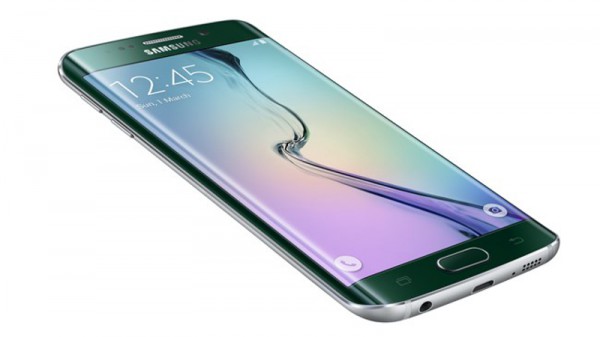
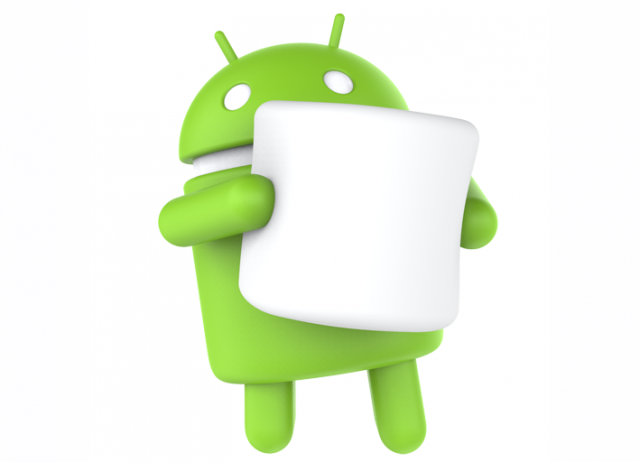
Samsung starts rolling out Android 6.0 Marshmallow for Galaxy S6

Android 6.0 Marshmallow has reached only a small number of Android users since its debut in early-October of last year. Google's latest numbers place it at just 1.2 percent distribution share. Aside from a limited number of handsets that arrive with Marshmallow on board, the other reason why Android 6.0 has such a small reach is the fact that upgrades are only available for very few popular handsets.
 
Samsung is now changing that, as today it announces that the much-awaited Android 6.0 Marshmallow update has finally started to roll out, with its Galaxy S6 and Galaxy S6 edge flagships being the first devices to get it.
 
Galaxy S6 and Galaxy S6 edge are among the handful of devices that Samsung has confirmed as getting the Android 6.0 Marshmallow software update. Galaxy Note 5 and Galaxy S6 edge Plus are also on this list, but it is not clear when they will receive the same treatment. Same goes for flagships that arrived in 2014, like Galaxy S5.
 
As is usually the case with major updates, it can take months before the Android 6.0 Marshmallow update is available for all Galaxy S6 and Galaxy S6 edge units. Some markets and mobile operators will get it sooner than others; there is no official timetable at this point, and I doubt there will be one. So, basically, it will be available when it will be available.
 
If you want to learn more about what Android 6.0 Marshmallow brings to the table for Samsung devices, check out this article. Samsung specifically mentions "the enhanced edge screen and new edge screen features", which make "[Galaxy S6 edge] faster and more convenient than ever" as a change that Galaxy S6 edge users can expect to see.
 
~ Mihăiță Bamburic

2.09.2016

Samsung inspired by Apple Purchase Plan

Samsung is planning to bring out their take on the iPhone Upgrade Plan. Jack Wallen believes this heralds a major shift in the mobile landscape and will wind up a win for the consumer.
Image: Jack Wallen
No matter how you feel about their products, if there's one almost universal truth in mobility, it's that Apple knows business...knows it quite well. Facing what looked like could be an Android singularity in the world of mobile devices, back in September, 2015, the Cupertino company introduced a carrier-free upgrade program, dubbed the iPhone Upgrade Program. With this program, consumers could pay for their iPhones through Apple (as opposed to their carriers) in installments (as low as $32.41/month USD).
  Since then, iPhone sales have skyrocketed. While Apple has witnessed a major uptick in sales, Samsung has watched its numbers tumble. That is precisely why the Korean tech juggernaut is planning their own purchase plan. The details of Samsung's plan have yet to be released, but you can be sure it will look similar to that of Apple's...consumers will be able to purchase Samsung devices, directly from the company, in installments.
  This comes on the heels of nearly all carriers dropping their subsidized contracts (where the cost of new devices is actually hidden in monthly fees), as well as the massive growth of low-cost, unlocked Android devices. It is that latter issue, I believe, which has many of the bigger Android manufacturers concerned. When the likes of OnePlus can crank out near-flagship devices and sell them at low-end prices, Samsung, HTC, LG, and Lenovo will take notice. And now, with iPhone sales increasing (thanks to the Upgrade Program), things are about to change.
  And change they will.

Win for the consumer

It would not surprise me to see every major manufacturer hopping onto the good ship upgrade sometime before 2016 is over. That, my friends, would be a big win for consumers. How? Because in the world of mobility, consumers have been gouged and locked in by carriers for years. You wanted a specific device, you most likely would have to switch to a different carrier...which, of course, would either cost you in terms of dollars or time. But this move (this mimic of Apple) by Samsung should be a warning to carriers of things to come. What things? That the mobility landscape is drastically changing and the power will soon be totally in the hands of the consumer.
 
That sounds kinda nice doesn't it?
All because Apple saw slumping sales and decided to sell their products directly...and Samsung saw the new program succeed and opted to follow in their footsteps. Now? We win. Thank you, Apple. Thank you, Samsung.

The caveat

There is, of course, a caveat to these programs. If you do that math, you can see there is zero cost savings for the consumer. After the requisite twenty four months of payments (on a 16 Gb iPhone 6S), you will have paid $777.84 USD. If you want a 128 Gb iPhone 6S+, that payoff is $1077.84 USD.

Make sure you take those numbers in for a moment...remembering, all the while, you're still paying your carrier monthly fees. All of a sudden, that payment plan doesn't sound so wonderful...especially considering you can opt for an unlocked Android device for around $200-$300.00 USD.

Even so, to many consumers cutting the carrier ties is worth it. This means Samsung needs to roll this upgrade plan on sooner rather than later. And while they're busy creating this plan, they need to make sure their model allows for users to upgrade...even before they've reached that blessed payoff. That means: Two year payoff, one year upgrade. But let's consider this option:


  • 2 Year payoff
  • 1 Year upgrade
  • 1 Year trade-in
In that 1 Year trade-in, users can (should their original devices be in good shape) get a portion of their payoff deducted. How would that be fair to Samsung? In many cases, those trade-ins can be refurbished and sold to second-tier carriers. Everyone wins.

I strongly believe that, in the future, the carrier is going to be responsible for two things: Voice and data. That is as it should be. Allow the consumer to purchase the device they want, from the OEM they want, and use them on the carrier they want.

Viva la upgrade!

~ Jack Wallen 

2.01.2016

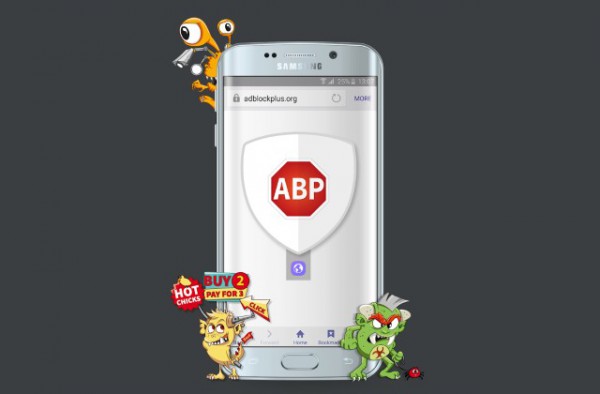
Android 6.0 Marshmallow update brings Adblock Plus to Samsung phones and tablets


Earlier today we learned that a new API is bringing adblocking to Samsung's own mobile webbrowser. Adblock Fast was the first to take advantage of the new option and now, hot on its heels, comes the big guns -- Adblock Plus.

Today Samsung is rolling out an Android 6.0 Marshmallow update and once this has been installed, Adblock Plus can also be installed. The extension brings content blocking capabilities to Samsung's own web browser, but you'll have to jump through the relevant hoops to gain the privacy and bandwidth preserving capabilities.

Once your handset has been updated to the very latest version Marshmallow, you'll need to head over to Google Play to grab a free copy of Adblock Plus (Samsung Browser). Next you'll need to enable Adblock Plus within the browser and then choose the level of content blocking you'd like to use. For complete privacy and malware protection, you can opt to block all ads, but there's also the option of permitting Acceptable Ads -- Adblock Plus points out that this is the default setting.

Adblock Plus co-founder Till Faida says:
Adblock Plus is very excited to continue our momentum in the mobile space by solidifying a working relationship with Samsung that allows us to handle content blocking on any Samsung device. We are excited that Samsung’s mobile product offering is now including content blocking and are happy that Samsung users can find us in the Google Play Store to assist them with their ad blocking.
For now, Adblock Plus for Samsung Browser is only available for devices running Android 6.0 Marshmallow, but in March it will also be an option for Android 5.0 Lollipop users.

~ Mark Wilson

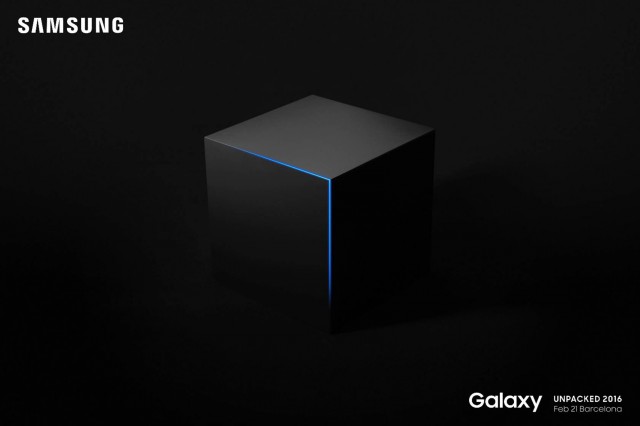
Samsung will unveil Galaxy S7 on February 21


The unveiling of a new Galaxy S smartphone is nearly as predictable as the introduction of new iPhones. Weeks before MWC, Samsung starts to tease the first Unpacked event of the year and, when the curtain finally lifts, it takes the wraps off its next flagship smartphone. A year ago, it was Galaxy S6 being presented, joined for the first time by an edge version.

Things appear to be no different this year. Samsung has just released a teaser for its first Unpacked event of 2016. It will be held in Barcelona, one day before this year's MWC conference kicks off. What will be unveiled? "The Next Galaxy", of course.

The first teaser suggests that Samsung will allow Gear VR users to experience the launch of Galaxy S7 in virtual reality. In case you are wondering, the headset requires a Galaxy S6, Galaxy S6 edge Plus or Galaxy Note 5 to work.

While Samsung has not come out and said that it will announce Galaxy S7 at Unpacked, which takes place on February 21, it is quite obvious that it is "The Next Galaxy". What we do not know is whether there will also be other models being unveiled, like a Galaxy S7 edge or Galaxy S7 edge Plus.

The launch of Galaxy S7, which starts at 19:00 CET, will be livestreamed by Samsung. Our very own Brian Fagioli will be attending the New York unveiling of the flagship. There will also be another dedicated US Unpacked event on the west coast, in San Francisco.

~ BetaNews Staff

1.29.2016

There was a record 1.4 billion smartphones shipped in 2015 and almost a quarter came from Samsung

 
The good news for smartphone manufacturers is that worldwide shipments grew by 12% and hit a record high of 1.4 billion in 2015. The bad news is that the industry just isn’t expanding as quickly as it has done in the past. Last year’s fourth quarter shipments grew just six percent from the same period in 2014, marking the sector's slowest growth rate of all time.
 

The results come from research company Strategy Analytics, which says that the slowdown is primarily due to most people in major markets like China already owning a smartphone and not feeling the need to upgrade. It also cites consumer fears over a global economic downturn as a reason for the slow growth rate.
 
When it comes to who leads global smartphone shipments, Samsung continues to stay ahead of the pack, shifting 81.3 million units in Q4 and 319.7 million units throughout 2015. The 9 percent quarter increase from Q4 2014 represents the Korean company’s fastest growth rate for almost 2 years.
 
Samsung stays ahead of Apple, which shipped 74.8 million units in Q4 and 231.5 million across all of last year – a big improvement on the 193 million devices the Cupertino company shipped in 2014.
 
 
The figures show that Samsung had a 22 percent share of the smartphone market across 2015, while Apple took an 18 percent market share. The research site noted that Apple will need to expand into developing markets such as India and Nigeria if it wants to boost iPhone growth in 2016.
 
Just below Apple lies Huawei, which jumped in front of Lenovo-Motorola into third place. The Chinese firm will no doubt be pleased that it shipped over 100 million smartphones in one year for the first time ever. Lenovo-Motorola, meanwhile, was the only company in the top five to see its shipments decline – down 18 percent across the whole of 2015.
 
Xiaomi stayed at fifth place with a five percent market share. It shipped 11 million more handsets in 2015 than it did in 2014, but growth slowed down in the final quarter. Xiaomi only shipped 2 million more units in Q4 2015 than it did in Q4 2014.
 
~ Rob Thubron

12.26.2015

Samsung unveils large-screen Galaxy A9 smartphone


Samsung has announced a new smartphone targeting those who love large screens and big batteries.
  
Unveiled at Samsung's Galaxy A Party 2016 event in China, the Galaxy A9 features a 6-inch, 1080p Super AMOLED display (367 PPI) with 2.5D curved glass. That big display is powered by Qualcomm's octa-core Snapdragon 652 chip (four Cortex A72 cores clocked at 1.8GHz and four Cortex A53 cores running at 1.2 GHz) alongside Adreno 510 graphics and 3GB of RAM.
  
There's 32GB of local storage (expandable up to 128GB via microSD card slot), a 13-megapixel rear camera with f/1.9 aperture, OIS and LED flash, a front-facing 8-megapixel shooter (also f/1.9 aperture), a fingerprint sensor and dual nano SIM card slots.
  
Connectivity-wise, the phone features 802.11 a/b/g/n Wi-Fi, Bluetooth 4.1, NFC and ANT+ and can connect to 4G LTE wireless networks. It'll ship running Android 5.1.1 Lollipop and packs a massive 4,000mAh battery that utilizes QuickCharge technology for speedy recharges. It's not as large as the colossal 10,000mAh battery inside theOukitel K10000 but it's not nearly as chunky either.
  
The phone measures 161.7 x 80.9 x 7.4mm and tips the scale at 200 grams.
  
No word yet on exactly when it'll go on sale (aside from "later this month") but we do know it'll show up first in China. Samsung is currently mum on pricing as well.

~ Shawn Knight 

11.04.2015

Google says Samsung Galaxy S6 Edge reduces Android security

 
Samsung's Galaxy S6 Edge is blighted by 11 security problems according to the Project Zero team at Google. The team carried out research to determine how easy it would be for an attacker to exploit an Android phone produced by an OEM.
 
Over the course of just a week of investigations, Google discovered "a substantial number of high-severity issues". While Samsung has now fixed some of the problems, at least three are still to be addressed.
 
The Project Zero researchers said that many of the security issues were "high impact and easy-to-exploit". One particularly interesting and easily-exploitable issue was found in the Samsung Email client whereby email could be forwarded to another account. A script injection problem was also found in the same app which could allow JavaScript embedded in a message to be executed. The team warns that this could "make JavaScript vulnerabilities in the Android WebView reachable remotely via email".
 
Writing on the Project Zero blog, "planner of bug bashes", Natalie Silvanovich says:
A week of investigation showed that there are a number of weak points in the Samsung Galaxy S6 Edge. Over the course of a week, we found a total of 11 issues with a serious security impact. Several issues were found in device drivers and image processing, and there were also some logic issues in the device that were high impact and easy-to-exploit.
The majority of these issues were fixed on the device we tested via an OTA update within 90 days, though three lower-severity issues remain unfixed. It is promising that the highest severity issues were fixed and updated on-device in a reasonable time frame.
She also highlights the problem of OEMs introducing "additional (and possibly vulnerable) code into Android devices at all privilege levels". Despite the number of problems found, Samsung was praised for issuing security patches in a timely fashion.
 
~ Mark Wilson

8.28.2015

Will your Samsung Galaxy devices receive Android 6.0 Marshmallow?

 
Google will officially introduce Android 6.0 Marshmallow in a few months, if history is of any indication. And, like with every release of a new version of the operating system, one of the common questions that users will ask is whether an upgrade will be offered for their devices.
 
It is not uncommon for Android manufacturers to reveal such information following the new operating system's introduction, but, this time around, Samsung has decided to announce which Galaxy devices are set to receive an upgrade to Android 6.0 Marshmallow first. Is yours on the list?
 
Needless to say, Samsung's premium Galaxy smartphones that were announced in 2015 make the cut. That includes Galaxy S6 and Galaxy S6 edge, which were introduced at the same event in March, as well as Galaxy Note 5 and Galaxy S6 edge+, which the company unveiled earlier in August. Those who use Galaxy S6 Duos should be pleased to know that it too is among the first devices to receive Android 6.0 Marshmallow.
 
Samsung has not included its flagship smartphone from last year, Galaxy S5, in the first wave of devices to get the upgrade. Given that there is no good reason for the company not to support it further, Galaxy S5 will probably receive Samsung's attention a bit later down the road. The company is currently still dealing with the Android 5.1 Lollipop roll-out, which has yet to reach most versions of the device.
 
When it comes to the two Note flagships from 2014, Samsung includes both Galaxy Note 4 and Galaxy Note Edge on the list. Same goes for Galaxy Note 4 Duos, which is the dual-SIM version of the former phablet. These handsets are not even a year-old at the time of writing this article, as they were announced in early-September last year and officially released nearly a month after.
 
Rounding up the list are Galaxy Alpha, a smartphone introduced by Samsung about a year ago as a sort of iPhone 6 competitor, and Galaxy Tab A, an affordable slate that was introduced in April.
 
Samsung will likely expand the list of devices that will receive Android 6.0 Marshmallow in the coming months to include more popular handsets. But, as always, do not expect the software upgrades to be rolled out overnight, after Google debuts its new operating system, as these things can take a while.
 
~ Mihaita Bamburic

8.18.2015

This (!) is precisely why phones without removable batteries are a terrible idea

 
When looking for a new phone, people place importance on numerous things -- different strokes for different folks, and all that. Two things that are frequent bones of contention are the absence of a microSD slot, and a battery that cannot be replaced by the user. It used to be the case that every phone out there (well, let's ignore the iPhone for now) had a battery that you could easily replace if needed. Or perhaps you wanted a spare battery so you could use your phone for longer.
 
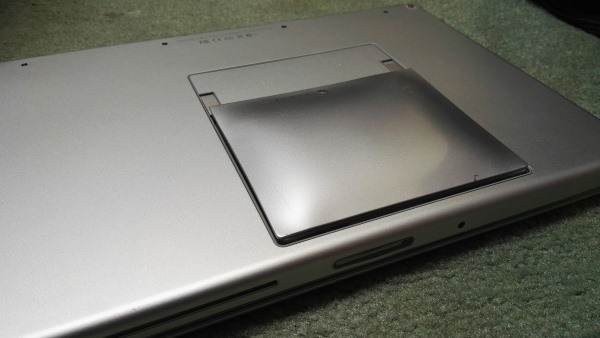
But recently there has been a worrying move towards delivering phones that are sealed units -- if your battery gives out on you, you have no option but to send it back to the manufacturer for a replacement. This takes time and money, but the problem of batteries that can't be replaced by users runs deeper than this. Just look at the image above.
 
OK, OK, that's a photo of a MacBook Pro battery, but it's still relevant. I've had batteries in phones puff up in the same way, thankfully in phones that I have been able to buy replacements for -- just as with the MacBook Pro. This battery swelling is something that, usually, happens very gradually; you tend not to wake up in the morning and discover that it has doubled in size overnight. This glacial creep can make it hard to notice when it's happening, but there will eventually be warning signs.
 
Battery life will almost certainly be impaired. A swelling battery is not a healthy battery, and you'll almost certainly notice a substantial drop in how long the charge lasts. There will probably be other power-related issues such as random restarts and overheating. Leave things for long enough, let the battery swell too much, and you might well notice that the rear cover starts to pop off. At least this is the case with phones whose batteries you can replace yourself.
 
It's a different story for phones that are sold as sealed units. It's not just the iPhone, Samsung's recently announced Galaxy Note 5 and Galaxy S6 Edge+ are also culprits. Because the case is sealed, because the back is screwed on -- or maybe the body is one solid piece of material -- you can't see the battery or the physical effect it might be having on your phone... at least until it is too late. With a phone whose back can pop off, this is exactly what a swelling battery will cause to happen. There's not enough room to continue to swell, so it makes a bit more room by pushing the obstacle out of the way.
 
With a sealed unit this just can't happen. Sure, the rear of the phone could bulge a bit, but it is designed not to move. But that swelling battery's not going to stop growing just because the back's not shifting. Rather than pushing a cover out the way, that puffed-up power pack is going to expand into, and start crushing, anything that's nearby -- circuit board, chips, the screen. That's when your repair bills start to get a lot steeper.
 
This was all prompted by splashing out £46 (around $72) this weekend on a couple of replacement batteries for a pair of Samsung phones. Both handsets are slightly aging, but both fully functional aside from atrocious battery life thanks to worn out batteries. The problem was easily diagnosed -- when battery life started to drop, it was initially put down to just general aging. But when it dropped more and more, it became clear that something more serious was wrong. It was very simple and, more importantly, free to slip off the back, remove the battery and perform a table top spin test (not that this was really necessary thanks to the obvious bloating).
 
It would have been a very different story had the phones' backs not been removable. I would have either had to send them off to be looked at, or take them into a store for repair. Time. Money. Both valuable commodities to me. And paying someone to operate on my phone rather than just being able to buy an aftermarket replacement battery will be the more expensive option in just about every case.
 
Or I may just have put up with it because I couldn't do something about it myself. Left to itself, the swelling battery could have become seriously problematic, potentially exploding or leaking. Without the ability to remove the back and look at my battery, I could have been none the wiser until it was too late. That's why sealed unit phones are bad. That's why users should be able to replace their own batteries.
 
Photo credit: Mark Wilson
 
~ Mark Wilson

8.13.2015

Samsung unveils Galaxy Note 5 and Galaxy S6 Edge+

 
At its Galaxy Unpacked event in NYC, Samsung today took the wraps off two of its most eagerly awaited handsets -- the Galaxy Note 5 and the Galaxy S6 Edge+. Just like Apple with the iPhone, Samsung's phone range is more about evolution than revolution -- but that's not to say there isn't quite a lot to get excited about.
 
Both devices include 4GB of RAM and as with previous generations, the Galaxy Note 5 features Samsung's S-Pen Stylus. The Galaxy S6 Edge+ boasts a larger screen than its predecessor but the Note 5's is the same size as before. So what else is new, and when can you get your hands on one?
 
The screens are the undoubted stars of the show here, but Samsung has made some interesting choices in other areas for the phones. Both are available in 32 and 64GB variants. It seems that 16GB models have now been consigned to the history books, but it would have been good to see a 128GB model to go head to head with the iPhone.
 
The storage limitations are highlighted by the fact that neither the Galaxy Note 5 or Galaxy S6 Edge+ support removable memory cards. Some people will be disappointed to find that the battery in both handsets is not removable, particularly in the case of the Note 5 which sees capacity dropping from the previous version. It is just as well, perhaps, that the battery supports fast charging.
 
Samsung is pitching the Galaxy S6 Edge+ as the phone that delivers the best multimedia experience, while the Note 5 is billed as being "perfect for multi-taskers".
 
The Galaxy Note 5 and Galaxy S6 Edge+ are slated for launch globally in August, but no precise date has been given -- nor do we yet have any word on pricing.


Here are the full specs of the Samsung Galaxy Note 5:
 
SYSTEM Android 5.1 (Lollipop)
DISPLAY 5.7-inch, QHD Super AMOLED (2,560 x 1,440 pixels, 518 ppi)
PROCESSOR Octa core (2.1 GHz Quad + 1.5 GHz Quad), 64 bit, 14 nm process
RAM 4 GB RAM (LPDDR4)
INTERNAL MEMORY 32/64 GB
CONNECTIVITY Wi-Fi 802.11 a/b/g/n/ac, MIMO(2x2), Bluetooth® v 4.2 LE, ANT+, USB 2.0, NFC, Location
CAMERA Rear: 16 MP OIS (F1.9), Front: 5 MP (F1.9)
BATTERY 3,000 mAh (non-removable), fast-charging, wireless charging
DIMENSIONS 153.2 x 76.1 x 7.6mm
WEIGHT 171 g
PRICE TBC
 
 
And the specs for the Samsung Galaxy S6 Edge+:
 
SYSTEM Android 5.1 (Lollipop)
DISPLAY 5.7-inch QHD Super AMOLED, 2560 x 1440 (518 ppi), dual-edge
PROCESSOR Octa core (2.1 GHz Quad + 1.5 GHz Quad), 64 bit, 14 nm process
RAM 4 GB RAM (LPDDR4)
INTERNAL MEMORY 32/64 GB
CONNECTIVITY Wi-Fi 802.11 a/b/g/n/ac, MIMO(2x2), Bluetooth® v 4.2 LE, ANT+, USB 2.0, NFC, Location
CAMERA Rear: 16 MP OIS (F1.9), Front: 5 MP (F1.9)
BATTERY 3,000 mAh (non-removable), fast-charging, wireless charging
DIMENSIONS 154.4 x 75.8 x 6.9mm
WEIGHT 153 g
PRICE TBC
 
~ Mark Wilson

8.06.2015

New Galaxy Note 5 leaked photos quash hopes for microSD slot or removable battery

 
Rendered for the press just a few days ago, and expected out next week, at a no doubt glitzy Unpacked event, Samsung's “next big thing” has been allegedly captured in the flesh for the first time. While it predictably looks awesome, the Note 5 doesn’t appear willing to repair Galaxy S6’s most critical imperfections.
 
No, ladies and gents, we’re afraid external storage expansion isn’t making a comeback on Samsung’s premium iPhone contenders. Nor will you be able to easily pop the trunk of Note 4’s successor, access and replace its glued battery.
 
Droid Life’s hands-on flaunts the Galaxy Note 5 from all angles, and the sealed back cover almost needs no clarification. But the publication’s sources insist the otherwise sizable 3,000 mAh cell is bolted in place, with a screwdriver, a lot of patience and recklessness as the only way in.
 
Meanwhile, we really can’t see where a microSD card slot might be accommodated, as the super-slim sides don’t shelter any digital hoarding-friendly goodies. Both “compromises” are made for noble purposes, though, specifically a robust, unibody type of construction and speedier than ever internal storage.
 
We all know how undependable microSD cards can get, and mixing a sluggish storage option with advanced UFS 2.0 would only lead to system instability. Ergo, it’s probably wiser to offer up to 128GB on-board data depository, plus unlimited cloud space.
 
Back to Note 5’s external appearance, its resemblance to the smaller, non-S Pen-capable GS6 is uncanny, save for a curvier, more ergonomic rear. And a spring-operated stylus opening, obviously, with razor-thin screen bezels also in tow, but unfortunately no USB Type-C connectivity.
 
Overall, this appears will be the Android phablet to beat during the holiday season, Quad HD 5.7-inch display, 4 GB RAM and all.
 
Image credit: Droid Life
 
~ Adrian Diaconescu

4.30.2015

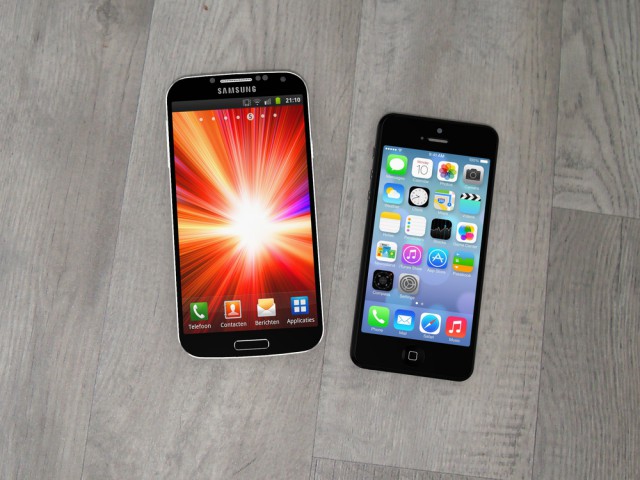
Samsung leads the smartphone market again, leaves Apple behind

 
Something interesting happened in the last quarter of 2014: Apple tied with Samsung on smartphone shipments. Both players moved 74.5 million units, reaching this figure from two opposite directions. The Cupertino, Calif.-based vendor saw its iPhone shipments increase by a whopping 46.07 percent year-over-year, while its South Korean rival dealt with a 13.37 percent decline.
 
But, luckily for Samsung, things changed in the first quarter of 2015. According to Strategy Analytics, its smartphone shipments reached 83.2 million units, while Apple's iPhones shipped in just 61.2 million units. And just like that, Samsung is, once again, back at the top. However, it is not yet in tip-top form.
 
Samsung's shipments actually decreased year-over-year, falling by 6.5 percent from 89 million units in Q1 2014. Its current market share is 24.1 percent, again lower than a year ago when it claimed a more comfortable 31.2 percent of the smartphone market. Sequentially, shipments are up, as Q4 2014 was, alongside Q2 of last year, its weakest of 2014.
 
Strategy Analytics notes that Samsung experienced some issues in "Asia and elsewhere, but its global performance has stabilized sufficiently well". The new Galaxy S6, and Galaxy S6 edge, could help Samsung's numbers in the following quarter, as its flagships are currently in high-demand in markets across the globe.
 
That said, Samsung's still seeing the effect of Apple's flagships, iPhone 6 and iPhone 6 Plus, which continue to sell in droves six months after their release. According to Strategy Analytics, "Apple’s new iPhone 6 portfolio is flying off the shelves in China and the United States, its two biggest markets". In fact, the former is Apple's biggest market now.
 
Year-over-year, iPhone shipments increased by 40.04 percent, rising from 43.7 million units. Apple's market share in Q1 2015 reached 17.7 percent, higher than the 15.3 percent captured a year ago. It is slightly smaller sequentially, but still higher than in any of the first three quarters of last year. In Q4 2014, Apple's market share was 19.6 percent.
 
In third place is Lenovo, combined with Motorola. Its shipments reached 18.8 million units in the first quarter of 2015, deceasing by 4.5 percent year-over-year from 19.7 million units (at the time, however, Motorola wasn't under Lenovo's leadership, so it is not exactly an accurate representation of the duo's performance).
 
Market share is just 5.4 percent, lower than the 6.9 percent a year ago. Its performance decrease sequentially, as in Q4 2014 the duo moved 24.7 million units and claimed 6.5 percent of the market. Strategy Analytics blames pressure in China faced by Lenovo and Motorola's inability to capitalize on its success in the North American and India markets, for the duo's weak results.
 
Total smartphone shipments for the first quarter of 2015 are said to be 345 million units, 21.05 percent higher year-over-year. In Q1 2014, smartphone shipments reached 285 million units, increasing by 33.2 percent year-over-year compared to Q1 2013. Year-over-year growth is obviously slowing down.
 
Photo Credit: Pieter Beens / Shutterstock.com
 
~ Mihaita Bamburic