Cisco Learning Network Store Promotions Page
Showing posts with label Microsoft HoloLens. Show all posts

10.26.2016

Windows 10 'Creator’s Update' arriving next spring, and it's (mostly) all about 3D


At Microsoft’s Windows 10 event in New York, the software giant has lifted the wraps off the next big update of Windows 10, which it’s calling the Creator’s Update.

Yes, we know -- weird name, right? New in this update (among other things) will be a fresh version of Paint, called Paint 3D. This isn’t a minor update of the awful Paint program that most people have ignored for years, but rather a tool that lets you scan objects in the real world, and import them into a 3D environment.

Speaking at the event, Megan Saunders, general manager at Microsoft said "We want to make 3D creation for everyone. It has to be as easy as taking a photo", and from what we saw on stage, that certainly seems true.

A Community panel lets you pull in content created by other users, and creations you make or import, can be viewed in PowerPoint, and in 360 degrees through Microsoft’s Hololens AR headset. At the event, Microsoft also revealed a new app called HoloTour that works with regular VR headsets and HoloLens, and will let users explore locations around the world.

Microsoft is adding 3D support to Word, Excel and PowerPoint over the next year, and says Microsoft Edge will be the first browser to fully embrace 3D -- can you spot the theme here?
You can find out more about Paint 3D in the video below:


And more about 3D in Windows 10 Creator's Update in this new clip.

 
A new Twitch-like option in the Creator's Update will let Xbox owners broadcast their games. This is powered by Beam, which Microsoft acquired in August. The Update also gains faster and easier sharing -- drag and drop content to your favorite people -- and the ability to aggregate multiple communication platforms, such as email, Skype, and SMS.
 
The first builds of  Windows 10 Creator's Update will be made available to Windows Insiders later this week. The update will be available to all in Spring 2017.

~ Wayne Williams
10.07.2015

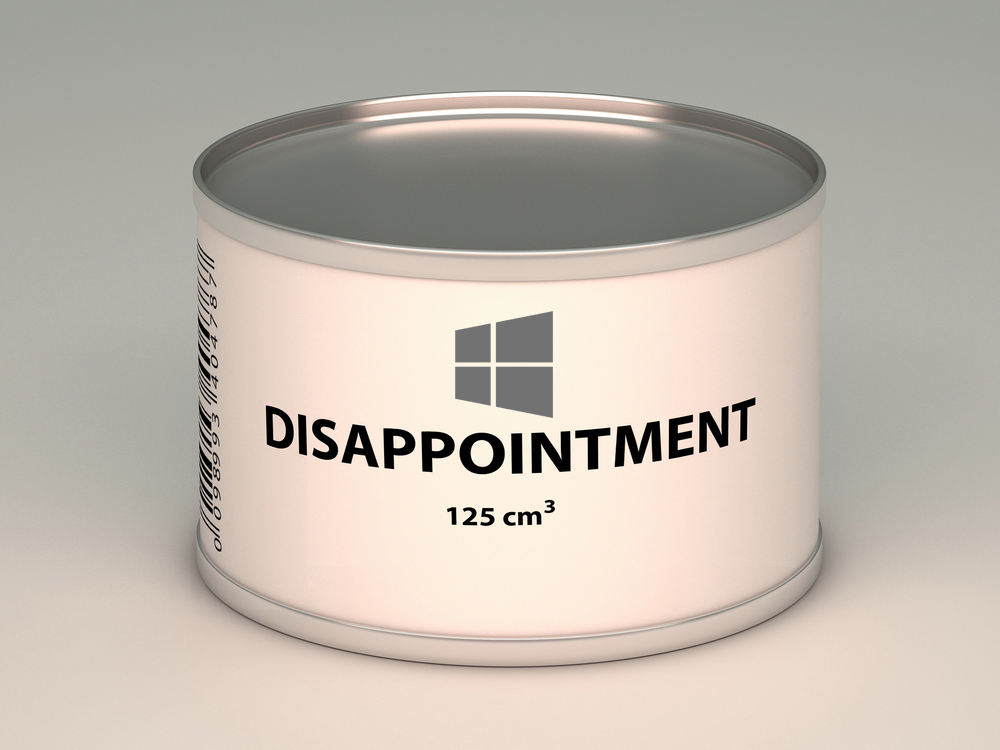
Microsoft's Windows 10 hardware event disappoints

 
"Where’s the beef?" That iconic phrase from the annals of advertising yore is just one of the thoughts that come to mind after viewing the recent Windows 10 "Hardware Event" in New York. Microsoft had an opportunity to really "wow" the industry with something new and innovative. Instead, it served up a re-hash of technologies and trends that have been old news for months now:
 
Surface Pro 4 -- Evolutionary rather than revolutionary, which is a good thing if you’re hawking BMWs and want to keep last year’s customers from feeling cheated, but not so great if you’re trying to showcase true innovation. Performance bump? Modest. Weight reduction? Negligible. Fanless? Only on the lowest-end model, and even then you save very little on weight.
 
In fact, aside from "Windows Hello" support (which is a terrible idea in itself -- think "random airport screening"), there is nothing compelling about the Surface Pro 4. If anything, Microsoft has walked the design back in some areas, like the bezel size (smaller does not always equal better) and the removal of the Start button (the assault on thumb navigation continues). Oh, and wasn’t Surface Pro 4 supposed to get some sort of dynamic bezel resizing technology (the rumor mills also took a hit with this one)? Just meh.
 
Surface Book -- Aside from the stunningly unimaginative name, the Surface Book seems like a device full of superlatives -- just not the ones Microsoft might use: "It’s the fattest Surface ever, heavier than a pair of Surface 3s glued together and almost as ugly".
 
Could Microsoft have possibly made a more unattractive device? Coming from an iPad or even a Surface 3, the Surface Book looks plain clunky. That hinge. Those horrible serrated looking vents. The "muscle" locking mechanism (mixed organic/tech terms just sound "icky"). Surface Book is the "Ikea Coffee Table" of laptops, right down to the "lid" that doesn’t fully close (though that "teardrop" gap looks like a tempting place to try to store the Surface Pen).
 
To be sure, the Surface Book’s specifications are impressive -- for a hybrid device. However, that starting price point of $1499 ensures that only Tesla owners will be buying one. Everyone else will do like Sheldon Cooper and grab a nice, tricked-out Alienware laptop. And maybe an iPad.
 
HoloLens -- Cool demo. But how long before some poor PTSD-addled soul shoots up his local Starbucks because -- according to the Police Report -- he saw "giant alien spiders crawling out of the display case…you know, the one where they keep those stale $6 sandwiches".
 
Lumia Devices -- First, Microsoft should have never let the guy who think’s he’s "too cool for school" give a demo. The shtick was tired and the jokes fell flat. Then there was the clever weaving of CYA language into the presentation ("PC-like experience") so that, when customers realize how limited a solution like Continuum really is, the company will have an out (e.g. no running apps side-by-side in "desktop" mode). But the phones do look nice -- very "retro" of Microsoft to keep the drab Lumia styling of yesteryear alive and well in 2015.
 
Bottom Line: After so much hype, the "Windows 10 Hardware Event" was a huge disappointment. Microsoft lightly tweaked Surface Pro, introduced its obese cousin, and set the stage for either mass shootings or riots from frustrated mobile users (that object whizzing by your head was a Lumia 950XL after the owner realized she couldn’t snap Edge and Word together).
 
Photo credit: shpock/Shutterstock
 
~ Randall C. Kennedy

1.22.2015

Microsoft to give away Windows 10, unveils hologram glasses

An undated handout photo of Microsoft's HoloLens, a holographic lens device that allows users to see three-dimensional renderings of computer-generated images.
Credit: Reuters/Microsoft/Handout
 
(Reuters) - Microsoft Corp (MSFT.O) will give away its upcoming Windows 10 operating system as a free upgrade to users of the most recent versions of Windows and Windows Phone, as the world's largest software company tries to retain customers in the mobile era.
 
The 'free' strategy is a calculated gamble for Microsoft, designed to put Windows in as many devices as possible. The company would then make up for any lost revenue by selling services such as Office over the Internet, or cloud.
 
"It's a necessary evil as CEO Satya Nadella and Microsoft have recognized the 'golden goose' and major revenue opportunities will happen after the upgrades have taken place," said Daniel Ives, an analyst at FBR Capital Markets. 
 
An undated handout illustration of Microsoft's HoloLens, a holographic lens device that allows users to see three-dimensional renderings of computer-generated images.
Credit: REUTERS/Microsoft/Handout
  
"Microsoft needs to lay seeds for its cloud-centric strategy and Windows 10 is the epicenter of that strategy. It's all about making it attractive for the ecosystem to upgrade onto this next-generation platform."
 
The immediate revenue hit is unlikely to be large, as Microsoft gets no more than $500 million of its $20 billion or so annual Windows revenue from upgrades, analysts said. The vast majority of Windows revenue comes from hardware makers installing it on new personal computers and businesses paying for multi-year licenses.
 
Investors were not impressed. Microsoft shares fell 1 percent to $45.91 on Nasdaq shortly before the close.
 
An undated handout illustration of Microsoft's HoloLens, a holographic lens device that allows users to see three-dimensional renderings of computer-generated images.
Credit: REUTERS/Microsoft/Handout
  
The company is expected to say more about the financial effects of the new approach when it reports quarterly earnings next week.
 
Windows 10, expected on the market this autumn, will be available for one year as a free upgrade to users of Windows 7, Windows 8.1 and Windows Phone 8.1, Myerson said.
 
Industry and Wall Street analysts described the move as inevitable.
 
An undated handout illustration of Microsoft's HoloLens, a holographic lens device that allows users to see three-dimensional renderings of computer-generated images.
Credit: REUTERS/Microsoft/Handout
  
Windows only features on roughly 15 percent of computing devices including phones and tablets, and is largely irrelevant for many consumers. It lags Apple Inc (AAPL.O) and Google Inc (GOOGL.O), which regularly update their software systems free for customers.
 
"The way to motivate consumers is to make upgrades transparent and painless - meaning free and low-to-no effort," said Forrester analyst Frank Gillett. "Microsoft had to match the expectation set by the mobile and Web leaders."
 
At an event at its headquarters near Seattle, Microsoft also tried to burnish its flagging reputation for innovation.
 
Microsoft Corp's Ashley Frank talks about Windows 10 at the annual shareholders' meeting in Bellevue, Washington December 3, 2014.
Credit: REUTERS/Jason Redmond
  
Unexpectedly, it unveiled a holographic lens device that allows users to see three-dimensional renderings of computer-generated images. Microsoft HoloLens, which looks like a wireless visor, raises the stakes in the emerging market for virtual and augmented reality, being targeted by Facebook Inc's (FB.O) Oculus and Google's Glass project.
 
The device will be available around the same time as Windows 10 this autumn, a Microsoft executive said.
 
Executives also showed off an Xbox app for games on Windows 10 and a new version of its browser code named 'Spartan,' which lets users make notes on Web pages and share them.
 
Microsoft announced its new Windows 10 operating system in September, billing it as a move to unify all kinds of device users. It skipped Windows 9 altogether, to put some distance between the new system and Windows 8, which confused many users by ditching the start button menu and using a new layout.
 
(Reporting by Bill Rigby; Editing by Jeffrey Benkoe, Andre Grenon and Richard Chang)               

~ Bill Rigby