Cisco Learning Network Store Promotions Page
Showing posts with label Galaxy Alpha. Show all posts

10.31.2014

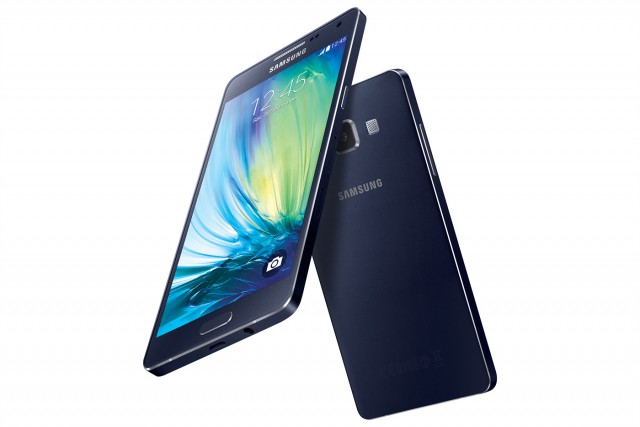
Samsung's new Galaxy A5, A3 smartphones boast very thin metal designs

 
Samsung is slowly moving away from its oft-maligned, all-plastic smartphone designs of the past, in an attempt to convince consumers that it too can make premium-looking and feeling devices. The first smartphone to reveal what the future holds was Galaxy Alpha, announced just a few months ago. Then Galaxy Note 4 came along, stepping things up even further in the high-end segment.
 
And now we see how Samsung's vision will impact its less expensive Galaxy devices, as the company just took the wraps off Galaxy A5 and Galaxy A3 today, two mid-range to low-end smartphones featuring "refined full metal unibody designs" that happen to be very, very thin (for whatever reason): 6.7 and 6.9 mm, respectively.
 
"The Galaxy A5 and A3 offer a beautifully crafted full metal unibody, slim design, superior hardware and the best possible social media experience", says Samsung CEO JK Shin. "These devices make our advanced Galaxy experience even more accessible to young and trend conscious consumers". In fact, Samsung is calling Galaxy A5 and Galaxy A3 its "slimmest smartphones to date", thanks to those low profiles.
 
And when Shin says Galaxy A5 and Galaxy A3 are designed for "young and trend conscious consumers", he means it. Both smartphones have 5 MP front-facing cameras, which should take quality selfies. But they also support 4G LTE connectivity, which means that those selfies should be uploaded in no time to Facebook or Instagram. Here's what Samsung says: "Users are also able to quickly and easily share photos or videos on their favorite social media channels with the device’s fast network speed of LTE Category 4 standard".
 
Both smartphones ship with Super AMOLED displays, a feature that is rarely seen in below-premium Galaxy smartphones (like Galaxy Alpha, Galaxy S5 and Galaxy Note 4). Galaxy A5 has the bigger panel, measuring 5.0 inches, with the higher resolution, of 720 by 1,280. Galaxy A3 makes due with a 4.5-inch screen with a resolution of 540 by 960. There's a similar thing going on inside. Here are the other noteworthy specs:
 
Galaxy A5: 1.2 GHz quad-core processor, 13 MP main camera, 2 GB of RAM, 2,300 mAh battery; 16 GB of internal storage; microSD card slot; Wi-Fi 802.11n; Bluetooth 4.0 LE; NFC (only in the 4G LTE model); Android 4.4 KitKat. It comes in at 139.3 x 69.7 x 6.7 mm and 123 grams.
 
Galaxy A3: 1.2 GHz quad-core processor, 8 MP main camera, 1 GB of RAM, 1,900 mAh battery; 16 GB of internal storage; microSD card slot; Wi-Fi 802.11n; Bluetooth 4.0 LE; NFC (only in the 4G LTE model); Android 4.4 KitKat. It comes in at 130.1 x 65.5 x 6.9 mm and 110.3 grams.
 
As you might have figured out after going through the specs, both will be sold in 4G LTE and HSPA+ versions. And, of course, they will feature Samsung's usual TouchWiz add-ons, like Ultra-Power Saving Mode and Adaptive Display.
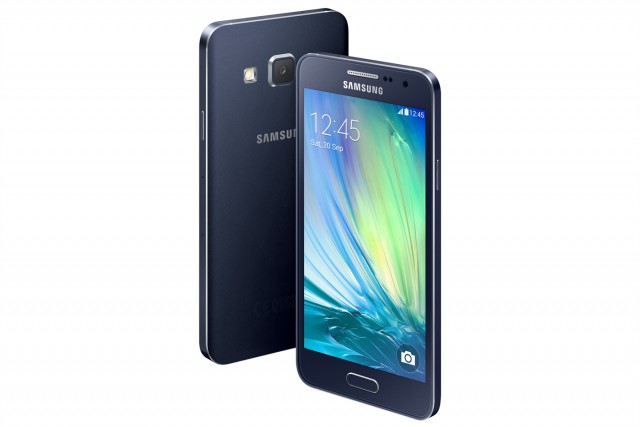
 
 
Galaxy A5 and Galaxy A3 (pictured above) will be sold in Champagne Gold, Light Blue, Midnight Black, Pearl White and Platinum Silver, starting in November; the color names (trickling down from more expensive Galaxys) sound fitting for their upmarket designs.
 
I do have to wonder what Samsung means by "full metal unibody designs", as the backs of the two smartphones look like they are still made out of plastic (polycarbonate). That is not a problem in my eyes, as the design seems to work great for Galaxy Alpha and Galaxy Note 4 where the back cover can be removed to switch the battery and insert a microSD card. But that description may lead people into thinking that it will feature as much metal as an iPhone, which does not appear to be accurate.
 
~ Mihaita Bamburic

9.17.2014

Will the "iPhone effect" hurt Android this time around?


Will the Android ecosystem be hurt or helped by the release of the latest iPhone? Jack Wallen offers an answer in the form of the "iPhone effect."

 
Soon, the latest and greatest iPhone will be released. This annual event draws Election Day-level attention to the world of technology, and with good reason -- Apple knows how to release a product better than any company on the planet. Their marketing team knows how to build consumers into a frenzy and have them salivating at the mouth to get the newest product.
 
I call this the "iPhone effect." It's like a special kind of Christmas for adults. The second the newest iDevice is released, those with the previous years model are antsy to have the new gleaming goodness in their hands.
 
The world of Android really has nothing like that. Why? Simple -- Android devices are released throughout the year. With so many manufacturers producing smartphones and tablets, it's easy to grow numb from the buzz and frenzy akin to Apple's big day.
 
Ultimately, will the latest release hurt Android this time? After all, Apple has completely redesigned the interface and enlarged the iPhone. These radical departures from Apple's norm dig deep into that which is part of the Android ecosystem. Does this mean Android's global dominance might take a hit?
 
The short answer? Here's how I think it will unfold.
  • US: Apple will see a significant rise in market share
  • Global: Apple will see a minor rise in market share
One of the reasons for the rise in both markets has as much to do with Samsung as it does Apple. Samsung's Galaxy S5 was a massive disappointment (both to the market and to users). However, with the upcoming release of the Galaxy Alpha, Samsung is on an opposite design trajectory than Apple. You see, the Alpha is going to be smaller than the S5 and will consist of a metal chassis. Two of the biggest issues with the S4/5 was the size and the cheap feel of the device. So, while Apple increases in size, Samsung is finally learning from its mistake and bringing to light a smaller version of its flagship phone. And if you've seen images of the Galaxy Alpha, the first thing that comes to mind is, surprisingly enough, the iPhone 6 -- a form factor many agree is the ideal size and shape for a smartphone (though, for me, the Moto X is the ideal size and shape).
 
This, of course, makes one wonder -- have iPhone users longed for a larger device? To avoid complete disaster (backlash from those that prefer the smaller size), Apple is rumored to be releasing two iPhone 6 devices with screens of either 4.7 or 5.5 inches. The larger model is actually bigger than the Galaxy S5 (coming in at 5.1) and the new Alpha will be the "ideal" 4.7 inches.
 
So, clearly, Samsung and Apple are taking queues from one another. The Galaxy line of devices is seeing its own iPhone effect and the iPhone line seems to be reaching Galaxy sizes. I firmly believe that when the Alpha is released, there will be quite an uptick in Android purchases from users who are tired of oversized, plastic devices... and this will help balance out the shift from iPhone 6 sales.
 
Yes, there will be a brief spike in the Apple market share (even globally) -- but in the end, it will even back out, and Android will continue to remain the king of mobile across the planet. Truthfully, this "competition" between the two mobile giants benefits everyone involved. As Apple, Samsung, HTC, Motorola, LG, Sony, etc. continue to push the boundaries of mobile technology, everyone wins. Although no other manufacturer of smartphones can claim to have the same effect as the release of an Apple product release, it should be easy to see how the "iPhone effect" positively affects all other manufactures.
 
As surprising as this may sound, I'm excited about the release of the iPhone 6. Why? Because it inspires competition and innovation from all other companies. It means the manufacturers of Android devices will, once again, bring their A-game when releasing their next devices (like the Galaxy Alpha).
 
How do you think the iPhone 6 will affect the Android ecosystem? Share your opinion in the discussion thread below.
 
~ Jack Wallen