I have been using Linux for many years. I consider myself well-versed in
the open-source kernel and its associated operating systems. When I
first started using Linux distributions, the community dreamed of a day
when it would become the dominant force in computing.
Well, arguably, the time is now. You see, Android is now the most popular mobile operating system and ChromeOS is making big strides in education -- both operating systems use the Linux kernel. Also, Unix-like operating systems power 66 percent of the web (47 percent
of which is Linux). However, Linux is not perfect and is still trailing
on the desktop to Microsoft. Below are what I view as the top five
problems with Linux.
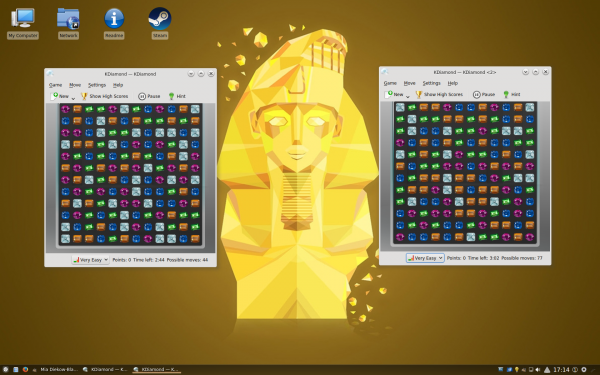
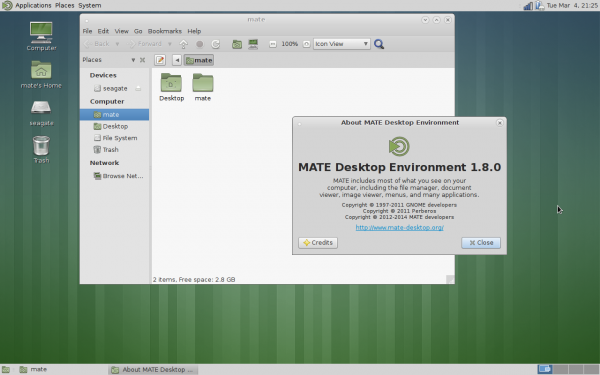
5. Different desktop managers lead to a fragmented experience
I am a big fan of the Gnome desktop environment and conversely I dislike
KDE (but I do respect it). Unfortunately, in the Linux community, this
story is all too common. It equates to the old Chevy vs. Ford, Coke vs.
Pepsi and Xbox vs. PlayStation debates. However, with Linux, there is
also XFCE, Unity, Cinnamon, etc. -- all of which have associated
"fan-boys". In other words, the community is vastly divided by tribal
identity.
While many may point to the freedom of user-interface choice as a
positive (and it can be), I would also argue that it is a negative. You
see, from a trouble-shooting perspective, it is almost impossible to
direct a Linux user over the phone or instant-messenger by just knowing
their distribution. If a user seeking help says they are on Ubuntu, you
cannot be sure that they are on Unity -- they may be on KDE, Gnome or
something else which ultimately can lead to confusion.
A lack of familiarity and shared experiences fragments users since they
do not have a shared rallying point. A screenshot of an OS X or Windows
desktop is immediately recognizable; the countless Linux desktops? Not
so much.
4. Too many package managers makes Linux hard to learn and master
Many Linux newbies start with Ubuntu. This should not take away from
Ubuntu; it is a testament to its smart design and ease of use. In the
terminal or on the command-line, these users will learn the apt package
manager commands, as that is what Ubuntu uses. Sadly, these new Linux
users will think the apt package manager is the
only package
manager. There are many other managers such as YUM and Pacman. These
package managers use entirely different commands which can be confusing.
For the most part, that is fine if they never stray from Ubuntu.
However, if they do stray, they will be in for a rude awakening and
frustration when the commands they know and love no longer work. How can
a user master Linux and become an expert when an unfamiliar package
manager can cause a beginner-like regression?
3. Lack of software
This is a sore subject for many, as Linux-purists and loyalist will
eagerly point you to wonderful alternatives that can be acceptable. Need
Adobe Photoshop? Use Gimp. Need Microsoft Office? Use LibreOffice. For
basic users, these alternatives may work (and work well). However, true
professionals cannot trust their careers and reputations to alternative
software. Open-source ideology be damned, Microsoft Office
will create more compatible files and lead to a more successful employee.
While Linux distributions offer wonderful photo-managing and editing,
video-editing is poor to non-existent. There is no way around it -- to
properly edit a video and create something professional, you must use
Windows or Mac.
A good example of software woe is, to protect my father from malware, I
built him a computer using Linux Mint. I figured, since he lives in the
browser, a Linux desktop with Google Chrome would be ideal and safe. For
a while, this worked like a dream. However, one day his printer broke
so he had to go to the store to buy another.
He wanted a wireless one so he could put the printer in another room. Of
course, the HP setup CD-ROM did not support Linux and setting up a
networked printer manually was not something he knew how to do. This
lead to headaches and disappointment and in the end he had to return the
printer (I later installed Windows 7 at his request and installed the
printer for him).
Overall, there are no true killer Linux applications that a Windows user
would lust over. However, conversely, Linux users have plenty to be
envious of -- Microsoft Office, Adobe Photoshop, Netflix support and
much more.
2. Hardware compatibility
Linux has come a long way regarding hardware compatibility. In fact, I
would say that Linux now offers a better out-of-the-box experience than
Windows or Mac for basic hardware detection. However, out-of-the-box is
not the end-all-be-all. Hardware will be released after that kernel
release and some accessory hardware will not have the needed software to
interface.
When I bought my first Nexus phone, the Galaxy Nexus, I was in pure
Android heaven. However, that device did away with USB Mass Storage and
opted instead for MTP. Sadly, this caused the device not to interface
with Linux properly. It was not until much later that lengthy and
convoluted instructions were posted on the internet that enabled flaky
performance at best. It is only very recently that MTP support has
started working out of the box.
Another example happened to a friend of mine who is in the Army and
purchased a Garmin GPS running watch. After running and working out, you
can connect the watch to a computer to upload the data. Unfortunately,
the watch was not recognized by Linux (Ubuntu 13.04) and even if it had
been, there was no Garmin software for it to interface with.
Unfortunately, I had to set up a dual boot with Windows; an embarrassing
moment since I was the one who got him started on Linux.
1. Linus Torvalds is mortal
Linus Torvalds, the founder of the Linux kernel is a remarkable man.
However, his intelligence and prowess is rivaled by his outlandish and
controversial behavior -- hurling profanities at Nvidia and insulting
kernel developers are two examples that come to mind. Ultimately, it is
his project and he is the keeper of the kernel; he maintains it. The
problem is, Linus will not live forever and his death can cause grave
consequences. You see, once Mr. Torvalds is no longer living, a new top
kernel maintainer and protector must be named. This can potentially
cause a schism in the project or even worse -- lead to its demise.
Linus Torvalds is both a gift and a curse for the Linux community.
Obviously, the entire thing would not exist without him. However,
developers and users only tolerate his behavior as he is the father of
the creation; he is not often second-guessed (those that do will feel
his wrath). Even if a capable successor is named, their intentions and
decisions will always be questioned. Eventually, the entire project
could be forked into irrelevance.
Conclusion
Despite these five problems, Fedora will continue to be my main
operating system at home on my desktop; I can personally get by without
Windows or Mac. However, I still maintain Windows and Hackintosh
installs just in case.
What about you? Can you get by with Linux exclusively? Do you agree with my problems list? Tell me in the comments.
~ Brian Fagioli