Cisco Learning Network Store Promotions Page
Showing posts with label iPad Air. Show all posts

8.08.2015

Apple Pay Less Secure Than EMV

A Tampa, Fla.-based dispute mitigation company, eConsumerServices, is warning consumers of a false sense of security associated with the mobile payment system Apple Pay. The company asserted that EMV or “chip and pin” are the most secure payment methods out there, not Apple Pay.
 
“Apple Pay is vulnerable to fraud due to the fact that someone could steal a credit card, enter it into a phone and then use the phone without any identification to purchase Apple merchandise,” Grant Cardone, CEO of eConsumerServices, said. “Think thousands of dollars worth of merchandise stolen at the blink of an eye. When the cardholder goes to dispute the fraudulent activity, Apple loses the most.”
 
Apple Pay is a mobile payment and digital wallet service that lets users make payments using iPhone 6, iPhone 6 Plus, Apple Watch-compatible devices (iPhone 5 and later models), iPad Air 2 and iPad Mini 3. Apple Pay does not require Apple-specific contactless payment terminals and works with Visa's PayWave, MasterCard's PayPass and American Express' ExpressPay terminals.
 
With Apple Pay technology, consumers can hold their phones near card readers to enable transactions using near field communication chips embedded in compatible Apple devices. By using Apple’s Touch ID sensor, consumers are no longer required to enter a PIN to verify their identity.
 
When a consumer sets up Apple Pay, the financial institution associated with his or her payment card must verify that the card is compatible with Apple Pay. With each Apple Pay transaction, Apple generates the equivalent of a new credit card number, and the merchant never sees the consumer's information.
 
“Until there is a database validating every single cardholder's fingerprint and digital identity, EMV will outpace Apple Pay in terms of security,” Cardone said. “With EMV, buying patterns and spending habits are analyzed in a split second in order to detect suspicious activity.”
 
Consumers do have recourse if a fraudulent purchase is made using their Apple Pay account – they may file a chargeback.
 
“Chargebacks can be a double edged sword,” Cardone explained, however. “Although filing a chargeback looks like a quick and effective solution to the problem of a fraudulent charge, it could ultimately harm the consumer in the long run.”
 
One industry analyst suggested that as many as 6% of Apple Pay transactions were completed using stolen credit card numbers.
 
“The credit card data is not stolen from Apple Pay; credit card data stolen from other channels is loaded into unauthorized Apple devices for these fraudulent transactions,” Amit Sethi, principal consultant at the Dulles, Va.-based security firm Cigital, said. “The problem generally lies with some banks that do not adequately verify who is loading a credit card into Apple Pay. Apple Pay does provide attackers with another mechanism with which they can use stolen credit card data – which is what we’re seeing with the 6% of Apple Pay transactions made with stolen credit cards.”
 
~ Roy Urrico

10.17.2014

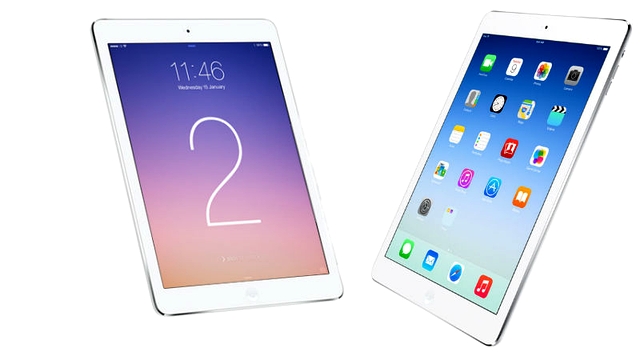
iPad Air 2 vs iPad Air: What's the difference?

 
Apple has released the much-anticipated iPad Air 2, updating its beloved iPad Air with an all-new look and beefed-up specs.
 
But how does the iPad Air 2 compare against its insanely successful predecessor, the iPad Air? Let's break down the specs and take a look.
 
Display
  
Ok, on paper, there is really very little in the way of resolution improvements for the new iPad Air 2. It has exactly the same 2048 x 1536 pixel resolution as its predecessor, the same 264ppi count, and the same Retina display.
 
But, that's not to say that Apple hasn't innovated. For starters, the iPad Air 2's screen has been imbued with an anti-reflective coating that claims to reduce reflections by 56 percent.
 
More impressively, however, is the fact that despite the fact that this new tablet is an eye-watering 18 percent thinner than the first generation iPad Air (more on that below,) its managed to maintain the same quality display. That's because it has a laminated screen, with an optically bonded touch sensor, LCD and glass -- that means no air gaps and a lot more room.
 
Camera
 
Apple has bumped up the camera specs on the iPad Air 2, from 5 to 8 megapixels, with a whole host of image optimization tools. If you were hoping for a higher resolution selfie-snapper, though, you're out of luck. Apple has stuck with its proprietary FaceTime camera, at 1.2-megapixels -- though let's remember megapixels aren't everything in this race.
 
It's a big bump up though from the 5-megapixel offering of the previous generation iPad Air. Photos on the new tablet are, in a word, crisp. Tablet photography has famously lagged behind its smartphone cousin. Could the iPad Air 2 be the one to even out the deficit?
 
Size & weight
 
Apple has made the iPad Air 2 even thinner than its extremely svelte predecessor. At 6.1mm thick, the iPad Air 2 is definitely one of the thinnest tablets on the market. Even though both generations sport the same 9.7in screen, the iPad Air 2 measures just 6.1mm to the old one's 7.5mm.
 
That's a big difference, and makes the Apple's new slate one of the most elegant on the market. It's also a lot lighter, weighing just 437g to the first iPad Air's 469g.
 
Under the hood
 
Apple has brought the beef with its new A8X processor, specially designed for the new iPad Air 2. This is meant to make the iPad Air 2 40 percent faster than its predecessor, which wasn't a sluggish machine to begin with.
 
Verdict
 
Thinner, lighter, and... gold-er, the new Apple iPad Air 2 is a worthy step up from its predecessor. Not only that, but it matches the original iPad Air in price, meaning it's also one of the most competitive Apple slates we've seen.
 
With added features like the long-awaited TouchID, the second generation iPad Air is bound to be a crowd-pleaser that ties in with a rapidly expanding Apple ecosystem.
 
 
Published under license from ITProPortal.com, a Net Communities Ltd Publication. All rights reserved.
 
~ Team ITPP

10.15.2014

Why I'm cashing in my iPad Air today

Summary: Another year, another round of tablet upgrades.
 
 
October cometh, and with that is the latest round of iPad upgrades. We don't know for sure what will be in the next version, although I took a stab at it around this time last year, so we'll find out in very short order whether I came close or not with my predictions.
 
When I heard just before I left on my vacation to Mexico last week that Apple was going to have an iPad event on the 16th, I immediately logged into Amazon Trade-In and put my iPad Air 128GB up for cash. They offered me a cool $407.
 
Gazelle and a few other companies do the same thing, but I find that Amazon is usually the best way to go, as their offers tend to be more generous and I spend a lot of money with them as a Prime customer anyway, so it doesn't matter much to me that it is for store credit.
 
If you decided that you were going to do the same thing today, assuming your device is in pristine, "like new" condition, you'd get $361. So in the course of a week, right after it was known a new version was going to be announced, the value of a used iPad Air depreciated $47.
 
My device of course has always lived in an OtterBox or some other heavy-duty protective case, so it's perfect. I've kept the original packaging, cable, and charger, so I expect that Amazon will give me the full $407. I sent it off via UPS today.
 
I am officially iPad-free, at least temporarily. My Surface 2 and Surface Pro will have to hold me over for a bit, and my iPhone 6 can fill the app gap.
 
Keep in mind that the iPad Air 128GB Wi-Fi was $799.00 brand new, so even with my $407.00 store credit offer from Amazon, that's a net loss of $392.00, or the equivalent of leasing an iPad at $32.66 a month over the course of a year.
 
It sounds nutty, but I do this every single year. Why? Because it's better than the device becoming absolutely worthless for current-generation apps within 2 or 3 years if I were to keep it.
 
Last year, I traded in my iPad 4th Generation 64GB for $387.50. And the year before that, I got $575.00 for my 3rd Generation 64GB.
 
See a pattern here? There's more and more iPads on the secondary market and thus the value of the current model depreciates more and more the same time every year.
 
I did actually consider keeping the current iPad Air and giving it to my wife, but she rebuffed my advances, preferring her Windows Phone and her touchscreen laptop.
 
Why not keep my iPads for as long as possible? Sure, plenty of people do that. They hand them down to their kids, maybe they don't need the latest and greatest stuff. But I'm a technology writer and I need to keep up with this junk, and I can easily make up the price of a new one with a few articles covering accessories and the like.
 
Still, it's not just keeping up with the latest and greatest. I bought the iPad Air, but I did not... love the thing.
 
I used it a lot, sure. I used it every day. I played games on it constantly. But it seemed to me beyond the basic form factor changes and the usual processor rev, the iPad Air was not a massive improvement over the iPad 4th Generation.
 
We did not get a fundamental display improvement over the 4th Generation with the iPad Air. We did not get magnetic induction charging. We did not get Touch ID. And frankly the stereo sound output on the iPad still kind of bites compared to some of its competitors. 
 
Now, if you waited two generations, maybe three generations until you upgraded, you might have noticed a big difference. But for those of us lunatics that need to have the latest model every year, the iPad Air was a bit of a letdown.
 
Sure, you could argue the move towards a 64-bit CPU and a discrete motion sensor processor is a big deal, but I actually haven't noticed tangible benefits of 64-bit processing yet, particularly with business applications like Microsoft Office or Apple iWork.
 
There were only a few games that I played over the course of that last year that I could have said that they worked fundamentally better than on the previous device. Perhaps they had graphic enhancements I wasn't able to examine side-by-side with the old model.
 
So maybe I'm getting a bit jaded.
 
You could also argue how much thinner and lighter the device was over previous versions. That's fine and good until you throw it in an OtterBox that adds an extra pound of weight to protect it from getting damaged, considering how fragile a device it is.
 
You know what I really want in the new model? Other than not making it out of eggshells and potato chips so I don't have to put armor plating on it? Besides adding inductive charging and Touch ID?
 
A much larger screen, like the rumored iPad Pro is supposed to have.
 
I'm getting older, I just got progressive lenses and I'm tired of looking at little screens with tiny fonts. I want 4K resolution with an active stylus so I can draw hyper-realistic paintings of my poodles and actually read something in the Kindle app without squinting.
 
I used to think it was enough, and I was really impressed with it when the iPad 3 came out, but 9.7" and 2560 pixels wide at 267ppi doesn't cut it anymore. My glasses prescription just went up over 2 diopters. I want in excess of 400ppi on a 13" display. Is that too much to ask?
 
Tank, I need business intelligence dashboards! LOTS OF DASHBOARDS!
 
Although it's not a hard requirement, what I would like to see from Apple is a heterogeneous multi-core SoC using big.LITTLE ARM architecture so the device conserves battery for apps that don't need all the horsepower, so we can get closer to 20 hours of battery life out of the tablet.
 
Of course, instead we'll probably get some souped-up version of the A8 with some better GPU than what the iPhone 6 uses, so I doubt it.
 
And I'd like some more RAM, please. 2GB would not be bad, it would beat the 1GB on the Air, but 4GB would be so, so much better. I mean how many times have you crashed an app on iOS because of a resource deficit?
 
Oh well. At least I have some more spending money now for whatever comes next.
 
Have you cashed in your iPad yet, hoping the new model will be better? Talk Back and Let Me Know. 
 
~ Jason Perlow 

12.18.2013

I love Google, so I bought an iPad Air

 
Despite their similarities, Android always seemed to exist to be the opposite of iOS. In other words, if Apple's mobile OS was popular culture, Google was a counter-culture. In the earlier days, Android had copy and paste, removable batteries, expandable memory, the ability to tinker, but many of those differences are virtually gone -- through Apple's additions and Google's subtractions. It was because of those differences, that I entered into the Google ecosystem with Android -- I have been rather happy. Lately however, I have been a bit unhappy with the direction of Android. Locked bootloaders, lack of SD card slots, non-accessible batteries. Sure, these things are technically not a part of the Android OS, but they are a part of the overall experience. While iOS doesn't offer these things either, at least Apple was upfront about that from the start.
 
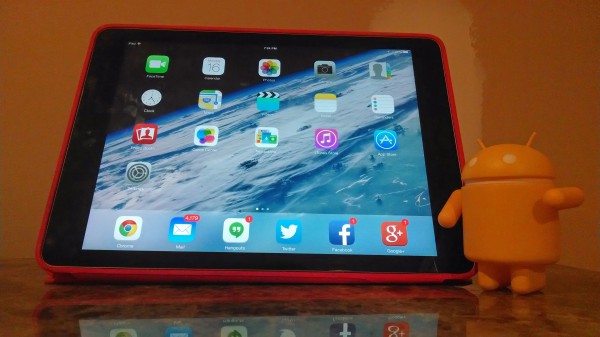
When Apple announced the svelte, yet powerful iPad Air, I was immediately in love. The dark holo theme of Android is just utterly depressing. Conversely, the iPad Air is bright and beautiful, thanks to iOS 7. My problem though, was that I was deeply entrenched in Google's world -- I was worried about moving to a competitor's platform. I love Google services like Gmail, Google Maps, Chrome and YouTube. Quite frankly, I cannot live without those things. Despite these fears, I bought an iPad Air and couldn't be happier. Not only is the build quality better than any Android tablet, the overall experience is better thanks to the superior UI. Not to mention, all of my desired Google apps are on iOS and they look and work better on Apple's operating system too.
 
Google+ for instance is much smoother and offers colorful bars at the top when refreshing. There are many style cues that make you think that Google app developers prefer Apple's platform. I even discovered a beautiful app called "YouTube Capture" that is not even found on Android. It is a wonderfully useful app for vloggers as you can record and edit YouTube video on the go. Why this is not on Android, I do not know -- it is mind boggling.
 
While Safari looks better than Chrome (personal preference), I chose to make Google's browser my default. It simply makes things easier, as I can sync my bookmarks, passwords and settings across Windows and Android too. When it came time to message my friends and coworkers, I found that Hangouts was available too. It works just as well as on Android.
 
Amazingly, Google Now is even here. By installing the Google Search app, I can access the same card-based system as on Google's operating system. This also felt much smoother on iOS. All of my sports scores, weather and traffic updates were as to be expected.
 
Of course, the iPad now comes with mobile versions of Apple's premium apps for free too. While Google started offering the functional Quickoffice on Android for free, it is no match for the premium experience of iLife -- Pages, Numbers and Keynote. These apps were previously $10 each, so to get them for free is an amazing value. Also available for free is iLife, which includes iPhoto, iMovie and Garageband.
 
So, the question for Android users is, what is the point? If you can use iOS and have access to both Apple's and Google's apps, why not make the switch? In other words, why not have the best of both worlds? I love my new iPad and it is the best Google experience on the market. If the iPhone 6 has a bigger screen, I may have to switch my smartphone allegiance too.
 
~ Brian Fagioli

11.27.2013

Video: Microsoft, Nokia both fire shots at iPad Air in new TV ads

In addition to its anti-Google Scroogled campaign, Microsoft has an anti-iPad ad propaganda in place as well, with a couple of new ads highlighting the benefits of using a Surface 2 tablet instead of an Apple tablet. In similar fashion, Nokia has released its own TV ad in which it mocks Apple’s iPad Air while comparing it to its Lumia 2520 Windows 8 tablet.
 
The two new Surface 2 ads are less than a minute long each, and describe two activities that are supposed to be better – cooking and family device sharing – when using Microsoft’s new tablet instead of an iPad air. According to the company, following recipes in the kitchen is easily done on the Surface 2, which has a stand and can be controlled using gestures, unlike the iPad.
 

When it comes to device sharing, the Surface 2 is superior to the iPad air according to Microsoft because it offers support for multi-user accounts that can be customized in terms of appearance and apps, and lets parents keep track of their children’s web activity.
 

In turn, Nokia argues in its short new TV ad (via TUAW) that the Lumia 2520 is better than the highly coveted iPad Air because it has a keyboard and a stand, it offers a longer battery life, and it doesn’t requires users to carry around a laptop for when they need to be more productive. The Lumia 2520 is the right tablet to buy in Nokia’s opinion also because it comes with Microsoft Office preloaded.
 
Unsurprisingly, the Microsoft and Nokia ads basically tell the same story, that a Windows-based tablet is better suited to regular users for everyday computing needs than an iPad. After all, Microsoft did agree to purchase Nokia’s devices and services division in a deal valued at more than $7 billion.
 
~

10.23.2013

Apple unveils iPad Air, new Macs for holidays


Apple makes ripple, not splash (2:21)
 
Oct. 22 - Apple unveiled its new lineup of products for the holidays - including a new slimmer and faster tablet called the iPad Air. 
 
~ Bobbi Rebell

(Reuters) - Apple Inc on Tuesday offered free upgrades for life on its operating system and business software, and unveiled thinner iPads and faster Mac computers ahead of a competitive holiday shopping season.

The debut of the one-pound iPad Air and MacBook Pro with sharper 'retina' display repeats a pattern of recent launches with improvements in existing lines rather than totally new products, and Apple shares fell 0.3 percent for the day. 
 
Apple said upgrades to its Mac operating system and iWork software suite, which compete with Microsoft Corp's Excel, Word and other applications, will now be offered for all MacBooks and Mac computers.
 
That brings Apple's model of free system software upgrades on phones and tablets to the computer market, where Apple is still the underdog to Microsoft's Windows.
 
Apple may be trying to safeguard its grip on mobile software as Microsoft revs up its Windows-powered Surface Pro, which runs applications, such as Word or Excel, that are the standard for business customers, analysts said.
 
"We are turning the industry on its ear, but this is not why we're doing it," Apple Chief Executive Tim Cook told media and technology executives at San Francisco's Yerba Buena Center.
 
"We want our customers to have our latest software."
 
The market is awash in inexpensive tablets running Google Inc's Android software, but the company may be focused on fending off a threat from the high end.
 
"In the tablet PC market, they do think Microsoft is a bigger threat than Android," said Gartner analyst Carolina Milanesi. "The iPad Air will compete with Surface Pro, not some rinky-dink Android tablet."
 
Gartner estimates that Apple's share of the global tablet market will slip to 47.2 percent in 2014, with Android-based tablets just overtaking Apple's this year. The IT research outfit expects Microsoft tablets to grab 3.4 percent of the market this year, double the 1.7 percent forecast for 2013.
 
PRESSURE
 
Microsoft gets 65 percent of its Windows revenue, which totaled $19.2 billion last fiscal year, from PC manufacturers which put the system on its machines, and 35 percent from other sources, chiefly people and businesses buying its software separately to install themselves.
 
The latest version of Windows, when bought separately to install on an old computer, starts at $120 for a home version and goes up to $200 for the full ‘Pro' version. The latest Windows 8.1 upgrade was free for customers running Windows 8.
 
Apple's product launches on Tuesday were evolutionary, with the new iPads equipped with faster processors and better screens. Cook, at an industry conference in May, had hinted at "several more game changers" from Apple which could include wearable computers, but had not given a time frame.
 
"As always with Apple, expectations on systematic breakthrough hardware innovations are irrational," said Forrester analyst Thomas Husson said. "Apple is good at inventing new products and at maximizing profitability of its product range over time through software innovations and clever marketing."
 
Apple's new iPad Air - its full-size tablet - is about 20 percent thinner than the previous generation of tablets, weighs one pound and starts at $499. It will go on sale on November 1.
 
The iPad mini now has a "retina" high-resolution screen and starts at $399, compared with $329 for the previous mini model. The two new tablets would face stiff competition, with Microsoft, Nokia and Amazon.com Inc all plugging rival devices in coming months.
 
Apple also showed off a new Mac Pro, a premium and high-powered cylindrical desktop computer that will be assembled in United States. It had shown the computer at a previously event.
 
For the first, Apple will launch the new iPads simultaneously in the United States and China, its biggest market, which is also a key growth region.
 
Apple, which jumpstarted the tablet computing market in 2010 with the first iPad, has already come under increasing pressure from cheaper devices ranging from Amazon's Kindle Fire to Samsung Electronics Co Ltd's Note.
 
But while Apple is ceding market share to rivals, its superior library of apps and content should safeguard its lead for years to come, analysts say.
 
Longer term however, investors hope to see real device innovation from a company that has not unveiled a new breakthrough product in years.
 
Cook on Tuesday dismissed the competition as directionless. 
 
"Our competition is different: they're confused," he said. "Now they're trying to make PCs into tablets and tablets into PCs. Who knows what they'll do next?"
 
"We have a very clear direction and a very ambitious goal. We still believe deeply in this category and we're not slowing down on our innovation."
 
~ Poornima Gupta and Edwin Chan