Cisco Learning Network Store Promotions Page
Showing posts with label iPhone 5S. Show all posts

10.09.2014

Apple sends out invites for October 16 media event, new iPads and Macs expected

 
Apple’s next media event is now official. The company has issued media invites to an event scheduled to take place on Thursday, October 16, at the Town Hall auditorium on Apple’s campus in Cupertino, California, which is the same venue that was used to debut last year’s iPhone 5s and 5c.
 
The tagline on the invitation reads, “It’s been way too long” which doesn’t immediately give any hints as to what we might see.
 
Most expect to see Apple unveil updates to its iPad and iPad mini line as well as new Macs. Furthermore, Tim Cook and company will likely launch the public release of OS X Yosemite.
 
Specifically, we’re likely to see an iPad Air that is thinner than the current generation with an A8 chip inside and support for Touch ID. The same can probably be said about the next generation iPad mini and if rumors prove accurate, at least one of the new iPads may see a new gold color option.
 
As for the rumored 12.9-inch iPad that would compete with Microsoft’s Surface Pro 3, there’s no indication that it’ll show but you never know.
 
The general consensus for Macs is that we may see the first Retina display on a desktop in the form of a new iMac.
 
Given the smaller venue, the event is likely to be a more exclusive affair than the massive unveiling that delivered the iPhone 6, iPhone 6 Plus and Apple Watch last month. The 2013 event wasn’t live streamed over the Internet; no word yet if Apple will have a live stream this year.
 
~ Shawn Knight

9.29.2014

Touch ID on iPhone 6: Still hackable

 
Apple's recently released iPhone 6 is susceptible to the same fingerprint forging attack as the iPhone 5s, according to the latest security research.
 
Mark Rogers, principal security researcher for mobile security firm Lookout, used techniques which are well-known to police officials and prototypers to access the device.
 
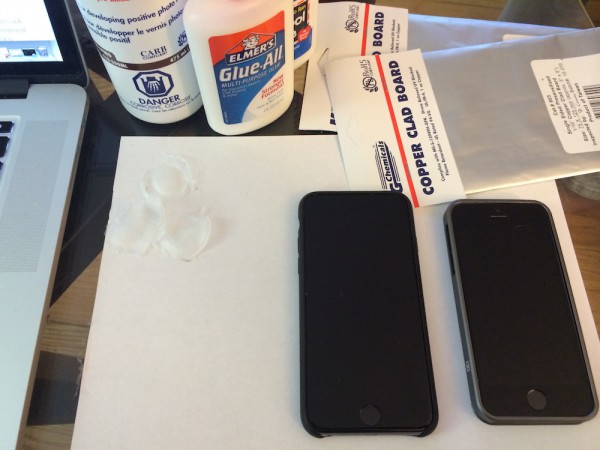
The process involves lifting latent prints from the iPhone before creating a mould using a custom circuit-board kit. Then using glue, sometimes mixed with glycerol, Rogers was able to create a replica print that allowed him to trick the Touch ID sensor.
 
However, his experiments did suggest that Apple had improved the sensor, as it rejected fewer legitimate prints and slightly more fake ones than the iPhone 5s version, with Rogers suggesting that it wasn't easy to trick the iPhone 6's security systems.
 
"The process with both of them is exactly the same", he said. "I would not call it a walk in the park, because it took me roughly eight hours to do. Yet someone who is not doing this for research could probably complete the process in two or three hours."
 
The security flaw highlights the major weakness of Touch ID, namely that the information required to access the phone, the user's fingerprints, are left all over the device. With that being said, the fact that Apple limits the number of attempts to five means that that the feature is relatively secure.
 
"I was aided by the fact that I had unlimited attempts, and it took quite a few attempts to get any usable print", Rogers said. "It is not something that I would expect a street criminal to use".
 
However, with the company set to push its own payment service, Apple Pay, stealing an iPhone may become a far more lucrative proposition for thieves, which could cause more users to scrutinize the level of protection offered by Touch ID.
 
"We are talking about putting a lot of financial transactions though the iPhone, and that money will incentivize criminals to refine the process, and that could open up a scenario where there is risk to the consumers", Rogers added.
 
Published under license from ITProPortal.com, a Net Communities Ltd Publication. All rights reserved.
 
~ Barclay Ballard

8.05.2014

Apple to hold iPhone-related media event on September 9: Re/code

The exploded view of the home button which doubles as a fingerprint sensor is seen on an image of the new iPhone 5S at Apple Inc's media event in Cupertino, California September 10, 2013.
Credit: Reuters/Stephen Lam
 
(Reuters) - Apple Inc (AAPL.O) has scheduled a "big" media event related to the iPhone for September 9, technology news website Re/code said, without citing sources.  
 
(on.recode.net/1qRPvKH)
 
Apple usually launches the newest version of its iPhone in September.
 
The company did not immediately return emails seeking comment.
 
Analysts and media reports have said Apple may launch two iPhone models with 4.7 and 5.5 inch screens this year to compete with Samsung Electronics Co Ltd's (005930.KS) popular Galaxy Note 3 phablets, which have a 5.7 inch display.
 
Apple's current iPhone models, the 5S and 5C, have a 4 inch display panel.
 
The company has asked suppliers to manufacture 70-80 million units of the new large-screen iPhones by the end of the year, the Wall Street Journal reported in July.
 
Apple's shares were down 0.8 percent at $94.81 in late afternoon trading on Tuesday.       
 
~ Soham Chatterjee

7.28.2014

Apple iPhones allow extraction of deep personal data, researcher finds

The exploded view of the home button which doubles as a fingerprint sensor is seen on an image of the new iPhone 5S at Apple Inc's media event in Cupertino, California September 10, 2013.
Credit: Reuters/Stephen Lam
 
(Reuters) - Personal data including text messages, contact lists and photos can be extracted from iPhones through previously unpublicized techniques by Apple Inc employees, the company acknowledged this week.

The same techniques to circumvent backup encryption could be used by law enforcement or others with access to the "trusted" computers to which the devices have been connected, according to the security expert who prompted Apple's admission.
 
In a conference presentation this week, researcher Jonathan Zdziarski showed how the services take a surprising amount of data for what Apple now says are diagnostic services meant to help engineers.
 
Users are not notified that the services are running and cannot disable them, Zdziarski said. There is no way for iPhone users to know what computers have previously been granted trusted status via the backup process or block future connections.
 
“There’s no way to `unpair' except to wipe your phone,” he said in a video demonstration he posted Friday showing what he could extract from an unlocked phone through a trusted computer.
 
As word spread about Zdziarski’s initial presentation at the Hackers on Planet Earth conference, some cited it as evidence of Apple collaboration with the National Security Agency.
 
Apple denied creating any “back doors” for intelligence agencies.
 
“We have designed iOS so that its diagnostic functions do not compromise user privacy and security, but still provides needed information to enterprise IT departments, developers and Apple for troubleshooting technical issues,” Apple said. “A user must have unlocked their device and agreed to trust another computer before that computer is able to access this limited diagnostic data.”
 
But Apple also posted its first descriptions of the tools on its own website, and Zdziarski and others who spoke with the company said they expected it to make at least some changes to the programs in the future.
 
Zdziarski said he did not believe that the services were aimed at spies. But he said that they extracted much more information than was needed, with too little disclosure.
 
Security industry analyst Rich Mogull said Zdziarski’s work was overhyped but technically accurate.
 
“They are collecting more than they should be, and the only way to get it is to compromise security,” said Mogull, chief executive officer of Securosis.
 
Mogull also agreed with Zdziarski that since the tools exist, law enforcement will use them in cases where the desktop computers of targeted individuals can be confiscated, hacked or reached via their employers.
 
“They’ll take advantage of every legal tool that they have and maybe more,” Mogull said of government investigators. 
 
Asked if Apple had used the tools to fulfill law enforcement requests, Apple did not immediately respond.
 
For all the attention to the previously unknown tools and other occasional bugs, Apple’s phones are widely considered more secure than those using Google Inc's rival Android operating system, in part because Google does not have the power to send software fixes directly to those devices.              
 
~ Joseph Menn

12.02.2013

iPhone 5c is a flop? According to one report, it’s just what Apple needed

iPhone 5c is a flop? According to one report, it’s just what Apple needed
Imagine a device that would allow Apple to eat into Android’s market share in several key markets, and yet only have a minimal negative impact on Apple’s margins. While early reports suggested the new iPhone 5c might be a flop when Apple had to cut orders with its manufacturing partners, new data from market research firm Kantar Worldpanel suggests that “the other high-end iPhone” might be just what Apple needed to pull in new business without sacrificing the average selling price (ASP) of its iPhone lineup.
 
The Telegraph on Monday covered a new report issued by Kantar that suggests Apple’s flagship iPhone 5s outsold the iPhone 5c by three to one in the UK during the three-month period that ended on October 31st. That news is hardly a shock. What is extremely interesting, however, is the firm’s note on who bought the iPhone 5c.
 
According to Kantar’s data, 80% of iPhone 5s sales were made to people who were upgrading from earlier iPhone models. Keeping customers onboard is obviously hugely important for Apple, just as it is with any company, but bringing in new business is a necessity for continued growth — and the iPhone 5c is doing just that. Kantar says that nearly 50% of 5c sales were made to people coming from other mobile platforms; namely Android, of course.
 
“The good news for Apple is that this wider appeal is attracting significant switching from competitors,” Kantar analyst Dominic Sunnebo said. ”Almost half of iPhone 5c owners switched from competitor brands, particularly Samsung and LG, compared with 80 per cent of 5s owners who upgraded from a previous iPhone model.”
 
Android is still the top mobile platform in the world by a sizable margin, but Apple’s new iPhone 5c could be the start of a slow and steady gnawing that helps Apple gain some ground. The device will obviously never compete with dirt-cheap phones in emerging markets, but it is apparently eating away at Android in a number of more developed smartphone markets where consumers spend more on mobile devices.
 
“Generally, Apple’s share of the market still remains lower than when the iPhone 5 was released, although this is not wholly unexpected as shoppers tend to react more positively to ‘full’ releases than incremental improvements such as the 5s and 5c,” Sunnebo added. “Momentum for Windows Phone is continuing, although its growth remains reliant on low-end handsets. In Britain, almost three quarters of Nokia Lumia sales in the latest period were low-end devices such as the Lumia 520 and 620 – a pattern that is similar across other EU markets.”
 

10.11.2013

I bought an iPhone 5s, but I returned it the next day

Summary: It's a beautiful device, but it loses out against cheaper Android devices with better usability.

I've been using a Nexus 4 since January. Somewhere down the line I must have developed a deep attachment to it. I really dig that smartphone.  
The iPhone 5s is beautiful. It's perfectly hewn from metal and glass. Everything about it feels carefully thought through and fantastically executed. I loved it, and I loved the gold colouring.
 
It also has all the apps that I need. Over the past year I've adopted quite a high number of day-to-day apps on Android. They're all supported on iOS. So if you looked at it from the perspective of could it do what I need it to do, it certainly could.
 
What I found though was that there were two major problems in the way that it did the things I needed it to do.
 
Firstly, the screen format is bizarre. The actual screen quality is fantastic -- it seems way better and brighter than the iPhone 4S I used for a good long while before changing to the Nexus 4. Another thing I liked was that the surface felt to have physically lower friction and the Nexus 4. Simply, it's more slidy, and that's nice.
 
But the screen has such a funny, illogical shape. It's smaller than I'd like, sure, but this weird "tower" arrangement makes no sense. You hold it in your hand and end up peering at the shape, rather than losing yourself in the content of the screen. To my mind, the screen on the iPhone is something Apple is really mucking up, which is weird if you consider that the iPad mini screen format is so perfect.
 
Going from another other device with a normal screen to the iPhone's weird screen is very off-putting. However, that's the sort of change that people get used to and I'm sure I could have got use to that. That wasn't the main reason why I returned it. 
 
Never go back 
I returned the iPhone to Apple because it didn't have a "back" button.
 
Post-PC encourages users to be lazy. I don't mean that in a bad way, it's just how these devices are supposed to be used. Post-PC devices like smartphones and tablets are designed to hang around in the background, and brought forward into the foreground to be used. These devices need to have very low "cognitive loading". Simply, they shouldn't ask you to think too much. 
 
The problem that Android users going to iOS will have is that Android trains you to use the back button as a lazy way of getting around an app. You never have to look for the back option on Android -- it's always in the same place and does essentially the same things. It's become part of every Android app design.
 
iOS devices don't have back buttons. This means that wherever you are in an iOS app you have to think in order to reach back into the app -- for example, to go back to your inbox, or a list of folders. It's this thinking that makes iOS less easy to use than Android. That grates when you're trying to use the device quickly, or when you desire to do so with little effort -- e.g. when you're on the hoof, or when you're tired.
 
If you consider that an Android phone now more or less does everything an iPhone does, but in a slightly less classy way, you have to think about what you're gaining by going from Android to iOS. You're probably going to be losing hundreds of dollars. What do you get in return?
 
The Nexus 4 is a very cheap phone, even before it was discounted as we approach the Nexus 5. The iPhone 5s is not cheap. I always buy my smartphones SIM-free, so I spent nearly $900 (£549) on a bottom of the range device. And for what? The "joy" of learning how to deal with a funny screen, and for a user experience that was harder than on Android for doing the equivalent things.
 
Plus, the Nexus 4 is so cheap that if I dropped it, lost it, or broke it, I probably wouldn't care. Dropping, losing, or breaking the iPhone 5s would likely make me cry. That's something worth thinking about.

Conclusion 

Talking about back buttons, there's a rumour that Windows Phone will soon lose its hardware back button. That now seems like a tremendously bad idea. It's worth considering that as we approach the 20 year anniversary of mainstream web browsing, we're probably quite used to the notion of "going back", which is why I think it's so natural to use on Android. 
 
What I've learned over this week is that a back button on a smartphone is both very helpful, and a big deal. Smartphones are better with back buttons.
 
Interestingly though, tablets don't seem to suffer with the same problem. That might be because they generally are less often used in casual settings (waiting in line at the store, etc) compared to smartphones.
 
Turns out the cliché was wrong. It's not "never go back", it's supposed to be "always go back".
 
What do you think? Post a comment.
 
~ Matt Baxter-Reynolds


10.03.2013

Samsung Galaxy S5 Release Date, Rumors and News Update: May Launch Soon with 64-Bit Processors

Samsung Galaxy S5 may pack the faster 64-bit processor. (Photo : Facebook/Concept-Phones)
Samsung Galaxy S5 may pack the faster 64-bit processor on its alleged release date in March.
 
According to Korea news website Daum, the 64-bit processors for the upcoming Samsung Galaxy S5 are already on its final stage of production. The report added that the processor will be added on the future smartphones and tablets of Samsung.
 
It seems that Samsung is following the lead of tech giant Apple, which recently released its flagship smartphone, iPhone 5S, packed with a 64-bit processor.
 
Samsung's CEO assured Samsung users and fans that the company is not that far behind in terms of technology since the company will bring a new line of devices to the market next year with this faster processor. Consumers can expect the 64-nit processors on the upcoming Samsung Galaxy S5 and Note 4.
 
However, current Samsung smartphone are not trailing much behind from iPhone 5S as Samsung Galaxy S4 and Galaxy Note 3 are powered by two quad-core processors to support the functions of the smartphones.
 
Meanwhile, there is a report saying that the new Android OS will only support 64-bit processors. The rumor came from the recent Intel's Developer Forum event last week that suggested that that Android 4.4. KitKat will only support such processor. This means that we may see 64-bit processor and Android KitKat to the upcoming Samsung Galaxy S5 or a lower end processor paired with the 4.3 version of Jelly Bean OS.
 
Aside from 64-bit processor, rumors claimed that Samsung Galaxy S5 will feature a larger screen display using Sharp's newest technology of IGZO screens. S5 will also support 4K screen resolution that will enable users to play videos that are beyond Full HD resolution and promising clearer and sharper images.
 
There were reports that Samsung Galaxy S5 will pack Android 4.4 KitKat that is set to be unveiled in October. However, other news said that Samsung is developing its own OS that will work as Apple's iOS.
 
Samsung Galaxy S5 release date is expected to happen in March, which marked the first birthday of the current Galaxy S4. Samsung has not release an official comment on the rumors on the upcoming Samsung Galaxy S5.
 
~ Staff Reporter for Latino Post

9.25.2013

IHS teardown finds iPhone 5S costs $199 to build, 5C even less

A recent teardown of Apple’s latest iPhones from IHS found that Apple spends at least $191 on components to build a 16GB iPhone 5S and up to $210 for a 64GB model. Factor in assembly cost and you’re looking at between $199 and $218 for a phone that sells for either $649 or $849, respectively.
 
This year’s flagship is actually a little cheaper to build than the iPhone 5 last year even with some new components like the Touch ID fingerprint sensor. If you recall, IHS pegged the original iPhone 5 at around $207.
As we have seen in the past, the phone’s display is the most expensive component of them all – accounting for about $41 when all associated parts are included. Displays were likely sourced from several vendors including Sharp, LG Display and Japan Display Inc.
 
The colorful iPhone 5C is believed to cost Apple between $173 and $183 to build which is said to include a $7 assembly fee. These handsets (16GB and 64GB) retail for between $549 and $649 off contract, respectively.
 
IHS analyst Andrew Rassweiler oversaw the teardowns and said the two different models are almost the exact same phone. The key differences of course being that the 5S has the A7 processor, some newer memory chips that consume less power and the fingerprint sensor. Beyond that, the two are basically the same, he said.
 
IHS’ report isn’t due out until tomorrow but they granted All Things D early access to their findings.
 
~ Shawn Knight

9.23.2013

Apple iPhone fingerprint reader confirmed as easy to hack

Summary: So much for Apple's newest security trick. Alas, it seems that an old way of beating fingerprint scanners works on the new iPhones too.
  
It's official. Security researchers Nick DePetrillo and Robert Graham have confirmed Germany-based Chaos Computer Club (CCC) hackers’ claim that they bypassed the fingerprint reader in Apple's iPhone 5s, called "Touch ID".
Apple iPhone 5s Touch ID fingerprint scanner isn't really all that secure after all. (Credit: Apple)
There was nothing fancy about this hack. As the CCC explained, "First, the fingerprint of the enrolled user is photographed with 2400 [dots per inch] DPI resolution. The resulting image is cleaned up, inverted, and laser printed with 1200 DPI onto a transparent sheet with a thick toner setting. Finally, pink latex milk or white wood glue is smeared into the pattern created by the toner onto the transparent sheet. After it cures, the thin latex sheet is lifted from the sheet, breathed on to make it a tiny bit moist, and then placed onto the sensor to unlock the phone."
 
That's it. No fancy magical hacker tricks. No cyber-ninja stealth entry into Apple's headquarters at 1 Infinite Loop in Cupertino, CA. Simply the same-old kitchen-sink technology that's been used to break fingerprint scanners for years.
 
For accomplishing this, Starbug, the first hacker to show off the method has been awarded more than $11,000 and other swag. including bottles of alcohol, a portrait, a book of erotica, and a free patent application. Not bad!
 
DePetrillo and Graham had been sure that the iPhone 5s’ fingerprint scanner could be breached. What surprised them was how easy it was. Graham wrote, "We claimed it'd be harder. We assumed that a higher resolution sensor wouldn't be so simply defeated with just a higher resolution camera. We bet money. We lost (and Starbug of the CCC won)."
 
Graham continued, "Many people claim this hack is 'too much trouble.' This is profoundly wrong. Just because it's too much trouble for you doesn't mean it's too much trouble for a private investigator hired by your former husband. Or the neighbor's kid. Or an FBI agent. … This sort of stuff is easy, easy, easy -- you just need to try."
 
That said, this "doesn't mean Touch ID is completely useless." wrote Graham. "Half the population doesn't lock their phone at all because it's too much trouble entering a 4 digit PIN every time they want to use it. If any of them choose to use Touch ID security instead of no security, then it's a win for security."
 
Just keep in mind that if your job requires you to be secure on your phone, the iPhone 5s’ Touch ID isn't the fail-proof security method that you might have thought it would be.

~ Steven J. Vaughan-Nichols

9.12.2013

Samsung: our next-gen smartphones will have 64-bit chips, too

Apple is set to launch the first 64-bit mobile processor when the iPhone 5S hits the market September 20. While the immediate performance gains this will bring are debatable -- despite Cupertino’s marketing hyperbole -- Samsung doesn’t intend to stand idle as its arch rival gets the upper hand on the spec sheets.
 
Speaking to the Korea Times, the company’s mobile business chief JK Shin confirmed that their next generation smartphones will have 64-bit chips too. There was no specific time frame for the move except for noting that such devices would arrive "not in the shortest time.” Not that Samsung lacks the expertise for the task; after all, their semiconductor business is going strong and they’ve touted some advances of their own such as Heterogeneous Multi-Processing, which allows all eight cores in the Exynos 5 SoC to operate simultaneously.
 
Samsung could use the ARMv8 64-bit architecture that ARM has been promoting for a while -- the same Apple based its design off. But as things stand right now a 64 bit processor would be worthless to them without proper support on the operating system level. No current version of Android is 64 bit, and while it's assumed that Google will eventually make this happen, it likely won’t be available until some time next year.
 
Apple on the other hand has already reworked iOS 7 and all its native applications to run on the 64-bit A7 chip. During Tuesday’s event, the company promised the benefits would be “huge” as it explained the A7 is up to twice as fast as its predecessor in both CPU and GPU tasks, but in reality the two aren’t necessarily linked to each other -- at least not as Apple would have you believe. Looking at the move to 64-bit computing on the desktop, 64-bit designs don't automatically improve performance for most tasks, and can even have drawbacks.
 
The biggest benefit comes from the capability to accommodate more than 4GB of RAM, and currently no ARM-based smartphone comes close to that. The move is more about Apple laying the groundwork for the future, but it'll be a while before we enjoy all the benefits. I guess you could say the same thing about quad- and octa-core processors in mobile devices. That said, in the realm of smartphone marketing bigger numbers are always better, so it wouldn’t be surprising to see everyone racing to get 64-bit chips on their phones too.
 
~ Jose Vilches

9.11.2013

iPhone 5c not cheap enough for emerging APAC markets

Summary: Compared to its rivals' offerings, the new iPhone targeting emerging markets is a "disappointment" for consumers in developing markets such as China and India, and Apple is losing its "wow factor".
 
The iPhone 5c is not cheap enough to attract consumers in emerging Asia-Pacific markets, especially with the lack of reliable 3G and 4G networks in the region, while the incremental improvements in the iPhone 5s do not appeal to customers of the developed markets.
 
According to Phil Harpur, senior research manager of Frost & Sullivan's ICT practice, the iPhone 5c is a "disappointment" for emerging markets in the region such as China and India. These markets are price-sensitive and look for cheaper options, and this does not fit with Apple's brand, Harpur said, speaking to ZDNet Asia in an interview following the iPhone launch on Wednesday.
Apple unveiled the iPhone 5s, its lower end iPhone 5c, as well as the latest version of its mobile platform iOS7. With a 2-year telco service contract, the iPhone 5s 16GB model costs US$199, while the 32GB is priced at US$299 (32GB), and the 64GB is US$399. The iPhone 5c 16GB model costs US$99, while the 32GB model is priced at US$199. Within Asia, the new iPhone 5s will be available in Japan, China, Hong Kong, and Singapore from September 20, 2013.
 
Harpur pointed out that the lack of reliable 3G and 4G networks in emerging Asian markets also made it less compelling for consumers to pay a premium price for smartphones.
It is becoming difficult for Apple to have any real competitive advantages, he said, adding that rivals such as Samsung, HTC, and LG all offer smartphone models at lower pricepoints and which are taking off in emerging Asia-Pacific countries.
 
In markets that are less price-sensitive such as Singapore, Australia, and New Zealand, while the price tag does not make the latest iPhones less attractive, the new smartphone models do not have anything new to offer the market, Harpur pointed out.
 
Even though the iPhone 5c is slightly more price-competitive, there is a lack of innovation so it is "equally disappointing" to developed markets in the region, he said.
 
Singapore-based engineer Shawn Lee, too, told ZDNet Asia the incremental changes in iPhone 5S were expected, apart from the fingerprint sensor and large-camera sensor, and hopes iPhone 6 will come with more major changes.
 
"Apple is already pretty far down the path of incremental improvements. They seem to be losing the innovativeness and the 'wow' factor that was key to their rise," Lee said.
 
"There's no denying Apple takes the cake in industrial and product design, but I'm an advocate of change and the lack of change in Apple's design is a turn-off for me," said the engineer, who is a Samsung smartphone user. "The iPhone 5s looks good but boring after being in the market for so long. And even though the iPhone 5c adds color, it sticks to the same design language." 

Higher security could offer enterprise potential

However, the iPhone 5s offers increased security which can offer enterprise potential, observed Carolina Milanesi, Gartner's research vice president of consumer technologies and markets, referring to the new biometric function as an example.
Jan Dawson, chief telecoms analyst of devices and platforms at Ovum, added that the new fingerprint scanner should make the device more appealing as it marked the first time a big-selling device offers such a feature.
 
However, overall, there are no other features that make the phone better or more attractive than its predecessor the iPhone 5, especially when BYOD and the use of high-end devices already have been generally accepted by most organizations, Harpur pointed out. 

Consumers unimpressed, unwilling to switch

Consumers with Android devices and older generations of the iPhone told ZDNet Asia they had no plans to switch over to the iPhone 5s or 5c.
 
Lin Surong, who currently owns a HTC phone, said while the iPhone does not become laggy after prolong use, it still has features that "irk [her] as a consumer" such as the non-expandable storage and built-in internal battery. And she is not impressed by the fingerprint sensor, which she described as "dodgy" since such features often do not work properly on laptops that offer them.
 
Lee added he would not switch over to iOS as he liked the customization and open source nature of Android.
 
Peace Chiu, an iPhone 5 user, too noted that while Apple made an effort to make iPhone 5s more visually appealing and added features such as the fingerprint scanner, she would not be considering an upgrade. "I don't think it's enough to convince me to switch to iPhone 5s since I find my current phone adequate. The switching process tends to be quite troublesome as well," Chiu said.
 
Joey Chapman, another iPhone 4 user, added the changes to iPhone 5s and 5c were insignificant and her current phone still works well.
 
"It [also] looks like a phone for kids because of the stupid colors," Chapman said.
~ Ellyne Phneah

Apple reveals iPhone 5S -- the rumors were true

There were so many leaks prior to yesterday's announcements at Cupertino that we pretty much already knew what to expect. Apple has taken the wrapper off the latest version of the iPhone and the company has stuck to its recent release schedule of following up a major iPhone with an S edition -- the iPhone 5S. Visually, things are very much the same as before, but in addition to black and white models, there's also the light gold colored model -- colors we now know should be referred to as space gray, silver and gold.
 
The promise to "brighten everyone's day" seems to have meant not only an addition to the color options for the iPhone 5C and 5S, but also new features. While the 5C retains the same processor as in the 5, the 5S boasts a new A7 processor which is the world's only 64-bit chip in a smartphone. iOS 7 has been re-engineered as a 64-bit operating system, but the chip is capable of running 32-bit and 64-bit apps. Apple claims the processor is double the speed of the iPhone 5 according to the graph they showed. And the processor now supports OpenGL|ES 3.0, the same as Nexus 7.
 
There's also a new M7 co-processor which measures the accelerometer, compass, and gyroscope which Apple claims will lead to a new breed of health and fitness apps. In terms of battery life, iPhone 5S users can expect 10 hours of talk time and 120 hours of standby. As with previous S models, there are other upgrades to the hardware to be found inside the case. The phone's camera has come a long way in recent years, and the 5S take things further boasting an F2.2 aperture lens.
 
The 8 megapixel camera takes multiple photos when the shutter is pressed, processes them and combines the elements of each for the best results. Two LED flashes -- one warm, one cool -- help to create a better light balance in shots, and there is a new burst mode than can take up to 10 shots per second. There's also double-speed video capture to experiment with thanks to 120 FPS video capture at 720p.
 
The rumoured fingerprint reader has indeed materialized, despite the fact many commentators thought it fantastical ahead of today. The Touch ID reader can be used to unlock the iPhone as well as confirming identifies when making a purchase. Forget typing a password or tapping a PIN, your finger is all you need. Orientation is not important as the reader, which is built in to the home button, and can scan at 500ppi in 360 degrees. Talking of the home button, it is now made of sapphire to eliminate the risk of scratches. If you're concerned about security, Apple assures users that fingerprint data is never shared with other apps, or even Apple.
 
Those all-important dimensions? Height: 4.87 inches (123.8 mm), Width: 2.31 inches (58.6 mm), Depth: 0.30 inch (7.6 mm) and Weight: 3.95 ounces (112 grams).
 
Of course, there's also iOS 7. As this had already been previewed there were few surprises here. You don’t have to be packing an iPhone 5S to take advantage of the updated operating system, it can be installed on everything back to the iPhone 4 and iPad 2. There's the new, flat look, improvements to Siri, the addition of iTunes Radio and AirDrop and a new multi-tasking view as well as easy search access and more. Get downloading on 18 September.
 
So we now know the details, we've got the full rundown. When can we get our hands on the iPhone 5S? Not long to wait -- the device will be available from 20 September. Expect to pay $199 for the 16GB model and $299 for the 32GB version and $399 for 64GB -- all on a two-year contract. There are also multi-colored cases available for $39 a piece.
 
Ordering starts 20 September, in the meantime you can check out the iPhone 5S website.
 
~ Mark Wilson

9.07.2013

Bigger iPhone: Apple said to be testing up to 6-inch screens

The iPhone 5S and 5C haven’t even been announced yet but that isn’t stopping Apple from looking to the future. That future reportedly includes larger displays ranging in size from 4.8-inches up to six inches according to "people familiar with the matter" as reported by the Wall Street Journal.
 
The current iPhone 5 ships with a 4-inch display, the first handset from Apple to include a bump in display size since the release of the original iPhone way back in 2007. An iPhone with a six inch display would put the handset among the largest on the market, rivaled only by phablets like Samsung’s Galaxy Mega and perhaps a small handful of international devices.

It’s not uncommon for Apple and several other tech firms to test multiple variants of a product before it hits retail. Whether or not Apple would ultimately release devices in multiple sizes remains to be seen but it doesn’t seem likely. Unlike Samsung that’s content to throw everything at the wall to see what sticks, Apple has up to this point been very calculated with their product releases.
 
If true, however, such a move would mark a turning point for Apple as they continue to explore options to remain relevant in a red hot smartphone market that’s now dominated by Korean rival Samsung. It can be argued that Apple’s last truly innovative product was the iPad which singlehandedly spurred the lucrative tablet market we all know today.
 
~ Shawn Knight