Cisco Learning Network Store Promotions Page
Showing posts with label South Korean. Show all posts

12.16.2013

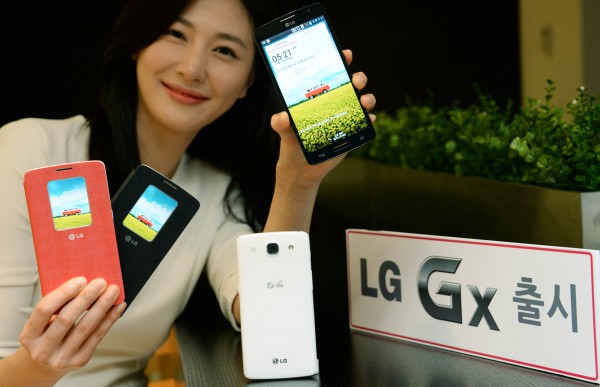
LG unveils Gx phablet, new Galaxy Note 3 competitor

South Korean maker LG has announced a new Android phablet, called Gx, which is part of the company's G premium lineup. The device will go toe to toe against the Samsung Galaxy Note 3, sporting similar hardware specifications and dimensions.
 
The Gx comes with a 5.5-inch IPS display, with a now flagship-standard resolution of 1080 by 1920. LG has opted for a quad-core Qualcomm Snapdragon 600 processor, instead of the more powerful Snapdragon 800 which is found in devices like the G2 and Galaxy Note 3, with 2 GB of RAM. The handset is powered by a 3,140 mAh battery.
 
On the back, the Gx ships with a 13 MP camera with autofocus, while on the front the device offers a 2.1 MP shooter. To make room for the sizeable photos and videos, LG equipped it with 32 GB of internal storage, but no microSD card slot.
 
As far as connectivity options go, the Gx offers support for 4G LTE (including the 2.6 GHz band), HSPA+, EV-DO and VoLTE (Voice over LTE). The list also includes Bluetooth 4.0 LE (Low Energy), USB 2.0 and NFC (Near Field Communication).
 
The Gx ships with a Jelly Bean variation of Android -- LG does not mention if it is 4.1, 4.2 or 4.3 -- alongside LG's own software enhancements, which include Q Remote (allows the device to act as a physical remote for household appliances), LTE U + Navi, Smart Memo, Media Time, KnockOn (allows to double tap on the display to lock and unlock the device) and others.

The Gx comes in at 150.6 x 76.1 x 9.2 mm and 167 grams. The device will be available, in black and white, in South Korea, with no word yet concerning international availability.
 

~ Mihaita Bamburic

10.08.2013

U.S. ban on some Samsung products to go into effect

The company logo is displayed at the Samsung news conference at the Consumer Electronics Show (CES) in Las Vegas in this January 7, 2013 file photo.
(Reuters) - The U.S. Trade Representative's office said on Tuesday it would allow a U.S. ban to go into effect at midnight on importing or selling mobile devices made by Samsung Electronics Co Ltd that infringe on Apple Inc patents.
 
The decision is the latest step in a patent battle between the two companies that has spread across several countries as Apple and Samsung vie for market share in the lucrative mobile industry. Samsung and Apple are the No. 1 and No. 2 smartphone makers globally, respectively.
 
The U.S. International Trade Commission said on August 9 that some older smartphones and tablets made by South Korea's Samsung infringed on Apple patents. It banned the importation or sale of the devices.
 
U.S. Trade Representative Michael Froman could have overturned the ban - as he did on August 3 in a case where Apple was found to have infringed on a Samsung patent - but did not.
 
"After carefully weighing policy considerations, including the impact on consumers and competition, advice from agencies, and information from interested parties, I have decided to allow the commission's determination," Froman said in a statement.
 
Apple had filed a complaint in mid-2011, accusing Samsung of infringing its patents in making a wide range of smartphones and tablets.
 
The ITC ruled that the Samsung devices infringed on portions of two Apple patents on digital mobile devices, related to the detection of headphone jacks and the operation of touchscreens.
 
Samsung has said its newer models incorporate features that work around disputed technology, and that those changes have been approved by the ITC.
 
In the August case, when the USTR overturned a proposed ban on some older-model Apple iPhones and iPads, the patents covered were standard essential patents, while the patents covered by Tuesday's decision were not.
 
Standard essential patents are central to the products at issue and are supposed to be licensed broadly and inexpensively. U.S. antitrust authorities have argued that infringing on them should trigger requirements for license payments but not import or sales bans. 
 
Diane Bartz        

9.06.2013

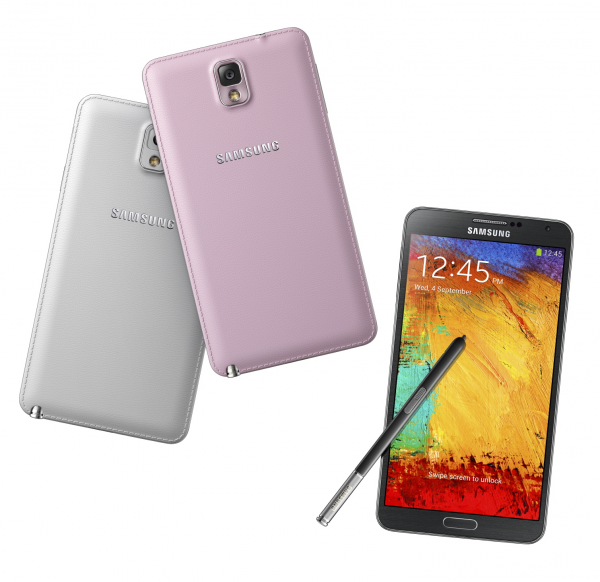
Samsung Galaxy Note 3 available for pre-order at AT&T, coming soon to T-Mobile and Verizon

Shortly after South Korean maker Samsung revealed the Galaxy Note 3, US mobile operators AT&T, T-Mobile and Verizon have announced important details related to the availability of the new smartphone in their respective portfolios.
 
The Galaxy Note 3 will first reach AT&T, where the smartphone is now available to pre-order, in Classic White and Jet Black color trims, for $299.99, alongside a two-year contract. The orders are expected to ship starting October 1. Alternatively, subscribers can also get the handset for $35 per month, through the AT&T Next program (it allows folks to switch to a new smartphone every year, instead of waiting the usual 24 months, by trading in the old one).

AT&T subscribers can also pick up the Galaxy Note 3 with a one-year contract, at which point of the cost of the device goes up to $549.99, and with a month-to-month plan for $724.99.
 
Verizon has revealed that Galaxy Note 3 pre-orders kick off today, at 9 AM EST. There is no pricing information nor official date of availability, at the time of writing this article.
 
T-Mobile subscribers looking to get the new Galaxy Note 3 will have to wait a tad longer. The US mobile operator has announced that it will officially launch the smartphone on October 2. At T-Mobile, the Galaxy Note 3 will be available for $199.99 down coupled with $21 monthly payments spread over the course of two years.
 
Both US mobile operators have also revealed information related to the Galaxy Gear, Samsung's smartwatch. At AT&T, the gadget will be available "in the coming weeks", while at Verizon it will be available to pre-order later today. T-Mobile provided more concrete data, saying that the Galaxy Gear will be offered in its stores starting October 2, for $299.99.
 
The highlights of the Galaxy Note 3 include: 5.7-inch Super AMOLED display with a resolution of 1080 by 1920; 2.3 GHz quad-core Qualcomm Snapdragon 800 processor; 3 GB of RAM; 3,200 mAh battery; 32 (AT&T model) or 64 GB of internal storage coupled with a microSD card slot (supports up to 64 GB memory cards); 13 MP back-facing camera with 4K (UHD) video recording; 2 MP front-facing shooter; Wi-Fi 802.11 a/b/g/n/ac; GPS with Glonass support; NFC (Near Field Communication); Bluetooth 4.0 LE (Low Energy); Infrared; Android 4.3 Jelly Bean coupled with Samsung-branded apps and features. The smartphone comes in at 151.2 x 79.2 x 8.3 mm and 168 grams.

~ Mihaita Bamburic

6.18.2013

Samsung to launch faster Galaxy S4 smartphone

SUWON, South Korea | Mon Jun 17, 2013 6:27am EDT
(Reuters) - Samsung Electronics Co plans to sell a variation of its flagship Galaxy S4 smartphone that will transmit data at nearly twice the normal speed, the head of its mobile business said on Monday.
 
J.K. Shin, also co-chief executive of the world's biggest technology firm by revenue, said the phone would be sold in South Korea as early as this month.
 
Samsung was in talks with several overseas carriers to take the phone, Shin told Reuters in an interview at Samsung's headquarters in Suwon, just south of Seoul. He declined to name the carriers.
 
"We'll be the first with the commercial launch of the advanced 4G version of the smartphone," Shin said.
 
The new S4 will use LTE-Advanced 4G technology, an upgrade from conventional 4G called LTE, or long term evolution. LTE-Advanced offers data transmission at up to twice the normal 4G speed. The phones will be powered by Qualcomm chips.
 
A movie download that takes 3 minutes with conventional 4G would take slightly more than 1 minute, Samsung said.
 
Samsung's shares have lost almost $20 billion since June 7 after analysts cut forecasts for Galaxy S4 sales by as much as 30 percent on industry data that showed the high-end smartphone market was getting saturated.
 
The same problem is hitting sales of the iPhone 5, made by Samsung rival Apple Inc.
 
Samsung's market capitalization is still a hefty $195 billion. Its shares closed down 0.2 percent on Monday.
 
Shin showed little concern about sales prospects for the S4, which hit stores in late April. The mobile devices division is the company's biggest profit generator.
 
"S4 sales remain strong. It's selling far stronger than the (Galaxy) S III ... and the new LTE-Advanced (4G) phone will be another addition to our high-end segment offerings that ensure healthy profit margins," Shin said.

 
Shin declined to provide forecasts for S4 sales. He said the new S4 would be slightly more expensive than the current one.
 
The South Korean firm hopes the addition of hardware offerings such as faster data transmission, along with its widely anticipated move to introduce models with unbreakable or flexible displays, will help it protect margin growth.
 
"As operators seek to provide more data-centric mobile services, I think this will become mainstream 4G technology globally in the coming years," Shin said.
 
Shin also said sales of Samsung's tablet products in the U.S. market jumped 3.3 times since it installed brand shops within Best Buy's stores in April, and is now considering expanding the format in Latin America and Britain. Samsung declined to name potential retailers.

 
EYES ON NETWORK BUSINESS

Many countries need to upgrade mobile base stations to handle not just 3G but also 4G, or build them from scratch to support 4G connections.
 
Shin said the network gear market was one of Samsung's fastest growing businesses, mainly thanks to 4G equipment sales which had been rising more than 30 percent a year since 2010.
 
The new phone would help this part of Samsung's business, he said.
 
"Such technology leadership will set the pace for the competition and help us become a major player in the network gear market," Shin said.
 
Samsung has won some 4G network deals from all major South Korean carriers, U.S. Sprint Nextel Corp and Japan's KDDI Corp and Hutchison Whampoa's British unit, but it needs to crack China to close the gap with traditional vendors in the overall gear equipment market.
 
Shin said there had not been much progress in Samsung's push to penetrate China's 4G equipment market yet, but it was increasing investment in the country.
 
China's three mobile operators - China Mobile, China Unicom and China Telecom - plan to spend a combined 345 billion yuan ($56.3 billion) this year on network upgrades. That includes investment in 4G, which multiplies mobile broadband speeds by up to five times for users of iPhone and Galaxy phones compared with 3G.
 
Many analysts believe Huawei and ZTE Corp - already big suppliers of China Mobile since only 10-15 percent of 3G network contracts went to foreign vendors - will be winners, leaving others to fight for smaller bits of the pie.
 
Samsung hopes to show Chinese clients that 4G networks with new technology can be built faster and with lower operating costs.

 
~ Dean Yates and Alex Richardson 

3.17.2013

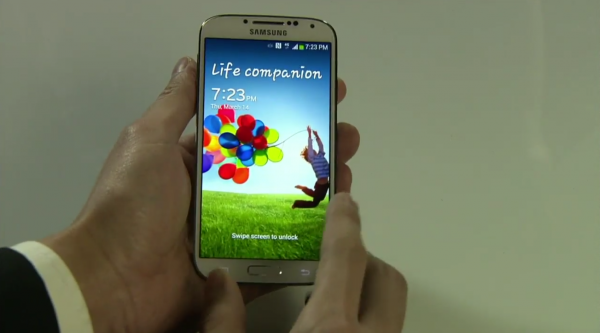
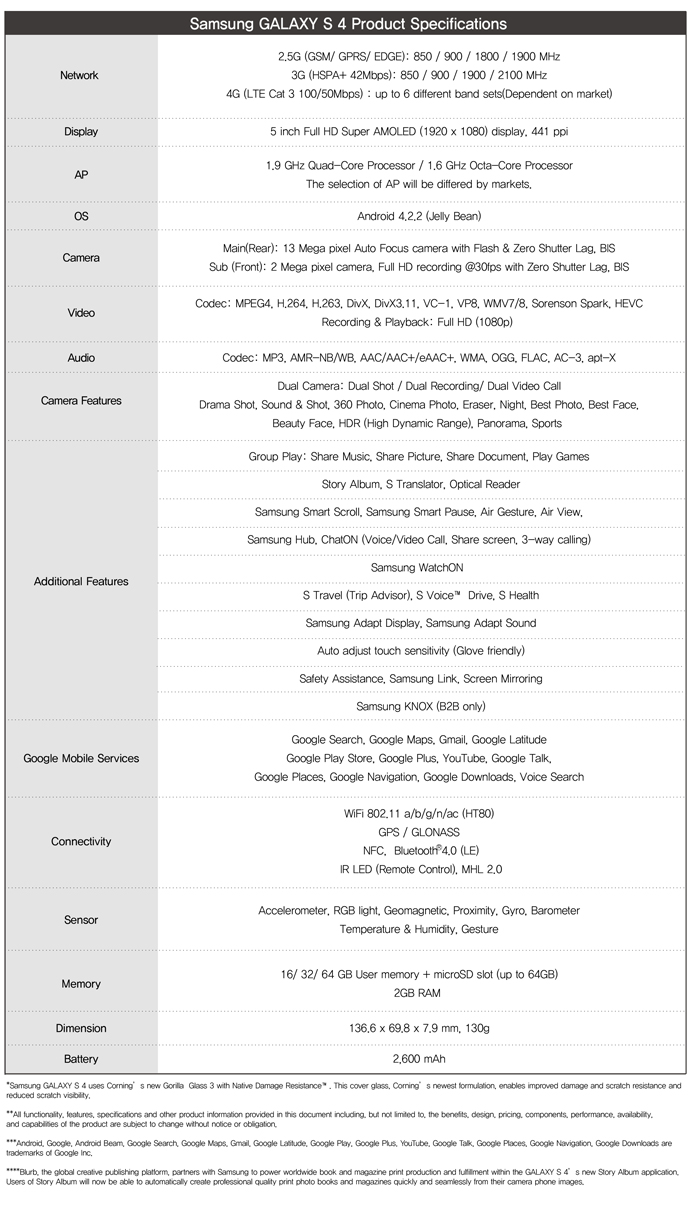
Samsung Galaxy S 4 is better than you think

I was wrong about the Galaxy S 4. Last week, I asserted that brand sentiments had changed enough here -- given Samsung's rising popularity, Apple's image problems and high-profile iPhone-to-Android switchers -- that the South Korean electronics giant could launch the S 4 in the United States. Nope. Reception among bloggers, journalists and the Technorati is largely ice cold. Most first-takes I see call the handset a S 3s and no better than iPhone 5. Idiots.

If Steve Jobs was still alive and introduced a Star Trek-like universal translator for iPhone, there would be cries: "Apple does it again". Tell me what's not innovative about translation from, say, English to Chinese or Japanese to French. In real time. On your phone. Or text-to-speech and speech-to-text translation capabilities? Imagine Jobs demonstrating the "Eraser" feature by taking a photo and jokingly removing marketing executive Phil Schiller from the photo. He could demonstrate dual-mode video by initiating a call with Schiller that includes members of the audience, which I promise would roar and clap.

There's No Magic without a Magician

But Jobs is no longer with us. Apple and not Samsung created these amazing software/cloud services features. The South Korean company doesn't have a spokesman of Jobs' caliber, while cultural etiqutette demands the stilted JK Shin, speaking in a foreign language, deliver the key intro. If Samsung marketers had any sense, Galaxy S IV would have introduced itself, by Shin speaking in Korean and the phone translating. Now that would have had impact.

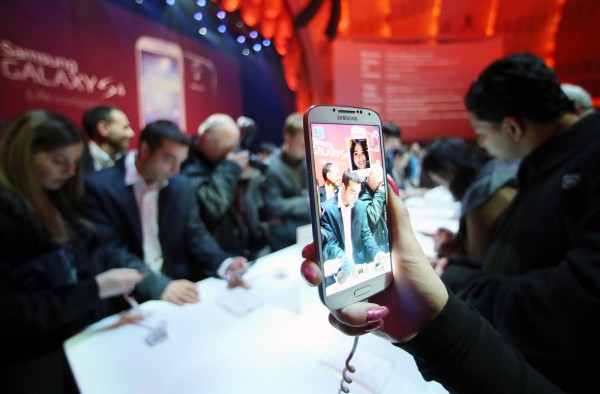
Still, Samsung did something amazingly right in S 4's unveiling (live stream archive), which is unsurprisingly lost on the bloggers and journalists writing about the smartphone. The launch focused on benefits, rather than features, which was the whole point of the different scenarios acted live from Radio City Music Hall.

Samsung rightly focused on what the phone can do for you rather than hardware features, something Apple often did under Jobs. Now iPhone launches focus too much on hardware specs and, doing so, look too much like competing devices. You don't feel the innovation, something Samsung tried to convey about Galaxy S IV.

Tech Elitists aren't Smarter than You

Based on the demos, Galaxy S IV is an amazing smartphone, jam-packed with lots of promising innovations -- mostly software and supporting cloud services. Conveying S 4's benefits, Samsung has three problems:

1. Presentation. For all the pomp and pace of the launch event -- hell, with actors and live orchestra performing -- S 4's special qualities didn't come through enough. Samsung needed what Apple used to have -- a masterful marketer standing on stage performing magic tricks, by making benefits come to life in the most aspirational way.

People buy products that make them feel good, about themselves or their future. During the best product launches Jobs made the audience feel like their lives would be better for purchasing the new thing and, occasionally if in the zone, got those watching feeling their lives would be worse should they not buy.

2. Pack mentality. Jobs' magical touch is widely-known as the "reality-distortion field". The afterglow of a keynote carried through in the stories written about new products -- luster lost without him, based on cooler reception to more recent Apple product announcements.

Make no mistake, there is peer influence among tech writers, which you can measure yourself by doing a few Google News searches. If the first stories praise, the ones that follow tend to have the same tone. Sadly, too many bloggers or journalists look to what others write and deliberately or subconsciously tailor tone accordingly. Haven't you noticed how many stories about tech this or that are similar?

Samsung's "Unpacked" event had no Jobs-like after-glow, even though innovation and benefits are oh-so Apple-like -- and even more. The first stories, coming from the U.S. market, where iPhone is the most popular smartphone, and widely-used by bloggers and reporters, set more of a negative tone. The majority that followed simply echoed criticisms. Too few writers broke from the mob, dared to stand apart, risked being wrong. They formed opinions based on that of others. Shameful. But commonplace.

3. Unrealistic expectations. Strangely, Samsung is like Apple in another way, although twisted. Rumor and hype set expectations high, and that's a problem Apple encountered many times, too. As such, many early blogs, news stories or product previews say the S 4 falls short, but based more on expectations set by rumors than any meaningful measure.

Unsurprisingly, too many writers fixate on form factor (like Galaxy S III but larger) and hardware specs, while ignoring the stunning software and services benefits. Tech writers obsessed about speeds and feeds often don't have the right priorities. They don't use products like you do. They're fussy and entitled. You're smarter than they are. You're who Samsung sells smartphones to. Tech elitists are gatekeepers to early information, because they have access and you don't.

"Life Companion" is a Development Philosophy

The people who get Galaxy S IV, really do, by understanding the pervasive design philosophy. "The S 4 demonstrates extensive innovation by Samsung", Ian Fogg, IHS Screen Digest principal analyst, opines. He focuses on something I also see, not just from this handset but its predecessor.

Two characteristics define Samsung's design philosophy, which sets it apart from every other handset manufacturer on the planet -- and that includes Apple: Context and humanness. I'll start with the latter, looking back to my analysis of Galaxy S III following its launch last year.

Recapping, the original iPhone stood apart from all other mobiles, not just smart ones, for its humanness. Touch, and its intimacy, and the way the handset responded to your proximity gave it a human quality. Suddenly the phone wasn't an inanimate object but more living thing. Apple extended humanness with each new model. Siri is best representation in iPhone 4S and 5.

The S3 extends this responsiveness, by, for example: the front camera detecting whether you are looking at the phone and keeps the screen lit. How many times has your display gone dark while reading a website or ebook? The phone also can automatically turn on, if recognizing your face. Another example: You're in the middle of texting someone and decide to call instead. Lifting the phone to your face places a call to the recipient.
Those are last model's features and all designed to make the phone more responsive to you -- more human-like. Samsung carries the design philosophy forward. Galaxy S 4 packs eight different sensors and uses them to make the phone highly responsive. Wearing gloves or have chocolate on your hands? Wave instead of touch. Watching a movie and turn your eyes away? Playback stops until you look at the screen again. But this responsiveness is much more.

"The reason for Samsung's choice of Galaxy S 4 tagline, 'Life companion' is because the word 'mobile' in mobile phone is highly misleading", Fogg explains. "Smartphones are most importantly about personal experiences, not mobile ones. Many of the new features that Samsung is adding into the S 4 are about the immediate vicinity and even inside the home, and not focused on really mobile life". Stated differently: The phone is highly contextual.

I have repeatedly asserted that Jobs was wrong to call this the post-PC era. We live in the contextual cloud computing era, where software and connected services matter more than the devices. Samsung's emphasis on "personal experiences" is dead-on right. The South Korean vendor is surprisingly focused on software and services, which I wouldn't have expected from a hardware manufacturer. Galaxy S IV adapts based on context.

Want to share the party with a distant friend? Use both cameras for the video call. Want to check your messages while driving? Let the S 4 read them to you. Snapped a great picture of your kids at the park and some guy in a trench coat in the background makes a face? Remove him immediately. You're with school friends at the park and want to party but have no speakers? Connect each smartphone and use them as a single 5.1-speaker system.

Context is about adaptability. At home, you want to play music on your fancy speakers. At the park, when you don't have them, the multiple-S 4 speaker is good enough -- in that context. At the office, you might read and respond to your messages on the PC. In the car, your hands need to be on the wheel, so you have the phone read them.

Samsung's software and services design approach is all about making the smartphone more human, more responsive, more contextually relevant and more like a personal assistant.

Most every story written about Galaxy S IV so ignores these key benefits, which can change people's lives. I'm appalled by the writers complaining about the lack of innovation here. Many of the most-obvious benefits are like science fiction, which ironically is what most stories slamming the S 4 are: fiction.

~ Joe Wilcox


8.28.2012

Apple seeks quick bans on eight Samsung phones

(Reuters) - Apple Inc is seeking speedy bans on the sale of eight Samsung Electronics phones, moving swiftly to translate its resounding court victory over its rival into a tangible business benefit.

The world's most valuable company wasted no time in identifying its targets on Monday: eight older-model smartphones, including the Galaxy S2 and Droid Charge. While Apple's lawsuit encompassed 28 devices, many of those accused products are no longer widely available in the world's largest mobile market.

Although Samsung's flagship Galaxy S III phone was not included in the trial, the jury validated Apple's patents on features and design elements that the U.S. company could then try to wield against that device. Apple may not have to seek a new trial over the S III, but can include it in a "contempt proceeding" that moves much faster, according to legal experts.

Many on Wall Street believe Apple now has momentum behind it in the wake of its near-complete triumph over the South Korean company on Friday.

"The evidence and weight of the case are heavily in Apple's favor," said Jefferies & Co analyst Peter Misek. "We expect there's a two-thirds chance of an injunction against Samsung products."

An injunction hearing has been set for September 20. If U.S. District Judge Lucy Koh grants sales bans, Samsung will likely seek to put them on hold pending the outcome of its appeal.
Samsung said it will take all necessary measures to ensure the availability of its products in the U.S. market. A source familiar with the situation said Samsung has already started working with U.S. carriers about modifying infringing features to keep products on the market should injunctions be granted.

Apple's win on Friday strengthens its position ahead of the iPhone 5's expected September 12 launch and could cement its market dominance as companies using Google Inc's Android operating system - two-thirds of the global market - may be forced to consider design changes, analysts say.

Apple was awarded $1.05 billion in damages after a U.S. jury found Samsung had copied critical features of the iPhone and iPad. The verdict could lead to an outright ban on sales of key Samsung products.

Apple's stock scored another record high on Monday.

While the victory does not cover new Samsung products including the Galaxy S III, Apple will push its case on these products in the near-term, Evercore Partners analyst Mark McKechnie said.

"While a ban would likely increase Apple's leading smartphone share in the U.S. market, we believe this verdict could lead to Samsung also delaying near-term product launches as it attempts to design around Apple's patents," Canaccord Genuity analysts said in a note.

TOOTH-AND-NAIL 

Apple's shares gained 1.9 percent to close at $675.68, tacking on another $12 billion-plus to its already historically leading market value. Samsung lost about the same amount in market capitalization as its shares slid 7.5 percent in Seoul. 

Samsung shares rebounded 1.8 percent on Tuesday.

"The ruling marks an important victory for Apple against Android. Competitors may now think twice about how they compete in smart mobility devices with the industry's clear innovator," Barclays analyst Ben Reitzes wrote on Monday. "If Apple forces competitors to innovate more, it could take longer for competitive products to come to market, and make it more expensive to develop them."

The victory for Apple - which upended the smartphone industry in 2007 with the iPhone - is a big blow to Google, whose Android software powers the Samsung products found to have infringed on patents. Google and its hardware partners, including the company's own Motorola unit, could now face legal hurdles in their effort to compete with the Apple juggernaut.

Google shares closed 1.4 percent lower at $669.22. Microsoft Corp, a potential beneficiary if smartphone makers begin to seek out Android alternatives, ended up 0.4 percent. Nokia, which has staked its future on Windows phones, gained 7.7 percent.

Even Research in Motion - which has hemorrhaged market share to Apple and Google - climbed more than 5 percent, before ending 2 percent higher.

"The mobile industry is moving fast and all players, including newcomers, are building upon ideas that have been around for decades," Google responded in a Sunday statement. "We work with our partners to give consumers innovative and affordable products, and we don't want anything to limit that."

The verdict came as competition in the device industry is intensifying, with Google jumping into hardware for the first time with the Nexus 7 and Microsoft's touchscreen-friendly Windows 8 coming in October, led by its "Surface" tablet.

Samsung, which sold around 50 million phones between April and June - almost twice the number of iPhones - will have to pay damages equivalent to just 1.5 percent of the annual revenue from its telecoms business.
"The verdict does not come as a surprise," wrote William Blair & Co analysts. "From Apple's perspective, Samsung's market position and its leadership in the handset world was something the company could no longer overlook, and viewing this as another 'imitation is a form of flattery' was not possible."

"Companies such as Samsung, who we categorize as fast followers, have been viewed by the industry for their ability to quickly adopt the latest handset trends ... rather than their ability to introduce fundamental innovation."

~ Sayantani Ghosh and Sruthi Ramakrishnan