Cisco Learning Network Store Promotions Page
Showing posts with label Asus. Show all posts

4.29.2015

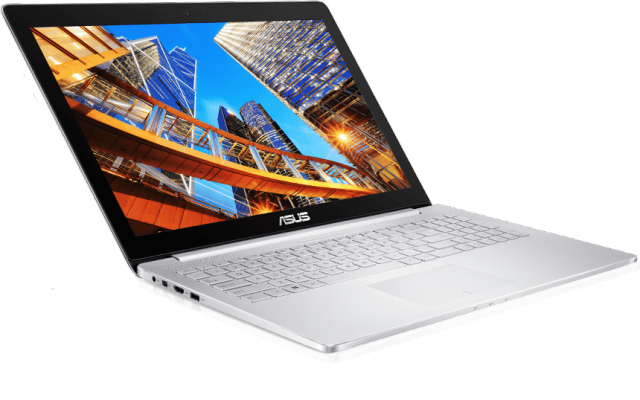
ASUS introduces the 15-inch ZenBook Pro UX501 high-end ultrabook

If you want a high-end 15-inch Windows laptop that is light and visually attractive you will most certainly not be spoilt for choice. PC makers are focusing on the smaller segments, which usually means a display size of around 13-inches. Sure, you can always grab a 15-inch MacBook Pro with Retina display and slap Windows on it, but that is not the same thing.
 
Fortunately, ASUS continues to include a 15-inch high-end option in its ZenBook lineup, as it just introduced ZenBook Pro UX501. It packs all the right features a buyer in this segment is looking for: ultra-high resolution screen, fast processor, lots of RAM, insanely fast SSD, dedicated graphics and a big battery, all in a package that is not much bigger and heavier than Apple's offering. What is not to like?
 
Let us go through the specs. First off, the display. It is a 15.6-inch IPS panel with a resolution of 3,840 by 2,160 and 100 percent sRGB color coverage, as well as 178-degree viewing angles. In practice, you will be able to scale at 200 percent, to get text rendered in a comfortable size, without degrading quality in the process. Pixel density is rated at 282 ppi (pixels per inch).
 
The 15-inch MacBook Pro with Retina display offers a much lower screen resolution of 2,880 by 1,800, which, using the same scaling option, would render everything at 1,440 by 900. Its pixel density is just 220 ppi, while viewing angles are comparable.
 
Inside the package, which comes in at 15.1 by 10 by 0.8 inches and 5 pounds, you will find a 2.6 GHz quad-core Intel Core i7-4720HQ processor, 16 GB of RAM, 512 GB PCIe SSD and Nvidia GeForce GTX 960M graphics with 2 GB of dedicated memory. The battery is a 96 Wh unit, which should help ZenBook UX501 deliver decent battery life.
 
 
There is something worth mentioning about ASUS' SSD of choice. It is capable of read and write speeds of up to 1,400 MB/s, which is nearly three times better than what you get from a typical SSD. Needless to say, you will be able to transfer large files in no time.
 
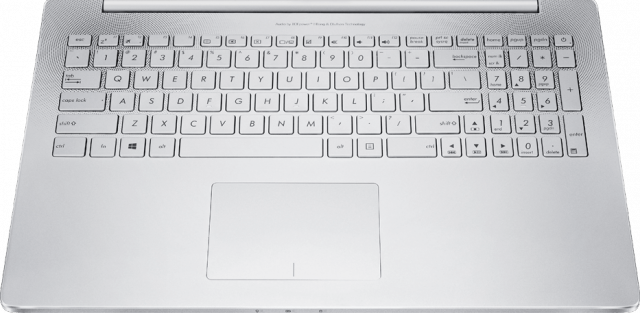
ZenBook Pro UX501 also packs Wi-Fi 802.11 ac and Bluetooth 4.0, a 720p camera on the front, backlit keyboard with a numeric keypad, one Thunderbolt port, three USB 3.0 ports, one HDMI port and an SD card reader. There is also "premium" audio.
 
 
The price? Well, that is going to put some people off. ASUS says that ZenBook Pro UX501, which is shipping now, costs a whopping $1,799. Still, it is much, much cheaper than a similarly-spec'd 15-inch MacBook Pro with Retina display; the model with dedicated graphics -- a slower GeForce GT 750M -- starts at $2,499.
 
However, you can expect Apple to introduce a refreshed model, sporting Broadwell processors, soon; meanwhile ZenBook Pro UX501 is likely to retain its Haswell-era processor for a long time to come. Something else that's worth pointing out is that while the big MacBook Pro with Retina display packs a slower dedicated video card the one that comes with its processor is actually much more powerful, being an Iris Pro Graphics 6200, instead of an HD Graphics 4600 like it is the case with ZenBook Pro UX501. It, of course, runs Windows 8.1.
 
~ Mihaita Bamburic

1.06.2015

Asus' Transformer Book Chi family is an inexpensive Surface Pro alternative

 
During Asus’ press conference at the Consumer Electronics Show, the company announced a new family of Windows-based convertible tablets. The Transformer Book Chi family will debut with three models including the low-end T90 Chi as well as the high-end T300 Chi that we first saw at Computex 2014.
 
Described by Asus CEO Johnny Shih as the ultimate dream machine and compared favorably to Apple’s MacBook Air, the flagship T300 Chi features a 12.5-inch display operating at a resolution of 2,560 x 1,440. Under the hood is a fanless Intel Core M processor (your choice of the Core M 5Y10 or the 5Y71), up to 8GB of RAM and a 128GB solid state drive.
 
 
Carved out of aluminum, the chassis measures just 0.65 inches thick with the keyboard attached and only 0.3 inches without it so it is indeed slimmer than a MacBook Air. But at 3.1 pounds with the keyboard (1.6 pounds without it), it’s also a little heavier in its notebook configuration.
 
Pricing starts at $799 with the 2,560 x 1,440 display however it can be had for $100 less if you opt for a 1080p screen.
 
 
If that’s more than you’re looking to spend, the T100 Chi checks in with a smaller 10.1-inch screen and a resolution of 1,920 x 1,200. It’s powered by Intel’s Atom Z3775 Bay Trail chip and comes with your choice of 32GB or 64GB of internal storage. Expect to pay $399 for the opportunity.
 
Last but not least is the T90 Chi, the cheapest of the bunch with a starting price of $299. Even smaller still at 8.9 inches, the T90 ships with a 1,280 x 800 resolution display and the same Atom hardware and storage options as the T100. One key difference with this model is the fact that its keyboard doesn’t include a touchpad, likely due to lack of real estate.
 
All three Transformer Book Chi convertibles will be available starting next month.
 
~ Shawn Knight

6.06.2014

Asus at Computex 2014: First look at Transformer Book V, Zenbook NX500, T300 Chi and more

 
Computex tends to be a main launch platform for a number of Asus’ new products, and this year was no exception. The company took to the stage yesterday to announce a huge range of new products, including several new hybrid laptops, a new 4K monitor, new tablets and a crazy-looking router.
 

After the announcements were over I went and had a look and hands-on at some of the new things on show, and some of them certainly look cool. I’ll start by discussing the craziest product Asus announced at Computex 2014.

Transformer Book V

 
If for some reason you were after a hybrid laptop-tablet-smartphone that runs both Android and Windows, you’ve come to the right place, because that’s exactly what Asus has announced in the Transformer Book V (where the V is pronounced as “five”). Bringing together the ideas of their Transformer Book and Padfone lines, the Book V is one crazy and very ambitious device.
 
There are two devices that make up the Transformer Book V: an Android-based smartphone, and a Windows-based laptop. The smartphone docks into the tablet, which in turn docks into the keyboard base to turn it into a laptop.
 
There are five different usage modes for the device, hence the name. There's the standalone Android smartphone; the standalone Windows tablet; an Android tablet, created by docking the phone into the tablet; and both a Windows and Android notebook, from docking the tablet into the base.
 
 
The Android smartphone is powered by a 64-bit Intel Moorefield mobile SoC, and contains a 5-inch 720p display and LTE radios. Meanwhile the tablet is powered by the “latest Intel processor”, which could either mean we’re looking at Bay Trail's successor, Cherry Trail, or perhaps something from Intel’s new Core M line. Either way, Asus isn’t ready to fully detail the CPU and it seems like we won’t see this product until Intel is ready to launch their new chips.
 
The tablet comes with a 12.5-inch 1366 x 768 display, 128 GB of NAND storage plus 1 TB in the keyboard dock, 4 GB of RAM, a 28 Wh battery and a total weight of 0.8 kg. Other specs for the phone include an 8-megapixel rear camera, 2 GB of RAM, up to 64 GB of internal storage, and a 2500 mAh battery.
 
 
Due to next-generation Intel parts inside the device, Asus didn’t let anyone at the event have a direct hands-on with the unit. However from what I saw, it looks like a basic combination of a Transformer Book and Padfone. The software looks slick, but I’m not sure the combination of a phone, tablet and laptop in the one package is something that’s hugely necessary.

Transformer Book T300 Chi

Undoubtedly the sleekest device Asus was showing off at Computex was the Transformer Book T300 Chi. The name might be a bit of a mouthful, but the laptop tablet hybrid is extremely impressive in a number of ways.
 
 
Firstly, it’s a detachable tablet that runs full Windows 8.1 in a body that’s just 7.3mm thick, which looks fantastic clad in what I can only assume is aluminium; again, Asus didn’t let anyone at the event have hands-on time with the unit. The tablet docks into a slim keyboard base in the usual Transformer Book way, with no visible ports or connectors, indicating it’s just a keyboard without any extra functionality.
 
Internally it’s powered by an Intel Core M (or Broadwell Y) CPU, which is why Asus didn’t let anyone have hands-on time with it. The display is a 12.5-inch WQHD IPS panel, which looked great when it was briefly shown off during the press event, but I didn’t get to see it up close unfortunately. Combined with LTE radios and 4 GB of RAM, Asus is positioning the device as a premium detachable tablet, and I’m really looking forward to getting proper hands-on time with it when it becomes available later this year.
 
 
In fact I’d tentatively describe this as the most attractive, premium tablet-laptop hybrid announced so far, but again, I’ll reserve proper judgement until I get a proper hands-on.

Zenbook NX500

 
Asus showed off a new high-end, high-performance Zenbook at Computex with one outstanding feature: the 15.6-inch 4K Ultra HD (3840 x 2160) IPS LCD display with support for a wide 100% NTSC color gamut. The NTSC color space is far larger than sRGB, which most displays use, and provided proper color management software is used with photos captured using NTSC colors, produces the most accurate, vibrant and realistic images.
 
At the Computex product demo Asus had two notebooks side-by-side, one that supported the NTSC color space, and the other used sRGB. The NTSC panel looked notably better, which of course could be down to some trickery, but it should on-paper provide a fantastic image.
 
The Ultra HD resolution also looked fantastic -- at a standard viewing distance it was essentially impossible to discern individual pixels.
 
 
Hardware-wise we’re looking at an Intel Core i7 4712HQ Haswell-based CPU in the top-end model, plus dedicated Nvidia GeForce GTX 850M graphics with 2 GB of GDDR5 memory, up to 16 GB of DDR3L RAM, SSD options including a 512 GB PCIe x4 unit and dual SSDs, and Wi-FI 802.11ac networking. The Ultrabook body looks high-end, and fits into the Ultrabook specification with a thickness of 19mm and weight around 2.2 kg.

ProArt PA328Q Ultra HD Monitor

While the above three products impressed me the most, Asus announced a number of other things which they had on show. One of them is a new 32-inch 4K LCD monitor, called the ProArt PA328Q, which looked fantastic displaying a range of sample images. I believe it’s a single-tile 4K monitor, and Asus confirmed it supports 60 Hz refresh rates over DisplayPort 1.2.
 
 
Other features of this display include the capability to display 1.07 billion colors with 100% sRGB coverage, 350 cd/m2 brightness, and four USB 3.0 ports. When I went hands-on with the product I had no trouble rotating the display into portrait mode, and generally it looks quite nice from a design perspective.

RT-AC3200 Router

 
Routers are never hugely exciting, but I wanted to talk about this particular one Asus showed off for two reasons. One, it supports tri-band 802.11ac capable of delivering 3.2 Gbps of throughput, and two, it has six antennas on the body. Simply put, the largish router looks like some sort of mutant insect with so many antennas on it.

Two Fonepads, Two MeMO Pads

 
I’m not going to spend much time discussing the Fonepad 8, Fonepad 7, MeMO Pad 7 and MeMO Pad 8, because frankly they aren’t too exciting. The Fonepad series allows you to make calls, which is ridiculous for a tablet, and all four tablets are very light. All the devices are powered by Intel Bay Trail Atom SoCs, and all of them have decent IPS LCD panels of either 7-inches or 8-inches in size.

Transformer Book Flip

Outside the main hall for the Asus press conference, the company was showcasing a few of their other products, some of which had already been announced. One of the new products that caught my eye was the Transformer Book Flip, a laptop that’s similar to the Lenovo Yoga in that the display can flip in a 360-degree fashion, folding all the way back into a tablet configuration.
 
 
Unlike the Yoga, this Transformer Book Flip is more of a mainstream device, available as either a 15 or 13 inch model with 1080p displays and Haswell processors from Intel. When I got some hands-on time with the Book Flip it was immediately clear that it wasn’t as slick as the Lenovo Yoga, but the flip functionality is certainly useful, and the entry price point of around US$550 is very attractive for price-conscious buyers.
 
~ Tim Schiesser

6.04.2014

While you watch Apple, the Android Army marches forward

 
As the American tech press turns to San Francisco and Apple's developer conference, the real world looks to Taipei and Computex. There you see the Android Army's march against iOS. ASUS announces new Android tabs, HP takes the wraps off a laptop running the operating system, and Samsung serves up a phablet so large it crosses category boundaries. In literature, they would call this foreshadowing. Do you see how this story will unfold -- as Android manufacturers and Apple engage like factions from the Divergent series.
 
Android accounted for 39.7 percent of device shipments -- hybrids, PCs, phones, and tablets -- during 2013, according to Gartner. Apple's iOS and OS X: 10.4 percent. Forecast for this year puts Android at 47.2 percent and the fruit-logo platforms at 11.5 percent. That's context for today's announcements from the East and West. As I write, Apple's announcements dribble (iOS 8 and OS X 10.10) out of Worldwide Developer Conference 2014, so this post focuses on what the Android news means.
 
ASUS Androids. There isn't much to say. ASUS makes some of the best Android tabs anywhere. There's a reason that the company manufactures both generation Google Nexus 7 tablets. The refreshed Transformer is the attention-getter. I know plenty of people who use one of these with attachable keyboard as their primary PC.

HP SlateBook. I don't know why HP loves bulky 14-inch laptops so much, because I don't. That said, the large screen is sensible as an Android laptop, rather than tablet with added keyboard. HP differentiates from other Androids, as well as Apple iPad Air or Microsoft Surface 3. In this case, size matters.
 
HP introduced the new laptop with its back-to-school line. At $399, SlateBook is pricier than Chromebook but Android's app selection, Millennials' seeming preference for apps over the browser, and the touchscreen make this a schoolhouse contender against iPad. Is it a winner, though? I will need to review one to answer.
 
Samsung Galaxy W. Last week, IDC lowered its tablet shipment forecast, citing slower refresh cycles and phablet competition. "Consumers are keeping their tablets, especially higher-cost models from major vendors, far longer than originally anticipated -- and when they do buy a new one they are often passing their existing tablet off to another member of the family", Tom Mainelli, IDC vice president, says. Other factor: "The rise of phablets -- smartphones with 5.5-inch and larger screens -- are causing many people to second-guess tablet purchases as the larger screens on these phones are often adequate for tasks once reserved for tablets".
 
Galaxy W blurs the line further, by offering data and voice cellular capability in a 7-inch screen size. But don't hold that thing to your face to talk! Also, the 1280 by 720 screen resolution is oh-so 2012. The concept is rightly timed. Apple, and many Android tab makers, sell nothing that competes in the rapidly rising category.
 
Photo Credit: ollyy/Shutterstock

~ Joe Wilcox

12.24.2013

Asus Enlists Statue of Liberty to Tease Dual Booting Mobile Device

Something "incredible" is coming from Asus

A promotional website by Asus with the tagline, "In search of incredible" teases an impending product reveal scheduled for January 6, 2014 at 12:00 PM Pacific (3:00 PM Eastern) at the Consumer Electronics Show in Las Vegas. What exactly is Asus planning to unveil? Based on a few written clues and a YouTube video featuring the Statue of Liberty, we suspect it's a 2-in-1 hybrid device capable of dual-booting Windows and Android.
 
The YouTube video is titled, "[Asus CES 2014 Teaser I] Green or Blue? One or Two?." As for the video itself, it shows the Statue of Liberty holding a tablet that repeatedly changes color from blue (Windows?) to green (Android?) and vice versa.
 
Reading deeper between the lines, after the Statue of Liberty tears apart the tablet to hold two devices, both continue to change colors, perhaps hinting of dual-boot functionality in both tablet and laptop mode.
 
Here's a look at the video:


~ Paul Lilly