Cisco Learning Network Store Promotions Page
Showing posts with label Edge Browser. Show all posts

10.26.2016

Windows 10 'Creator’s Update' arriving next spring, and it's (mostly) all about 3D


At Microsoft’s Windows 10 event in New York, the software giant has lifted the wraps off the next big update of Windows 10, which it’s calling the Creator’s Update.

Yes, we know -- weird name, right? New in this update (among other things) will be a fresh version of Paint, called Paint 3D. This isn’t a minor update of the awful Paint program that most people have ignored for years, but rather a tool that lets you scan objects in the real world, and import them into a 3D environment.

Speaking at the event, Megan Saunders, general manager at Microsoft said "We want to make 3D creation for everyone. It has to be as easy as taking a photo", and from what we saw on stage, that certainly seems true.

A Community panel lets you pull in content created by other users, and creations you make or import, can be viewed in PowerPoint, and in 360 degrees through Microsoft’s Hololens AR headset. At the event, Microsoft also revealed a new app called HoloTour that works with regular VR headsets and HoloLens, and will let users explore locations around the world.

Microsoft is adding 3D support to Word, Excel and PowerPoint over the next year, and says Microsoft Edge will be the first browser to fully embrace 3D -- can you spot the theme here?
You can find out more about Paint 3D in the video below:


And more about 3D in Windows 10 Creator's Update in this new clip.

 
A new Twitch-like option in the Creator's Update will let Xbox owners broadcast their games. This is powered by Beam, which Microsoft acquired in August. The Update also gains faster and easier sharing -- drag and drop content to your favorite people -- and the ability to aggregate multiple communication platforms, such as email, Skype, and SMS.
 
The first builds of  Windows 10 Creator's Update will be made available to Windows Insiders later this week. The update will be available to all in Spring 2017.

~ Wayne Williams

9.26.2016

Microsoft takes security to the Edge with Windows Defender Application GuardPost title

 
With many cyber attacks now initiated through the browser, endpoint security is something all businesses need to take seriously.
 
Among today's announcements at Ignite, Microsoft trailed security enhancements across a range of its products, including the Edge browser. Windows Defender Application Guard will be available to Windows 10 Enterprise users from next year and aims to make Edge the most secure business browser.
 
With Windows Defender Application Guard mode enabled, the Edge browser will protect enterprises from advanced attacks that can infiltrate networks and devices via the Internet, creating a safer, worry-free browsing experience for customers.
 
It's powered by virtualization-based security technology and uses isolated containers. These are built directly into the hardware to prevent malicious code from moving across employee devices and into the corporate network.
 
Other security announcements today include Windows Defender Advanced Threat Protection (WDATP) and Office 365 ATP now being able to share intelligence mutually across both services, helping IT pros to investigate and respond to security threats across both Windows 10 and Office 365 more quickly and efficiently.
 
Office 365 Advanced Threat Protection will also be extended to Word, Excel, PowerPoint, SharePoint Online and OneDrive for Business. It will benefit from enhancements that include dynamic delivery, this enables users to receive email immediately with a placeholder attachment while the actual attachment undergoes scanning, and URL detonation, which analyzes links in real time to identify any new malicious URLs.
 
Office 365 Threat Intelligence will provide alerts and information on the origin of specific attacks, integrate with existing security incident event management (SIEM) systems, and enable customers to deploy dynamic policies based on the nature of a threat.
 
Enterprise Mobility + Security E5, is a new offering that expands security to help companies transition to mobility and cloud. Available starting Octrober 1, 2016, the suite includes the new Microsoft Azure Information Protection service to help organizations classify, label and protect their sensitive data.
 
The first of October will also see the launch of Secure Productive Enterprise, which offers the latest and most advanced security and productivity capabilities across Office 365, Windows 10 Enterprise and Enterprise Mobility + Security.
 
You can see a short video explaining how Defender Application Guard will work in Edge below.
 
 
Photo credit: Gil C / Shutterstock.com
 
~ Ian Barker

7.19.2016

Microsoft badmouths Chrome's battery life as Windows 10 message urges switching to Edge

 
Microsoft has been shouting about Edge a lot as of late. Not happy with claiming that it is the most battery-friendly of the main web browsers, the company has also made much of Edge's 1080p support for Netflix.
 
In the latest twist, Microsoft switches tack, instead using pop up messages in Windows 10 to badmouth Chrome and promote Edge. The pop up rams home the idea that Chrome is a battery hog and suggests switching to Microsoft Edge to increase longevity.
 
This is not the first time Microsoft has used Windows 10 to advertise apps -- don’t forget promoted apps in the Start menu -- but it is the most aggressive advertising of its own software within its operating system. Software developer Rudy Huyn grabbed a screenshot of the offending message and posted it to Twitter:
Microsoft is yet to comment on the appearance of the message, but it would be interesting to hear how many readers have seen this appear on their own computer.
 
~ Mark Wilson

7.14.2016

Microsoft Edge is the best browser for Netflix -- the only that offers 1080p on the desktop

 
Internet Explorer has been much-maligned over the years, and Microsoft Edge sees the Redmond company trying to shake off the shackles of the past. Its latest marketing push finds Microsoft claiming that Edge is the best desktop web browser for Netflix viewing.
 
The reason? In addition to claims about greater battery efficiency, Microsoft's killer blow is that Edge is the only of the main desktop browsers to support 1080p viewing. It might seem like a surprising and audacious claim, but the test bears it out. Microsoft Edge has a serious unique selling point.
 
Microsoft's lauding of Edge comes in a blog post in which the company points out that Firefox, Chrome and Opera are limited to 720p. Pre-empting any concerns that this extra quality comes at the expense of longevity, Microsoft points out that its own test shows that "Microsoft Edge provided the highest quality content and also delivered the longest battery life".
 
With everyone so keen on accessing the highest quality content possible, you might be tempted to take Microsoft's claims with a pinch of salt. But further testing by PC World shows them to be entirely correct:
A quick test of all four browsers by PCWorld proved this claim to be true, with the other three browsers capped at 720p.
This is a real boon for Microsoft, and something that -- sufficiently advertised -- could push more and more users to Edge... even if it is only for their Netflix and chill sessions.
 
Photo credit: ByEmo / Shutterstock
 
~ Mark Wilson

6.23.2016

Opera says Microsoft's claims about Edge battery life are wrong -- but all's not as it seems

 
The other day, Microsoft made some bold claims about the power consumption of Edge. The company claimed that its latest web browser is the most battery-friendly when compared to Chrome, Opera and Firefox. Having been beaten into third place behind Chrome, but ahead of Firefox, Opera has hit back.
 
The company says that its own tests show -- surprise, surprise -- that it is Opera which is the most efficient battery sipper. Opera says that its own battery saving feature boosts battery life by up to 50 percent when compared to Chrome. The company criticizes Microsoft for failing to reveal its methodology, accusing it of a lack of transparency. But Opera is guilty of being disingenuous, as it fails to compare like with like.
 
In a post on the Opera blog, Błażej Kaźmierczak says that the company was taken aback by Microsoft's claim. He says that when Opera was being optimized, Edge was ignored: "we didn’t pay attention [...] Microsoft Edge, mostly because [it] is only available on Windows 10". He goes on to reveal Opera's own batch of tests that show that far from being the best performing browser, Edge is actually knocked into second place.
 
 
The graph clearly shows that in Opera's test, Chrome gives 2 hours 54 minutes of battery life, Edge gives 3 hours 12 minutes, and Opera gives five minutes short of four hours. To back up its claims, there's even a video showing the methodology -- "Our test (which you can replicate) show..." -- and full details of the tests are provided:


This looks good for Opera, and bad for Microsoft. Opera throws down the gauntlet, saying:
If Microsoft really wants to prove that its browser performs better than others (in any regard), the company should be transparent about its methodology so that others can replicate it.
Better luck next time, Microsoft!
But Opera is not being entirely honest. In its tests, it works with Microsoft Edge (25.10586.0.0) and "the latest version of Google Chrome" (51.0.2704.103). You would expect Opera to offer up the latest version of its own browser to make for a fair test, but no. Instead, what is used is "Opera Developer (39.0.2248.0) with native ad blocker and power saver enabled".
 
So a developer version of Opera -- a version used by a small subsection of the browser's user base -- is pitted against the publicly released versions of Chrome and Edge. That hardly seems fair.
 
Play the game, Opera.
 
Photo Credit: Horoscope / Shutterstock

~ Mark Wilson

5.11.2016

Microsoft releases Windows 10 Insider Preview Build 14342 -- here's what's new

 
Windows Insiders now have a new build to test, as Microsoft just released Windows 10 Insider Preview Build 14342 to Fast Ring. As always, users can expect a significant number of improvements and bug fixes to be included, but also some known issues to be present.
 
One of the biggest changes is related to Wi-Fi Sense. Because it has not been very popular with Windows 10 users, Microsoft is not dropping its biggest feature -- the ability to share Wi-Fi networks with contacts. Wi-Fi Sense will still be available in upcoming builds, though with limited functionality.
 
"The cost of updating the code to keep this feature working combined with low usage and low demand made this not worth further investment. Wi-Fi Sense, if enabled, will continue to get you connected to open Wi-Fi hotspots that it knows about through crowdsourcing", explains Microsoft's Gabe Aul.
 
Now, let's talk about Microsoft Edge. As you may have read, AdBlock and AdBlock Plus have made their way to Windows Store, enabling the browser's users to block advertisements. This latest build is, of course, compatible with both, though Microsoft notes that you should only be using one at a time.
 
Microsoft also notes that you should not turn off all of your Microsoft Edge extensions. A bug can rear its ugly head, affecting context menus and preventing the browser from closing. Microsoft advises uninstalling the extensions that you are not using, instead of disabling them; in the case you are seeing this bug, just kill any Microsoft Edge processes with Task Manager and turn at least one extension on.
 
Microsoft Edge is also getting real-time web notifications, which, when used, will lead to a notification being displayed in the Action Center. You will be able to test this feature using Skype for Web, for instance.
 
Last but not least, swiping back and forth in Microsoft Edge will now allow you to navigate back and forward. This feature is going to be available in the upcoming Windows 10 Mobile build too.
 
Bash on Ubuntu on Windows is getting some attention in this build. You can read the whole list of improvements here, but here two of the most important ones: symlinks within Windows Subsystem for Linux are now functional on mounted Windows directories and users with non-Latin usernames can now install Bash on Ubuntu on Windows.
 
Skype now gives you the option of enabling a dark theme and switching between multiple accounts. There is an updated mobile version coming "in the next few weeks", Microsoft says.
 
Feedback Hub gets some improvements of its own, now suggesting categories and subcategories when you create new feedback. A middle-click now dismisses a notification.
 
Microsoft has also updated the Windows Ink Workspace icon and the visuals for User Account Control, and introduced a landing page for Apps for websites, in the Settings menu under System -- any apps that will support it will show up there. For those who are not familiar with it, Apps for websites allows developers to have their apps open when users visit a certain website. For instance, you could soon see Facebook wanting to open when you visit facebook.com.
 
Below you can see the list of bug fixes in Windows 10 Insider Preview Build 14342
  • We have fixed the issues blocking the Desktop App Converter Preview (Project Centennial). You can now run the converter on the Enterprise edition as well as Pro edition of Windows. You will need the latest converter and base image from here to take advantage of all the improvements which will be available later today.
  • We fixed the issue causing Tencent online games from not working in current builds from the Development Branch.
  • We have fixed the issue causing DRM-protected content from services like Groove Music, Microsoft Movies & TV, Netflix, Amazon Instant Video or Hulu from being playable with playback with 0x8004C029 or 0x8004C503 errors.
  • We fixed an issue resulting in audio crashes for users who play audio to a receiver over S/PDIF or HDMI, and use a driver that supports real-time encoding via technologies like Dolby Digital Live or DTS Connect.
  • Polished the animation when invoking Cortana on the Lock screen. And also resolved an issue where tapping the link to fix mic issues wouldn’t fix them.
  • We fixed an issue resulting in the ok/cancel buttons in the network flyout being clipped on high DPI devices.
  • We fixed an issue where you might see Windows Hello messages on the screen while you were already logging in with a fingerprint.
  • We fixed the issue where if you were in an app and clicked on a link with a URL longer than 260 characters, it would bring up the "Open with..." dialog instead of opening with your default browser.
  • We fixed an issue resulting in not being able to use your mouse in the Photos app to either move photo while zoomed or adjust crop region.
  • The ALT + Y keyboard shortcut to choose "yes" now works with the updated UAC UI.
  • Updated new Credential UI to add support for pasting into username and password fields
  • Polished icons used to identify pages in the Settings app – in particular, updated battery icon to be more consistent with the weight of the other icons.
  • Made some polish improvements to the Action Center, and resolved an issue where icon in Taskbar wasn’t displaying correctly at 175 percent DPI.
  • We fixed an issue where the image used in Screen Sketch would be rotated 90 degrees for native portrait devices (such as the Dell Venue 8 Pro). Also polished the experience of cropping images in Screen Sketch.
  • We fixed Clock and Calendar flyout issues on the taskbar with the 24-hour time format where the agenda items would display using 12-hour format instead of the 24-hour time format and certain items would be off by 12 hours.
  • We fixed an issue where the Clock and Calendar flyout couldn’t be dismissed by clicking on the date and time in the taskbar a second time.
  • We updated the "set location" notification so tapping anywhere in the notification will now enable you to set a default location.
  • We fixed an issue where certain shortcuts weren’t working in UWPs, for example CTRL + C, CTRL + V, and ALT + Space.
  • We fixed an issue where tapping the battery icon wouldn’t open the Battery flyout when in Tablet Mode.
  • We fixed an issue where clicking elements in the Start navigation pane might result in the Store opening instead.
  • We fixed an issue where background audio tasks might show up in the volume controls.
  • We added a "Clear Input History" option to the IME Settings page.
  • We fixed an issue where doing an action on a file in a folder pinned to Quick Access after using the address bar to get there might result in File Explorer unexpectedly navigating to Quick Access.
  • We fixed an issue resulting in Cortana crashing if you shared an avatar with Cortana from the Xbox Avatars app.
  • We fixed an issue causing the search box on the Language Settings page to not work.
Now, here are also the known issues present in this build:
  • Feedback Hub is not localized and the UI will be in English (US) only, even with language packs installed.
  • Feedback Hub takes about 20-30 minutes after updating to this build to download and populate itself if launched from Start. If you launch Feedback Hub from All apps -- it will force the app to hydrate.
  • Symantec products such as Norton Antivirus and Norton Internet Security are causing PCs to bluescreen (bug check).
  • The QQ app from Tencent crashes. We’re working on a fix for the issue.
  • If you are using a non-English keyboard, you can’t accept Bash prompts.
  • We are investigating an issue where if you’re running Insider Preview builds in certain languages, the All apps list on Start appears empty. A workaround for this is to use search to launch apps.
  • You may see square boxes in certain apps when using some of the new emoji -- we’re still getting things set up, this will be resolved in a future build.
Windows 10 Insider Preview Build 14342 is available now. Yesterday, Microsoft released a cumulative update for Windows 10, which you can read about here.
 
Photo credit: Stanislaw Mikulski / Shutterstock
 
~ Mihăiță Bamburic

5.05.2016

Microsoft says Windows 10 is now on 300 million devices

 
Microsoft has gone on record as saying it wants to get Windows 10 on a billion devices in 2-3 years. It’s made good headway so far, helped by making the new OS a free upgrade for users on Windows 7 and 8.1, and also by labeling it as a 'recommended' update so it automatically installs on some systems. Whether the user wants it or not.
 
A lot has been written about Microsoft’s aggressive promotional tactics, but they certainly seem to be paying off, as even though adoption has slowed lately, Windows 10 has found its way on to a lot of systems.
 
A month ago, at Build 2016, Microsoft revealed Windows 10 was on over 270 million devices. A month later, and according to the software giant, that figure has jumped to 300 million.
 
In addition to that milestone, Microsoft reveals some numbers on how people are using its operating system. Yes, once again we have those scary stats that hint just what information Windows 10 passes on to the software giant:
  • Over 63 billion minutes were spent on Microsoft Edge in March alone, with 50% growth in minutes since the last quarter. Exclusively available on Windows 10, Microsoft Edge is our modern browser for helping you get things done.
  • Cortana, the personal digital assistant in Windows 10, has helped answer over 6 billion questions since launch.
  • People are playing games on Windows 10 more than ever before, with over 9 billion hours of gameplay on Windows 10 since launch.
  • Apps that come with Windows 10, including Photos, Groove Music, and Movies & TV are seeing millions of active users each month, including more than 144 million people using Photos.
  • And, the Windows Store continues to grow daily with new Universal Windows Platform apps like Facebook, Instagram, and Facebook Messenger; updated UWP apps from Vine, Hulu, Netflix and Twitter; and popular PC games including Rise of the Tomb Raider and Quantum Break.
300 million devices running Windows 10 is certainly an impressive milestone, although it’s sadly one that’s been tainted by an aggressive upgrade policy that makes you wonder just how many devices would have been purchased or upgraded if users had chosen Windows 10 purely because they actually wanted it, and not because it was forced upon them…
 
Photo Credit: ollyy/Shutterstock

~ Wayne Williams

4.16.2016

Microsoft Edge web browser gets plugin-free Skype, and that is great news for Linux users

As a Linux user, I have stopped using Skype recently. What was once a great experience on Ubuntu, Fedora, and other such operating systems, has been seemingly abandoned by Microsoft. Skype on Linux is barely usable nowadays, as the client has not seen an update in quite a while. This is rather tragic, as it is otherwise a great service on other platforms, such as Android, iOS, and of course, Windows.
 
Users of Windows 10 that use the Edge web browser are getting a cool update this month, as Microsoft is rolling out plugin-free Skype support. While that is cool, the really intriguing aspect is the potential for Linux users, as it should lead to similar functionality on browsers like Google Chrome and Firefox.
 
"Today, we're excited to announce that Skype for Web, Outlook.com, Office Online and OneDrive now support real-time, plugin free voice, video and group video calling on Microsoft's Edge browser, using the ORTC media engine that was recently embedded in Microsoft Edge", says The Skype Team.
 
The team further says, "today's launch is exciting news and is the first step towards fulfilling the commitment we've made to support WebRTC in Skype and Skype for Business. But we want to bring seamless calling to everyone, not just people using Microsoft Edge. To make this a reality, we will continue to work on enabling audio and video interoperability with Chrome and Firefox browsers, once they both support the H.264 video codec".
 
There you have it folks, not only is Microsoft focusing on its own Edge web browser, but Firefox and Chrome too. Since both of those browsers are available for Linux, it could once again make Skype a valid option for users of operating systems based on the open source kernel. Maybe this is why Microsoft has not been focusing on the Skype client for Linux.
 
Do you use the Edge browser? Are you a Linux user that leverages Skype? Tell me what you think of this news in the comments.
 
Photo credit: Viachaslau Kraskouski / Shutterstock
 
~ Brian Fagioli

4.08.2016

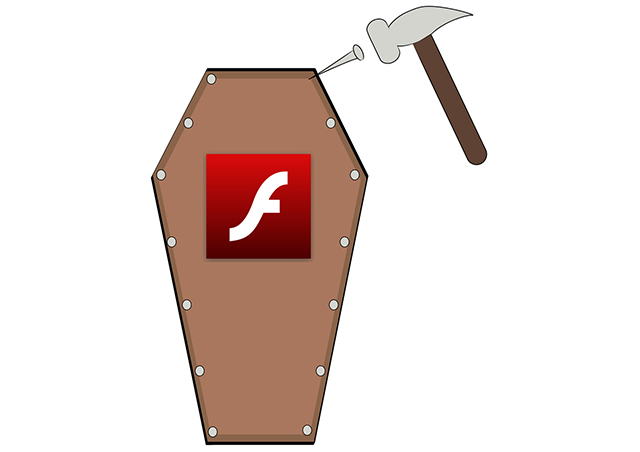
Microsoft bangs another nail in Adobe Flash's coffin with a big change to Edge

Flash is not as integral to the web as it once was, but it’s still required for some content, despite being a huge security nightmare.
 
Microsoft, like Google and Mozilla, wants to hasten the transition away from Flash to a more modern, standards based web, and so plans to make a big change to Edge in the forthcoming Anniversary Update to Windows 10.
 
According to John Hazen, Principal Program Manager Lead, Microsoft Edge, the future build of Microsoft’s new browser will "intelligently auto-pause content that is not central to the web page".
 
Essentially, what this means is any vital Flash content -- like video and games -- will play as normal, but "peripheral content", like Flash animations and ads, will be automatically paused. If you want to activate them you can, but it will be your choice.
 
Taking this action will, Hazen observes, significantly reduce power consumption and improve performance, while preserving the fidelity of the page.
 
Pausing non-essential Flash content is just the start for Microsoft. The software giant intends to roll out additional controls in the future, offering users complete control over all Flash content.
 
"We are planning for and look forward to a future where Flash is no longer necessary as a default experience in Microsoft Edge", says Hazen. And, for most web users, that day couldn’t come soon enough.
 
Photo credit: WilleeCole Photography / Shutterstock
 
~ Wayne Williams

3.19.2016

Windows 10 Insider Preview Redstone Build 14291 delivers extensions to Microsoft Edge and other new features

 
Microsoft is having a very busy Thursday. As well as beginning the long-awaited rollout of Windows 10 Mobile, the software giant has also pushed the button on a new PC build for Insiders on the Fast ring.
 
Fast ring updates sometimes offer new features, but other times it’s just tweaks to the core and bug fixes. Windows 10 Insider Build 14291 is one the more noteworthy updates, finally delivering the long awaited extensions in Microsoft Edge, as well as pinned tabs and other Edge enhancements. There’s also an updated Maps app, and a wealth of other changes, including the introduction of a new Feedback Hub.
 
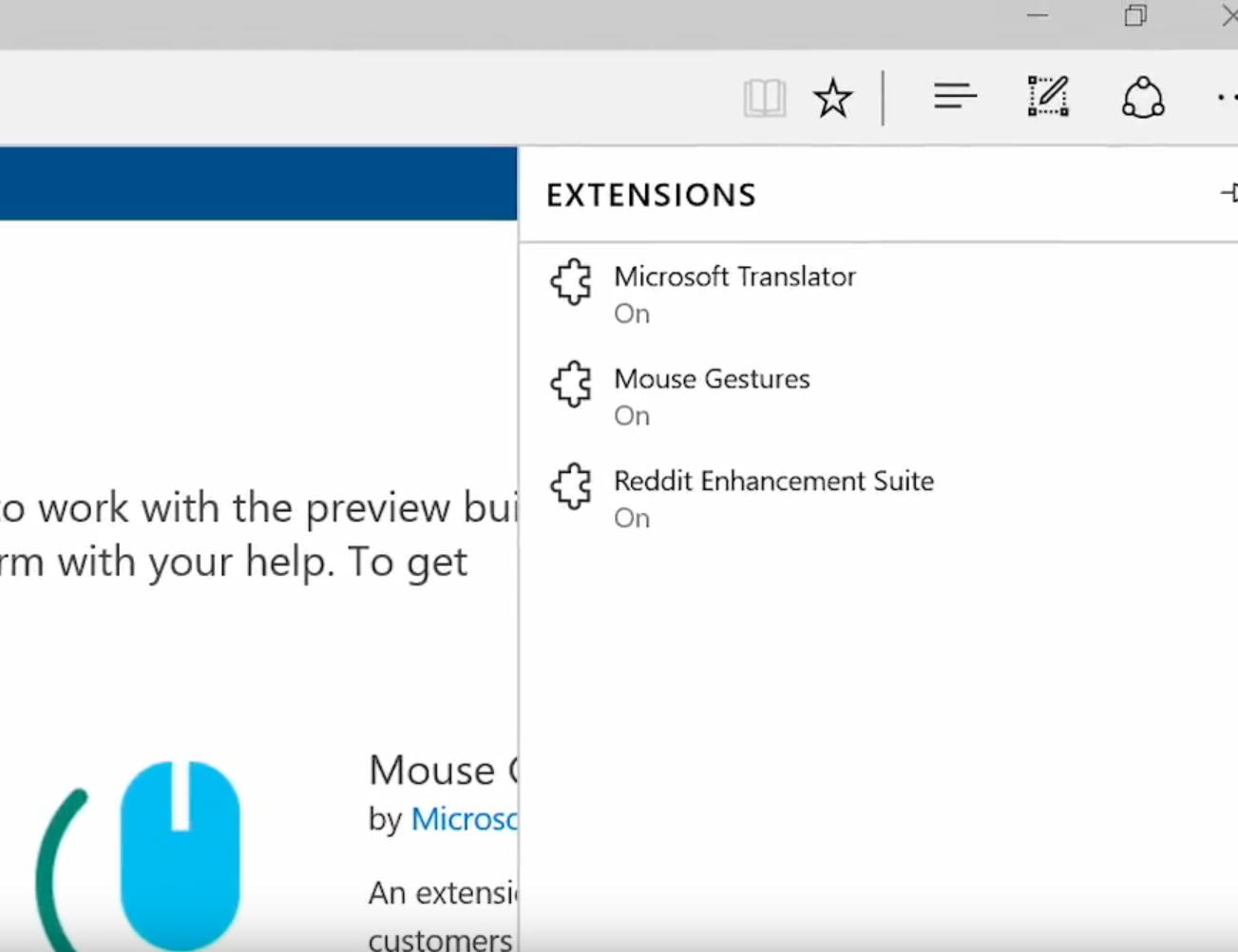
Extension support is of course the biggie and finally gives Microsoft Edge a chance to compete with the likes of Firefox and Chrome. To try out an extension, just click on the ellipses (…) at the top right and then click Extensions. In the Extensions pane click Get extensions.
 
This is obviously a new feature, so there aren’t many add-ons available at the moment, but you can try out Mouse Gestures, Microsoft Translator (automatically translates pages in over 50 different languages) and an early version of Reddit Enhancement Suite.
 
More extensions are on the way, including AdBlock, Adblock Plus, Amazon, LastPass, Evernote.
 
 
Although extensions currently have to be downloaded and sideloaded they will eventually be made available through the Windows Store.
 
 
Edge also now lets you pin tabs so you can have easy access to favorite and regularly used sites. This feature works exactly as you’d expect. To pin a tab, right-click on it and choose Pin tab. To unpin a tab, right-click on it and choose Unpin tab. Pinned tabs don’t show a close button, so can’t be closed accidentally.
 
Finally, you can now copy any link into your clipboard, and right-click on the address bar in Microsoft Edge and choose "Paste and go" from the context menu. This is a standard feature found in most other browsers, and is a welcome inclusion in Edge.
 
Other Changes
 
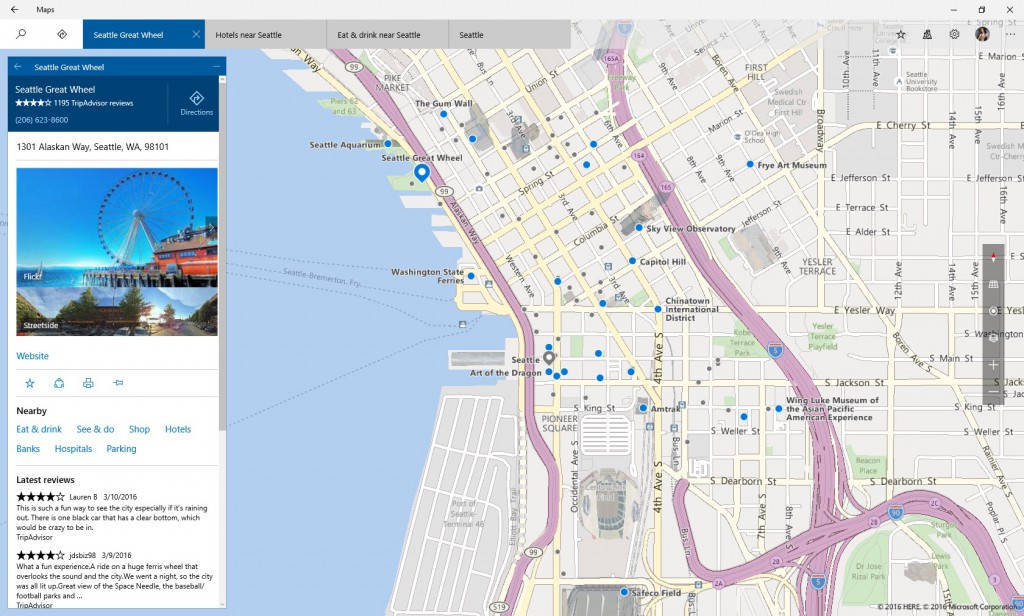
The updated Maps app offers a more lightweight and improved UI as well as general improvements and new features including one-tap access to search and directions from anywhere, the ability to view multiple searches and directions at the same time, and Cortana based turn-by-turn directions. You can read more about the changes to the app here.
 
 
The Alarms & Clock app has been updated as well with a new inline time picker, and there are a couple of big improvements for Japanese users (one-handed kana touch keyboard and Lined-mode Text Input Canvas).
 
The Feedback Hub, which combines the Insider Hub and Windows Feedback apps, also makes its debut in this new build.
 
In addition to all those new features Build 14291 includes the following fixes:
  • The issue causing the notification area ("systray") to look out of alignment when turning on the "always show all icons in the notification area" should now be fixed.
  • Fixed the issue where connectivity to older Wi-Fi networks using the WEP encryption security method may be broken.
  • Fixed an issue where the "X" to close the "Find of Page" toolbar in Microsoft Edge is displayed off screen on 8-inch devices when in portrait mode.
  • Fixed an issue where the USB icon in the notification area was reverting to the old icon when ejecting drives.
  • Fixed an issue where clicking the suggested search in Microsoft Edge resulted in a URL to the search as the search string.
With this being a Fast ring release, there are the usual list of known issues to be aware of including:
  • Microsoft is continue to investigate an issue in which some Surface Pro 3, Surface Pro 4, and Surface Book devices experience a freeze or hang and all input such as keyboard/trackpad and touch do not work. The workaround is to hold down the power button to force the device to hard-reboot.
  • Your PC may freeze when plugging in an Xbox One or Xbox 360 controller and other gamepads in this build.
  • If you use Hyper-V and have a Virtual Switch configured for your network adapter, you may see an error indicator (red-colored "X") for your network adapter in the notification area of your taskbar. The error indicator is incorrect and your network adapter should continue to work just fine.
  • We are seeing reports of some apps such as QQ crashing. We are currently investigating, and this bug may also impact older apps such as Windows Live Mail and Expression Encoder 4.
  • If you have Kaspersky Anti-Virus, Internet Security, or the Kaspersky Total Security Suite installed on your PC there is a known driver bug that prevents these programs from working as expected in builds from the Development Branch. We are partnering with Kaspersky to fix this issue for a future release, but at this time there are no known workarounds. While this issue is present, we recommend using Windows Defender or another third party anti-virus product of your choice to remain protected.
Are you excited about the introduction of extensions in Edge? Will it make you use Microsoft's new browser?
 
Photo credit: charnsitr / Shutterstock
 
~ Wayne Williams

1.06.2016

Microsoft poised to deal deliver a fatal blow to Internet Explorer 8, 9 and 10


In less than a week, Microsoft will only offer support for Internet Explorer 11 and Microsoft Edge. As of Tuesday 12 January, Internet Explorer 8, 9 and 10 will die. The aging browsers will receive one more update, and then will be consigned to the trash.

Tuesday is the day that older versions of IE reach the end of their support cycles, and Microsoft is keen for everyone to move to either Microsoft Edge or -- for the diehards -- Internet Explorer 11. If you have not already made the switch (or jumped to Chrome or Firefox), one more patch, KB3123303, will pester you into upgrading.

This is vaguely reminiscent of the Browser Choice screen that Microsoft was forced to introduce sever years ago, and it will be interesting to see how effective the nagging is at getting people to move towards the most recent versions of Microsoft's web browsers.

Since the launch of Windows 10, Microsoft has been pushing Edge hard, but Internet Explorer 11 remains available mainly for enterprise users who need more time to be able to fully prepare for the switch. Of course, it's entirely possible that the nagging will simply sour people's view of Microsoft and push them towards the browsers offered by the likes of Mozilla and Google.

But for now, the death clock ticks on.

Photo credit: Mattz90 / Shutterstock

~ Mark Wilson

10.13.2015

Windows 10 Insider Preview Build 10565 arrives on the Fast ring, includes Skype integration, Edge improvements

 
If you’re a Windows Insider on the Fast ring, Microsoft has a new Windows 10 preview build for you to try. Build 10565 has quite a lot of changes and new features, including integrated Skype messaging, calling and video, tab preview in Microsoft Edge, some new icons, and Cortana enhancements.
 
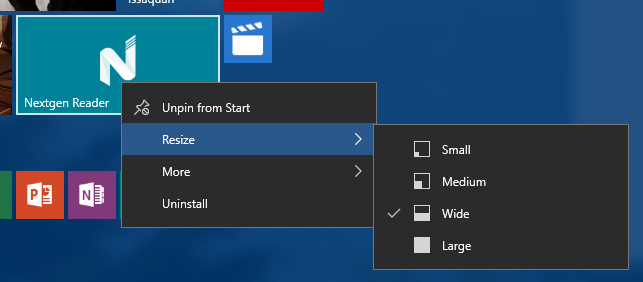
There are also improved context menus on Start, more vibrant title bars, and the ability to sync favorites and reading list items in Edge. A lot of annoying problems have been fixed in this build too.
 
The Skype integration is of course the big new addition. The inclusion comes through Messaging, Phone and Skype video Windows apps, and Microsoft warns that as this is an early preview you can expect "some bugs", so be warned.
 
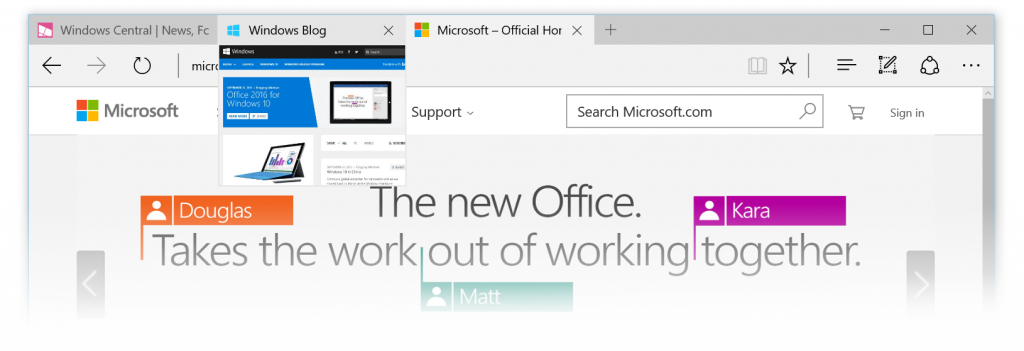
Tab preview shows a glimpse of what’s on a website when you hover your mouse over an open tab, and the Cortana changes include reminders for movie and event bookings and being able to intelligently understand hand written notes.
 
You can read the full list of changes and bug fixes here.
 
Naturally, with this being a Fast ring release, there are some known issues to be aware of:
  • The search box does not work if you are in a locale where Cortana is not available. Microsoft is  currently investigating workarounds.
  • The Xbox app for Windows 10 will consume gigabytes of memory on your PC if you have any Win32 games (non -Windows Store games) installed on your PC that have been identified as games or added by you in the Xbox app. Closing the Xbox app will release your PC’s memory.
  • WebM and VP9 have been temporarily removed from the flight builds. Microsoft will continue to develop a VP9 implementation that it intends to ship in Windows. Expect VP9 to return soon in a future release.
  • Small form-factor devices, like the Dell Venue 8 Pro, that boot with rotation or virtual mode screen size set larger than the physical screen size will experience a bluescreen on upgrade and will roll back to the previous build.

The new build is available to Fast ring insiders now, except those in Russia and Turkey. If you live in either of those countries you'll have to wait a few more days for the build to make its way to you.
 
~ Wayne Williams

9.09.2015

Apple to live stream September 9 event: How you can watch

For the first time in a while, Windows 10 users can also watch the live event.

Apple's almost ready to reveal what it's been working on for the past year.
 
At the event on September 9, Apple will lift the lid on its new smartphone at the Bill Graham Civic Auditorium in San Francisco.
 
Almost everything has leaked so far. Don't expect that many surprises here. We've got a good primer of what's most likely to arrive. It's also possible that other hardware and software bits will also be announced at the event.
 
As usual, the company will stream the event live, featuring Apple chief executive Tim Cook and other senior executives.
 
Apple will offer the video stream of the keynote at 10 am PT (1 pm in New York; 6 pm in London).
 
If you are around to watch the hour-long keynote, viewers must watch the stream online with Safari 6.0.5 or later on OS X 10.8.5 or later, or Safari on iOS 7 or later. If you're watching through Apple TV, it requires the second- or third-generation set-top box with software 6.2 or later.
 
And, for the first time in a long time, Windows users can watch live as well if they're running the Edge browser on Windows 10.
 
As always, if you're at work or away from the screens, you can keep up to date with ZDNet throughout the morning and the afternoon, wherever you are.


8.12.2015

Mozilla rolls out Firefox for Windows 10 with browser-choice cues

Mozilla's Firefox 40 for Windows 10 includes built-in browser-choice mechanisms meant to unseat Microsoft's Edge and Bing search engine defaults.

After complaining that Microsoft has made choosing a browser other than its own Edge too difficult with Windows 10, Firefox officials have taken browser-choice into their own hands.
 
 
Firefox 40 for Windows 10, made generally available on August 11, includes new "support materials to show you how to restore or choose Firefox as your default browser in Windows 10."
 
The new Firefox for Windows 10 goes further. When Windows 10 users look to the Cortana search box built into the task bar, web searches done from that search box will "show results in the default search engine you choose in Firefox," rather than defaulting to Bing, Firefox officials said.
 
The Firefox for Windows 10 browser supports third-party add-ons -- unlike Microsoft's Edge at this point, though add-on support is coming, Microsoft officials have said. Mozilla is distinguishing between Mozilla-certified add-ons and non-certified ones. Non-Mozilla-certified add-ons currently include warnings, and in the future, will be disabled by default.
 
The new Firefox also includes user interface tweaks, including bigger and bolder design elements.
 
Firefox 40 for Windows 10 is available for download from Mozilla's web site.
 

7.30.2015

Microsoft Edge introduces new security risks in Windows 10

 
The Internet Explorer replacement Microsoft Edge is one of the headline features of Windows 10. With security at the heart of Microsoft's latest operating system, and the general concern about online safety, it makes sense to put the web browser under the microscope to see how it fares against the competition.
 
This is exactly what security analysts at Trend Labs have done. While the team concedes that Microsoft Edge beats Firefox's security and roughly draws level with Chrome's, the new web browser also introduces new security problems and threat vectors.
 
Of particular concern for the security experts is the integration of PDF reader and Adobe Flash plugins. With the historic and on-going security concerns with Flash, Trend Labs suggests that Microsoft Edge could have a problem on its hands:
While we believe that users and sites should move away from it, the reality is that for the foreseeable future Flash won’t go away yet. Attacks targeting Flash will continue to be a problem, and having it as a built-in feature may pose risks down the road.
The windows.data.pdf.dll module is singled out as worrisome, but Trend Labs points out that Chrome and Firefox have both managed to remain relatively secure after integrating plugins. Microsoft Edge's ability to receive patches through Windows Update works in its favor, however.
 
Another potential security concern is Edge's support for asm.js, a Mozilla-developed subset of JavaScript that has proved problematic in other browsers. Trends Labs warns that an exploit used to attack Firefox could also be used on Edge. As it stands, Edge has launched without support for extensions, but this is set to change in the near future. This also poses a security risk:
It is known that Chrome and Firefox extensions can be used by Microsoft Edge with relatively little modification, but other details have not been made clear. These extensions will run in the AppContainer sandbox, but sandbox escape vulnerabilities can be used to evade this. In addition, the threat of malicious extensions cannot be ruled out – either they may be malicious from the start, or a legitimate extension can be modified with an update to become malicious.
In all, Edge was found to have reached 'security parity' with Chrome, while managing to outpace Firefox.
 
~ Mark Wilson

7.22.2015

Does Windows 10 attract or repel you?

In some ways it only seems like five minutes since the appearance of Windows 8. But at the same time, it feels as though Windows 10 has been a long time coming. While Microsoft has been talking about the upgrade for quite some time, it has only been in recent months that there has been any sense of progress having been made.
 
Early builds of Windows 10 were a little lacklustre, and even later builds failed to inspire the levels of excitement that Microsoft would undoubtedly want them to do. Any new version of Windows is met with a combination of trepidation, eagerness, and disappointment, and Windows 10 is no different. It's very easy to say that it is impossible to please everyone, but it's certainly fair to say that Windows 10 has proved particularly divisive. Now, as we edge ever closer to launch, the time comes to ask -- what has Microsoft done right, and what is still wrong?
 
I'm not going to stray into review territory just yet, but when canvassing opinion it makes sense to touch on a few of the operating system's key areas. The development of Windows 10 has seen Microsoft looking for, receiving, and responding to feedback in an unprecedented way -- but has it paid off? Are the changes that have been implemented changes for the better, or has the hive mind made Windows take a turn for the worse?
 
So what is there to embrace in Windows 10? In many regards, little has changed, but at the same time. The Windows Insider program -- as well as the various leaks that have surfaced -- have given us a great opportunity to familiarize ourselves with the operating system ahead of launch, but it is easy to forget that the vast majority of people will be coming to Windows 10 blind. There have been a lot of testers trying things out, but there are millions more who have no experience at all. July 29 will be the start of a whole new experience.
 
The Live Tiles that have been ported from Windows Phone still feel a little strange. They appear to have been designed for people suffering from an attention deficit disorder. The Start menu is something that people have been begging for ever since it was culled and replaced with the Start screen. Now it's back and there is a very real danger that Microsoft still has not got it quite right. On the plus side there is the choice between using the Start menu and the Start screen, but the menu is likely to disappoint more than it pleases.
 
For purists, the Windows 10 Start menu will be an overly large and fussy affair, and the presence of Live Tiles is something that grates. The Start menu has always been somewhere users visit to access apps, files, and folders. Now it is home to information as well. This sound great in theory, but in practice it is far from ideal. Users of the Start menu become accustomed to firing it up, putting it to use as a launcher... and that's it. Now images scroll by, headlines flash up, and all manner of other information is displayed -- if you're willing to stick around and wait for it to appear that is. Spend a little time with Windows 10 and the feeling that the right hand side of the Start menu in general, and Live tiles in particular, is a waste of space and time. Why would you want to spend time lingering in a part of Windows that is historically only a brief stop-over? Your mileage may vary, of course, but the revamped Start menu feels like something of a missed opportunity. It could have been so much more.
 
One of the biggest features that Microsoft has been shouting about is Edge. The replacement of Internet Explorer is long-overdue, but it's not clear that Microsoft Edge is anywhere near ready. With so few new features in Windows 10, one can't help but feel that it would have made sense to wait a little longer until the browser is fully complete. Perhaps the greatest selling point for Edge is support for add-ons, yet this option will not be available at launch. How many people who rely on add-ons are going to be willing to give Edge another chance further down the line? If you're already invested in Chrome or Firefox, there really is very little reason to move away. It possible that even those moving from Internet Explorer to Microsoft Edge will be tempted to investigate the competition now that concentration has been focused on add-ons and awareness of the possibilities raised.
 
What else is there? We have a change to the way modern apps run. We have Cortana. There's a virtual desktop manager. There is the much sought after notification system. Is it enough? Has Microsoft listened to feedback enough... or too much?
 
Over to you.
 
What are your highs and lows in Windows 10?

~ Mark Wilson

6.01.2015

How to customize Windows 10 Insider Preview Build 10130

 
On Friday Microsoft surprised us by releasing a new build of Windows 10 to Insiders on the Fast ring. This build includes new and updated icons, improvements to the Microsoft Edge browser (still called Spartan, unbelievably), Jump List tweaks and more.
 
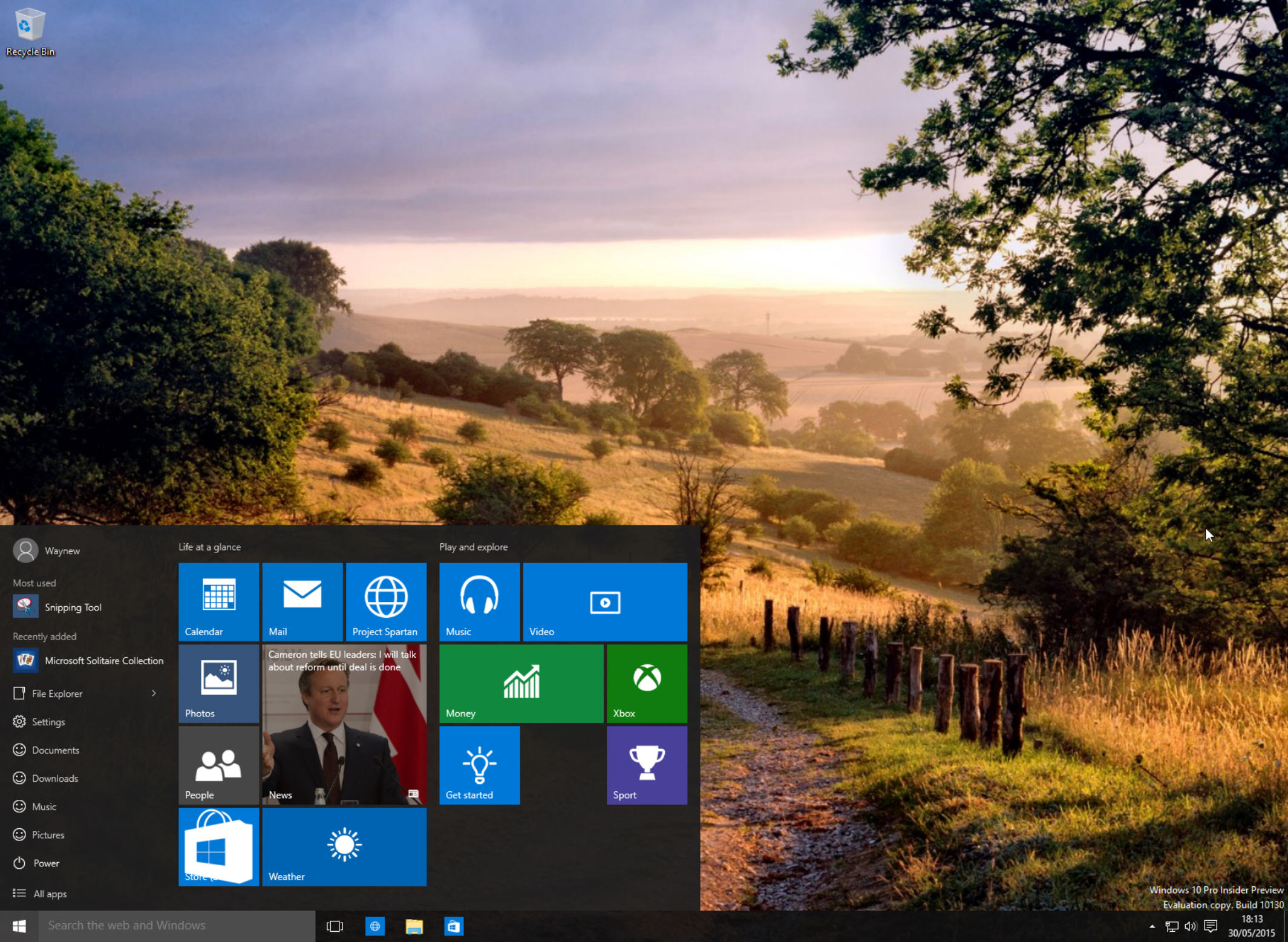
Microsoft has also introduced additional options for customizing Windows 10. In particular, you can now easily choose what appears on the Start menu. It’s very easy to make changes to the OS's appearance, so let’s take a look at the options.
 
Open the Settings app from the Start menu, and click on Personalization. Background lets you change the Windows wallpaper, while Colors lets you choose an accent, show colors on the Start menu, taskbar and action center, and toggle transparency on or off. You can also access high contrast settings here.
 
Lock screen gives you three style choices -- Spotlight, Picture and Slide Show. You can choose apps to display status notifications on the lock screen here.
 
Themes gives you access to classic theme settings, as well as related settings (advanced sound, desktop icon, and mouse pointer).
 
Finally, in the latest build there’s a new Start customization option. From here you can choose whether you want to receive occasional app and content suggestions. That’s personally the last thing I want to see in Windows, and it will be interesting to see what gets pushed to users when the OS is released. You can also choose whether to see recently opened programs in Start, and also whether recently added apps groups should appear as well.
 
From the menu you can customize the links that appear in the Start menu. You can add or remove the likes of File Explorer, Settings, Documents, Downloads, Music, Pictures, Videos, HomeGroup, Network, and Personal folder.
 
 
Start behaviors can be customized here too. You can choose whether you want the full screen Start when in the desktop, and whether recently opened items should appear in Start or the taskbar.
 
I'm sure more customization options will appear in later builds, but it's certainly looking good at the moment.
 
~ Wayne Williams

5.30.2015

Microsoft releases Windows 10 Insider Preview Build 10130

 
Early on in the Windows 10 preview program, things looked a bit grim. While I was confident Microsoft would pull it all together eventually, I was dubious that the company could meet its self-imposed summer deadline. Not only were there many bugs, but some baffling design choices.
 
A lot has changed since then. Since build 10122, I am totally convinced that not only will Windows 10 be ready by the summer, but it will be exceptional too. Today, Microsoft releases Windows 10 Insider Preview Build 10130. The company is wisely putting the major focus on tightening up the experience instead of introducing new features. Don't worry though, there are some new features in the build. Sadly, there is one major bug too.
 
"We have a new build for PCs releasing today to Windows Insiders in the Fast ring -- Build 10130. As I mentioned with the last build, from here onward you are going to see a lot of tuning, tweaking, stabilizing, and polishing which means fewer big feature changes from build to build. You’ll see that in this build which has a number of small improvements and more polish. For example – you will see some new icons (check out File Explorer) as well as many subtle changes to the UX. We heard a lot feedback around icons in Windows 10 and think these new ones are a bit more refined. Let us know what you think. We’ve also added new Taskbar animations for actions like moving files, downloads, etc. and more improvements to Start. And we also heard a lot of feedback around the border around Action Center -- which is now gone in this build and looks much nicer", says Gabe Aul, Windows guru.
 
Aul also explains, "as always, thank you for using the preview builds and sending us your feedback. Keep it coming by using the Windows Feedback app to share your problem reports and suggestions so we can get them to the right feature team. You may have noticed that in the Feedback app you’ll see a 'Received' note under your Feedback once it has been routed to the right team on our side so you know it has gotten through".
 
 
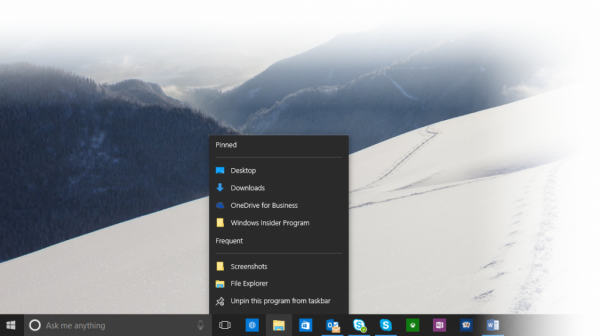
There are some major visual improvements in this build, including both new and updated icons. It is impossible to please everyone, but Microsoft has done a damn good job trying. The company has literally tweaked or introduced thousands of system icons. Task bar jump lists also get a new coat of paint, as the menu will now match the task bar color.
 
The Edge browser gets some major improvements too. You can now pin different panes within Edge, offering improved usability for those that depend on them. The reading view is now optimized for more screen resolutions (including Surface Pro 3). Most importantly, however, the browser can play video in full screen.
 
Tablet users will be glad to know that some useful functionality from Windows 8.1 has returned. Swiping from the top of the screen will now bring up app commands. I am glad Microsoft is focusing on tablet users in this build too.
 
Unfortunately, not all is good. Aul lists the following known issues.
  • Mail app may crash due to a memory error, and may not sync mail when in the background. We plan to service this issue with an update via Windows Update.
  • In some cases, flyouts from the Taskbar (including Start, Cortana, Network, Battery, and Action Center) fail to fly out. This is a transient issue, and after retrying a few times it will succeed. We are also working to service this issue with an update.
  • Wi-Fi connectivity may fail at times due to a known issue. A system reboot is required to recover from this state.
While the first two are simply annoying, the third is a huge issue. Having to reboot to regain Wi-Fi connectivity is a big productivity killer. Hopefully Windows Update can push a fix soon. This will get old fast!
 
If you are on the Fast Ring, you can download now from Windows Update. Tell me how you like the new build in the comments below.
 
Photo Credit: Viorel Sima/Shutterstock
 
~ Brian Fagioli

5.27.2015

Microsoft brings Dolby Audio to Windows 10 -- works with Edge, not Chrome or Firefox

 
Consuming media -- music and movies -- is one of my favorite hobbies. While this used to happen with VHS, DVD and CD, I have transitioned entirely to using streaming and downloaded files. The majority of my consumption happens on Windows, where I use a USB DAC to get the best audio performance.
 
Today, Dolby announces that Microsoft has selected its technologies to be featured in Windows 10. This means consumers should benefit from an improved audio experience.
 
"Dolby Laboratories, Inc. and Microsoft Corporation  announced today that Dolby Audio is selected to be a part of the Microsoft Windows 10 operating system and will be natively supported by the new Microsoft Edge browser for the playback of web-based content as well as accessible by third-party Windows Store apps. Users of Microsoft Windows 10 PCs and tablets will enjoy Dolby quality audio experiences through Windows entertainment apps and through Microsoft Edge", says Dolby.
 
The company also says, "Dolby Audio (supporting Dolby Digital Plus) will be available in x86 Windows 10 PCs and tablets for playback of movies, TV shows, and videos with crisp, clear dialog and greater detail of sounds. Windows 7 and 8 users may upgrade to Windows 10 for free and continue to experience Dolby quality audio consistently across headphones, built-in PC and tablet speakers, or connected home theater systems. Microsoft Edge will be the first browser to leverage the Dolby Digital Plus decoder on the Windows 10 operating system, enabling online content providers to enrich the entertainment experiences of millions of Internet users globally with Dolby Audio".
 
Did you catch that? Dolby Audio will only be available to apps from the Windows Store. In other words, Chrome and Firefox will not be able to take advantage unless Google and Mozilla make their browsers "Windows Apps" like Edge.
 
This is a smart move by Microsoft to entice developers to convert their traditional programs to Windows app variants. This could  increase the number of apps in the store, and ultimately, Windows users will benefit.
 
Are you excited for Dolby audio on Windows 10? Tell me in the comments.
 
Photo Credit: Boris Ryaposov/Shutterstock
 
~ Brian Fagioli