Cisco Learning Network Store Promotions Page
Showing posts with label CES 2016. Show all posts

1.07.2016

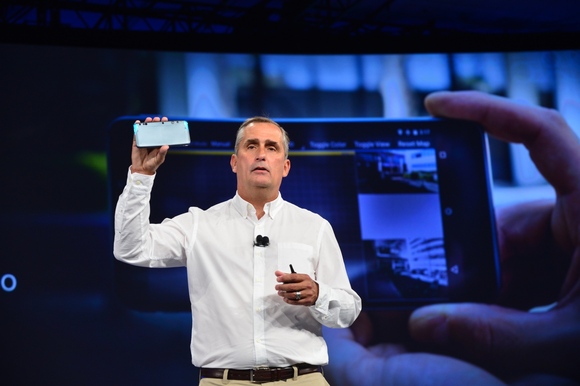
Intel's new smartphone comes with a 3D RealSense camera


Most people may not know this, but Intel is no stranger to the smartphone world. It develops mobile processors that power a wide range of Android devices, like ASUS' ZenFone 2 line. But the company is not stopping there as at CES 2016, it just unveiled a smartphone equipped with a RealSense camera.

Virtually every smartphone has cameras on the front and rear, so what makes Intel's device special? Well, the RealSense camera allows the handset to recognize 3D objects and gestures, similar to Microsoft's Kinect.

The RealSense camera, which has the ZR300 designation, is actually comprised of a number of sensors, as Intel calls them: a RealSense R200 camera module, an accelerometer and gyroscope unit, a wide field of view camera for motion and feature tracking, an 8MP RGB camera on the back and a 2 MP RGB camera on the front.

"The Intel RealSense Camera ZR300 supports Google Project Tango specifications for robust feature tracking and synchronization via time stamping between sensors. Combined with its low power consumption the camera can provide versatile experiences, such as indoor mapping and navigation, as well as area-learning capabilities that naturally complement applications in 3D scanning as well as immersive virtual and augmented reality usages on top of drones and robotics applications", Intel explains. "The Intel RealSense Camera ZR300 provides high-quality and high-density depth data at VGA-resolution of 60 frames per second".

The rest of the smartphone is actually pretty interesting as well. It has a 6-inch QHD screen, Atom x7-Z8700 processor, 2 GB of RAM, 64 GB of internal storage, but only 3G connectivity support, among other specs. And, of course, it runs Android.

The 3G network support is actually the least impressive thing about it. The omission of 4G LTE support is probably because Intel's smartphone is actually aimed at developers, and not the general public. This is a device meant to be in the hands of users who want to create apps that can take advantage of its RealSense camera.

The smartphone will be available for $399.99, and can be pre-ordered from Intel's site.

~ Mihaita Bamburic
1.05.2016

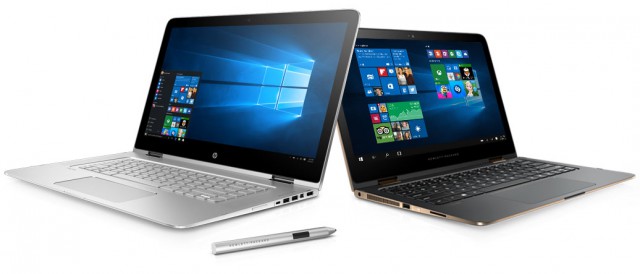
HP's new Spectre x360 laptops offer optional 4K, OLED displays

CES is quite possibly the trade show with the highest number of new Windows products showcased. Lots of such devices fly under the radar, however, as they tend not to have many, if any, standout features. HP's new Spectre x360 laptops are an exception.

What makes the 13.3-inch and 15.6-inch Spectre x360 worth bringing to your attention is HP's choice of (optional) displays. The smaller model can be had with an OLED panel, which is a very rare option in this market, while its bigger brother can be specified with a super high resolution screen, a 4K display to be exact.

Explaining its choice of optional displays for the two Spectre x360 laptops, HP says that "screen quality -- including resolution, brightness and contrast -- are increasingly important to customers creating and viewing rich media content on their personal systems, and PCs are no exception".

And, indeed, having a quality screen will pay dividends, as this is one of the main things that users experience when first using any device. If the display is not all that great, their experience will follow suit. And this is something that matters very much when we are talking about premium laptops.
The 15.6-inch Spectre x360 starts at $1,149, and while there is no official pricing yet for the 4K-equipped model it's fair to assume it will add a couple hundred bucks to that base price. Same goes for the OLED-equipped 13.3-inch Spectre x360; the base price for this laptop is $899.99.
 
But, enough of that. Here's what else you should know about their hardware.
 
In the case of the 15.6-inch model, which is actually positioned as a "convertible" device, HP gives users the option to add Intel Iris graphics and up to 16 GB of RAM to help drive that 3,840 by 2,160 resolution.
 
The laptop will be available with SSD configurations of up to 512 GB, and a choice of sixth-generation Intel Core i5 and Core i7 processors. Bang & Olufsen speakers are present -- four of them to be exact -- and there will be a 64.5Wh battery inside which is expected to deliver up to 9.5 hours of battery life when the laptop is coupled with an UHD panel and 13 hours of battery life with a fullHD screen.
 
Weight for the bigger Spectre x360 starts at four pounds, and thickness will be 15.9 mm. HP says that that makes it the lightest and thinnest convertible laptop in its segment. A hinge will make possible the transition into a tablet-like mode. There are three USB 3.0 ports on board, with a single USB Type C connector.
The 15.6-inch model will be available from February 14, from HP's online store and BestBuy.
Moving on to the 13.3-inch Spectre x360 with an OLED display, which will be offered starting this spring, HP says that this panel brings the weight down by 50 grams while increasing color gamut at 103 percent, versus just 72 percent on WLED displays. There's optional Intel Iris graphics and up to 1 TB of storage via SSD drives.

~ Mihaita Bamburic