Cisco Learning Network Store Promotions Page
Showing posts with label Xiaomi. Show all posts

2.25.2016

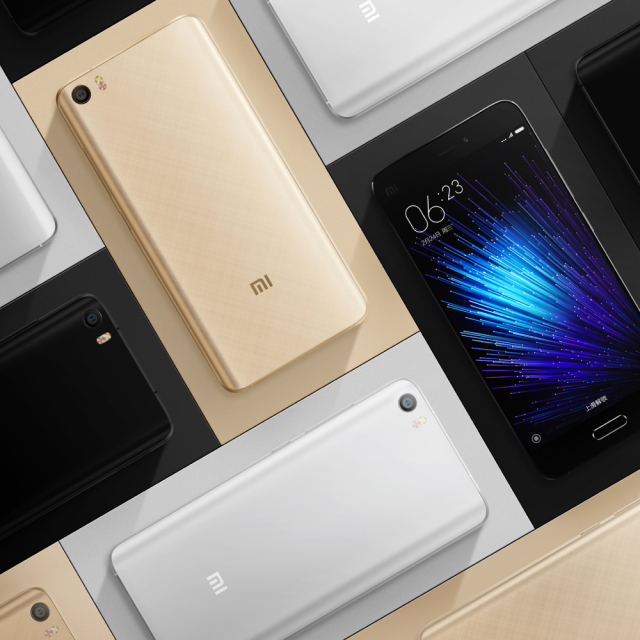
Xiaomi's new Mi 5 offers flagship hardware at an affordable price

 
Xiaomi is once again proving that you do not need to spend a lot of money to get your hands on a flagship smartphone. Its new Mi 5, which is the successor to the popular Mi 4, offers top of the line hardware for just over $300.
 
Mi 5 offers just about anything you could want in a flagship smartphone. It makes you wonder whether it is worth ponying up for a similar device from LG or Samsung, which costs at least twice as much.
 
The only place where Mi 5 falls short compared to the competition is in the display department. Its 5.15-inch screen has a resolution of "just" 1,080 by 1,920, which is not as impressive as the 1,440 by 2,560 resolution that some of its rivals have.
 
That, however, might work in its favor, because typically higher-resolution displays come with a performance penalty, in terms of both battery life and graphics performance. Most people may not notice the difference in pixel density, but they will most certainly appreciate a few more hours of battery life, for instance.
 
Inside, there is a 1.8 GHz or 2.15 GHz Qualcomm Snapdragon 820 processor paired with 3 GB or 4 GB of RAM, depending on the configuration. The base model, which costs around $306, ships with the lower specs, but the mid-range and high-end Mi 5 versions get paired with the faster processor and most RAM. Powering it all is a 3,000 mAh battery, which supports Qualcomm's Quick Charge 3.0 technology.
 
The mid-range version offers 64 GB of internal storage and costs around $351, while the top of the line model has 128 GB of internal storage and can be had for around $458. The larger difference in price likely comes from the choice of back cover, which in the latter case is ceramic as opposed to glass.
 
In the imaging department, Mi 5 offers a 16 MP camera on the back with four-axis image stabilization and phase-detection autofocus. There is support for 4K video, of course. On the front, it has a 4 MP shooter.
 
Xiaomi points out that there is NFC on board, as well as UFS 2.0 storage, 4G LTE+ cellular connectivity, which enables speeds of up to 600 Mbps, VoLTE, and a fingerprint sensor, which is embedded in the home button under the screen. On top of this, there is also a microSD card slot. It comes in at 144.55 x 69.2 x 7.25 mm and 129 g.
 
Mi 5 runs Xiaomi's MIUI skin, atop of Android 6.0 Marshmallow. If you are not familiar with Xiaomi's interpretation of Android, it is a bit over the top overall as it tries to be closer to how iOS looks and works. That is probably the only thing that will be polarizing about Mi 5.
 
Xiaomi will offer Mi 5 in China first, but there is a very good chance that it will be made available in other markets as well, if its predecessor's availability is of any indication.
 
~ Mihăiță Bamburic

1.29.2016

There was a record 1.4 billion smartphones shipped in 2015 and almost a quarter came from Samsung

 
The good news for smartphone manufacturers is that worldwide shipments grew by 12% and hit a record high of 1.4 billion in 2015. The bad news is that the industry just isn’t expanding as quickly as it has done in the past. Last year’s fourth quarter shipments grew just six percent from the same period in 2014, marking the sector's slowest growth rate of all time.
 

The results come from research company Strategy Analytics, which says that the slowdown is primarily due to most people in major markets like China already owning a smartphone and not feeling the need to upgrade. It also cites consumer fears over a global economic downturn as a reason for the slow growth rate.
 
When it comes to who leads global smartphone shipments, Samsung continues to stay ahead of the pack, shifting 81.3 million units in Q4 and 319.7 million units throughout 2015. The 9 percent quarter increase from Q4 2014 represents the Korean company’s fastest growth rate for almost 2 years.
 
Samsung stays ahead of Apple, which shipped 74.8 million units in Q4 and 231.5 million across all of last year – a big improvement on the 193 million devices the Cupertino company shipped in 2014.
 
 
The figures show that Samsung had a 22 percent share of the smartphone market across 2015, while Apple took an 18 percent market share. The research site noted that Apple will need to expand into developing markets such as India and Nigeria if it wants to boost iPhone growth in 2016.
 
Just below Apple lies Huawei, which jumped in front of Lenovo-Motorola into third place. The Chinese firm will no doubt be pleased that it shipped over 100 million smartphones in one year for the first time ever. Lenovo-Motorola, meanwhile, was the only company in the top five to see its shipments decline – down 18 percent across the whole of 2015.
 
Xiaomi stayed at fifth place with a five percent market share. It shipped 11 million more handsets in 2015 than it did in 2014, but growth slowed down in the final quarter. Xiaomi only shipped 2 million more units in Q4 2015 than it did in Q4 2014.
 
~ Rob Thubron

1.11.2016

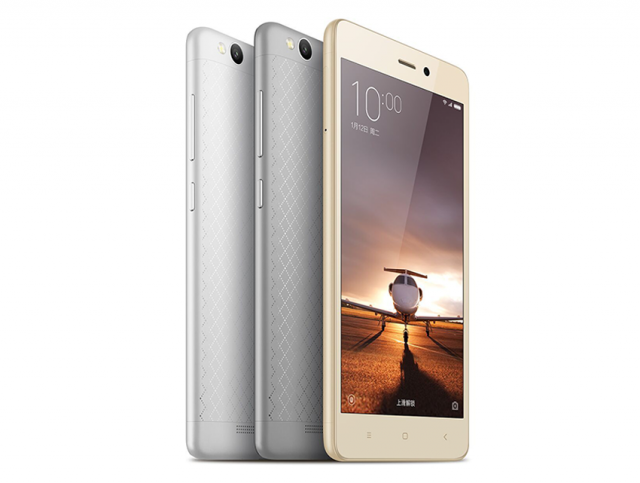
Xiaomi announces Redmi 3 smartphone with huge battery

 
Xiaomi is well known for delivering attractive devices at very affordable prices. Its new Redmi 3 is no exception. The company's latest Android smartphone is a mid-range handset with a huge battery, but with a price tag that puts it closer to entry-level offerings.
 
Redmi 3 is positioned as one of the more affordable Android devices in Xiaomi's lineup, being introduced at the RMB699 (roughly $107) price point. For the money, there is really nothing that potential buyers might miss.
    
The star of the show is, without a doubt, the 4,100 mAh battery, with support for "fast charging" (the device will charge the battery at 5V at 2A). Users can expect to get great battery life, also thanks to Xiaomi's choice of display and processor.
  
Xiaomi has opted for a lower-resolution 5-inch panel (720 by 1,280), which should keep the load on the octa-core Qualcomm Snapdragon 615 processor at a minimum. The chip is coupled with 2GB of RAM.
Redmi 3 has a 13 MP f/2.0 camera on the back, and a 5 MP f/2.2 shooter on the front. The former has phase detection, which theoretically means that it will be able to autofocus accurately and quickly.
 
The smartphone is equipped with 16 GB of internal storage, but also a microSD card slot which supports cards up to 128 GB in size. Also worth noting is that it has dual SIM support; the second slot doubles as the microSD slot.
   
Despite the huge battery, Redmi 3 only measures 139.3 x 69.6 x 8.5 m and weighs 144 g.
  
Redmi 3 will be available in three colors starting tomorrow from Mi.com and Tmall. For the moment, its availability is limited to China, but interested buyers will no doubt find a way to import it. Xiaomi has hinted at international availability, but there are no official plans to bring it to global markets as of yet.
 
~ Mihaita Bamburic

5.17.2015

Xiaomi to hold its first international sale on May 19, lines up crazy cheap products

 
Xiaomi isn’t a household name in the western part of the world. But that is because the Chinese electronics conglomerate only sells its products in a handful of Asian regions. Despite its limited demographic, the company has managed to turn many heads. In its five years of existence, Xiaomi has become the largest smartphone vendor in its home country China and fifth largest manufacturer in the world.
 
Earlier this year, Xiaomi announced its plan to debut some of its products in US and UK by the end of 2015, and the company is now starting to deliver on that promise. It announces today that it will be holding a beta test flash sale on May 19 on its official Mi.com portal. The company will be accepting orders from people in the United States, United Kingdom as well as France and Germany.
 
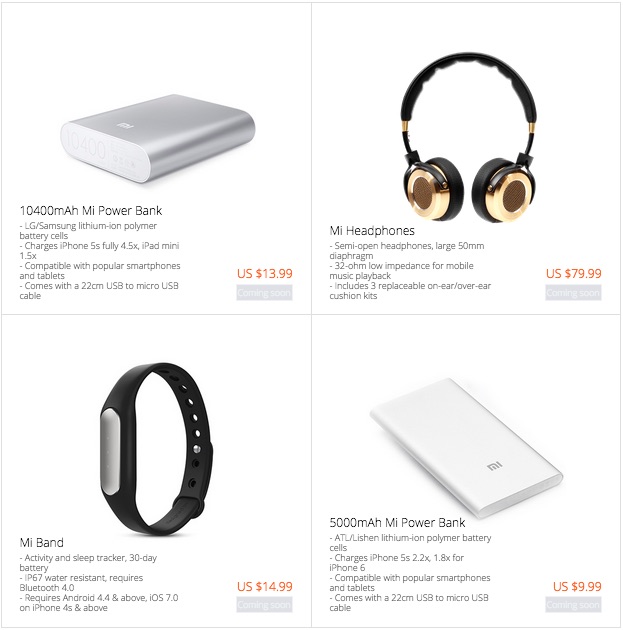
But shoppers won’t be able to grab a Xiaomi smartphone, or its crazy cheap-priced 4k TV just yet. The company instead plans to sell the Mi PowerBank in both 5,000mAh and 10,400mAh capacities for $9.99 and $13.99 respectively, fitness tracker Mi Band for $14.99, and Mi Headphones for $79.99.
 
The company will begin its first beta flash sale on May 19 at 1PM CEST for as long as stocks of its different products last. Will you be purchasing a Xiaomi product next week? Let us know in the comments section below.
 
 
Photo credit: LoopAll / Shutterstock
 
~ Manish Singh

1.28.2015

Xiaomi: Hand over your iPhone, get a Mi Note flagship for free

 
Xiaomi is going hard against Apple in 2015. CEO Lei Jun recently gave several shoutouts to the Apple's inferior design quality on the iPhone 6 when compared to the Mi Note.
 
And now the next step in the battle will focus on swapping iPhones for Xiaomi Mi Note and Mi Note Pro at no extra cost, according to a new report citing Xiaomi's media development director.
 
Users will be able to trade in iPhone 5s (or an older model) for a free Mi Note and trade in an iPhone 6 or iPhone 6 Plus for a free Mi Note Pro, Xiaomi's two new smartphones launched earlier this month.
 
The Mi Note and Mi Note Pro are already half the price of the iPhone alternatives, making it quite a gamble in the price department.
 
If a user is able to get a Mi Note from an iPhone 5 it might be worth it, but we doubt Xiaomi will have any large success with the Mi Note Pro trade in offer.
 
Xiaomi has added a 5.7-inch full HD display, quad-core Snapdragon 801, 3GB of RAM, 16/64GB of internal storage and 3000mAh battery to the Mi Note, or an upgrade to a QHD display, octa-core Snapdragon 810 and 4GB of RAM on the Mi Note Pro.
 
Both exceed specifications for price, beating Apple's iPhone 6 and 6 Plus without much of a fight, however Apple has made it an objective to never compare specs and always test the feel and software.
 
Apple's total iPhone marketshare is up to 16 per cent in China. Xiaomi is no longer the de-facto ruler of mainland China, so it needs to pick up the pace if it wants to be competitive against the leading Apple in 2015.
 
Published under license from ITProPortal.com, a Net Communities Ltd Publication. All rights reserved.
 
~ David Curry

1.15.2015

Xiaomi reveals its iPhone 6 Plus competitors

 
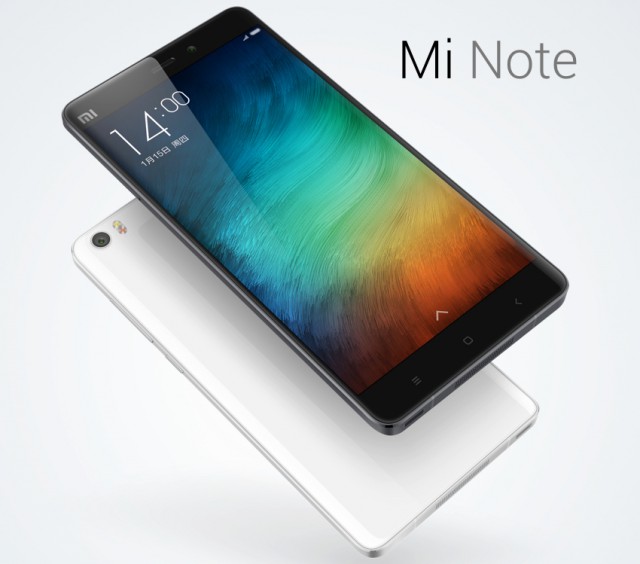
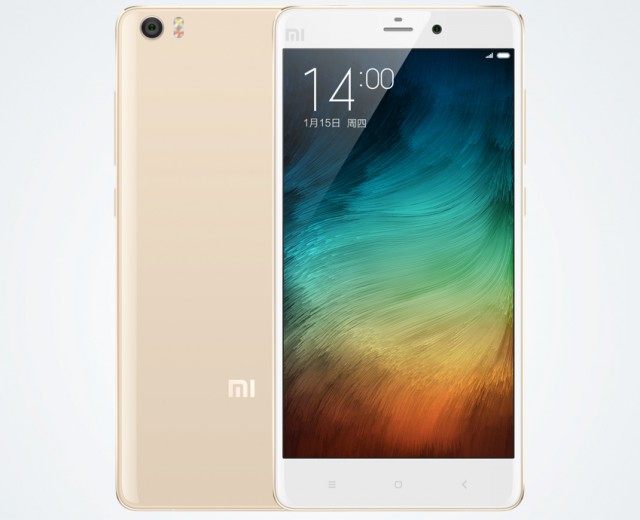
Chinese maker Xiaomi is going after iPhone 6 Plus with two new premium phablets unveiled today at a special event in Beijing. Called Mi Note and Mi Note Pro, the two Android handsets feature high-end hardware and, in typical Xiaomi fashion, lower price-tags than their Apple-made rival.
 
Xiaomi is calling both devices a flagship, although, judging by the specs alone, Mi Note Pro is clearly more deserving of the title, as it features the latest-available technologies. It is also better equipped to take on iPhone 6 Plus, which has proven to be quite successful for a phablet.
 
But, first, let's kick off with the less-expensive and less-impressive of the two. On paper, Mi Note is the phablet that is closer to iPhone 6 Plus with regards to hardware specifications. (That said, its specs are still more impressive, again on paper, than those of iPhone 6 Plus.)
 
It has a 5.7-inch display with a resolution of 1,080 by 1,920. It is protected by a sheet of 3D Corning Gorilla Glass 3 (the 3D bit means it's curved). Power comes from a 2.5 GHz quad-core Qualcomm Snapdragon 801 processor 3 GB of RAM, aided by a 3,000 mAh battery -- Quick Charge 2.0 is supported, as expected. But these are specs that would have been standard a year ago, and today they just don't cut it anymore for a device that is said to be a flagship.
 
On the back there is a 13 MP Sony camera with a wide f/2.0 aperture and optical image stabilization, which should make it a solid low-light shooter. On the front, the camera is a 4 MP unit with two-micron pixels -- it's similar to the camera HTC uses on the back of One (M8) and (M7) going by these two specs.
 
Xiaomi is, however, adding a few interesting bits to Mi Note. The device also gets improvements to the audio quality courtesy of a 24-bit/192 KHz Hi-Fi audio system, and dual-SIM support where both slots are 4G-enabled -- one is a nano-SIM and the other is a micro-SIM.
 
 
Mi Note will be offered in two versions, one with 16 GB of internal storage for CNY2,299 (around $371) and the other with 64 GB of internal storage for CNY2,799 (around $452). It comes in at 155.1 x 77.6 x 6.95 mm and 161 grams. Mi Note goes on sale next quarter in Singapore, and, presumably, other markets as well.
 
Mi Note Pro, as I implied, features all the latest goodies that a spec-fan can dream of. It has a 5.7-inch display with a resolution of 1,440 by 2,560. That gives it a pixel density of 515 pixels per inch. Inside, there is an octa-core 64-bit Qualcomm Snapdragon 810 processor aided by Adreno 430 graphics and a whopping 4 GB of RAM.
 
It also features 64 GB of internal storage as standard, which is a capacity that is optional on iPhone 6 Plus as the base model only offers 16 GB. Oh, and just like Samsung's Galaxy Note Pro LTE-A, it supports 4G LTE Category 9 cellular networks, which means download speeds of up to 450 Mbps and tri-band carrier aggregation support.
 
These are the main differences that Xiaomi has revealed so far between Mi Note and Mi Note Pro. The latter, of course, is also more expensive, costing CNY3,299 (about $533). There is no launch date announced for Mi Note Pro yet.
 
You may be thinking how the two stack up to iPhone 6 Plus. Well, as far as power goes it is a difficult comparison to make given the different architectures these devices have. But, here are the main specs of Apple's phablet: 5.5-inch display with a resolution of 1,080 by 1,920; 64-bit Apple A8 processor (dual-core 1.4 Ghz CPU, 1 GB of RAM); 8 MP main camera with f/2.2 aperture and optical image stabilization; 1.2 MP front camera; 16 GB, 64 GB or 128 GB of internal storage. It comes in at 158.1 x 77.8 x 7.1 mm and 172 grams.
 
But what about price? Well, here is where Xiaomi's phablets have a clear advantage. In 16 GB trim, iPhone 6 Plus costs CNY6,088 (about $983 -- I'm bringing up Chinese prices because Xiaomi operates in China and other Asian markets). For a 64 GB iPhone 6 Plus one has to shell out CNY6,8888 (about $1,113). Even Mi Note Pro is less than half the price of a similar iPhone 6 Plus, but Mi Note is nearly two and a half times cheaper. Clearly, price-conscious buyers will see this as a huge advantage, which is what Xiaomi is betting on.
 
~ Mihaita Bamburic

5.13.2014

A new crop of Android smartphones is on the rise

Jack Wallen examines the rise of a line of Android devices that the US market may have no idea even exists -- a line that could easily take over (if given the chance). 

When you think of Android smartphones, a select few companies come to mind: HTC, Samsung, LG, Motorola. That's about it, right? If you live in a bubble, yes. If, however, you reach beyond that shell, you will discover a new crop of Android-powered smartphones readily available in other parts of the world. This includes the following:
Let me introduce you to each of these.
 
The OnePlus One is one of the single most powerful smartphones on the market. With a 2.5 GHz Snapdragon 801 processor, 3 GB of RAM, a 5.5-inch 1080p display, and plenty of specs that should have the major Android manufacturers shaking in their boots, the OnePlus One is one of the first Cyanogen-powered devices on the market. Because it's driven by Cyanogen, it can be highly customized. So, you have incredible power and serious customization packed together in a single device. No wonder the OnePlus One is one of the most sought-after Android devices on the planet! What's even more amazing is the price -- $299 for the 16 GB model or $349 for the 64 GB version. That's half the price of most other flagship models on the US market.
 
Figure A
Image credit: OnePlus
The OnePlus One.

OPPO

OPPO's new N1 offers one of the more unique takes on the smartphone camera. The camera sits on top of the camera and can be rotated 206 degrees . Watch the video:
 
 
The N1's design is a truly stunning all-aluminum work of art. And if that 206-degree rotating camera weren't enough, what about the 12 cm rear touch panel that allows you to control your device from the back side? That's innovation.

Xiaomi

Xiaomi may not be crafting works of art or building the most powerful devices on the planet, but they are selling quality smartphones at insanely low prices. Their new Redmi Note specs 2 GB of RAM on a 1.7 GHz processor for $179.00 ( Figure B). Or you can step it down to 1 GB of RAM and a 1.4 GHz processor for $129.00. That's cheap (and also the reason the company has two phones on the top 10 global sales list). What's more surprising is that, in 2013, Xiaomi overtook Apple's sixth place spot in the Chinese smartphone market (Samsung resides on top).
 
Figure B
Xiaomi Redmi Note.
Any one of these manufacturers could easily hand the world the single greatest Android device. Does that mean said device could become not only the most popular smartphone but a household name? That's hard to say. Breaking into the US market isn't easy for such manufacturers. However, the US isn't the only market. When you look at the global smartphone market, there are only three manufacturers in the top 10 highest selling devices list:
  • Apple
  • Samsung
  • Xiaomi
As OnePlus, OPPO, and Xiaomi continue to produce quality and inexpensive devices, that top 10 list is going to change. Companies like Apple and Samsung do not have nearly the flexibility or incentive to innovate as these Chinese companies. Innovation could easily make or break OnePlus, OPPO, and Xiaomi. From the looks of it, two companies are nailing it from a technical perspective and the other from the price point. I'm not willing to make a prediction, but I would certainly be willing to bet all three of these companies will make major ripples in the smartphone waters over the next year.
 
What do you think? Can a relative unknown company (to the US) make any noise in a market currently controlled by a small group of manufacturers? Can a device that outshines all other flagship devices find its niche in the US -- or will these companies never break the barrier to US entry? Share your thoughts in the discussion thread below.
 
~ Jack Wallen