Cisco Learning Network Store Promotions Page
Showing posts with label Huawei. Show all posts

4.06.2016

Huawei's new P9 flagship features dual-lens Leica camera

 
One of the things that separate flagships from the rest of the smartphone crowd is their camera performance. Consumers expect to take great photos and videos with a top of the line handset, so manufacturers tend to use premium sensors and lenses for their best offerings. And, sometimes, they team up with a household name in the field when they really want to woo potential buyers.
 
For its latest flagship smartphones, called P9 and P9 Plus, Huawei has partnered with famous camera maker Leica. That is not the only thing that's different about its camera, however, as the main highlight is actually its dual-lens setup, which, among other things, enables the device to capture depth information for that lovely bokeh effect.
 
"Huawei is excited to give P9 users the best smartphone photography experience by leveraging the unrivaled capabilities of Leica, the leader in the world of imaging for more than 100 years", says Huawei Consumer Business Group CEO Richard Yu. "Consumers around the world use their smartphones to take billions of pictures each year, making photography critical to user experience. P9 users can now capture images with unmatched clarity, richness and authenticity, with a masterfully designed and powerful smartphone that looks and feels incredible".
 
It remains to be seen whether P9 lives up to those claims but, in the meantime, let's take a look at some of its most-important specs, starting with the cameras, of course.
 
The main thing that you need to know is that the dual-lens setup features two 12 MP, Sony-made, sensors and matching Leica-branded Summarit H lenses with an f/2.2 aperture and an equivalent 27mm focal length. Its field of view is typical of a high-end smartphone, but its low-light performance may to suffer next to, say, Samsung's Galaxy S7 which has a wider-aperture -- f/1.7 -- lens that can transfer much more light to the sensor.
 
Huawei, however, claims that P9 "truly excels in low-light conditions", though I have a hard time believing that after using a number of devices with a similarly-large lens aperture. There is only so much that you can do with a smartphone sensor these days before running into physical limitations.
 
Worth noting is that one sensor is RGB, for capturing color, while the other is monochrome, for, Huawei says, capturing better detail. There is Hybrid Focus technology, for super-accurate and fast autofocus. There are also a number of presets to change how images look, which is fairly standard for any smartphone today.
 
P9 is designed as standard-sized flagship smartphone, so it uses a 5.2-inch display. Where it falls short compared to some its Android-powered rivals is in the resolution department -- its resolution is 1,080 by 1,920. Samsung's Galaxy S7, for instance, has a similarly-sized screen with a resolution of 1,440 by 2,560.
 
P9 Plus is a larger version of the flagship, featuring a 5.5-inch screen and Press Touch technology. That is Huawei's version of 3D Touch, which debuted on iPhone 6s and iPhone 6s Plus last year.
When it comes to processing power, Huawei has equipped P9 with a homebrew processor, called Kirin 955. Maxim clock speed is 2.5 GHz. There is a 3,000 mAh battery inside, which Huawei claims delivers "outstanding mobility and battery life". There are no estimates offered, however. P9 Plus features a 3,400 mAh battery, and adds dual-IC Rapid Charge, which is similar to Qualcomm's QuickCharge technology -- it is said to add up to six hours of talk time after 10 minutes of charging.
 
Last, but not least, both devices come with a fingerprint sensor, a feature which is becoming standard on smartphones in this class. It, of course, runs Android, but Huawei does not say which version. Hopefully, that'll be Marshmallow.
 
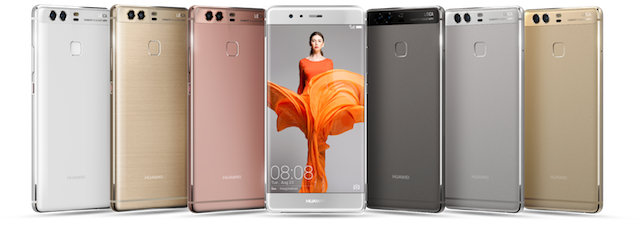
Huawei launched P9 in UK, with availability slated for May for both models. P9 will be priced at £449 off-contract, for a 32GB version with 3GB of RAM, while P9 Plus, which features 64 GB of storage and 4GB of RAM, will cost £549. You can check the available color options in the main photo, but you should know that availability will vary.
 
~ Mihăiță Bamburic

1.29.2016

There was a record 1.4 billion smartphones shipped in 2015 and almost a quarter came from Samsung

 
The good news for smartphone manufacturers is that worldwide shipments grew by 12% and hit a record high of 1.4 billion in 2015. The bad news is that the industry just isn’t expanding as quickly as it has done in the past. Last year’s fourth quarter shipments grew just six percent from the same period in 2014, marking the sector's slowest growth rate of all time.
 

The results come from research company Strategy Analytics, which says that the slowdown is primarily due to most people in major markets like China already owning a smartphone and not feeling the need to upgrade. It also cites consumer fears over a global economic downturn as a reason for the slow growth rate.
 
When it comes to who leads global smartphone shipments, Samsung continues to stay ahead of the pack, shifting 81.3 million units in Q4 and 319.7 million units throughout 2015. The 9 percent quarter increase from Q4 2014 represents the Korean company’s fastest growth rate for almost 2 years.
 
Samsung stays ahead of Apple, which shipped 74.8 million units in Q4 and 231.5 million across all of last year – a big improvement on the 193 million devices the Cupertino company shipped in 2014.
 
 
The figures show that Samsung had a 22 percent share of the smartphone market across 2015, while Apple took an 18 percent market share. The research site noted that Apple will need to expand into developing markets such as India and Nigeria if it wants to boost iPhone growth in 2016.
 
Just below Apple lies Huawei, which jumped in front of Lenovo-Motorola into third place. The Chinese firm will no doubt be pleased that it shipped over 100 million smartphones in one year for the first time ever. Lenovo-Motorola, meanwhile, was the only company in the top five to see its shipments decline – down 18 percent across the whole of 2015.
 
Xiaomi stayed at fifth place with a five percent market share. It shipped 11 million more handsets in 2015 than it did in 2014, but growth slowed down in the final quarter. Xiaomi only shipped 2 million more units in Q4 2015 than it did in Q4 2014.
 
~ Rob Thubron

7.27.2015

Huawei P8: The best flagship smartphone you've never heard of [Review]

 
Huawei is not, perhaps, a name that springs immediately to mind when you think about smartphones. But with this latest model the Chinese manufacturer is making a bid for a slice of the top end market dominated by the likes of the iPhone and Samsung Galaxy.
 
You get the impression of quality from the moment you receive it. It comes in a smart, black plastic box with a cardboard slip case; the phone sits in this with a shiny edge uppermost so it’s like opening a piece of jewelry.
 
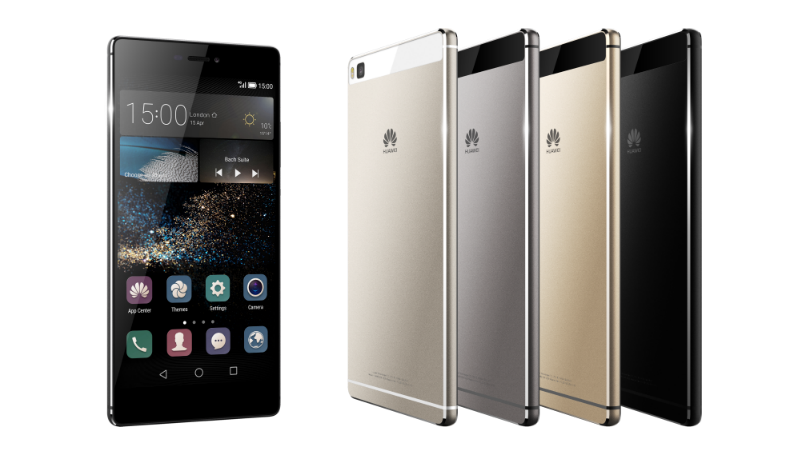
The P8 has a metal body that’s a slender 6.4mm thick -- that’s thinner than a Galaxy S6 or an iPhone 6. There’s a 5.2-inch full HD display and it’s available in 16GB or 64GB versions, you can add a microSD card up to 128GB for extra storage. It uses an eight-core 1.5GHz processor and two cameras, 13 MP at the rear and 8 MP at the front, and of course it’s 4G. Android 5.0 Lollipop is installed but Huawei adds its own Emotion interface which gives a different look and feel.
 
The design is smart, with a metal back and edges along with a Gorilla Glass screen, the power and volume controls along with trays for the SIM and microSD cards are all on the right-hand side. The headphone jack is on top and the USB port at the bottom along with speaker slots.
 
The P8 is available in four colors, two for each version; our review sample came in Champagne Gold which is actually more of a silver. The phone feels nicely weighted and while quite large isn’t too big for one-handed use.
 
 
In Use
 
Huawei foregos having separate navigation controls and displays them on the bottom of the screen instead. The screen itself is clear and sharp with 1,920 x 1,080-pixel resolution, which equates to 424 pixels per inch. That’s less than the 577ppi of the Galaxy S6 but you don’t really notice the difference on a screen this size. It delivers smooth video playback with strong colors and touch response is good.
 
It has a 2,680mAh battery and you’ll get about a day and a half of use out of a full charge. If you want to play games or watch videos intensively though you can easily run out of juice in around eight hours.
 
There’s a clever Speech awareness feature that allows you to wake the handset and say "where are you?" to which the phone replies by lighting the flash LED, playing some music and speaking a rather creepy "I’m here" -- handy if you tend to forget where you put your phone. Whilst this is a neat idea, in practice you need a fairly quiet environment for the phone to hear you.
 
Another neat idea is that the phone can differentiate between tapping the screen with a finger and a knuckle. Double tap with a knuckle and it takes a screen shot, draw a circle and you can access a crop tool. Whilst this is a clever party trick there’s currently nothing else you can do with it, but maybe it will be expanded in future versions.
 
The 13 MP rear camera has a dual LED flash and the phone uses a DSLR quality image processor. Whilst this is less than the 16 MP of the S6 it’s more than the 8 MP of the iPhone 6. There’s more to photography than the number of pixels though and in use it delivers natural colors and it has an impressive auto mode that helps ensure you get the best results. It’s good in low light too.
 
If you need to grab pictures in a hurry the P8 lets you take a shot while the phone is locked by double pressing the down volume button. There are various options to let you enhance your photos, including a beauty mode which irons out wrinkles, slims faces, enhances eyes and generally tries its best to make you look like Kate Moss -- with slightly scary results. There’s a light painting mode too so you can take long exposure shots of night time traffic or a friend writing in the air with a torch. Let’s not forget the front 'selfie' camera which at 8-megapixels offers better resolution than most of the competition.
 
WPS Office and NQ anti-virus are pre-installed but otherwise the phone isn’t overloaded with software, though you do get a few useful tool apps including a mirror and a torch. If you’re used to standard Android, however, the Huawei interface doesn’t feel quite as polished, with rather dull, uninspiring icons in its default settings. You can tweak it via a Themes app to brighten things up a bit though.
 
Conclusion
 
Shop around and you can pick up a 16GB P8 for about £360 which is cheaper than the competition from Samsung and Apple. If you want a contract, Carphone Warehouse is currently offering it for £21.50 a month on its own iD network. Price is really the only advantage it has, there are no big technical advantages, but don’t let the fact that the Huawei isn’t a big name phone put you off.
 
The P8’s hardware is well up to the standard you’d expect of a flagship phone, the camera in particular is impressive, and it feels well made. The only major thing missing compared to a Galaxy S6 or iPhone is a fingerprint scanner.
 
Other than that what lets it down are the non-standard interface and some slightly gimmicky features like the knuckle sensing mode that don’t feel quite thought through. But spend a bit of time tweaking the user experience and it’s a phone you can quite happily live with and not feel that you’ve bought second best.
 
Pros
 
Smart design
Solid feel
Good camera quality
 
Cons
  
Non-standard Android interface
Hit and miss speech control
No fingerprint reader
 
Published under license from ITProPortal.com, a Net Communities Ltd Publication. All rights reserved.
 
~ Ian Barker