I joined Facebook on Sept. 30, 2006 -- that's four days after opening to the public. The service promised so much, and I was excited by this compelling competitor to MySpace, which let customization run amok. But within short time, my interested declined; over the years I've come to loathe Facebook, which user interface is among the worst ever, as the site increasingly clutters with distracting elements. MySpace is now clean by comparison. Far worse: Privacy settings too often change, and what's different is often lost, even if temporarily, in the grotesque layout.
Overnight, Instagram, which Facebook now owns, announced radical rights policy changes starting in
mid-January. The photo-sharing service grants itself a perpetual license to use and to sell your content. No permission required. That's one policy change too many for me. On December 9, I posted to Google+ my intentions to give up Facebook on the last day of the month. I thought more to empty the account of friends, information and content but not cancel -- for sentimental reason of having joined so much earlier than most everyone else. My intentions changed. I'm done with Facebook on December 31. I'd cancel today, but want intimates -- family and close friends -- to have forewarning.
Changing Mores
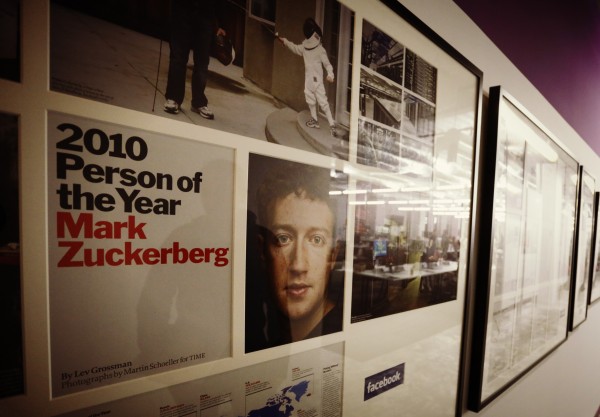
Facebook isn't a social network. It's a philosophy that reflects CEO Mark Zuckerberg's personal attitudes about privacy and his inability to operate within the confines demanded by social norms. Over the years, he has repeatedly affirmed that privacy doesn't matter -- that "he doesn't believe in it". His stance is advocacy, seeking to upend longstanding privacy mores by way of Facebook.
Yet there's something seemingly insincere about Zuckerberg's privacy stance, because Facebook stands to profit so much from content posted for free by users and the mining of the personal data, behavior and activities for profit by way of advertising and third-party relationships.
Facebook's CEO reminds me of young Bill Gates. Both men launched globally-influential companies. They're cunning and competitive programmers with shrewd business sense, questionable social skills (about the same age) and tenacious drive. Microsoft built an operating system for PCs, while Facebook is an operating system in the cloud. Developers write applications for both. Both men benefitted from timing -- Gates the shift from mainframes to PCs and Zuckerberg cloud-connected social sharing.
Anti-Social
Zuckerberg's privacy philosophy and easy willingness to exploit others for profit says something about his own social skill set and how well he fits in with others. Think about it. Why do you need Facebook if you can easily make and maintain relationships? The service is supposed to be a social network, but in many ways it's anything but. There's something very anti-social about Facebook, or perhaps it's better to say "awkward social" or socially awkward
-- like it's for people who don't easily make or maintain relationships.
For the socially awkward, where distance is an advantage and the person engaged reads the intelligence of their writing rather than hears them or sees their uncertain facial and body expressions, Facebook is pure empowerment. What irony! A super smart but socially awkward geek creates the global watering hole for making and maintaining relationships. Perhaps because they're not so easy for him.
Should the truly socially inept, particularly those lacking empathy for others, have as much influence as Zuckerberg does through Facebook? Answer that question in context of the service's brazen privacy changes, which are frequent. On the one hand, the frequency of them reflects social awkwardness -- that Facebook the entity doesn't understand how to relate well to others; so it tries new things. On the other hand, the changes create confusion about what is and isn't private, which disrupts behavior (and the mores behind them) and opens corridors for quick profits from personal information.
Facebook privacy changes are seemingly endless. The service proposed some new ones late last month, including combining personal information with Instagram that Electronic Privacy Information Center opposes.
The Long Goodbye
Anyone reading my stuff over the years knows I have no qualms making radical changes to my computing lifestyle, with the Apple boycott being one of the most recent. Leaving Facebook, I find unexpected irony, because my first post, on Oct. 1, 2006, was about giving up something else. Excerpt:
I’ve been increasingly unhappy with the amount of DRM-protected music that I have amassed...My silent stewing over DRM content is a months’-long process...My problem with DRM is how it creates unnecessary 'pay for performance' dilemmas for us consumers. I can watch a DVD on the TV or PC, but I’ve got to buy the movie again to watch it on a portable device like iPod. Some content is transferable, but only by accepting newer DRM mechanisms. Additionally, technologies like HDCP and HDMI will limit consumption of high-definition content to specific DRM-supporting devices.
No pay, no play.
I don’t expect most other consumers to follow my lead: Make another choice. Neither Hollywood nor the music industry is the only source of good entertainment. Books, local plays or even YouTube offer loads of enjoyment. Some of the amateur YouTube stuff is a hoot (and you maybe thought I meant the uploaded copyrighted TV shows; naw). There are podcasts and video blogs (check out the Scoble Show; he really needs an editor, but he’ll learn). There is plenty of enjoyable and entertaining content available out there—and most of it is free. No pay. Do play. Share away.
I achieved DRM freedom in early October 2007, so almost a year later.
As for social networking, I have been more active on Google+, which is where you can find me henceforth.
~ Joe Wilcox