Cisco Learning Network Store Promotions Page
Showing posts with label Smartphones. Show all posts

9.29.2016

IP shielding enables secure voice and video conferencing

 
There's a great deal of emphasis on securing data and email, but essential business communication via voice and video tends to get ignored. Yet these communications are vulnerable, partly because devices constantly release metadata, telling the network where and how to route communications.
 
To address this, Privacy-as-a-Service platform specialist Dispel is launching a secure voice and video conferencing service, a single application designed to provide enterprises and individuals with impenetrable private communications on their smartphones and mobile devices.
 
"Parallel with the increased use of encryption, big data analysis and behavioral inference have become the techniques of choice for technically sophisticated parties attempting to decipher what companies, governments, and persons of interest are communicating, as well as where their assets are located," says Ethan Schmertzler, CEO of Dispel. "Accessible metadata lets competitors pre-emptively learn of deals by searching and monitoring tracked executive communications for patterns. Governments can locate journalists and trace back to their sources. ISIS can locate human rights workers. Intelligent criminals can track law enforcement to cloak illicit activities".
 
Using Dispel's platform, each conversation is twice encrypted using AES-256 with unique 2048-bit RSA for initial key exchange. What's more companies retain full chain of custody over all data and materials, and there's packet-level anonymity.
 
The Dispel platform leverages five major cloud providers -- Amazon, Softlayer, Digital Ocean, Vultr and Rackspace -- with operations in numerous countries. It's built on an unattributable, multi-cloud ephemeral infrastructure, the data Dispel protects is constantly in motion, presenting a moving target that hackers cannot find or attack.
 
Dispel's voice and video components are available for Windows, Linux, macOS, and Android, with iOS support coming soon. Visit the company's website to find out more.
 
Image Credit: Andrey_Popov / Shutterstock
 
~ Ian Barker

8.31.2016

Samsung's Galaxy Note 7 delayed due to quality issues -- exploding batteries suspected

 
The Galaxy Note 7 has received some extremely positive reviews. The Guardian described it "as without doubt, the best phablet going" and Engadget declared it "Samsung’s best phone yet". High praise indeed.
 
If you were hoping to get your hands on the new smartphone there’s some bad news. Shipments of the new devices are being delayed while Samsung conducts additional quality control testing.
 
There’s no word on the reason for the additional tests, although Reuters says some Note 7 users in South Korea have reported the batteries in their phones exploding. That seems a likely reason for the extra tests as Samsung will not have delayed shipments for anything minor, but it will be highly worrying if true.
 
The smartphone manufacturer confirmed the delay earlier in a brief statement saying simply: "Shipments of the Galaxy Note 7 are being delayed due to additional tests being conducted for product quality".
 
Samsung will be keen to resolve any potential problems with the new devices and get shipments back on track as soon as possible and we will update this post once more information becomes available.
 
~ Wayne Williams

8.22.2016

Samsung is planning an Apple-style refurbished phone program

 
If you want to get your hands on cheaper Apple products, you can opt for the secondhand market on eBay, or you could go for an official refurbished device from the company itself. Not wanting to miss out on a trick, Samsung looks set to launch its own refurbished smartphone program.
 
Citing "a person with direct knowledge of the matter", Reuters says the program could launch as early as next year. With Samsung hardware selling for something of a premium -- particularly flagships like the Galaxy Note7 -- consumers are as keen to seek out a saving as Samsung is to ensure ongoing profit in an ever-competitive market.
 
Reuters reports that the handsets of those signing up for a one year upgrade program could be sold on in a bid to maintain profit margins. At the moment it is not clear how much of a discount Samsung might offer on refurbished handsets, and the company is yet to issue an official statement about the program.
 
As with Apple, any refurbishment program run by Samsung is likely to prove popular with people who are keen to get their hands on a premium brand, but find that they can't afford to buy the very latest handsets. For anyone who is willing to wait a year, the program will offer a cheaper jumping on point that benefits customers and Samsung alike.
 
~ Mark Wilson

8.02.2016

Meet Samsung Galaxy Note7

 
Samsung today unveils one of the most hotly anticipated smartphones of 2016 -- the Galaxy Note7. As the latest flagship in the popular series it builds upon the success of the Galaxy S7 line, featuring similar top of the line hardware, while boasting software enhancements that accommodate the now-famous S Pen.
 
Quite frankly, no one would blame you for saying that the Galaxy Note7 looks like a stretched out Galaxy S7 edge that has an S Pen at the bottom. Many of the specs are basically the same and, as a first for a device in this series, even the body is waterproof. So what does it bring to the table?
 
Let's get the main specs out of the way first. We'll start with the display, which is a 5.7-inch Super AMOLED panel boasting a resolution of 2,560 by 1,440. That is on par with its predecessor, and only slightly larger than the screen on the Galaxy S7 edge (5.5-inch panel with the same resolution). However, the Galaxy Note7 display is protected by Corning's Gorilla Glass 5, used for the first time in a smartphone, and is also curved on both side edges.
 
The Galaxy Note7 is powered by an octa-core processor (four cores clocked at 2.3GHz and the other four at 1.6GHz) built on the 14nm manufacturing process, 4GB of RAM and a 3,500mAh battery. The battery is smaller than on the Galaxy S7 edge (3,600mAh), mind you, but only just. Samsung says that it supports fast charging, but wired and wireless, and that it is WPC and PMA compatible.
 
In the imaging department, you have a 12MP Dual Pixel camera on the back with optical image stabilization and an f/1.7 lens, while on the front there is a 5MP shooter that also boasts an f/1.7 lens. To store all your photos you get 64GB of UFS 2.0 internal storage and a microSD card slot for expansion. Other things worth noting are the presence of NFC, Wi-Fi 802.11 ac, Bluetooth 4.2 LE, and 4G LTE Cat.9 support, which enables transfer speeds of up to 450 Mbps for downloads and 50 Mbps for uploads.
 
But here is what sets the Galaxy Note7 apart from its Galaxy S7 cousins. First of all, it has an iris sensor, which adds a new way of unlocking and securing your smartphone. Second, there is a USB Type-C port at the bottom, which is a first for a Samsung flagship -- there is also a new GearVR to work with the USB Type-C port.
 
Then there is the S Pen, which, as you might expect, is joined by some new functionality on the software side. You get a new app for writing notes called Samsung Notes, the ability to create and share GIFs, new Air Command features, and a smaller tip that improved pressure sensitivity.
 
The Galaxy Note7 features Android 6.0.1 Marshmallow out of the box, which will soon be superseded by Android 7.0 Nougat. Samsung has added lots of enhancements, like a Power Management UX in Smart manager, new S Health app, and beefed up KNOX security. There is also Samsung Cloud, which gives users 15GB of free cloud storage.
 
The Galaxy Note 7 measures 153.5 x 73.9 x 7.9mm and weighs 169g. It will be available in four colors, Black Onyx, Blue Coral, Gold Platinum, and Silver Titanium, starting August 19. Pre-orders kick off today in US. At T-Mobile, for instance, it will be available to pre-order at 9:01pm PST, costing $849.99 outright.
 
There will also be a line of accessories dedicated to the Galaxy Note7, which includes an S View Standing Cover, and a water-resistant backpack for charging on the fly.


~ Mihăiță Bamburic

New security solution offers anytime, anywhere user protection

 
As growing numbers of devices are connected to the internet, security and privacy concerns grow. Businesses are looking for solutions that provide protection for both the endpoint and the network.
 
Israel-based Allot Communications is announcing a new collaboration with Intel Security to introduce McAfee Unified Security Powered by Allot, providing complete end-to-end security capabilities.
 
The solution blends advanced threat detection technologies in the network and at the endpoint with customer intelligence and comprehensive personalization capabilities to deliver a scalable platform that simplifies security service activation, service awareness, operation and management. Deployed by communication service providers (CSPs) as a value-added security service to their customers, it offers comprehensive protection for users at home, at work and on-the-go, and features a consumer-friendly interface and simple self-management capabilities.
 
"With the proliferation of mobile devices and the exponential growth in IoT, the combination of Intel Security's expertise in the cyber security domain with Allot's vast experience in the CSP network-based Security as a Service market delivers immediate and unparalleled value for operators and consumers alike", says Andrei Elefant, president and CEO at Allot Communications. "We see significant interest in the joint solution, including several engagements in progress. We are excited about this collaboration and are looking forward to working jointly with Intel Security and to expanding Allot's global reach".
 
Unified Security works with devices ranging from smartphones and tablets to gaming consoles, smart TVs and more. It can help guard against bots, malware, phishing and spam, plus it uses Intel's True Key to allow users to sign in using features that are unique to them instead of having to remember passwords. Additional features include ad blocking and parental controls.
 
You can find out more on the Allot website.
 
Image Credit: alphaspirit / Shutterstock
 
~ Ian Barker

7.28.2016

BlackBerry claims its second Android smartphone is 'world's most secure'

 
BlackBerry's Priv, hasn't quite been a huge hit with consumers, but the company is not ready to give up just yet as it has introduced its second Android handset, called DTEK50. The selling point? BlackBerry claims that it is the "world's most secure Android smartphone".
 
The market for privacy and security-focused smartphones seems to be quite small -- insignificant, really -- if we are to look at how poorly Priv and Silent Circle's Blackphone have been selling so far. And it is hard to see how the new DTEK50 will change that.
 
BlackBerry's second Android smartphone is actually a rebadged Alcatel Idol 4, which is a typical mid-range Android smartphone in terms of hardware specifications. Of course, the main difference lies in the software, which is likely why it costs $299.99 off-contract.
 
When you look at the smartphones that you can buy for around $300 it is hard to get excited about a rebadged Idol 4, which has a 5.2-inch full HD display, Qualcomm Snapdragon 617 processor, 3GB of RAM, 13MP main camera, 8MP front-facing camera, and a 2,610mAh battery. Those are all fine, but not class-leading in that price range.
 
BlackBerry has listed a whole bunch of software features that should make IT people super happy, but they may not sound convincing to the contingent who buy most smartphones. Fortunately, the enterprise still likes BlackBerry so at least there's that.
 
BlackBerry says that the DTEK50 will be available directly through ShopBlackBerry.com in US, Canada, UK, France, Germany, Italy, the Netherlands, and Spain. It will also be offered in other markets across the globe through "more than 40 partners". Those who decide to get a DTEK50 will also get a BlackBerry-branded Mobile Power Pack that retails for $59.99, which is offered until August 8 for free.
 
~ Mihăiță Bamburic

6.09.2016

Watch Lenovo reveal its latest tech innovations, including a Protect Tango smartphone, here -- LIVE

Lenovo has attracted a lot of criticism recently due to its occasional bundling of malware and flawed applications on its PCs, but the Chinese technology company does produce some very good products.
 
Today marks the start of Lenovo Tech World, the firm’s annual technology showcase, and among the products set to be launched will be the world’s first Project Tango-enabled smartphone, which Lenovo says "promises to make AR and VR as pervasive as your GPS".
 
We’re expecting to see two Moto Z handsets revealed -- the Moto Z Style and Moto Z Play -- with a modular backplate nicknamed MotoMods. This will allow users to improve the handsets by snapping on different modular accessories. Don’t like the existing camera? Replace it. Speakers not good enough? Choose a different option.
 
In addition Lenovo is promising to show off its latest concept products.
 
Lenovo Tech World takes place in San Francisco today, 9 June 2016, and the company will be livestreaming the event keynote which you can watch below.
 
The show begins at 10am PST/1pm EST/6pm BST.
 
 
~ Wayne Williams

5.26.2016

Google plans to replace your Android password with a 'trust score'

 
Google wants to do away with traditional passwords on Android and replace them with "trust scores".
 
The company outlined how it is planning to make the transition away from passwords on its mobile platform by 2017 during its I/O conference last week. By using a variety of different metrics, Google’s Trust API technology would be able to replace traditional passwords and pins used to unlock its smartphones.
 
Typing speed, vocal inflections, facial recognition and how close a user’s device is to familiar Wi-Fi hotspots and Bluetooth devices are some of the metrics that the new system will use to determine if the user accessing the device is indeed its owner.
 
Google will allow access to games and basic tools even if a low trust score is detected. This would allow other users to access the core functionality of a device without delving into more private sensitive data. A device could then be used in what is essentially guest mode without the need to switch from its primary account. Apps that are more sensitive such as email and online banking apps would require correct Wi-Fi and Bluetooth data along with a high score to open.
 
While it will be easier for other users to access a phone, Google’s new trust score system could lead to possible privilege exploitation attacks. However if a user sets a passcode and then forgets it, they will be locked out and unable to access their own data. So essentially Google has made a trade-off between security and convenience with its trust score system. This is quite different from how Android currently operates as it lets a user access every app on a device once it has been unlocked.
 
Richard Lack, director of Sales EMEA at identity management firm Gigya, is in support of Google’s new initiative: The future lies in methods of authentication without passwords, which consumers clearly favor both in terms of convenience and enhanced security.
 
"Biometric authentication is a powerful enabler allowing businesses smart enough to deploy it to significantly increase rates of registration, gaining data and insight about their customers, while also increasing customer security. This is a win/win scenario which sounds the death-knell for awkward and insecure passwords sooner than we may imagine".
 
Published under license from ITProPortal.com, a Net Communities Ltd Publication. All rights reserved.
 
ymgerman / Shutterstock.com
 
~ Anthony Spadafora

4.11.2016

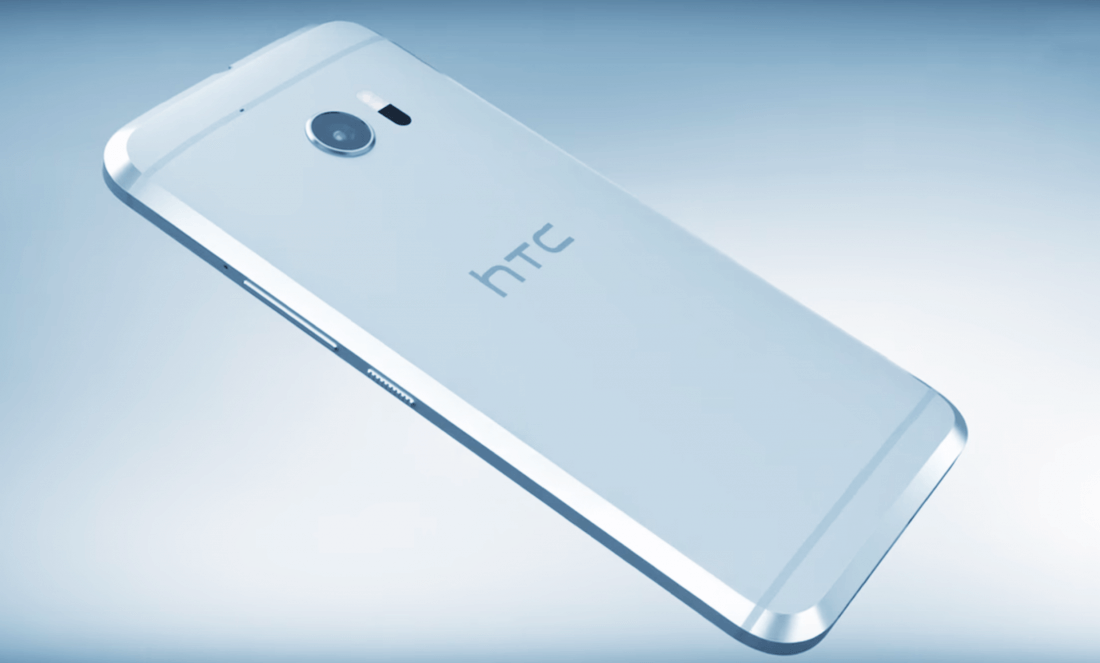
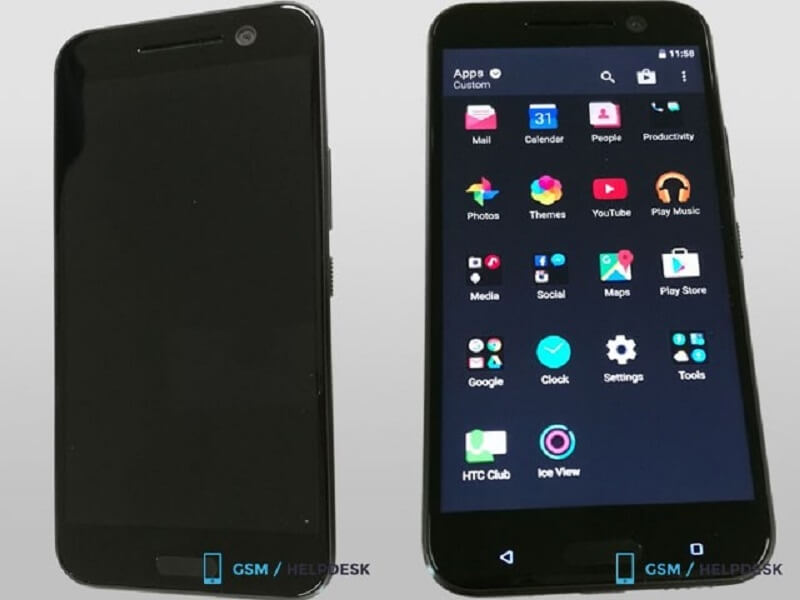
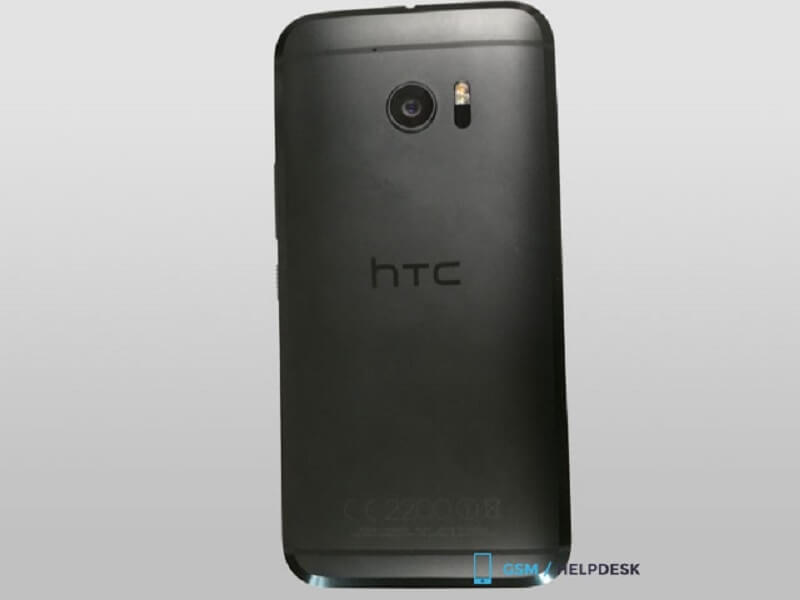
HTC 10 leak: new images, video, and info hit the web before tomorrow's unveiling

 
Even though HTC isn’t set to unveil its latest flagship smartphone until tomorrow, new images of the device have hit the web. Dutch site GSM Helpdesk posted two photos of the HTC 10, giving us a good look at the front and back of the upcoming smartphone.
 
“The image is of a HTC website listing and therefore, should be considered to be fairly accurate, pending any immediate changes,” claims the report. The HTC 10, which is dropping the ‘One’ part of the name that's used in the company’s previous devices, bears a striking resemblance to last year’s HTC One A9 - apart from the addition of oversized beveled edges and the lack of front-facing dual speakers and logo.
 
 
Despite the lack of visible speakers, the company says that the HTC 10 will still feature stereo audio. An earlier teaser for the smartphone suggests that a speaker built into the earpiece at the top will work in conjunction with the bottom speaker to provide the BoomSound setup.
 
The website claims that the HTC 10 will be available “worldwide” in mid-May. A pre-order listing for the device shows Verizon and Sprint absent from the list of supported carriers, suggesting there will be no CDMA compatibility, but this could change when the listing is updated, according to Android Headlines.
 
 
The phone's rumored specifications are said to include a Snapdragon 820 SoC, 4GB of RAM, fingerprint scanner, QHD resolution, 32GB or 64GB of storage, microSD slot, a USB type-C connector, and a 5.2-inch display.
 
HTC 10’s camera and battery life will reportedly be the device’s standout features. It’s rumored to use a 12-megapixel UltraPixel 2 sensor, laser autofocus and an optically stabilized f/1.8 lens for the rear snapper, along with a 5-megapixel front camera that also features OIS. Additionally, the phone is said to come with a huge 3000mAh battery.
 
You can watch HTC's launch event tomorrow at 8 AM Eastern Daylight Time on HTC.com.
 
Update: A new promotional video has just leaked online, showing off more of the HTC 10
 
 
~ Rob Thubron

4.06.2016

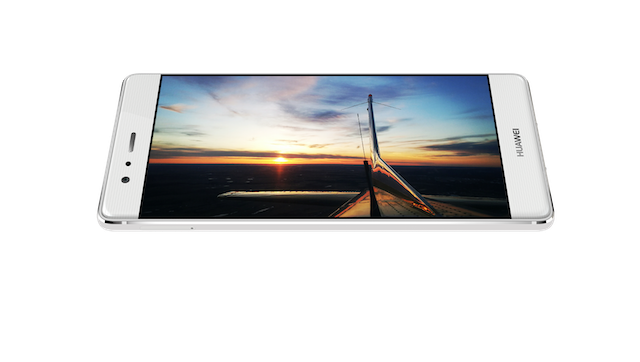
Huawei's new P9 flagship features dual-lens Leica camera

 
One of the things that separate flagships from the rest of the smartphone crowd is their camera performance. Consumers expect to take great photos and videos with a top of the line handset, so manufacturers tend to use premium sensors and lenses for their best offerings. And, sometimes, they team up with a household name in the field when they really want to woo potential buyers.
 
For its latest flagship smartphones, called P9 and P9 Plus, Huawei has partnered with famous camera maker Leica. That is not the only thing that's different about its camera, however, as the main highlight is actually its dual-lens setup, which, among other things, enables the device to capture depth information for that lovely bokeh effect.
 
"Huawei is excited to give P9 users the best smartphone photography experience by leveraging the unrivaled capabilities of Leica, the leader in the world of imaging for more than 100 years", says Huawei Consumer Business Group CEO Richard Yu. "Consumers around the world use their smartphones to take billions of pictures each year, making photography critical to user experience. P9 users can now capture images with unmatched clarity, richness and authenticity, with a masterfully designed and powerful smartphone that looks and feels incredible".
 
It remains to be seen whether P9 lives up to those claims but, in the meantime, let's take a look at some of its most-important specs, starting with the cameras, of course.
 
The main thing that you need to know is that the dual-lens setup features two 12 MP, Sony-made, sensors and matching Leica-branded Summarit H lenses with an f/2.2 aperture and an equivalent 27mm focal length. Its field of view is typical of a high-end smartphone, but its low-light performance may to suffer next to, say, Samsung's Galaxy S7 which has a wider-aperture -- f/1.7 -- lens that can transfer much more light to the sensor.
 
Huawei, however, claims that P9 "truly excels in low-light conditions", though I have a hard time believing that after using a number of devices with a similarly-large lens aperture. There is only so much that you can do with a smartphone sensor these days before running into physical limitations.
 
Worth noting is that one sensor is RGB, for capturing color, while the other is monochrome, for, Huawei says, capturing better detail. There is Hybrid Focus technology, for super-accurate and fast autofocus. There are also a number of presets to change how images look, which is fairly standard for any smartphone today.
 
P9 is designed as standard-sized flagship smartphone, so it uses a 5.2-inch display. Where it falls short compared to some its Android-powered rivals is in the resolution department -- its resolution is 1,080 by 1,920. Samsung's Galaxy S7, for instance, has a similarly-sized screen with a resolution of 1,440 by 2,560.
 
P9 Plus is a larger version of the flagship, featuring a 5.5-inch screen and Press Touch technology. That is Huawei's version of 3D Touch, which debuted on iPhone 6s and iPhone 6s Plus last year.
When it comes to processing power, Huawei has equipped P9 with a homebrew processor, called Kirin 955. Maxim clock speed is 2.5 GHz. There is a 3,000 mAh battery inside, which Huawei claims delivers "outstanding mobility and battery life". There are no estimates offered, however. P9 Plus features a 3,400 mAh battery, and adds dual-IC Rapid Charge, which is similar to Qualcomm's QuickCharge technology -- it is said to add up to six hours of talk time after 10 minutes of charging.
 
Last, but not least, both devices come with a fingerprint sensor, a feature which is becoming standard on smartphones in this class. It, of course, runs Android, but Huawei does not say which version. Hopefully, that'll be Marshmallow.
 
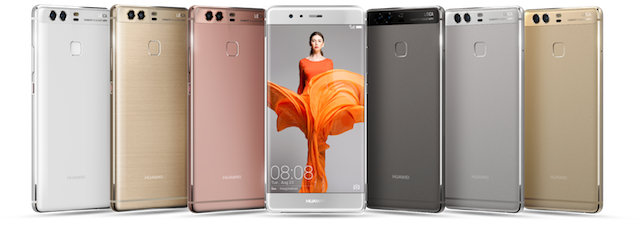
Huawei launched P9 in UK, with availability slated for May for both models. P9 will be priced at £449 off-contract, for a 32GB version with 3GB of RAM, while P9 Plus, which features 64 GB of storage and 4GB of RAM, will cost £549. You can check the available color options in the main photo, but you should know that availability will vary.
 
~ Mihăiță Bamburic

3.09.2016

Samsung Galaxy S7 reviews are in: Can latest flagships spur upgrades?

Samsung's Galaxy S7 pair remains among the top of the Android pack, but the smartphone market has changed and it's unclear whether an upgrade cycle will follow.


Replacement cycles aside, we believe we have clearly entered a period of limited growth in high-end smartphones. This is due in part to the strong likelihood that incremental hardware innovation will have diminishing consumer value. This is a permanent shift, in our view; software and Internet services drive the bulk of consumer value in smartphones, and incremental hardware features do not seem likely to materially improve the experience from current levels. This has negative implications for replacement rates and pricing over time.
Enter Samsung's Galaxy S7.
 
The reviews for the Galaxy S7 have landed and most takes indicate that Samsung did what it had to. The company listened to its customer base, brought back features like the MicroSD slot and created a water resistant device that may have an improved camera.  
 

CNET's Jessica Dolcourt noted that the Galaxy S7 is too similar to the S6 to entice an upgrade. Ditto for the S7 Edge. The phones are fine. A tour of Samsung's New York technology and culture showplace highlighted tables of the devices that felt great in my hand.
 
 
Just not great enough to ditch my Galaxy Note 5. Aside from the latest Android, a MicroSD card and a 12-megapixel camera that is supposed to be an improvement from the previous 16-megapixel on, the Galaxy S7 pair is incremental. All smartphones are now incremental.
 
 
In the land of high-end Android, LG's G5 has more unique features with its modular design.
 

Nevertheless, some analysts are predicting the Galaxy S7 will outsell its predecessor. Credit Suisse analyst Keon Han said the S7 is likely to be more profitable and move more units than the S6. Han said:
 
 
The GS7 launch is earlier this year. The annual volume contribution is typically about 3 million in the launch quarter. About 7 million units of GS7 are expected to be shipped in 1Q16. The bill of materials cost is improving as the GS6 platform has been extended. Current estimate calls for GS7 sales to surpass GS6 volume.
 
 
In a nutshell, Samsung will move more Galaxy S7 units at a better profit margins and potentially price. From a business perspective it's a win for Samsung. From a gadget lust perspective, the Galaxy S7, like the smartphone market in general, will be incremental.

3.02.2016

Samsung shifts the paradigm once again

Samsung continues to set the mobile landscape ablaze with speed and size. Find out what the company's latest announcement could mean for you. 

Imagine, if you will, that your mobile device contained the same amount of storage as your SSD-toting desktop or laptop. Gone would be the constant struggle to make room for apps and data. No longer would you see those dreaded Device full errors.
 
If Samsung has its way (and it most assuredly will), the company will be shipping flagship devices that include a remarkable 256 GB memory chip, based on the Universal Flash Storage 2.0 standard. That's right, ladies and gents, a flagship smartphone that contains as much storage as many desktops and laptops. What's best, this new chip from Samsung will outperform the current crop of SATA-based SSDs shipped on most laptops and desktops.
 
"By providing high-density UFS memory that is nearly twice as fast as a SATA SSD for PCs, we will contribute to a paradigm shift within the mobile data storage market," said Joo Sun Choi, Executive Vice President, Memory Sales and Marketing, Samsung Electronics.
 
Yes, indeed, you will.

Size and speed

The chips themselves will be based on Samsung's V-NAND flash memory chips and will included a specially designed, high-performance controller. For those who need numbers (for comparison) the previous generation UFS memory could handle read/write speeds up to 19,000 (input operations per second) and 14,000 (output operations per second). The new Samsung chips can handle read/write speeds of up to 45,000 (input operations per second) and 40,000 (output operations per second). That's a significant leap in performance. Add to that the massive increase in size and you do have a serious game changer.
 
The new 256 GB UFS chips use two lanes of data transfer to move data at up to 850 MB/s. Yet again another massive besting of typical SATA-based SSDs. For sequential writing, the chips support up to 260 MB/s.
 
The besting keeps on coming.
 
In real time, this means that mobile devices will now be able to handle seamless 4K Ultra HD video playback while simultaneously multitasking. These new chips are also even smaller than today's external microSD cards... which means they won't cause problems for smartphone designers and manufacturers.  

Odd timing

But let's consider Samsung alone. Its next flagship device, the Galaxy S7, will not include the beefed up chip (although it will re-introduce external microSD card support). Samsung did eventually release Galaxy 6S variant that included the 128 GB chip. Will the same thing happen this time around? Maybe this is a bit of sleight of hand on the part of Samsung that goes something like this:
  • Hey, here's the latest, greatest smartphone from Samsung
  • Fans purchase shiny new Samsung smartphone
  • Hey, we've invented a faster chip for smartphones
  • Fans groan
  • Hey, we're releasing a variant of our latest smartphone to include the shiny new chip
  • Fans grumble, but purchase the shiny new smartphone with the shiny new chip
  • Samsung bathes in money
Okay, that's a bit of an exaggeration. But you get the idea. What Samsung should be doing is announcing the new chip and then announcing the new device that will include the new chip upon release. That certainly didn't happen. In fact, the announcement of the new chip came a scant three days after the announcement of the Galaxy S7. My guess is that it will do the same thing it did with the 6S and release a variant S7 that includes the new 256 GB chip. When that will happen? No one knows.

The ante is upped

However, the oddly timed announcements is splitting hairs a bit. The truth of the matter is this. Samsung is (once again) seriously upping the ante for the world of mobility. The very idea of having such a high-speed storage chip on a smartphone has been unheard of until now. And as much as I hate the term, this truly is a paradigm shift for the mobile landscape.
 
If you've been anxiously awaiting the release of the Galaxy S7, it might be in your best interest to hold off purchasing until later on in the year. Yes, the variant will probably cost you quite a bit of coin, but having a high-end device with such massive (and speedy) storage would be worth the wait.
 
~ Jack Wallen 

2.25.2016

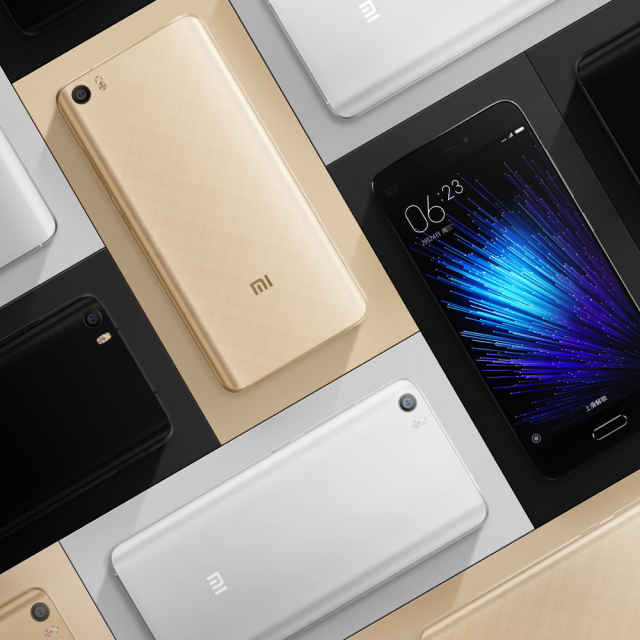
Xiaomi's new Mi 5 offers flagship hardware at an affordable price

 
Xiaomi is once again proving that you do not need to spend a lot of money to get your hands on a flagship smartphone. Its new Mi 5, which is the successor to the popular Mi 4, offers top of the line hardware for just over $300.
 
Mi 5 offers just about anything you could want in a flagship smartphone. It makes you wonder whether it is worth ponying up for a similar device from LG or Samsung, which costs at least twice as much.
 
The only place where Mi 5 falls short compared to the competition is in the display department. Its 5.15-inch screen has a resolution of "just" 1,080 by 1,920, which is not as impressive as the 1,440 by 2,560 resolution that some of its rivals have.
 
That, however, might work in its favor, because typically higher-resolution displays come with a performance penalty, in terms of both battery life and graphics performance. Most people may not notice the difference in pixel density, but they will most certainly appreciate a few more hours of battery life, for instance.
 
Inside, there is a 1.8 GHz or 2.15 GHz Qualcomm Snapdragon 820 processor paired with 3 GB or 4 GB of RAM, depending on the configuration. The base model, which costs around $306, ships with the lower specs, but the mid-range and high-end Mi 5 versions get paired with the faster processor and most RAM. Powering it all is a 3,000 mAh battery, which supports Qualcomm's Quick Charge 3.0 technology.
 
The mid-range version offers 64 GB of internal storage and costs around $351, while the top of the line model has 128 GB of internal storage and can be had for around $458. The larger difference in price likely comes from the choice of back cover, which in the latter case is ceramic as opposed to glass.
 
In the imaging department, Mi 5 offers a 16 MP camera on the back with four-axis image stabilization and phase-detection autofocus. There is support for 4K video, of course. On the front, it has a 4 MP shooter.
 
Xiaomi points out that there is NFC on board, as well as UFS 2.0 storage, 4G LTE+ cellular connectivity, which enables speeds of up to 600 Mbps, VoLTE, and a fingerprint sensor, which is embedded in the home button under the screen. On top of this, there is also a microSD card slot. It comes in at 144.55 x 69.2 x 7.25 mm and 129 g.
 
Mi 5 runs Xiaomi's MIUI skin, atop of Android 6.0 Marshmallow. If you are not familiar with Xiaomi's interpretation of Android, it is a bit over the top overall as it tries to be closer to how iOS looks and works. That is probably the only thing that will be polarizing about Mi 5.
 
Xiaomi will offer Mi 5 in China first, but there is a very good chance that it will be made available in other markets as well, if its predecessor's availability is of any indication.
 
~ Mihăiță Bamburic

2.05.2016

Here's how to bypass the iOS lock screen passcode


There are numerous ways to keep your smartphone safe from prying eyes, and a lock screen protected with a passcode is a popular choice. But a newly discovered vulnerability in iOS 8 and iOS 9 means that iPhones and iPads could be accessed by attackers.
  The vulnerability was discovered by security analyst Benjamin Kunz Mejri and it has been assigned a Common Vulnerability Scoring System (CVSS) count of 6.0, as well as a 'high' severity rating. Apple has been aware of the issue since late last year, but has yet to issue a patch.
  Vulnerability Laboratory has issued a security advisory that warns: "An application update loop that results in a pass code bypass vulnerability has been discovered in the official Apple iOS (iPhone 5 & 6 | iPad 2) v8.x, v9.0, v9.1 & v9.2. The security vulnerability allows local attackers to bypass pass code lock protection of the Apple iPhone via an application update loop issue. The issue affects the device security when processing to request a local update by an installed mobile iOS web-application".
  As explained by security expert Graham Cluley, the exploit works by taking advantage of a brief period after rebooting during which passcode authentication is disabled. Vulnerability Laboratory details how to exploit the security hole (text is produced verbatim with the original typos and grammatical oddities):

  • First fill up about some % of the free memory in the iOS device with random data
  • Now, you open the app-store choose to update all applications (update all push button)
  • Switch fast via home button to the slide index and perform iOS update at the same time. Note: The interaction to switch needs to be performed very fast to successfully exploit. In the first load of the update you can still use the home button. Press it go back to index
  • Now, press the home button again to review the open runnings slides
  • Switch to the left menu after the last slide which is new and perform to open Siri in the same moment. Now the slide hangs and runs all time in a loop
  • Turn of via power button on the ipad or iphone ....
  • Reactivate via power button and like you can see the session still runs in the loop and can be requested without any pass code. Note: Normally the pass code becomes available after the power off button interaction to stand-by mode
  • Successful reproduce of the local security vulnerability!
Check out the video below to see the exploit in action:

  Physical access to the device is required, so the advice is to make sure you do not leave your iPhone or iPad unattended.

Photo credit: Twin Design / Shutterstock

~ Mark Wilson

2.01.2016

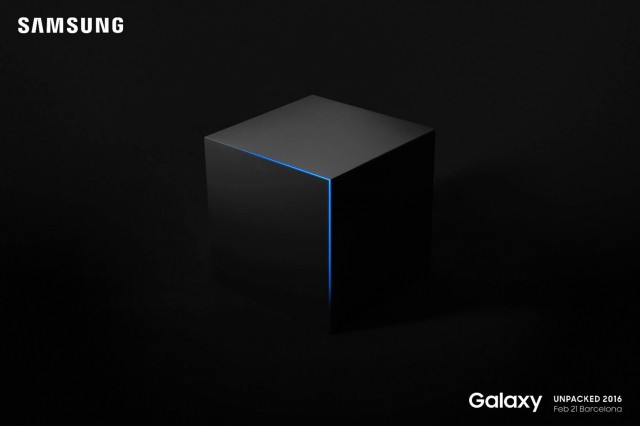
Samsung will unveil Galaxy S7 on February 21


The unveiling of a new Galaxy S smartphone is nearly as predictable as the introduction of new iPhones. Weeks before MWC, Samsung starts to tease the first Unpacked event of the year and, when the curtain finally lifts, it takes the wraps off its next flagship smartphone. A year ago, it was Galaxy S6 being presented, joined for the first time by an edge version.

Things appear to be no different this year. Samsung has just released a teaser for its first Unpacked event of 2016. It will be held in Barcelona, one day before this year's MWC conference kicks off. What will be unveiled? "The Next Galaxy", of course.

The first teaser suggests that Samsung will allow Gear VR users to experience the launch of Galaxy S7 in virtual reality. In case you are wondering, the headset requires a Galaxy S6, Galaxy S6 edge Plus or Galaxy Note 5 to work.

While Samsung has not come out and said that it will announce Galaxy S7 at Unpacked, which takes place on February 21, it is quite obvious that it is "The Next Galaxy". What we do not know is whether there will also be other models being unveiled, like a Galaxy S7 edge or Galaxy S7 edge Plus.

The launch of Galaxy S7, which starts at 19:00 CET, will be livestreamed by Samsung. Our very own Brian Fagioli will be attending the New York unveiling of the flagship. There will also be another dedicated US Unpacked event on the west coast, in San Francisco.

~ BetaNews Staff

1.29.2016

There was a record 1.4 billion smartphones shipped in 2015 and almost a quarter came from Samsung

 
The good news for smartphone manufacturers is that worldwide shipments grew by 12% and hit a record high of 1.4 billion in 2015. The bad news is that the industry just isn’t expanding as quickly as it has done in the past. Last year’s fourth quarter shipments grew just six percent from the same period in 2014, marking the sector's slowest growth rate of all time.
 

The results come from research company Strategy Analytics, which says that the slowdown is primarily due to most people in major markets like China already owning a smartphone and not feeling the need to upgrade. It also cites consumer fears over a global economic downturn as a reason for the slow growth rate.
 
When it comes to who leads global smartphone shipments, Samsung continues to stay ahead of the pack, shifting 81.3 million units in Q4 and 319.7 million units throughout 2015. The 9 percent quarter increase from Q4 2014 represents the Korean company’s fastest growth rate for almost 2 years.
 
Samsung stays ahead of Apple, which shipped 74.8 million units in Q4 and 231.5 million across all of last year – a big improvement on the 193 million devices the Cupertino company shipped in 2014.
 
 
The figures show that Samsung had a 22 percent share of the smartphone market across 2015, while Apple took an 18 percent market share. The research site noted that Apple will need to expand into developing markets such as India and Nigeria if it wants to boost iPhone growth in 2016.
 
Just below Apple lies Huawei, which jumped in front of Lenovo-Motorola into third place. The Chinese firm will no doubt be pleased that it shipped over 100 million smartphones in one year for the first time ever. Lenovo-Motorola, meanwhile, was the only company in the top five to see its shipments decline – down 18 percent across the whole of 2015.
 
Xiaomi stayed at fifth place with a five percent market share. It shipped 11 million more handsets in 2015 than it did in 2014, but growth slowed down in the final quarter. Xiaomi only shipped 2 million more units in Q4 2015 than it did in Q4 2014.
 
~ Rob Thubron

1.23.2016

Fewer orders at Apple suppliers could signal first iPhone sales decline

Some of Apple Inc's main Asian suppliers expect revenues and orders to drop this quarter, indicating iPhone sales are almost certain to post their first annual decline since the flagship product was launched almost a decade ago.

The forecasts of lackluster sales by companies including Taiwan Semiconductor Manufacturing Co (TSMC), the world's biggest contract chipmaker, and smartphone camera lens producer Largan Precision Co Ltd add to concerns about Apple's outlook amid slowing global demand for smartphones.

Industry executives say the latest iPhone did not have enough new features from the previous model to tempt users, raising fears that Apple's innovative streak - and the profits it has generated - may be running its course.

Apple, which reports December-quarter results on Tuesday, declined to comment on its sales outlook.

"Visibility is only a month at a time and demand is quite weak," Largan Precision Chief Executive Adam Lin told an earnings briefing, referring to his company's overall business.

Other suppliers said Apple now only gave them orders one month in advance, instead of the usual three months.

"We have to be very flexible in terms of capacity," said an executive at one of those firms, declining to identify their company or be named due to a confidentiality agreement that prevents Apple suppliers from discussing its order book.

Apple has previously said that individual data from its supply chain was not an accurate reflection of its outlook.

But TSMC, which makes some of the chips that go into iPhones, forecast this month that first-quarter revenues would likely fall by up to 11 percent year-on-year, adding that demand for high-end smartphones would also be weak.

An 11 percent quarterly decline would be the steepest revenue drop for TSMC in almost 7 years, Thomson Reuters data shows.

Earlier this month, people familiar with the matter told Reuters that Taiwan-based Foxconn, which assembles most iPhones, had taken a rare decision to cut working hours over a major holiday during which workers usually rack up overtime.

Foxconn, the trade name for Hon Hai Precision Industry Co Ltd, saw its December revenues slump by a fifth and 2015 sales miss expectations.

A more detailed picture about Apple's outlook could emerge next week if key suppliers including LG Display Co Ltd, SK Hynix Inc and Samsung Electronics Co provide first-quarter forecasts when they report December-quarter earnings.

First-quarter revenues at both LG Display and Hynix are expected to fall around 10 percent, according to Thomson Reuters I/B/E/S data.

Analysts say iPhone sales could pick up during the second half of the year, when the company usually launches new products, but with competitors such as Samsung Electronics and Huawei Technologies Co Ltd sharpening their edge, some suppliers are not so sure.

"The pace of innovation has slowed. Apple is going toward the same direction as other brand names," said another Taiwanese Apple supplier.

(Additional reporting by Se Young Lee in SEOUL and Miyoung Kim and Aradhana Aravindan in SINGAPORE; Editing by Miral Fahmy)

An iPhone 6S Plus is seen at the Apple retail store in Palo Alto, California September 25, 2015.
REUTERS/ROBERT GALBRAITH

~ J.R. WU

1.22.2016

Google paid $1 billion to Apple so its search would stay on iPhones


In the smartphone arena, Apple and Google are rivals -- but that doesn't mean they can't have a symbiotic relationship. Longstanding rivalry in mind, many people have questioned why Apple has retained Google as the default search choice on iPhones. The reason is that money talks.

Transcript of a copyright case involving Google and Oracle show that the search giant paid Apple $1 billion in 2014. An agreement is in place that sees Google paying Apple a percentage of the revenue it generates through iOS devices. This is something that has been rumored for some time, but neither Apple nor Google has commented on.

The news comes via Bloomberg which claims Google shares up to 34 percent of its revenue with Apple. Court transcripts from last week show that the arrangement was revealed by Oracle attorney Annette Hurst. Court papers also show that Google tried to get the judge to strike details of the arrangement from the records. The transcript shows that lawyer Robert Van Nest said:
That percentage just stated, that should be sealed. We are talking hypotheticals here. That's not a publicly known number.
The request was blocked, but Apple and Google made a separate appeal on 20 January, saying that: "The specific financial terms of Google's agreement with Apple are highly sensitive to both Google and Apple. Both Apple and Google have always treated this information as extremely confidential".

Bloomberg reports that:
The transcript vanished without a trace from electronic court records at about 3 p.m. Pacific standard time with no indication that the court ruled on Google’s request to seal it.
Apple and Google remain tight-lipped about their relationship.

Photo credit: NuOilSuwannar / Shutterstock

~ Mark Wilson

1.14.2016

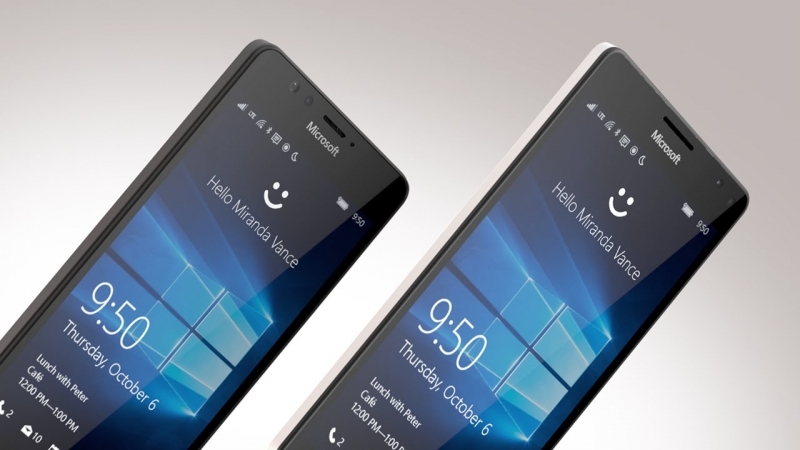
Microsoft working on a "breakthrough" smartphone, strongly hints that it's the Surface Phone

  
Microsoft’s past performance in the smartphone market hasn’t been particularly impressive. Windows phones made up only 2.6 percent of the worldwide smartphone OS market in the second quarter of 2015, a decline from 3.4 percent in 2013. But now, the Redmond company has confirmed that is working on something that may turn its smartphone fortunes around.

Speaking during an episode of This Week in Tech’s Windows Weekly podcast, Microsoft executive vice president and chief marketing officer Chris Capossela revealed that the company is working on a “breakthrough” new smartphone – and it’s not a going to be another Lumia.

While Capossela didn't specifically say the new device will be the long-rumored Surface Phone, he did strongly hint at it. “With Surface we had a bunch of early misfires, but that notion of a tablet that could replace your laptop. That notion of saying, Hey, Apple wants to sell you an iPad and they want to sell you a Mac, we think there’s one device that exploits the seam between those two devices. We need some sort of spiritual equivalent on the phone side that doesn’t just feel like a phone for people who love Windows.”

Compared to today’s smartphones, the Surface Phone is expected to be much more like a PC. Microsoft will likely ditch the traditionally-used Qualcomm chips for Intel architecture and use a software setup more commonly found in home computers. It’s also rumored that Microsoft will be giving the Surface Phone the ability to run full Windows software, not just apps from the Windows Store market, creating a true PC/smartphone hybrid device.

A Surface Phone would likely utilize Windows 10 Mobile’s Continuum feature that can turn a smartphone into a PC by allowing it to attach to a monitor, mouse and keyboard in order to create a desktop-like experience.
  
We may have to wait a while before we see the Surface Phone, although some reports say it could be here as early as the second half of 2016. Speaking about the mystery device, Capossela said "I think we have to do more breakthrough work" to make Apple fans "pause before they buy their 17th iPhone.”

~ Rob Thubron

1.11.2016

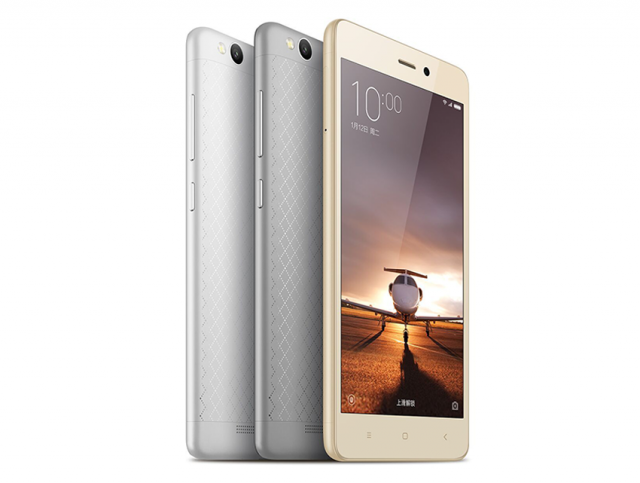
Xiaomi announces Redmi 3 smartphone with huge battery

 
Xiaomi is well known for delivering attractive devices at very affordable prices. Its new Redmi 3 is no exception. The company's latest Android smartphone is a mid-range handset with a huge battery, but with a price tag that puts it closer to entry-level offerings.
 
Redmi 3 is positioned as one of the more affordable Android devices in Xiaomi's lineup, being introduced at the RMB699 (roughly $107) price point. For the money, there is really nothing that potential buyers might miss.
    
The star of the show is, without a doubt, the 4,100 mAh battery, with support for "fast charging" (the device will charge the battery at 5V at 2A). Users can expect to get great battery life, also thanks to Xiaomi's choice of display and processor.
  
Xiaomi has opted for a lower-resolution 5-inch panel (720 by 1,280), which should keep the load on the octa-core Qualcomm Snapdragon 615 processor at a minimum. The chip is coupled with 2GB of RAM.
Redmi 3 has a 13 MP f/2.0 camera on the back, and a 5 MP f/2.2 shooter on the front. The former has phase detection, which theoretically means that it will be able to autofocus accurately and quickly.
 
The smartphone is equipped with 16 GB of internal storage, but also a microSD card slot which supports cards up to 128 GB in size. Also worth noting is that it has dual SIM support; the second slot doubles as the microSD slot.
   
Despite the huge battery, Redmi 3 only measures 139.3 x 69.6 x 8.5 m and weighs 144 g.
  
Redmi 3 will be available in three colors starting tomorrow from Mi.com and Tmall. For the moment, its availability is limited to China, but interested buyers will no doubt find a way to import it. Xiaomi has hinted at international availability, but there are no official plans to bring it to global markets as of yet.
 
~ Mihaita Bamburic