Cisco Learning Network Store Promotions Page
Showing posts with label iPhone 7. Show all posts

11.03.2016

Apple exec explains why "cumbersome" SD card slot removed from new MacBooks but 3.5mm jack remains

 
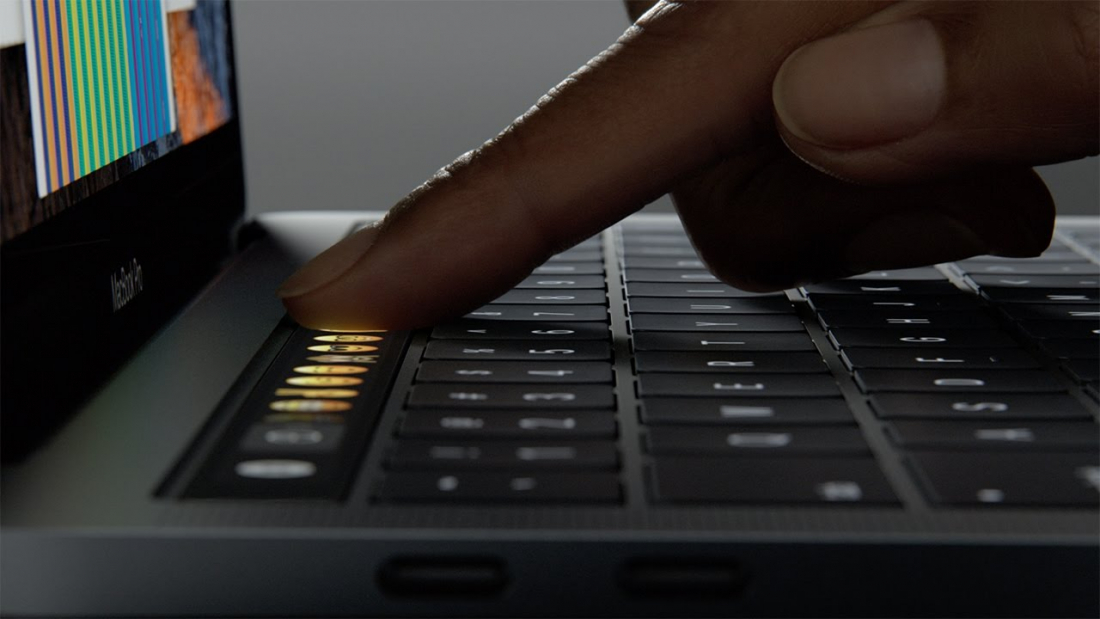
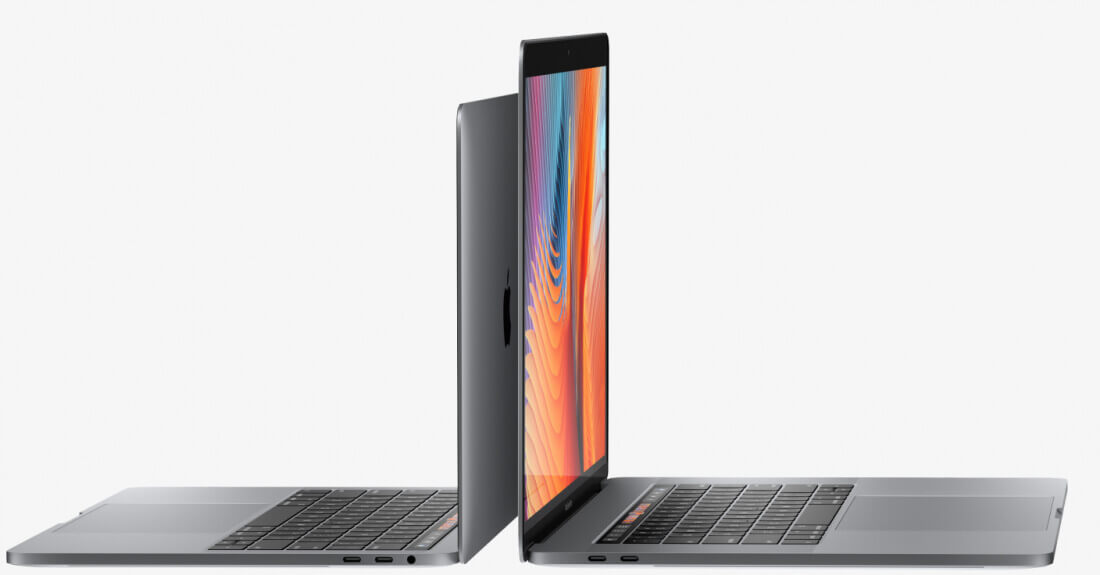
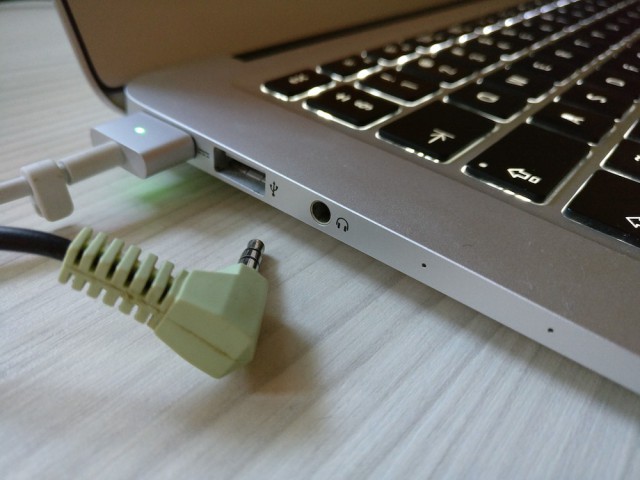
Just why does Apple love removing long-used ports from its products? It seems the outcry that followed the disappearance of the headphone jack from the iPhone 7 had no effect on the Cupertino company; it dropped most of the standard ports from the new MacBook Pro, including the SD card slot, yet kept the laptop's 3.5mm jack.
 
Speaking during an interview with The Independent, Phil Schiller, Apple’s Senior Vice President of Worldwide Marketing, explained the thinking behind axing the SD slot. He called the decision a “bold move” - similar to how removing the latest iPhone’s headphone jack took “courage.”
 
It seems the two main reasons behind the slot’s removal were because it is “cumbersome” and there are an increasing number of cameras that use wireless transfer technology.
Because of a couple of things. One, it’s a bit of a cumbersome slot. You’ve got this thing sticking halfway out. Then there are very fine and fast USB card readers, and then you can use CompactFlash as well as SD. So we could never really resolve this – we picked SD because more consumer cameras have SD but you can only pick one. So, that was a bit of a trade-off. And then more and more cameras are starting to build wireless transfer into the camera. That’s proving very useful. So we think there’s a path forward where you can use a physical adapter if you want, or do wireless transfer.
While Schiller has a point about more cameras using wireless, there are still plenty of models, even expensive DSLRs, that don’t have the feature. And was the SD card really such a pain when sticking slightly out of the MacBook's slot? Surely using a full USB-C SD adapter, as he suggests, would be a lot more cumbersome.
 
When asked why the 3.5mm jack was removed from the iPhone 7 but remains on the MacBook Pro, Schiller said that the jack is used for more than just headphones on the laptop. Apple kept it because “these are pro machines,” and many users “have setups with studio monitors, amps, and other pro audio gear that do not have wireless solutions and need the 3.5mm jack.” Suggesting that if people used the MacBook Pro's jack for just headphones, then it would have likely been dropped. But it could still be removed in future models, if a Apple survey from September is anything to go by.
 
 
The removal of so many standard ports, and the fact that not everyone is impressed by the new Touch Bar, has led to a fair amount of criticism being directed at the new MacBooks – something that has surprised Schiller. He did add, though, that he’s never “seen a great new Apple product that didn’t have its share of early criticism and debate — and that’s cool.”
 
Despite the negative reception from some quarters, Apple’s online store is apparently taking more orders for the new MacBooks than “any pro notebook before.”
 
~ Rob Thubron

10.17.2016

iOS 10 has a hidden onscreen Home button for iPhone 7 users

 
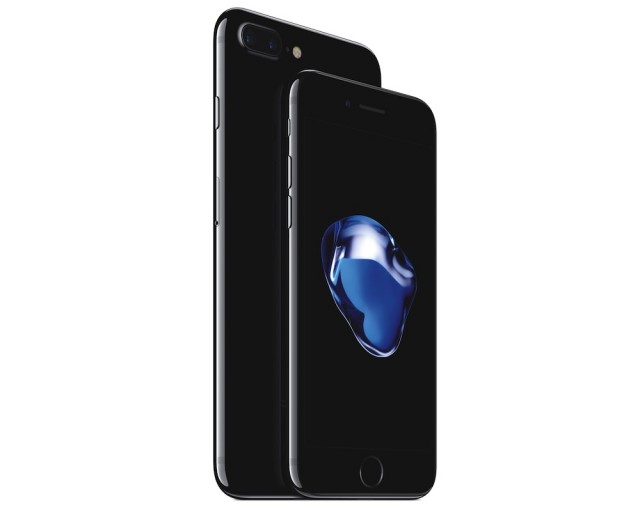
With the launch of the iPhone 7 and iPhone 7 Plus Apple not only removed the headphone jack, the company also replaced the mechanical home button with a static one. What was not revealed, however, is that iOS 10 also has a secret software Home button.
 
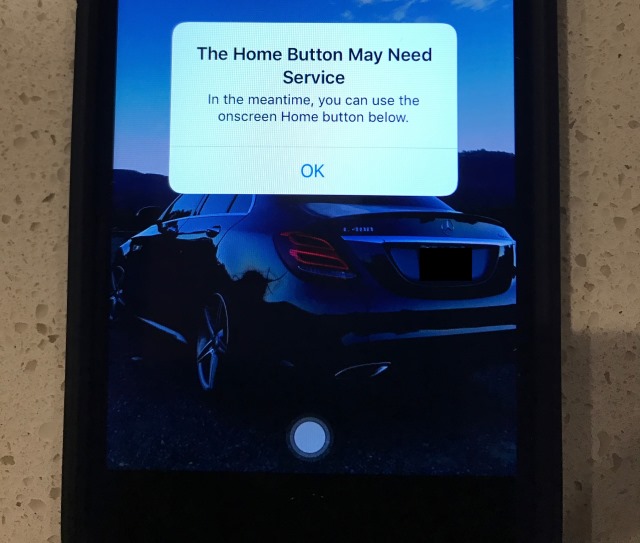
The feature is a safeguard built in should anything go wrong with your physical home button. Should this happen, the button problem will be detected and iOS 10 will offer up a temporary on-screen Home button to tide you over until you can get to the Genius Bar.
 
The hidden button was noticed by a member of the MacRumors fourm where he shared details of his discovery. User iwayne plugged in his iPhone 7 to charge and was greeted by a message reading: "The Home Button May Need Service. In the meantime, you can use the onscreen Home button below". iwayne wrote:
It worked at first then started spazzing out. The Haptic engine kept firing 3-4 times in a row for every "press". I restarted again and it's back to not working.
His problem also reveals something about the waterproofness of the iPhone 7:
Interesting thing is that this was after the phone got wet. Used a wet paper towel to clean the phone off to put on a new case and that was the end. How is this supposed to survive a meter down for a half hour if a wet paper towel did her in.
It's worth noting that -- as pointed out by Trusted Reviews -- the software button is not really new, although having it automatically kick in is. It's a part of an accessibility feature called Assistive Touch, and you can enable it yourself.
  • Go to Settings > General > Accessibility > Assistive Touch, then turn it on
  • Tell Siri: "Turn on Assistive Touch"
  • Go to Settings > General > Accessibility > Accessibility Shortcut, and turn on Assistive Touch
Photo credit: iwayne
 
~ Mark Wilson

10.15.2016

Apple now sells unlocked iPhone 7 and iPhone 7 Plus in US

 
Nearly a month after releasing the iPhone 7 and iPhone 7 Plus, Apple is giving consumers the option of purchasing the unlocked versions of its latest flagships in US. The "SIM-free" models are available in all the color and storage configurations as their carrier counterparts, with prices starting at the same $649 for the iPhone 7 and $769 for the iPhone 7 Plus.
 
The unlocked iPhone 7 and iPhone 7 Plus models carry the designation A1778 and A1784, and support the same LTE bands as the AT&T, Sprint, T-Mobile and Verizon versions. But what are the differences?
 
The main difference between the unlocked and carrier versions of the iPhone 7 and iPhone 7 Plus, as Apple explains on its website, is that the SIM-free versions do not ship with a carrier SIM card and "work with any carrier".
 
Meanwhile, Apple notes, the iPhone 7 and iPhone 7 Plus models designed for AT&T and T-Mobile will be limited to 3G for voice services while data can be "either 3G or 4G LTE", when connected to a CDMA network. However, the Sprint and Verizon versions can work on AT&T and T-Mobile as well.
 
If you are thinking of buying the unlocked version to get an iPhone 7 or iPhone 7 Plus faster you should know that shipping times range between a couple of days to a whole month, depending on the configuration that you want.
 
~ Mihăiță Bamburic

9.29.2016

Apple is smart to enlist hackers and iPhone 7 jailbreakers to secure iOS and macOS

 
Apple has historically been very guarded and secretive. While this is still true today, the company has definitely become more open after Steve Job's death. Quite frankly, the fact that there are now public betas for both iOS and macOS is mind-blowing for the Apple faithful. Last month, the company even launched its first bug bounty program! Why did Apple soften its guarded position? It had to. As the technology market advances, and security becomes a bigger focus, it is not possible to catch all bugs and vulnerabilities in house.
 
While the bug bounty and public betas were very wise moves, the company is apparently taking things a step further. According to Forbes, Apple is enlisting iPhone jailbreakers and other hackers (such as Luca Todesco, Nicholas Allegra and Patrick Wardle) to bolster the security of its products using the aforementioned bug bounty program. In fact, it is rumored to be happening at a secret meeting. If true, is the company smart to trust these people?
 
Many iPhone users like jailbreaking their devices, and yeah, I can understand the appeal. You can make your phone do things that Apple did not intend, including fun customizations. The problem? It makes your iPhone or iPad less secure. Every time an exploit is discovered that allows jailbreaking, or a vulnerability is discovered in macOS, it highlights a bug that Apple missed -- it is embarrassing for the company.
 
Some bugs and vulnerabilities can be exploited by malware, as we saw last month. While the iPhone is viewed by many as secure, hackers were found to be spying on people. It was quickly patched with iOS 9.3.5, but there is no telling how long the vulnerability had been in the wild. This malware in particular highlights why Apple must do whatever it can to secure its products -- including working with known hackers.
 
Unfortunately, selling these bugs and exploits to nefarious groups and governments can be quite lucrative -- it is big business. In order for Apple to recruit these people into its program, it has to do one of two things -- outbid other entities that purchase them, or build a relationship with the hackers. If Apple has really invited these people as Forbes claims, they may be trying to do the latter.
 
Besides the previously mentioned invitees, who else is attending? Forbes says the following.
Forbes believes others who made the cut include noted iPhone and Mac hackers Francisco Alonso, Stefan Esser, Braden Thomas, Pedro Vilaca and Jonathan Zdziarski. Former Apple engineer Alex Ionescu, Steven De Franco (better known in the jailbreak community as ih8sn0w), and a member of the famous Pangu jailbreak crew, Hao Xu, are also amongst the invitees.
Whether or not this secret meeting pays off for Apple remains to be seen. If the maximum the iPhone-maker will pay is $200,000, and other groups (such as Cellebrite) will offer them more, these hackers and jailbreakers may be tempted to cut Apple out. Cash is king, right?
 
Tim Cook and company may want to consider higher bounty payments, or to take things further, hire these people full time. Yes, I am actually suggesting making these people official Apple employees. With that said, they will need to be vetted, of course. These folks are undoubtedly smart, but their trustworthiness and ability to adapt to the corporate world will need to be proven.
 
Do you think Apple is wise to work with jailbreakers and hackers or is it playing with fire? Tell me in the comments.
 
Photo Credit: Goncharenya Tanya/Shutterstock
 
~ Brian Fagioli

9.28.2016

Cellebrite cagily claims it can hack into just about any phone including iPhone 7 and Nougat handsets

 
Israeli security firm Cellebrite -- the company said to have helped the FBI access the San Bernadino iPhone -- says that it has the power to break into, and extract data from, just about any phone out there. Speaking with the BBC, the company demonstrated how it can crack the password on a smartphone to access its data.
 
It said that it was able to extract data from the very latest handsets including Android 7 devices and the iPhone 7. Cellebrite says it works with law enforcement agencies around the world too, and stopped short of saying it refused to work with oppressive regimes. The interview raises some interesting questions.
 
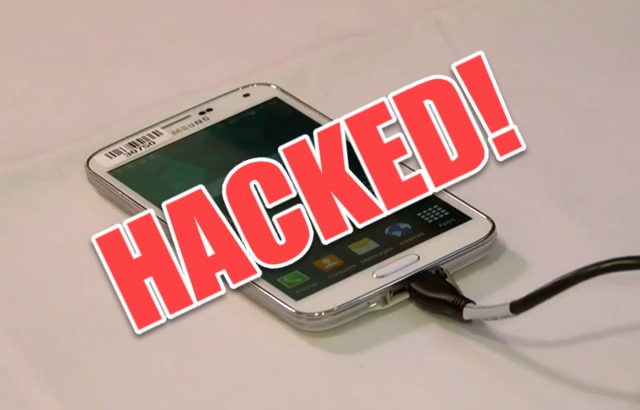
Clearly Cellebrite doesn’t reveal just how it is able to break into smartphones, but a worker for the company can be seen plugging the target handset into tablet-like device, to which is connected a USB drive. The tablet is shown to be running a tool called Cellebrite UFED Touch 2 (version 5.3.0.731, if you're interested) although it does appear to be only a demonstration version. Moments later, with just a few taps, the lock screen password for the connected Samsung Galaxy S5 is cracked, and access to the phone's data is achieved.
 
Although not shown being performed, Cellebrite says that it can use the same tool to extract all data from a target phone. This includes information such as call logs, emails and messages, location information and much more. The company clearly saw the interview with the BBC as an opportunity to blow its own trumpet, but it became very cagey when asked about the specifics of what data could be extracted, and the types of people the company was willing to sell its technology to.
 
In fact, Cellebrite seemed extremely uncomfortable when asked anything about its operation. Asked whether more sophisticated, encrypted messaging tools could be cracked, the company stopped short of giving a straight yes or no for any named service. Instead the response was: "Some of those services will allow extraction of those messages".
 
The company was also rather cagey about the phones it could crack, or the amount of data that could be extracted from different devices. Asked about the iPhone 6, the answer avoided referring to this specific handset entirely:
This machine will definitely be able to pull some data from a wide range of iPhones.
Probed further about the iPhone 7, Cellebrite says, rather shiftily and hesitantly:
We can definitely extract data from iPhone 7 as well. The question is what data? What is the situation? What is the situation the device is in?
Asked about Nougat, there was a similarly stuttering reply:
I'm saying that our solutions do provide support for a very wide range of devices -- including the latest Android devices -- for law enforcement to extract data from.
The company is also keen to protect the identities of its customers, but says it typically sells services to government-owned or government-operated law enforcement agencies around the world. Clearly, there are some governments and regimes with less-than-perfect track records, particularly when it comes to human rights, civil liberties and privacy. Would, or does, Cellebrite sell to such governments? Asked about whether the company sells to repressive regimes, the response was interesting:
I don't know the answer to that and I'm in no position to comment on that at this point in time [...] We operate under the law, both international and the laws of every jurisdiction and country in which we work. This is what guides us.
Make of that what you will. You can check out the full report over on the BBC website.
 
~ Mark Wilson

9.16.2016

The most popular iPhone 7 is the Plus model

 
When Apple said that iPhone 7 sales will be determined by supply and not demand it meant it. Earlier this week it issued a statement saying that all iPhone 7 Plus versions and the Jet Black iPhone 7 sold out quickly after going up for pre-order -- and they will not be available to walk-in customers, as a result.
 
While we do not know how many iPhone 7 and iPhone 7 Plus units Apple had available for the pre-order round, a Slice Intelligence report claims that the bigger model is more popular with early adopters. Last year, it was the iPhone 6s which enjoyed the biggest success during pre-orders.
 
The iPhone 7 Plus is the better model on paper, boasting a bigger, higher resolution screen, dual camera setup at the back, and larger battery. Still, its success comes as somewhat of a surprise, because phablets used to be less popular than their smaller counterparts.
 
Slice Intelligence says that 55 percent of the iPhone 7 units Apple moved during the pre-order round were Plus models, with the remaining 45 percent of pre-orders being for the smaller version. Most folks (55.9 percent) who purchased one of Apple's latest flagships came from an older iPhone.
 
The report says that 34 percent of the customers haven't purchased a smartphone online since 2014. Few came from a rival brand, like Samsung (2.1 percent), LG (0.6 percent) or Motorola (0.5 percent) -- those numbers may go up after the iPhone 7 and iPhone 7 Plus are officially available in stores.
 
When it comes to colors, most buyers opted for black (46 percent), followed by jet black (23 percent), rose gold (15 percent), gold (nine percent), and silver (eight percent). The most popular storage option is 128GB (67 percent), followed by 256GB (19 percent) and 32GB (14 percent).
 
It is interesting to see that the range-topping 256GB versions were more popular than the entry-level 32GB models, seeing as they are $200 more expensive in US. The mid-range, 128GB versions, are the best buy, as they offer much more storage capacity over the 32GB model for $100 more.

~ Mihăiță Bamburic

9.15.2016

Removing the headphone jack from future MacBooks would be a mistake

 
I can understand the logic behind Apple's decision to remove the headphone jack from its latest iPhones. Some folks may not like it, but fact of the matter is that space is at a premium on such small devices. If a manufacturer can add meaningful features that improve the user experience by dropping the headphone jack then it is well worth it -- despite the fact that you can no longer charge your iPhone 7 or iPhone 7 Plus and use the headphones at the same time without buying a dongle.
 
But Apple is testing the waters to see if it could drop the headphone jack on other devices as well, as it is now asking users of the MacBook Pro with Retina display if they "ever use the headphone port". This is no longer about "courage". It would be change for change's sake.
 
The main argument for removing the headphone jack on an iPhone is that it takes quite a bit of space, which could be put to better use. And Apple has introduced some changes over the previous generation -- like a bigger battery, a home sensor with haptic feedback instead of a clicky button, extra speaker, optical image stabilization or dual-camera setup -- that are meaningful improvements that do not change the overall dimensions of the iPhone 7 and iPhone 7 Plus compared to the old generation.
 
However, MacBooks aren't iPhones. People expect to have a certain degree of flexibility on laptops as powerful as the MacBook Pro, and that means being able to plug different things in, like, you guessed it, speakers. The headphone jack on a MacBook Pro is not only useful for plugging in headphones but also full-fledged speakers.
 
You could replace wired headphones with wireless ones because MacBooks have Bluetooth, and you could even get used to the fact that they'll involve an extra expense (on top of what you'll pay for a new MacBook) and require charging. But if you have proper speakers, like I do, then you really do not want to find workarounds to keep using them.
 
Apple could throw an adaptor in the box or come up with some sort of dongle, but that would not really be all that necessary considering that MacBooks don't have to be that thin or space-challenged inside to go that far. Not to mention the fact that you do need a bit of thickness to make sure there is enough travel in the keyboard, and ensure that you can fit a large enough battery underneath.
 
Apple hasn't shied away from removing things that were deemed super popular and important in the past, but it did that to offer something better in return or because there was a better alternative available. For instance, I am sure that no one really mourns the loss of the built-in DVD player these days, as not a lot of people have to use DVDs anymore. You could be better served by a USB flash drive, no doubt.
 
But the headphone jack is still very relevant in the PC space primarily because there are lots of users who have purchased (pricey) speaker setups that require it to be there. Meanwhile, manufacturers haven't come up with a better alternative or felt the need to do so, because, like I said above, space isn't really an issue on devices like desktops, laptops or even tablets. And not to mention that the backlash would be huge.
 
Perhaps Apple could surprise us by revealing a MacBook design so good that users could forget about the lack of a headphone jack, but personally I doubt that it could happen. Quite likely, we'd be looking at a thinner profile and USB Type-C ports that few people could use without adaptors. And I wouldn't be surprised if there's also an adaptor in the accessory list, that would rob users of a port just so they could continue to enjoy their speakers.
 
Realistically speaking, desktop speakers aren't things that you want to replace. In the consumer space there is not much progress -- if any -- because all the improvements have long taken place. Manufacturers are adding small tweaks here and there to improve their audio offerings, but really, their offerings from today aren't all that different to those that shipped a decade ago.
 
Some folks that I know, like me, have speakers purchased in the last decade, that still work great today -- and they expect them to continue working for years to come. I assume that is the case with lots of MacBook users who use speakers while at the desk. Apple probably knows how many of them there are but, no matter, the number is unlikely to be small.
 
If Apple comes to the conclusion that it could get away with dropping the headphone jack then it'll probably be right. It is not the end of the world. People will continue buying MacBooks, but it would no doubt be a change for the worse, not the better.
 
~ Mihăiță Bamburic

9.06.2016

Almost half of Samsung Galaxy Note owners want to switch to Apple iPhone 7

 
Tomorrow is the big day -- Apple's September product event. While there is probably more than one product being unveiled -- maybe even new MacBooks -- the most anticipated device is the iPhone 7.
 
Are Apple fanatics the ones most excited for the new iPhone? Not necessarily. Actually, according to a new study by Market Strategies (called "iPhone 7 Market Landscaper") almost half of Samsung Galaxy Note owners expressed interest in potentially switching to Apple's iPhone 7.
 
"As the battle heats up between Apple and Samsung, a new study conducted by Market Strategies International reveals that 33 percent of all Samsung owners show purchase interest in the much anticipated iPhone 7. More interestingly, nearly half (45 percent) of Galaxy Note owners expressed interest in the new iPhone, more than any other Samsung device user. With so many Samsung users considering iPhone 7, Apple is well-positioned to acquire customers amid challenges with the recently launched Galaxy Note 7", says Market Strategies.
 
Greg Mishkin, vice president, research & consulting, Market Strategies explains, "our conversations with customers reveal a strong likelihood that Samsung Note users are ripe for defecting to Apple. Samsung’s recent issues are a huge boon to Apple, just as many were writing off the iPhone 7 release as insignificant".
 
 
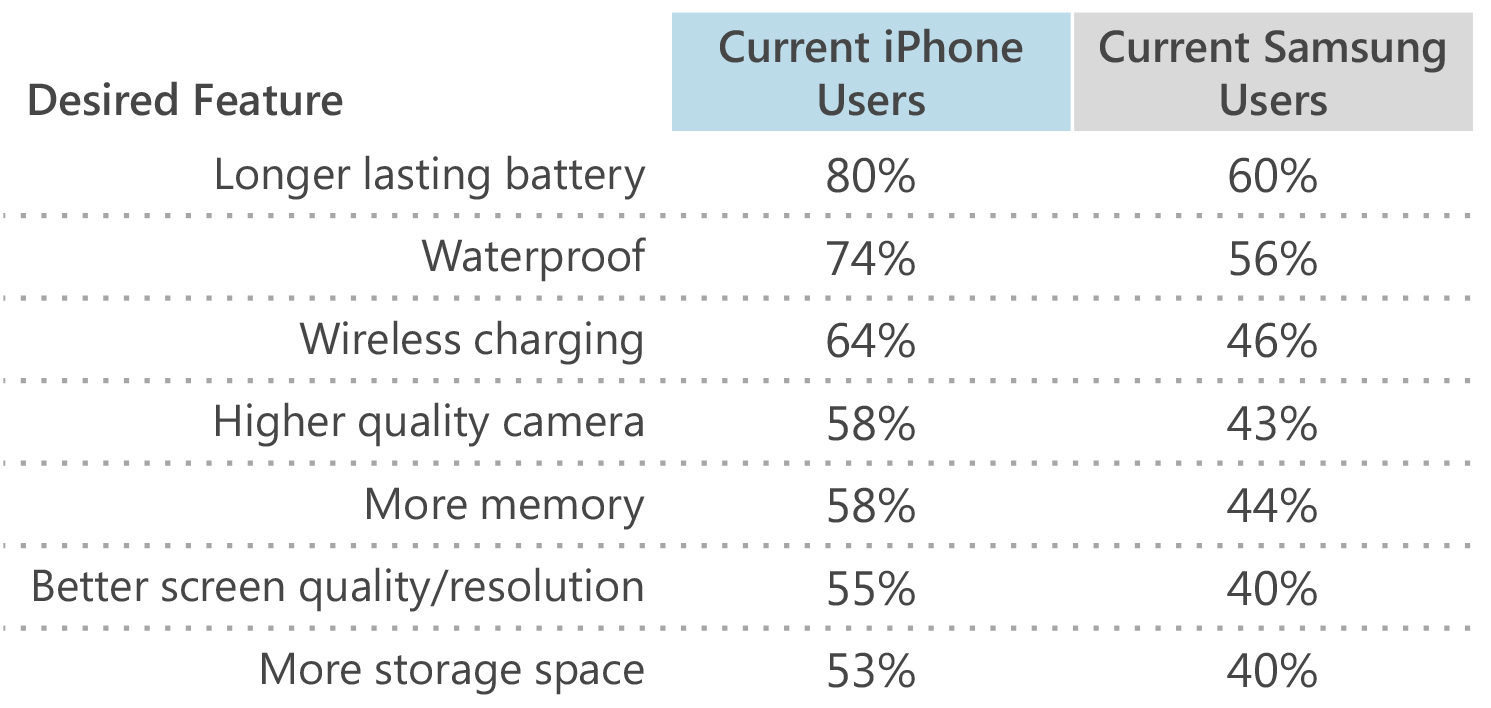
Surprisingly, as seen above, existing iPhone and Galaxy Note users vary quite a bit in wants from their next smartphone. For instance, both groups want better battery life, but there are more iPhone users that want that improvement. This is understandable, as the iPhone 6s battery life can be a bit disapointing -- the Plus variant, however, is phenomenal in this regard. Galaxy Note users would likely select Apple's plus variant if they switched, as its screen size measures up better to Samsung's phablet.
 
The company shares the following key finding from its study.
  • Battery: 80 percent of current iPhone users and 60 percent of current Samsung users want a longer-lasting battery more than any other feature.
  • Waterproofing: Although 74 percent of current iPhone users and 56 percent of Samsung users are interested in a waterproof iPhone 7, only 16 percent of iPhone users and 8 percent of Samsung users would like to see the headphone jack removed, a change that Apple had been considering for the next iPhone release.
  • Wireless Charging: 64 percent of Apple users and 46 percent of Samsung users hope for this feature on the next iPhone.
  • Memory: 58 percent of iPhone owners and 44 percent of Samsung owners noted more memory as a feature of interest.
  • Screen Size: While 61 percent of iPhone users who currently have a large screen (i.e., iPhone 6/6S Plus) report wanting an even larger screen, only 30 percent of people with older iPhones (i.e., iPhone 5S and earlier) want larger screens.
There is a good possibility that Samsung's battery woes and recall with the Note 7 are increasing the desire to switch to iPhone 7. After all, no one wants a device that could potentially blow up and cause a house fire. Owners of previous Note models could be turned off to the brand a result. As the study suggests, Apple could be looking at big iPhone 7 demand from fearful Note users that seek safety over brand loyalty.
 
Are you a Galaxy Note user who will switch to iPhone 7? Tell me in the comments.
 
Photo Credit: Dan Kosmayer/Shutterstock
 
~ Brian Fagioli

8.30.2016

This is how the iPhone 7 looks, according to Spigen

 
The launch of the new iPhones is just around the corner. Apple has revealed that it will unveil its next flagships on September 7, and with around a week to go before the big event it already feels like we know everything there is to know about the iPhone 7 line.
 
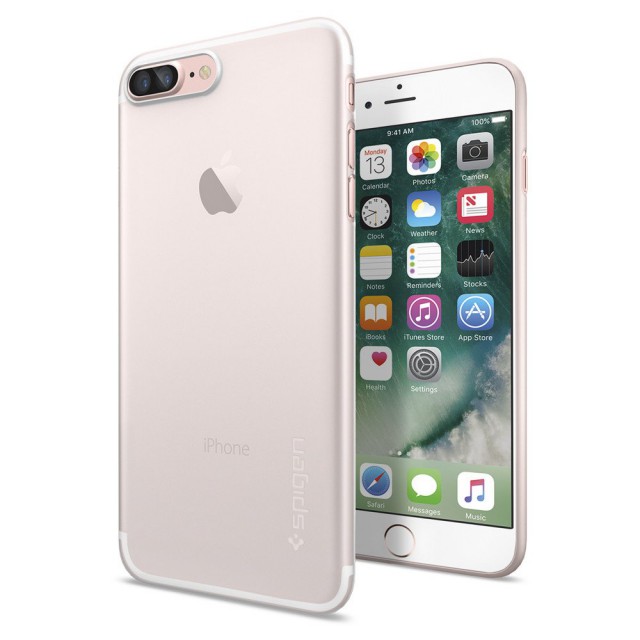
Much of that information can be filed under rumors though. However, Spigen's unveil of its new cases for the iPhone 7 line is different, as it also shows the iPhone 7 and iPhone 7 Plus in its new products' presentation photos.
 
The iPhone 7 and iPhone 7 Plus designs shown by Spigen are in line with the rumor mill, featuring hidden antennas, no headphone jack and a dual camera setup on the back of Apple's upcoming phablet.
 
The iPhone 7 is shown with a single-sensor camera unit on the back, which is again consistent with what the rumors have suggested so far. Also worth mentioning is that the mute switch is also present, above the volume buttons on the left side of the device. A power key is found on the right side.
 
Instead of a headphone jack at the bottom we see what appear to be two speaker grills, suggesting that Apple could have a stereo setup in store. The Lightning port is in the middle, as usual. Also, the devices are shown in white, black and gold colors.
 
Worth noting here is that Spigen's photos show a fingerprint sensor below the screen. It is not clear if it is also going to double as a home button, as with previous iPhones, but it seems like Apple has not managed to do away with the fingerprint sensor in this iPhone generation.
 
It is also worth pointing out that these might very well be renders based on existing photos and information, but they could also be the real deal. Either way, we will find out soon enough what Apple has in store for the iPhone 7 and iPhone 7 Plus.
 
If you want to learn more about the cases, hit the link in the third paragraph to go to Spigen's page.
 
~ Mihăiță Bamburic

3.09.2016

Samsung Galaxy S7 reviews are in: Can latest flagships spur upgrades?

Samsung's Galaxy S7 pair remains among the top of the Android pack, but the smartphone market has changed and it's unclear whether an upgrade cycle will follow.


Replacement cycles aside, we believe we have clearly entered a period of limited growth in high-end smartphones. This is due in part to the strong likelihood that incremental hardware innovation will have diminishing consumer value. This is a permanent shift, in our view; software and Internet services drive the bulk of consumer value in smartphones, and incremental hardware features do not seem likely to materially improve the experience from current levels. This has negative implications for replacement rates and pricing over time.
Enter Samsung's Galaxy S7.
 
The reviews for the Galaxy S7 have landed and most takes indicate that Samsung did what it had to. The company listened to its customer base, brought back features like the MicroSD slot and created a water resistant device that may have an improved camera.  
 

CNET's Jessica Dolcourt noted that the Galaxy S7 is too similar to the S6 to entice an upgrade. Ditto for the S7 Edge. The phones are fine. A tour of Samsung's New York technology and culture showplace highlighted tables of the devices that felt great in my hand.
 
 
Just not great enough to ditch my Galaxy Note 5. Aside from the latest Android, a MicroSD card and a 12-megapixel camera that is supposed to be an improvement from the previous 16-megapixel on, the Galaxy S7 pair is incremental. All smartphones are now incremental.
 
 
In the land of high-end Android, LG's G5 has more unique features with its modular design.
 

Nevertheless, some analysts are predicting the Galaxy S7 will outsell its predecessor. Credit Suisse analyst Keon Han said the S7 is likely to be more profitable and move more units than the S6. Han said:
 
 
The GS7 launch is earlier this year. The annual volume contribution is typically about 3 million in the launch quarter. About 7 million units of GS7 are expected to be shipped in 1Q16. The bill of materials cost is improving as the GS6 platform has been extended. Current estimate calls for GS7 sales to surpass GS6 volume.
 
 
In a nutshell, Samsung will move more Galaxy S7 units at a better profit margins and potentially price. From a business perspective it's a win for Samsung. From a gadget lust perspective, the Galaxy S7, like the smartphone market in general, will be incremental.