Cisco Learning Network Store Promotions Page
Showing posts with label iPhone 6 Plus. Show all posts

1.09.2016

iPhone 7 Plus rumored to include larger battery, 256GB storage option


Could 2016 finally be the year that Apple caves to customer demand and delivers a smartphone
with a larger battery? At least one publication thinks that'll be the case when the next iPhone
debuts later this year.

Chinese technology site MyDrivers (via Apple Insider) claims the iPhone 7 Plus will ship with a 3,100mAh battery. The current iPhone 6s Plus features a battery with a capacity of 2,750mAh. If true, the iPhone 7 Plus would have a 12 percent larger battery which the publication says would result in up to three additional hours of use.

It's worth pointing out that Apple actually reduced the size of the battery from the iPhone 6 Plus to the iPhone 6s Plus (the former packed a 2,915mAh unit). The more efficient A9 processor allowed the handset to retain the same usage ratings.


MyDrivers also claims the iPhone 7 Plus (notably, not the standard iPhone 7) will include an option for 256GB of local flash storage. Up to this point, the most storage you can get on an iPhone is 128GB. The site added that the 256GB option will be in addition to "the normal ones" which would mean 16GB, 64GB and 128GB variants. It'd make a lot more sense for Apple to finally drop the 16GB offering and bump the 64GB model down to the entry-level slot but I digress.

As always, it's recommended that you take this information with a bit of skepticism. It's still pretty early for rumors of this magnitude, especially considering that we haven't heard anything about Apple's A10 SoC and iOS 10.

~ Shawn Knight

8.23.2015

Apple launches free replacement program for defective iPhone 6 Plus iSight cameras

 
Complaints about the camera of the iPhone 6 Plus have been plentiful, and Apple has finally acknowledged that there is a problem. It's not something that affects all iPhone 6 Plus owners, but the company says that phones manufactured between September 2014 and January 2015 could include a failed camera component.
 
Apple has set up a replacement program which enables those with problems with the rear camera to obtain a replacement. Before you get too excited, it is just replacement camera components that are on offer, not replacement iPhones. You'll need to check to see if your phone is eligible at the program website.
 
The company says that it "has determined that, in a small percentage of iPhone 6 Plus devices, the iSight camera has a component that may fail causing your photos to look blurry. The affected units fall into a limited serial number range and were sold primarily between September 2014 and January 2015. If your iPhone 6 Plus is producing blurry photos and falls into the eligible serial number range, Apple will replace your device's iSight camera, free of charge."
 
To see if your iPhone is eligible, head to the iSight Camera Replacement Program for iPhone 6 Plus page and enter your serial number. If you're eligible, you can then take your iPhone to an Apple store or authorized service provider, or contact Apple technical support.
 
While Apple says that the replacement is free of charge, there is a risk that some people could incur costs:
If your iPhone 6 Plus has any damage such as a cracked screen which impairs the camera replacement, that issue will need to be resolved prior to service. In some cases, there may be a cost associated with the repair.
There is no particular rush to hand over your iPhone for repair. The replacement program runs for three years after the handsets first went on sale.
 
~ Mark Wilson

8.11.2015

iPhone 6 Plus balances benefits [Review]

 
Sometime within the next few weeks, Apple should announce successors to iPhone 6 and 6 Plus, and my review of the latter device is long overdue. Let's get to it finally and present the key finding first: If size matters, as in you want a phone with larger screen but that doesn't feel humongous, the 5.5-inch iPhone 6 Plus is a worthy choice. By measures that matter most—benefits from apps, calling, camera, data, performance, screen, and storage—the phablet is best of class.
 
As expressed in my iPhone 6 review, I regretted not buying the larger device after handing it. The Plus is big, but not overly large for my tastes. Hell, I bought Motorola-made and Google-branded Nexus 6 in January 2015 to replace iPhone 6; the screen is even bigger than Plus, at whopping 6 inches. I gained great value using either of the larger handsets, but gave up one for the other.
 
That's right. I switched from Nexus 6 in June 2015, and not for dissatisfaction. I love the phone. By the specs, the Google phablet is superior to  iPhone 6 Plus, but both deliver exceptional user experience. Google groupies laugh at iPhone 6 or the Plus as "Me-too" devices that catch up to or fall behind other high-end smartphones. That's because these people mistake the forest for the trees, using a clichĂ©. The trees are features and the forest are benefits, which are finely balanced—and that's this review's major focal point: Benefits.
 
Repeating for the umpteenth time: Your Starbucks coffee cup is one of the best illustrations of the difference between benefits and features. The wrapper that goes round the cup is a feature. Protecting your hand from burning is a benefit. Features and benefits are absolutely conjoined in things designed well. But they are nevertheless separate, and particularly among tech companies there is too much emphasis on features, when benefits matter more.
 
A smartphone or phablet isn't the sum of its features but balance of benefits. Apple understands this principle and handsomely applies it to both 6 variants. Google gets it, too, which is why Nexus devices are so wonderful.
 
Why I bought iPhone 6 Plus
 
My decision to abandon Nexus 6 started with a convergence of seemingly unrelated events, all within about 10 days:
  • Apple announced OS X 10.11 and iOS 9, and I wanted to test them
  • Apple unveiled its streaming music service, which I also wanted to test
  • My sister decided to give up Nokia Lumia Icon and needed a new handset
  • A freak electrical problem damaged my wife's Chromebook Pixel and required replacement
If not for my wife's Chromebook coming to untimely end, I would likely still own Nexus 6 today and would have taken advantage of the Project Fi invite that Google finally sent last week. Instead, my wife inherited Chromebook Pixel LS, which she loves; my sister bought the Nexus 6; and I used the proceeds from insurance and sis to replace both, with 13-inch MacBook Pro Retina Display and the Apple phablet.
 
Sizing up the Digital Lifestyle
 
iPhone 6 Plus and Nexus 6 are both exceptional phablets, and choosing one or the other is as much about digital lifestyle as device. Apple and Google sell lifestyle platforms around which someone builds stuff. The bitten-fruit company demands the more inclusive lifestyle, which hugely influenced my decision to give up the LS and N6 that I enjoyed and fit my more cloud-oriented lifestyle. For example, Apple Music isn't available without iTunes or iOS device; I couldn't test otherwise.

That said, more because of other developers' commitment, Apple is the Switzerland of mobile apps and cloud computing. I call iOS the "eat your cake and have it, too" platform. You can jump into the Apple lifestyle, while choosing from Google's. Meanwhile, the majority of the newest, third-party cloud-connected lifestyle apps are available for iOS before Android. Yum. Yum.
 
 
Google groupies will wave the comparable number of Android apps and selection. But it's not how many but which ones that matter. Number of apps is a feature, while meaningful selection is a benefit. The most useful Android apps also are available for iOS, or exclusively.
 
Let's cherry-pick pieces from the Apple lifestyle, which would be relevant to any iPhone 6 Plus buying decision, with caveat: iOS 9 is testing and final release is close. This list is based on the current version, iOS 8.4, and the next rev will offer additional lifestyle benefits.
 
Command me. iOS gives good speech-to-text capabilities, like Android, but Siri still sucks. If she was a living employee, the company would have fired her long ago. In the past, when Siri couldn't directly answer a question, I relied on the web searches she presented. But with iOS 7—and, sadly, carried forward to iOS 8—Bing is the search engine. Sorry, Google delivers more meaningful results.
 
Griping aside, Siri will get you around town and provide relevant, contextual information—there, Apple Maps is a help rather than hindrance (no more misdirections). She's not as proactive as Google Now, but as such not as snoopy. There's something stalker-like about Big G's app/service that creeps me out.
 
Still, Siri steers me wrong too often and can't compete with Google Now. Yesterday, my daughter wanted treats from Nomad Donuts. My wife and I were driving, and I asked Siri about the shop. Wow! It was just a few blocks away. But we arrived at, ahem, a less classy confectionary. That bitch brought me to the closest donut shop rather than the one requested.
 
If self-punishment is your thing, Siri is a great lifestyle companion. Our relationship is like Charlie Brown and Lucy. She promises that this time, she won't pull away the football when I run to kick it.
 
Cover me. As the Switzerland of mobile platforms, iOS offers the best cloud cover of them all. These benefits aren't exclusive to iPhone 6, but I would be remiss ignoring them, since they're core to any digital lifestyle. Simply stated: Connected-apps are aplenty.
 
For simplicity, let's focus on the Apple Way—iCloud Drive, which is new with iOS 8. The service is almost simple to a fault, because it's not obvious on iOS devices; access is from apps rather than a file manager (which is available on Yosemite or iCloud for Windows).
 
iCloud Drive finally catches competitors offering content access anytime, anywhere, and on anything (well, for the latter if an Apple-supported platform). Sync is excellent, based on my testing. "Set it, and forget it" is the design ethic, an attribute that made the original iPod so compelling. Simple sync is a huge benefit, and it works well with other Apple apps and services, such as calendar, contacts, and mail.
 
Grumble. Keeping with Apple's "You should always pay more" design ethic, the cloud costs. During San Diego Comic Con last month, I quickly exceeded my 20GB cloud storage and had to buy more: 200GB for $3.99 a month. By contrast, Google Photos storage is free for files less than 16MB. Pic syncing is what maxed out iCloud.
 
Share me. With this platform release cycle, Apple introduces the super useful Family Sharing. Think of it as "fair-use" applied to personal, digital content. I've complained for years about ebooks, music, movies, and the like being tied to a single account and not easily shared. Hey, mom can buy a CD or DVD and let the kids watch or lend it to grandma—but not her digital downloads. Sharing is a humungous benefit.
 
According to Apple: "Once you set up Family Sharing, family members get immediate access to each other’s music, movies, TV shows, books, and apps. Download what you want with a tap anytime you like. All without having to share an Apple ID or passwords".
 
This benefit alone is reason to consider iPhone 6 Plus or another iOS device and Apple's reward to long-time content buyers. Six people can share.
 
Play me. That brings us to Apple Music, which isn't available for non-iOS mobile devices. The streaming service in some respects supersedes Family Sharing. You can have both, but may not need to. The service is free during the first three months of operation and will later cost $9.99 individually or $14.99 for family fare.
 
You won't get much better music experience outside the Apple lifestyle, unless cost is limiting factor. In my testing, the streaming service offers broad selection, and the curated playlists are simply fantastic. Apple uses, gasp, real people rather than algorithms to curate music. I can't say enough positive about the overall experience but will try in my eventual full review.
 
Apple Music is one of the digital lifestyle benefits
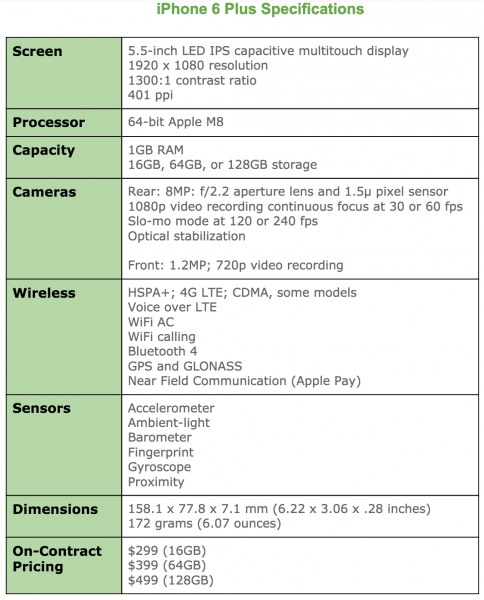
Watch me. If you would like to use Android Wear smartwatch with a mobile phone, you better buy into the Google lifestyle. Similarly, you'll want iPhone for Apple Watch. The data timepiece is fabulous companion for 6 Plus. The phone is large—158.1 x 77.8 x 7.1 mm (6.22 x 3.08 x .28 inches)—and the watch allows fast interaction with content or people without hauling the lug from your pocket.
 
Of course, this all fits into Apple's "You can always pay more" philosophy. Why buy one thing when you can get two, eh? I discuss user benefits in the next subhead, and screen-quality and size give many. But that means using a honking cellular carryall that may offend the hands of some users more accustomed to iPhone 5s-size handsets. Apple Watch makes getting phablet benefits a workable compromise: Big when you need it, small when you don't. That is, if you're willing to buy two thangs when one was good enough before.
 
Big Benefits in Plus Size
 
Perhaps you read this far and wonder where the hell is the hardware discussion. You got it this subhead, and the back-to-front approach is deliberate, because digital lifestyle and benefits should be first considerations when buying any modern handset, not price or features. The limited list sets the stage for features and benefits, which fit into a larger lifestyle lexicon.

Aesthetics. The design of the 6 Plus is reminiscent of iPhone classic—the original sold starting in June 2007. Rounded corners and curvy frame are the visible characteristics they share. Other reviewers point to iPod touch similarities, which is true of thinness, but the prominent aesthetic—rounded corners—inherits from the original.
 
The similarities only begin there. iPhone 6 Plus finely balances benefits against features in ways much like the classic. In 2007, Apple stripped back features available on other phones, such as 3G and MMS, to balance others: battery life and responsive interaction of the new sensors and touchscreen.
 
Balance is the overall design aesthetic and priority placed delivering benefits before the fanciest features. By the specs, iPhone 6 Plus is inferior to newer Motorola and Samsung flagship handsets.
 
However, my experience favors Apple's decision to deliver more by giving less. iPhone 6 Plus is extremely enjoyable to use, and joy is a benefit often overlooked in tech design. How you feel using a device matters much more than how you think about features. There, balance—how all the features fit together to deliver benefits—and the device's design mean everything.
 
The iPhone 6 Plus design is understated, which is a long-standing Apple aesthetic (see my June 2005 analysis). I've seen some complaints online about the plainness and critics calling the top and bottom back bans ugly. Picky. Picky.
 
Plainness isn't the problem. Apple is sometimes guilty of putting form before function, and this is where aesthetics can undermine usability. How a phone feels and how well it stays in hands and fingers are intertwined benefits. While I find that both newer iPhones feel quite good to hold and can be operated with one hand, the surface is too slick. I can't get good enough grip, and the curved rather than flat frame is one reason why. Both are the first iPhones for which I strongly encourage using some kind of case. Either will eventually slip from your hands otherwise, and Apple should be faulted for squandering benefits.
 
Design ethic inherits from the original iPhone
Sight. The screen delivers some of any smartphone's most important benefits. As such, I obviously wondered what the experience would be stepping down from the Nexus, which 6-inch display is 2560 x 1440 resolution and 493 pixels per inch. iPhone 6 Plus: 1920 x 1080 resolution and 401 ppi. I have no complaints, because the experience is excellent.
 
Some of that comes from a difference best described compared to iPhone 6, which resolution is 1334 x 750. The larger phone's screen is crisper, the glass seemingly less reflective, and the desktop so vivid it looks painted on. When first compared at Apple Store, I had to check to ensure I hadn't picked up a dummy phone with paper mockup pasted on. The three qualities deliver extreme benefits, particularly the muted reflectiveness.
 
Pretty much anything viewed on the iPhone 6 Plus screen looks superb. People upgrading from iPhone 3/G/GS or 4/4S might be overwhelmed by the spaciousness, while most 5/5s users will be pleased. Nice touch: Standard and Zoom modes. For my ailing, aging eyes Standard is just fine, however.
 
Sound. iPhone 6 Plus gives great audio—if you attach headphones or speakers. But the tinny, internal single speaker lacks much, particularly for someone steeping down from Nexus 6's dual front-facing speakers. That said, placement on the bottom frame (in vertical orientation) assures that notifications and phone rings can be heard.
 
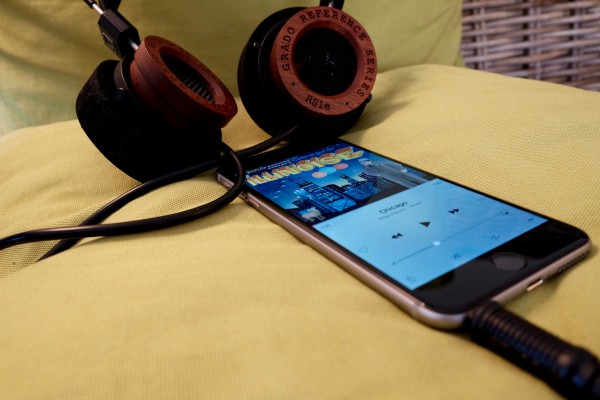
Connected to headphones, Apple Music streaming sounds fantastic. There's an immediacy to fullness and breadth of soundstage that's good to a fault. For example, with quality cans—Grado RS1e—I hear imperfections in the encoding, which on some tracks my ears perceive as over-modulation or muffled vocals.
 
Photography. More megapixels is meaningless, as I have asserted for years. Apple wisely sticks to 8MP, which is the reasonable limit, because cameraphone sensors are tiny (I would prefer 5MP). The greater packed the sensor with pixels, the more artifacts and other aberrations appear in photos. Like iPhone 5s, the 6 offers 1.5 micron pixels, which, among other benefits, let in more light than the standard 1.1 micron pixels, which tightly pack on 16MP phone shooters.
 
The f/2.2 aperture lens is good choice, and in my testing finely balances with sensor and software. I can't emphasize the importance of the latter and choices made when shooting and post-processing. In 2012, I used the 5MP Samsung Galaxy Nexus to shoot San Diego Comic-Con. One reason: The phone produced surprisingly good photos in low light, mainly because of the superb balance of features and wise settings choices made in auto mode. Something else: Google promised and the smartphone delivered instant-shutter response.
 
The catchup capability is one of iPhone 6 Plus's best photography benefits, particularly in HDR mode. Shutter response is fast. Immediate. But there is more: In my testing, the smartphone smartly chooses aperture, ISO, and shutter speed—and that's best observed in low-light settings. Color accuracy and white balance are generally spot on.
 
Most people are not professional photographers. They wouldn't know f-stop from exposure compensation. Rather than presenting confusing controls and numbers, Apple provides a nifty slider for adjusting exposure—lightness or darkness the user sees in the screen preview. Just tap the display. Other niceties, many carried forward from iPhone 5s and iOS 7 or long available elsewhere, include auto stabilization, face detection, and panorama mode.
 
Optical stabilization is available on iPhone 6 Plus, but not the smaller handset, and it's a differentiator that will be valuable to some shooters but not everyone. The technology is rather nifty, using the gyroscope in conjunction with the lens, which position changes, to reduce camera shaking that often blurs photos. Jim Harmer's Plus photo review is excellent primer for understanding the benefits.
 
iPhone 6 Plus camera smartly balances color and contrast
Gripe: The handset's body is thinner than the camera can accommodate, such that the lens juts out from the enclosure. It's an unacceptable design compromise that puts the lens at greater risk of damage and is, unfortunately, another reason to buy a back-fitting case. If cynical, you can chalk it up to the "You can always pay more" design ethic. Meaning: Back cover case is near necessity by design.
 
Most people will find iPhone 6 Plus photography to be satisfying at the least. There is no non-pro compact camera with fixed lens—meaning without telephoto—that I would recommend over this smartphone. Last week, I sold my beloved Fuji X100T, which is fixed lens. I rely on the Apple phablet when on the go, or for more demanding needs the interchangeable lens Fuji X-T1, which in July I bought during Comic-Con.
 
Videography. Apple delivers some nifty tricks shooting videos, and one is desperately-needed catchup: Continuous focus, a feature found on most major flagship smartphones. Fixed focus is one of older iPhones' biggest videography handicaps. On the 5 and 5s, you can tap to focus to start but there's trouble if you or the subject moves. In my testing, iPhone 6 Plus adjusts focus as promised. Finally!
 
Neat trick: Slow-motion at 120 fps or 240 fps. Slo-mo is super fun, but good luck easily exporting clips and keeping the slow speed. Direct upload from phone to YouTube is my method, as prescribed by phoneArena's helpful how-to guide.
 
The videocam can capture 1080p at 30 or 60 fps, and the latter is beneficial for shooting moving objects or finer-editing later on. Time-lapse videography enables other creative options, and Apple claims something called "Cinematic Video Stabilization", which supposedly lets you GoPro without buying one.
 
Longevity. Question everyone should ask about a smartphone: "How long can I use it before the battery dies?"  Long enough is my answer. Time period between charges is so great, I can't keep track. Even when using Apple Maps, which should be a battery killer, iPhone 6 Plus keeps going and going.
 
Apple claims 24-hour talk time over 3G, 14 hours watching videos, or 12 hours Internet over LTE or WiFi. I care about shooting photos and videos and uploading them to the cloud, while rumbling across social networks. These functions are more meaningful measures—and I easily get through the day with juice left over.
 
Responsiveness. Performance is an important benefit, and subjectively either elicits joy or generates frustration—and the latter emotion is one every manufacturer should avoid. I smile and assume you will, too: iPhone 6 Plus is speedy enough, even short a couple cores compared to Nexus 6. Either scrolling or opening apps and browsers is fluid and fast.
 
If you're looking for benchmarks, apologies but there are none here. They are for geeks hung up comparing features rather than looking at benefits. What matters more: How the device does daily tasks that are most important to you. By that measure, I have no complaints about subjective speed. However, I would say same about iPhone 5s. If you own the device and performance is your major buying criteria, expect to be surprised by the subjective speed sameness.
 
The Verdict Is In
I am satisfied enough with iPhone 6 Plus and believe that most buyers will be, too. That assumes they live the Apple lifestyle, or even an Apple-Google hybrid. Make digital lifestyle and assessment of benefits you want the first reasons for choosing smartphone or tablet. Specs don't matter, and they distract from what does.
 
Photo Credits: Joe Wilcox

~ Joe Wilcox

8.08.2015

Apple Pay Less Secure Than EMV

A Tampa, Fla.-based dispute mitigation company, eConsumerServices, is warning consumers of a false sense of security associated with the mobile payment system Apple Pay. The company asserted that EMV or “chip and pin” are the most secure payment methods out there, not Apple Pay.
 
“Apple Pay is vulnerable to fraud due to the fact that someone could steal a credit card, enter it into a phone and then use the phone without any identification to purchase Apple merchandise,” Grant Cardone, CEO of eConsumerServices, said. “Think thousands of dollars worth of merchandise stolen at the blink of an eye. When the cardholder goes to dispute the fraudulent activity, Apple loses the most.”
 
Apple Pay is a mobile payment and digital wallet service that lets users make payments using iPhone 6, iPhone 6 Plus, Apple Watch-compatible devices (iPhone 5 and later models), iPad Air 2 and iPad Mini 3. Apple Pay does not require Apple-specific contactless payment terminals and works with Visa's PayWave, MasterCard's PayPass and American Express' ExpressPay terminals.
 
With Apple Pay technology, consumers can hold their phones near card readers to enable transactions using near field communication chips embedded in compatible Apple devices. By using Apple’s Touch ID sensor, consumers are no longer required to enter a PIN to verify their identity.
 
When a consumer sets up Apple Pay, the financial institution associated with his or her payment card must verify that the card is compatible with Apple Pay. With each Apple Pay transaction, Apple generates the equivalent of a new credit card number, and the merchant never sees the consumer's information.
 
“Until there is a database validating every single cardholder's fingerprint and digital identity, EMV will outpace Apple Pay in terms of security,” Cardone said. “With EMV, buying patterns and spending habits are analyzed in a split second in order to detect suspicious activity.”
 
Consumers do have recourse if a fraudulent purchase is made using their Apple Pay account – they may file a chargeback.
 
“Chargebacks can be a double edged sword,” Cardone explained, however. “Although filing a chargeback looks like a quick and effective solution to the problem of a fraudulent charge, it could ultimately harm the consumer in the long run.”
 
One industry analyst suggested that as many as 6% of Apple Pay transactions were completed using stolen credit card numbers.
 
“The credit card data is not stolen from Apple Pay; credit card data stolen from other channels is loaded into unauthorized Apple devices for these fraudulent transactions,” Amit Sethi, principal consultant at the Dulles, Va.-based security firm Cigital, said. “The problem generally lies with some banks that do not adequately verify who is loading a credit card into Apple Pay. Apple Pay does provide attackers with another mechanism with which they can use stolen credit card data – which is what we’re seeing with the 6% of Apple Pay transactions made with stolen credit cards.”
 
~ Roy Urrico

3.23.2015

Apple Pay adoption sits at just six percent among iPhone 6 / 6 Plus owners, report claims

 
For years, experts argued that mobile payment systems wouldn’t really take off until Apple got involved. That finally happened late last year with Apple Pay, the company’s NFC-powered mobile payments platform. Early indications suggested the Cupertino-based company’s service was off to a solid start but a new report is painting a slightly different picture.
 
The report, titled “Apple Pay By The Numbers: Adoption And Behavior“ from InfoScout and PYMNTS.com, claims that just six percent of iPhone 6 and iPhone 6 Plus owners actively use Apple Pay while nine percent have at least tried it. Those figures are up from five percent and four percent in November, respectively.
 
Among those that had tried Apple Pay but weren’t consistent users, nearly a third (32 percent) said they simply forgot it was an option.
 
What this means is that there is a huge number of iPhone 6 and iPhone 6 Plus users that have never tried Apple’s mobile payments solution. If true, it would appear as though Apple is also struggling with a major industry hurdle: awareness.
 
 
InfoScout co-founder and CEO Jared Schrieber said the company needs to be dead-focused on making sure there is a trigger that compels users to use Apple Pay instead of just whipping out the ole credit or debit card. Something is simply lacking in the habit-forming action at checkout, he added.
 
Elsewhere, 31 percent of respondents said they were unsure if a particular merchant accepted Apple Pay while another 20 percent said they simply prefer to pay for transactions using another method. Of those that regularly use the service, 79 percent said it was more convenient than other forms of payment with 77 percent noting it was faster, 73 percent claiming Apple Pay is easier to use than others methods and 70 percent believing it is more secure.
 
If awareness is indeed the issue, it still has a shot at success once Apple Watch arrives. Simplifying the process even further by eliminating the iPhone from the transaction could very well do that. But first, Apple has to prove there’s a demand for its smartwatch which could be its biggest hurdle yet.
 
~ Shawn Knight

1.28.2015

Xiaomi: Hand over your iPhone, get a Mi Note flagship for free

 
Xiaomi is going hard against Apple in 2015. CEO Lei Jun recently gave several shoutouts to the Apple's inferior design quality on the iPhone 6 when compared to the Mi Note.
 
And now the next step in the battle will focus on swapping iPhones for Xiaomi Mi Note and Mi Note Pro at no extra cost, according to a new report citing Xiaomi's media development director.
 
Users will be able to trade in iPhone 5s (or an older model) for a free Mi Note and trade in an iPhone 6 or iPhone 6 Plus for a free Mi Note Pro, Xiaomi's two new smartphones launched earlier this month.
 
The Mi Note and Mi Note Pro are already half the price of the iPhone alternatives, making it quite a gamble in the price department.
 
If a user is able to get a Mi Note from an iPhone 5 it might be worth it, but we doubt Xiaomi will have any large success with the Mi Note Pro trade in offer.
 
Xiaomi has added a 5.7-inch full HD display, quad-core Snapdragon 801, 3GB of RAM, 16/64GB of internal storage and 3000mAh battery to the Mi Note, or an upgrade to a QHD display, octa-core Snapdragon 810 and 4GB of RAM on the Mi Note Pro.
 
Both exceed specifications for price, beating Apple's iPhone 6 and 6 Plus without much of a fight, however Apple has made it an objective to never compare specs and always test the feel and software.
 
Apple's total iPhone marketshare is up to 16 per cent in China. Xiaomi is no longer the de-facto ruler of mainland China, so it needs to pick up the pace if it wants to be competitive against the leading Apple in 2015.
 
Published under license from ITProPortal.com, a Net Communities Ltd Publication. All rights reserved.
 
~ David Curry

1.15.2015

Xiaomi reveals its iPhone 6 Plus competitors

 
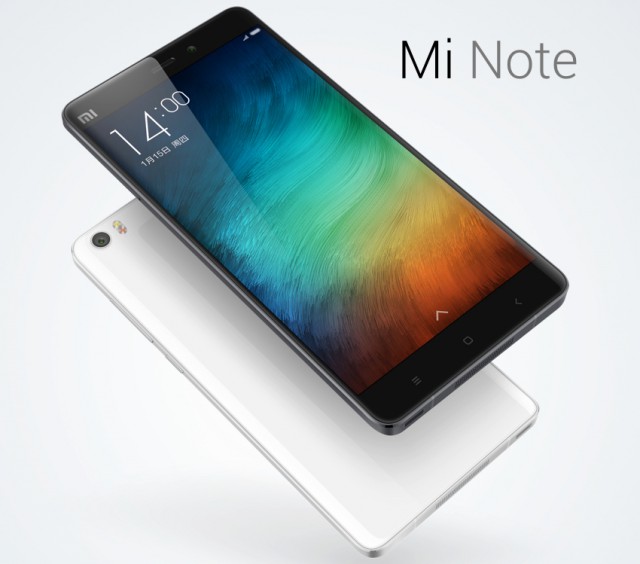
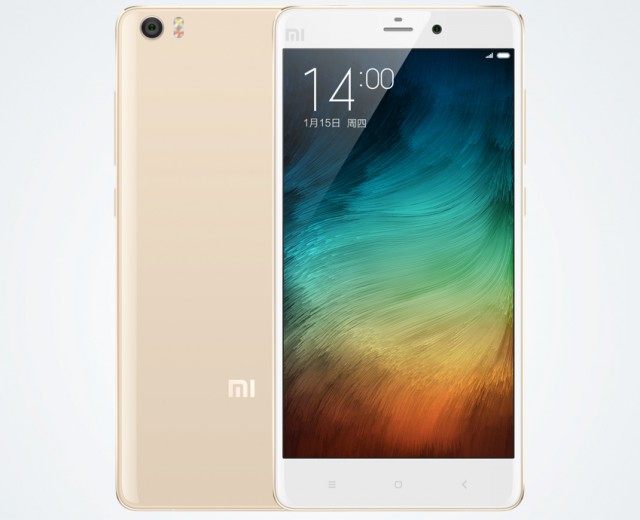
Chinese maker Xiaomi is going after iPhone 6 Plus with two new premium phablets unveiled today at a special event in Beijing. Called Mi Note and Mi Note Pro, the two Android handsets feature high-end hardware and, in typical Xiaomi fashion, lower price-tags than their Apple-made rival.
 
Xiaomi is calling both devices a flagship, although, judging by the specs alone, Mi Note Pro is clearly more deserving of the title, as it features the latest-available technologies. It is also better equipped to take on iPhone 6 Plus, which has proven to be quite successful for a phablet.
 
But, first, let's kick off with the less-expensive and less-impressive of the two. On paper, Mi Note is the phablet that is closer to iPhone 6 Plus with regards to hardware specifications. (That said, its specs are still more impressive, again on paper, than those of iPhone 6 Plus.)
 
It has a 5.7-inch display with a resolution of 1,080 by 1,920. It is protected by a sheet of 3D Corning Gorilla Glass 3 (the 3D bit means it's curved). Power comes from a 2.5 GHz quad-core Qualcomm Snapdragon 801 processor 3 GB of RAM, aided by a 3,000 mAh battery -- Quick Charge 2.0 is supported, as expected. But these are specs that would have been standard a year ago, and today they just don't cut it anymore for a device that is said to be a flagship.
 
On the back there is a 13 MP Sony camera with a wide f/2.0 aperture and optical image stabilization, which should make it a solid low-light shooter. On the front, the camera is a 4 MP unit with two-micron pixels -- it's similar to the camera HTC uses on the back of One (M8) and (M7) going by these two specs.
 
Xiaomi is, however, adding a few interesting bits to Mi Note. The device also gets improvements to the audio quality courtesy of a 24-bit/192 KHz Hi-Fi audio system, and dual-SIM support where both slots are 4G-enabled -- one is a nano-SIM and the other is a micro-SIM.
 
 
Mi Note will be offered in two versions, one with 16 GB of internal storage for CNY2,299 (around $371) and the other with 64 GB of internal storage for CNY2,799 (around $452). It comes in at 155.1 x 77.6 x 6.95 mm and 161 grams. Mi Note goes on sale next quarter in Singapore, and, presumably, other markets as well.
 
Mi Note Pro, as I implied, features all the latest goodies that a spec-fan can dream of. It has a 5.7-inch display with a resolution of 1,440 by 2,560. That gives it a pixel density of 515 pixels per inch. Inside, there is an octa-core 64-bit Qualcomm Snapdragon 810 processor aided by Adreno 430 graphics and a whopping 4 GB of RAM.
 
It also features 64 GB of internal storage as standard, which is a capacity that is optional on iPhone 6 Plus as the base model only offers 16 GB. Oh, and just like Samsung's Galaxy Note Pro LTE-A, it supports 4G LTE Category 9 cellular networks, which means download speeds of up to 450 Mbps and tri-band carrier aggregation support.
 
These are the main differences that Xiaomi has revealed so far between Mi Note and Mi Note Pro. The latter, of course, is also more expensive, costing CNY3,299 (about $533). There is no launch date announced for Mi Note Pro yet.
 
You may be thinking how the two stack up to iPhone 6 Plus. Well, as far as power goes it is a difficult comparison to make given the different architectures these devices have. But, here are the main specs of Apple's phablet: 5.5-inch display with a resolution of 1,080 by 1,920; 64-bit Apple A8 processor (dual-core 1.4 Ghz CPU, 1 GB of RAM); 8 MP main camera with f/2.2 aperture and optical image stabilization; 1.2 MP front camera; 16 GB, 64 GB or 128 GB of internal storage. It comes in at 158.1 x 77.8 x 7.1 mm and 172 grams.
 
But what about price? Well, here is where Xiaomi's phablets have a clear advantage. In 16 GB trim, iPhone 6 Plus costs CNY6,088 (about $983 -- I'm bringing up Chinese prices because Xiaomi operates in China and other Asian markets). For a 64 GB iPhone 6 Plus one has to shell out CNY6,8888 (about $1,113). Even Mi Note Pro is less than half the price of a similar iPhone 6 Plus, but Mi Note is nearly two and a half times cheaper. Clearly, price-conscious buyers will see this as a huge advantage, which is what Xiaomi is betting on.
 
~ Mihaita Bamburic

10.16.2014

Apple Pay to launch this week with mixed expectations

Apple is expected to launch its Apple Pay mobile payments initiative this week for iPhone 6 and 6 Plus owners, but not everyone is excited.  

 Image: ZDNet
Apple will hold a media event on Thursday at its Cupertino headquarters. The company is expected to launch a new iMac, updated iPads, and announce the release of the latest version of its desktop operating system, OS X Yosemite.
 
It is also expected to launch iOS 8.1 with its Apple Pay mobile payments system, first unveiled last month alongside the introduction of the new iPhone 6 and 6 Plus smartphones, which are the only Apple devices equipped with the near-field communication (NFC) technology required to make Apple Pay work.
 
Apple has invested a lot of time and money in the Apple Pay program, and many customers and partners are very excited about the possibilities of the system -- but not everyone.
 
There are a number of retailers eagerly on board with Apple Pay, which is really just an Apple implementation of industry-standard touchless payments that are already supported by a number of different devices and banks. Apple Pay is certainly the highest profile touchless payment program, however.
 
Apple has a long list of retailers supporting Apple Pay, including Macy's/Bloomingdale's, Disney, Toys 'R' Us, Nike, McDonalds, Panera, Petco, Sephora, Staples, Walgreens, and Whole Foods -- but these make up but a fraction of retail outlets in the United States. There is an equally lengthy list of companies that have either outright said they will not support NFC payments or simply demurred, saying they have "no plans" to support touchless payments.
 
The Daily Dot spoke to a number of retailers who said they have no immediate plans to support Apple Pay, including: Best Buy; H&M; Coach; Bed, Bath & Beyond; Sears and Kmart; BP (in the next couple of years, at least); Publix; Pizza Hut; KFC; Chipotle; and Starbucks (in-store, at least). Walmart has also said it has no plans to adopt NFC payments.
 
Of course, if Apple Pay is successful, retailers will likely look to adopt NFC-powered touchless payments, because being able to take money from your customers in their preferred form is just good business.
 
On the other side of the partnership triangle, Apple's partner banks seem very excited to jump on board. A Chase spokesperson told The Daily Dot that Apple Pay is "extremely secure." A spokesperson for Navy Federal Credit Union said that risk and liability is reduced for everyone involved in the payment process, from the retailer to the consumer and all the banks.
 
Activist investor Carl Icahn, who is also a large investor in Apple, sent an open letter to Apple CEO Tim Cook this week. In it, he estimates that Apple could generate billions in added revenue from Apple Pay and is "unusually well positioned to succeed with Apple Pay where others could not."
 
A leaked memo from Walgreens suggests that Apple Pay will launch on this Saturday, October 18, with a separate report saying military-focused bank USAA will begin its support on November 7.
 
Are you excited for Apple Pay? Why or why not? Let us know in the comments below.

~ Jordan Golson

10.07.2014

'Hairgate': iPhone hit by new social media storm

A woman holds an iPhone 6 Plus after it went on sale at the Apple store in Sydney September 19, 2014.
An iPhone 6 phone is seen on display at the Fifth Avenue Apple store on the first day of sales in Manhattan, New York September 19, 2014.
Credit: Reuters/David Gray
 
(Reuters) - First there was bendgate... now brace yourself for hairgate.  
 
Fresh from the online uproar over whether the shiny new iPhone 6 bends when carried around in pockets, Apple has been hit by a new complaint - that the handset traps users' hair or beards when they make calls. 
 
It is difficult to gauge whether there is any real issue, but Twitter users have made #hairgate a rising social media trend, leading major news outlets to pounce on the story. 
 
"The seam on my iPhone 6 where the aluminum meets the glass is definitely catching my hair and pulling it out," one user tweeted.
 
Bearded iPhone users have jumped on the bandwagon complaining that their facial hair gets yanked during calls, leading to spats over whether to treat #beardgate as a separate trend, or simply as a subset of #hairgate. 
 
Apple was not immediately available to comment.
 
Jokers are having a field day, with the Twitter account of the Atlanta International Fashion Week speculating that it may be an elaborate plot against hipsters for whom facial hair has become de rigeur. Another user tweeted: "Congrats, Apple, for finally getting hipsters to shave."
 
For some it is a heaven-sent marketing opportunity; Gillette Co. [PGGIL.UL] was quick to tweet: "Your phone may be smarter than ever, but leave the shaving to the experts."
 
However, many iPhone 6 users were left to wonder what all the fuss was about.  
 
"I have iPhone 6. Doesn't bend and doesn't snag hair. Who thinks up these things? Apple haters? Competitors?" tweeted Dr. John Wooten, a Virginia-based technical consultant.  
 
~ Eric Auchard

New iPhones make app development complicated

Summary: The iPhone 6 and 6 Plus add a third tier of iOS apps for developers to deal with.
 
(Image: Apple)
The lack of big iPhones used to play well with developers of apps for them. All iPhones had small screens and most apps only needed one interface and display to fit them all. That changed with the recent release of large iPhones, and developers must adapt their apps to work better with them.
 
That's not an easy task, as iPhone apps must still support the millions of smaller phones out there. The careful design of apps for them goes out the window for the iPhone 6 and especially the iPhone 6 Plus. It's usually not best to simply scale up the app display to fit the bigger phones.
 
The iPhone 6 Plus is approaching the size of a small tablet, and it takes a careful design of the app interface to yield an optimal user experience. Apps that display information in a single column must be tweaked for the wider screen of the new iPhone without looking garish.
 
Onscreen controls may need to be moved to a location that makes more sense on the bigger iPhones without compromising touch control. The controls need to be big enough for easy manipulation yet blend in well with the rest of the displayed elements.
 
All of this redesign must be done in a way that doesn't compromise how the app works on smaller iPhones. This is where developers must be pulling their hair out, as it's not easy to come up with a design that works well on all screen sizes.
 
Then there's the added difficulty of good landscape support, a must for the larger iPhones. The bigger displays cry out for using apps in landscape in addition to portrait. This adds a layer of complexity to the development effort.
 
Many existing iPhone apps deal with landscape support as simply as possible. They don't support it. While not always ideal, with smaller displays developers could get away with locking the app (and the user) into portrait use only.
 
CNN iPhone app (Image: James Kendrick/ ZDNet)
When you look at an iPhone app that has good landscape support it is apparent why allowing use in all orientations is good for the user. The new CNN app is a great example of such an app. It displays information in an attractive single column (that is easy to control by touch) in portrait, and morphs into a two-column format when the iPhone is rotated to landscape.
 
It handles text, images, and video through it all, and is a versatile app that lets the user work the way they want. This is key, it's all about the user and not what's easiest to code.
 
This is a tough challenge and I appreciate the effort developers must put into getting it right. It's a juggling act to get apps to work best on small and large iPhones, and in both portrait and landscape. But it's an important effort that users will come to expect from them when they use the iPhone 6 and iPhone 6 Plus.
 
Many developers have long produced both an iPhone version in addition to an iPad version of their apps to appeal to a broader market. Or, they may have chosen to build a universal app that has code for both devices.
 
Unfortunately for app devs, as big as the iPhone 6 Plus may be, it's not big enough for most apps to just use the iPad display for the iPhone. What's ideal falls between the big iPad interface and the existing small iPhone UI. This is in effect a third tier of display support for devs who already have both iPhone and iPad versions.
 
App redesign is a lot of work, and the multiple requirements that large iPhones add to the mix are something that devs must address. Getting an app interface right for small and large iPhones is important as users are fickle. If they don't like the way a favorite iPhone app works on the new models, they'll move on to something else.
 
~ James Kendrick

9.27.2014

Apple to replace bent iPhone 6 Plus models

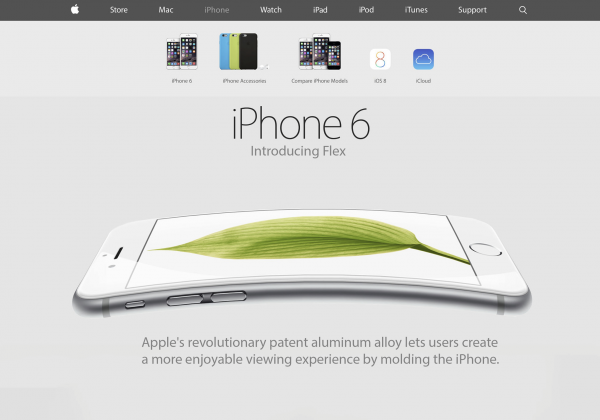
Summary: In response to what some users have dubbed #bendgate, Apple says handsets which bend when placed in pockets will be replaced -- on condition of a "Visual Mechanical Inspection."
 
 
Apple has promised to replace faulty iPhone 6 handsets following customer complaints that handsets have bent while in pockets.
 
On Wednesday, owners of one of Apple's latest flagship smartphone range, the iPhone 6 Plus, took to social media to complain that the large handset unexpectedly bends when placed in a pocket. In what has been dubbed #bendgate on Twitter, iPhone 6 users tweeted that while the smartphones remained operational, slight bends formed generally in the middle or the top of the handset. According to some of the complaints, bends formed when the device be placed under pressure -- for example, when the user sits down for a period of time.
 
While the standard iPhone 6 does not appear to have this design flaw, the iPhone 6 Plus' large size and 5.5-inch screen, combined with a thin aluminium frame, may be the problem.
 
The Next Web reports that in an online conversation with Apple's support desk, the representative said bent iPhones will be replaced, as long as the handsets passes a visual inspection. Genius Bar employees must place the gadget through a test known as the "Visual Mechanical Inspection" before deciding if warranty covers the problem. When asked if bends occurring during normal use of an iPhone 6 or iPhone 6 Plus would be covered under warranty, the representative said:
"That is 100 percent up to the Genius you speak with at the store. There is a test called a Visual Mechanical Inspection that the device will have to pass. If it is within the guidelines, they will be able to cover it. If not, the replacement would be a paid one."
The support team member also implied the iPad and iPhone maker is taking the issue seriously, as the company is "looking into this with an insane amount of detail.”
 
Therefore, if your new handset has been damaged after being placed in your back pocket, you may be eligible for a replacement. However, if you've been tampering with the smartphone on purpose, you're likely out of luck.
 
There have been some amusing responses to the design problem on Twitter, as noted below. It wasn't long before brands also joined in the fun.
 
 
Our phone doesn't bend, it flexes...on purpose. #bendgate pic.twitter.com/d1DudxDQgf
 
~ Charlie Osborne 

9.26.2014

Apple releases iOS 8.0.2, fixes borked update

Summary: Apple has released its iOS 8.0.2 update just a day after iPhone users around the world were left without cell service or Touch ID functionality following yesterday's bug-ridden iOS 8.0.1 release.
 
Apple has moved quickly to release its iOS 8.0.2 update, after leaving users around the world without cell service or Touch ID functionality on their iPhones following the release of its troubled iOS 8.0.1 update yesterday.
 
Apple said that the new update fixes the issue in the iOS 8.0.1 update that impacted cellular network connectivity and Touch ID on the iPhone 6 and iPhone 6 Plus.
 
The update, "fixes a bug so HealthKit apps can now be made available on the App Store," said Apple, in its update information, adding that the new update also addresses an issue where third party keyboards could become deselected when users enter their pass codes.
 
The company said that the update should improve the reliability of the Reachability feature on the new iPhones, and would fix an issue that could "cause unexpected cellular data usage when receiving SMS/MMS messages".
 
Less than 40,000 people were affected by the bugs in iOS 8.0.1, Apple said.
 
The new update will provide better support for Ask to Buy for In-App Purchases, and fixes an issue where ringtones were sometimes not restored from iCloud backups, along with a bug that prevented uploading photos and videos from Safari.
 
(Screenshot: ZDNet)
Apple has offered a rare apology for the bug-ridden iOS 8.0.1 update — itself released to fix bugs in last week's initial iOS 8.0 release — that saw iPhone users lose service, while seeking to quell a storm over reports that its new handsets are susceptible to bending.
 
The bug appeared not to have been specific to a country or particular network, affecting iPhone 6 devices running on networks in the US, the UK and Australia.
 
The slew of negative headlines has seen a steep drop in Apple stock, as the US tech giant acknowledged the software glitch, and yesterday offered a temporary fix immediately and a full update "in the next few days".
 
But Apple sought to minimise reports on bending of its newly released oversize iPhone — one analyst described the damaging claims as "a black eye" for Apple — saying it had received only nine complaints about the matter.
 
"Our iPhones are designed, engineered and manufactured to be both beautiful and sturdy," an Apple spokeswoman said in an email.
 
"They also feature stainless steel and titanium inserts to reinforce high-stress locations and use the strongest glass in the smartphone industry."
 
The statement said that "with normal use a bend in iPhone is extremely rare and through our first six days of sale, a total of nine customers have contacted Apple with a bent iPhone 6 Plus".
 
Apple yesterday offered a "workaround" to the software glitch after numerous users complained on social media and online forums that the iOS 8.0.1 update left their phones largely inoperable.
 
The update, which was released and then pulled within hours on Wednesday, had been developed to add in fitness monitoring programs which were omitted from the iOS 8 platform released last week.
 
"We have a workaround for you if you have an iPhone 6 or iPhone 6 Plus and you lost cellular service and Touch ID functionality today after updating to iOS 8.0.1," Apple said.
 
The temporary fix, which closely mirrored the unofficial fix outlined by ZDNet on Wednesday, allows users to reinstall iOS 8 through iTunes until the full update becomes available.
 
In a separate statement, Apple said, "we apologise for the great inconvenience experienced by users and are working around the clock to prepare iOS 8.0.2 with a fix for the issue."
 
~ AAP and Leon Spencer 

9.25.2014

Unofficial fix for iOS 8.0.1? Roll back to iOS 8. Here's how

Summary: Here's how to roll back your iPhone 6 or iPhone 6 Plus to iOS 8, and get the cellular connection and Touch ID working again.
 
 
What follows is an unofficial fix for the cellular and Touch ID issues introduced by the iOS 8.0.1 update.
 
I present this as is, and offer no endorsements or warranties. If it goes wrong, then you're on your own. However, this worked for two devices we tested, the iPhone 6 in the New York newsroom and the iPhone 6 Plus one in the UK.
 
1. Download the iOS 8.0 firmware (for iPhone 6, and iPhone 6 Plus) file from Apple.
  • iOS 8.0 (iPhone 6 Plus): iPhone7,1_8.0_12A366_Restore.ipsw
  • iOS 8.0 (iPhone 6): iPhone7,2_8.0_12A365_Restore.ipsw
2. While the file you need is coming in, go into Settings > iCloud and turn off Find My iPhone.
 
3. Next, connect the iPhone to a PC or Mac running iTunes using a cable connection (not Wi-Fi), and allow the two to connect.
 
4. Make a local backup using iTunes before you do anything else by clicking on the Backup Now button. Make sure you update to "this computer," rather than iCloud, encrypt the backup if you want to keep passwords, and make sure to include apps. Allow that to complete.
 
5. From the iPhone screen in iTunes, hold down Alt (on Mac) and Shift (on Windows) and click on Restore iPhone and point iTunes to the file you downloaded earlier.
 
6. Allow the restore to take place and when you iPhone reboots it will be running iOS 8.
 
7. Reload your data and apps by clicking on Restore from this backup and allow the process to complete.
 
8. Re-enable Find My iPhone.
 
If you followed the steps then you're handset is back to running iOS 8.0, and the Touch ID and cellular connection should be working again.
 
~ Adrian Kingsley-Hughes

9.24.2014

Apple issues iOS 8.0.1 for bug fixes, knocks out cell service and Touch ID for some

Summary: Less than a week after the initial release of iOS 8, Apple issues the first update for the platform, fixing several bugs — but introducing a number of new issues.
  
(Image: CNET/CBS Interactive)
Less than a week following the release of iOS 8, Apple has released the first update to the platform.
 
However, for some it brings more problems than it solves.
 
Hundreds on Twitter say they are unable to get a cellular signal following the update, with their iPhones stuck in searching for service mode, or getting the "No signal" message.
 
Others are seeing problems with the Touch ID fingerprint reader after applying the 8.0.1 update.
 
We tested an iPhone 6 running T-Mobile in ZDNet's New York newsroom, and an iPhone 6 Plus running on the 3 network in the UK and can confirm the issue.
 
Several iPads that have been tested however seem to have survived the update unscathed. Also, we are getting unconfirmed reports that the problem is confined to the iPhone 6 and iPhone 6 Plus.
 
For now, upgrading to iOS 8.0.1 is not advised, no matter what device you are running.
 
There's no mention as to whether the update brings with it better battery life or fixes some of the stability issues that some users have been experiencing. Also, there is no word as to whether this update includes any security fixes.
 
iOS 8.0.1 brings with it the following improvements and bug fixes, including updates to HealthKit, and addressing third-party keyboard issues.
 
The update is available either as an over-the-air (OTA) update or via iTunes.
 
The update is available for the iPhone 4s and later, iPad 2 and later, iPad mini and later, and iPod touch (fifth-generation).
 
~ Adrian Kingsley-Hughes

If your iPhone 6 or 6 Plus bends, it's Apple's fault


Apple could have a huge problem on its hands if iPhone 6 and iPhone 6 Plus are susceptible to bending. According to some early adopters, the new iPhones can show visible signs of damage after only a few days of normal use.
 
That's because the build quality does not appear to stand up to the challenges posed by pants' front pockets, which are causing the metal shells to bend near the cutouts for the physical side buttons. Light metal shell, meet thin profile.
 
Among the early adopters who have signaled the issue, lending credence to initial reports, is Geek.com's Russell Holly. He says that he never dropped his iPhone 6, but that it had been kept in a front pocket for "an extended period of time" while driving. Holly says that he only noticed the damage after seeing the first reports.
 
This suggests that there could be other folks unaware that their iPhone 6 or iPhone 6 Plus shares the same fate. BentGate or BendGate -- as the issue is commonly referred to as now -- may be more widespread than originally believed. But, even so, it is too soon to tell if it affects most, or all, new iPhones that have been sold so far. Apple staying mum about it does not help its cause.
 
I am inclined to believe that Apple did not thoroughly test its new devices, based on my engineering background. The signs are all too obvious. First of all, the side profile is thin. The thinner it is, the more likely it is for the body to cave under pressure. This should have immediately raised some concerns among Apple's engineering and quality assurance teams. Second of all, the metal shell has to be insanely thin also to achieve such low weights, which only adds to the bending risks. As I said earlier, put the two together and you have a recipe for disaster. It's a matter of physics here. Thicker side profiles and thicker metal would have helped. Or plastic, but that's a big no-no.
 
Take a look at how iPhone 6 Plus reacts while being bent.


Next, take a look at Samsung Galaxy Note 3 in a similar experiment. Notice how the plastic returns to its original shape afterwards. The difference is pretty substantial.
 
 
So what can you do if your iPhone 6 or iPhone 6 Plus is also bent? Well, if you can't live with it in this condition and Apple agrees to take it back, return it. It's that simple. It's not your fault, after all, it's Apple's for selling you a fragile device. If this is what happens after a few days of use, imagine how your iPhone will look at the end of your contract.
 
Photo Credit: TheDJtec
 
~ Mihaita Bamburic

9.23.2014

iPhone 6 and 6 Plus teardowns reveal internal details

The new iPhone 6 models have gone on sale, and shortly after Apple's new smartphones hit shelves, teardown sites had the full skinny on the innards of the devices, having ripped them apart.

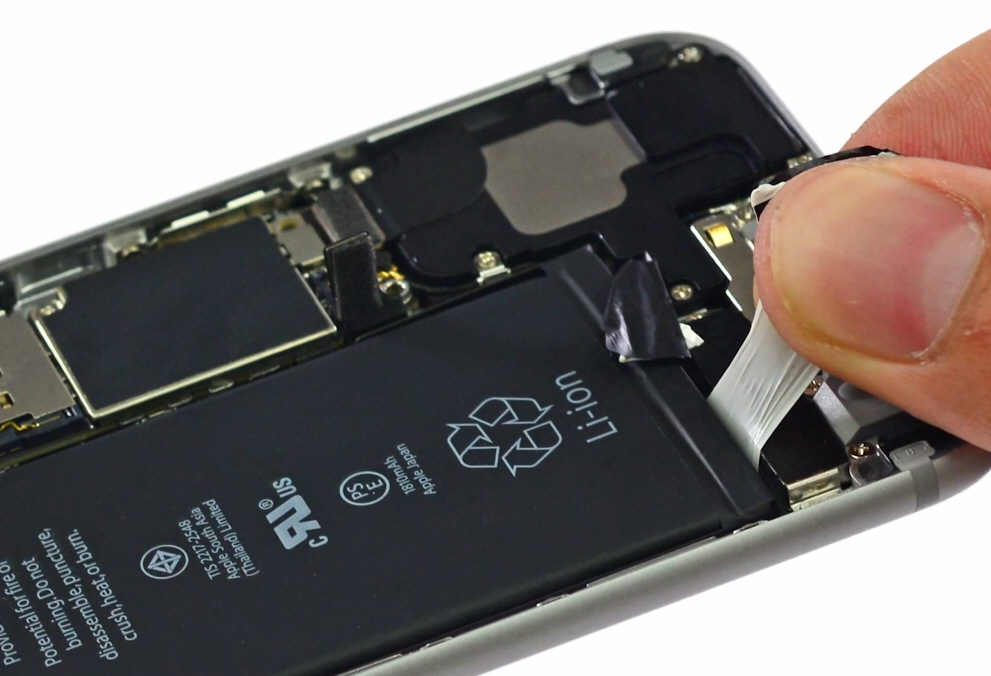
The most prominent, iFixit, produced its usual very detailed breakdown of the components of both the iPhone 6 and iPhone 6 Plus. Here are some of the highlights...

First off, the site notes that the design and construction of both models is very similar.

The protruding camera lens or "bump" is there due to improved optics, meaning the lens assembly is a tad thicker than the phone -- with the bump apparently measuring 0.6mm according to iFixit (slightly less than we heard pre-launch). Both cameras in the 4.7in and 5.5in iPhones seem pretty much the same, aside from the phablet which has optical image stabilization.

As for the battery, the iPhone 6 has an 1810mAh affair, just as pre-launch speculation had pointed to. That's not all that much bigger than the iPhone 5S, considering that the power pack has to drive a bigger, higher resolution screen. Apple claims that talk time will be increased from 10 hours to 14 hours, though -- we'll have to see how that pans out when our review of the handset goes live.

The phablet has a much chunkier 2915mAh effort as you'd expect, given that it has the space inside with a larger body.

As regards who makes the other internal components of the iPhone 6, the firms involved include Qualcomm, Skyworks, InvenSense and Avago. There's an Apple A8 APL1011 SoC and SK Hynix RAM doing the grunt work.

iFixit also notes that while the iPhone 6's speaker has a new design, it is just a minor update over the iPhone 5S.

 
As a final note, spare a thought for one Australian man who tried to do an impromptu teardown on live TV... check the video out here.

Published under license from ITProPortal.com, a Net Communities Ltd Publication. All rights reserved.

~ Darren Allan

9.22.2014

Apple only manages to sell 10 million iPhone 6 and 6 Plus in opening weekend

 
Expectations always run high when it comes to sales of new iPhones during launch weekend. There's an incredible frenzy in the media fueled by loyalists, long lines form outside Apple stores (immediately followed by the first inadvertent drop caught on camera), the reviews are raving across the board (and why wouldn't they be when only loyalists get review units?) and, finally, on Monday, Apple gives its fans the much-awaited reason to celebrate -- a new first-weekend sales record.
 
Needless to say, the 10 million iPhone 6 and iPhone 6 Plus units that Apple managed to sell during the first weekend exceed the 9 million iPhone 5s and iPhone 5c units sold a year ago. Barely. Considering the appeal that larger iPhones seem to have -- we've been waiting for them for a couple of years, after all -- 10 million sounds a tad short. It really does.
 
Last year, Apple sold 9 million new iPhones (well, new at the time) with the dreadful iPhone 5c in its lineup -- we all know how big of a hit it has been. Most of the weight to post a new sales record rested on iPhone 5s, which did not disappoint.
 
So, 9 million units were sold with only a "best new iPhone" on the market. You can imagine why 10 million units are unspectacular when two so-called best new iPhones contributed to the tally.
 
Apple CEO Tim Cook, as always, says the obvious:
Sales for iPhone 6 and iPhone 6 Plus exceeded our expectations for the launch weekend, and we couldn’t be happier. We would like to thank all of our customers for making this our best launch ever, shattering all previous sell-through records by a large margin. While our team managed the manufacturing ramp better than ever before, we could have sold many more iPhones with greater supply and we are working hard to fill orders as quickly as possible.
Apple could have sold more had the new iPhone 6 and iPhone 6 Plus been available in China during the first three days on sale. The largest smartphone market makes up the only difference between this year's availability and last year's, in the opening weekend. Still, we cannot know for sure how much of a difference China could have made, without speculating.
 
Nonetheless, iPhone 6 and iPhone 6 Plus will sure get a sales boost following the second wave of availability, which, on September 26, will add Austria, Belgium, Denmark, Finland, Ireland, Isle of Man, Italy, Liechtenstein, Luxembourg, Netherlands, New Zealand, Norway, Portugal, Qatar, Russia, Saudi Arabia, Spain, Sweden, Switzerland, Taiwan, Turkey, and United Arab Emirates to the list of markets where the two devices are on sale. By the end of the year, Apple says its new iPhones will be offered in a total of 115 countries.
 
Photo Credit: Andresr/Shutterstock

~ Mihaita Bamburic

9.15.2014

Surface Pro 3 stock sellouts and record iPhone 6 pre-orders make for nice headlines but are meaningless

 
My colleague Brian Fagioli reported some news a couple of days ago that had me smiling. "Microsoft's Surface Pro 3 is a worldwide success -- strong sales cause limited supply" his headline declared. It’s the sort of headline Microsoft would have hoped for when it announced the news that some overseas retailers had run out of Surface Pro 3 stock.
 
"A worldwide success" is pushing it. What happened was demand outstripped supply, in some countries, and the supply was probably on the low (prudent, if you like) side to begin with. Microsoft announced no numbers, and posted a cleverly worded blog which makes it sound as if Surface Pro 3 is a huge hit. Unless you read what it actually says.
 
"Given the interest that we saw as part of our US launch, retailers ordered what we thought was a healthy amount of Surface Pro 3s for these new markets. It turns out that we didn't ship enough", Brian Hall, General Manager, Surface Marketing says.
 
"Given the interest" is a fun way to begin that sentence. It could mean, "Given the high interest" or "Given the low interest". If you assume it’s not the implied first meaning but the second one, what he’s really saying is "Given the limited interest in the US, overseas retailers took more stock than we expected them to, and by golly they cleared the lot!"
 
The fact that Surface Pro 3 has sold out in some overseas territories is good news for Microsoft and the tech giant’s tablet brand, but it certainly doesn’t mean the device is a success, worldwide or otherwise yet.
 
When a new product launches stock shortages are common, and demand from people wanting to get their hands on the new release often cause sellouts that paint a picture that might not -- indeed probably won’t -- reflect the truth.
 
Shortly after Windows 8 launched, Microsoft told the world "Windows 8 upgrade momentum is outpacing that of Windows 7" and here we are a couple of years later waiting for Windows 9 to replace Microsoft's worst selling OS in recent memory.
 
And let's not forget, the original Surface and Surface Pro "sold out" in a lot of places in the early days too, and we all know how well that turned out to be doing. Shortly after Surface 2 and Pro 2 launched, Microsoft declared it "close to selling out" and now it's claiming the same with Surface Pro 3.
 
Brian also reported on how well iPhone 6 was doing (taking a swipe at Android users in the process) using a quote from Apple that said "response to iPhone 6 and iPhone 6 Plus has been incredible with a record number of preorders overnight". It is, of course, another rather meaningless statement. It could be a record number of preorders overnight everywhere, or a record number of preorders overnight in Punxsutawney, Pennsylvania Apple doesn't specify, and doesn't give any numbers, either.
 
When the Apple 5s launched we had stories about how iPhone 5s supplies were limited and my colleague Joe Wilcox wrote the following:
In business perception is everything, and supply shortages generate blogs and news stories and the appearance that the product is super hot-in-demand.
And when a product is super hot-in demand, people want it. They want to jump on that bandwagon and own the product everyone else has. If Microsoft or Apple say "we've plenty of stock, come buy" it will give the impression that no one wants what they're offering, and who wants a product that no one else wants?
 
So congrats to Microsoft for running out of Surface Pro 3 stock in some parts of the world, and well done to Apple for getting good pre-orders on a new phone with a hugely fanatical fan base. Come back to me when you have some solid sales numbers to offer, okay? 
 
Image Credit: shpockShutterstock
  
~ Wayne Williams