Cisco Learning Network Store Promotions Page
Showing posts with label iPad Air 2. Show all posts

2.26.2016

Apple, bring on the 9.7-inch iPad Pro!

Not too long ago, we were talking about tablets as PC replacements. Consumers were buying them in droves, losing interest in desktops and laptops. Apple's iPads ruled supreme, dominating this space from afar. Fast forward to today and we are talking about the slate as a has been, as it struggles to command the same levels of attention.
 
For Apple, which was used to posting record numbers every single quarter, it is an especially troublesome trend. The company started the tablet craze, after all, when it showcased the first iPad six years ago, and now sales figures are lower and lower as the quarters go by. However, the productivity-oriented iPad Pro appears to be bucking the trend -- could a smaller version do the same?
 
Yes, iPad Pro Is a Success
 
Sales figures for iPad Pro are not as impressive as for a typical iPad, because Apple only shifted around two million units last quarter out of a total of 16.1 million iPads. But they far exceed the competition, which is what matters considering that iPad Pro is basically a first-generation, niche device. An iPad Air 2 or iPad mini 4 is more mature and appeals to a wider range of consumers.

Microsoft sold only 1.6 million Surface devices in the whole quarter. Its tablets are the obvious rivals for iPad Pro, so it is a bit interesting to see a newcomer outselling more mature options in this space. The biggest iPad was only available for a month and a half in total, so it could have sold in three to four million units easily had Apple introduced it on October 1; from that perspective, it started off well in this segment.
 
Not to mention that all the recent Surface devices are arguably better in the productivity department, as they ship with a stylus and run a full-blown version of Windows. The keyboard is better designed as well. But, the fact that iPad Pro is selling better suggests that perhaps what consumers want is a more beefed up tablet, not a tablet masquerading as a laptop replacement.
 
But, Could a Smaller iPad Pro Work?
 
Because consumers seem to be responding well to a productivity-oriented iPad, Apple could apply the same recipe to make a smaller, 9.7-inch version. If you think about, there is no reason not to do it.

Apple should replace iPad Air 2 at some point this year, and a similar-sized iPad Pro could take its place in the lineup. It would be able to do the same things an iPad Air 3 could, while adding support for a stylus, keyboard and beefier apps. The smaller screen would not even be limiting, because iOS is designed to work well on iPads with screen sizes ranging from 7.9-inches to 12.9-inches.
 
There are no issues with tablet apps either, as developers optimize them well for all iPads. Not to mention that those apps that are now designed specifically to take advantage of iPad Pro's features could just as easily work on a smaller version, if it has the same -- or more powerful -- hardware inside.
 
As it stands now, an iPad Air 3 would likely be just a faster iPad Air 2. As I mentioned earlier, consumers are losing interest in these sort of devices. But, by giving them the extra benefits that iPad Pro has, in a smaller form factor, they could respond better. Many iPad Air owners are already using it with a keyboard, so it would be a natural evolution from this perspective. A stylus is also a popular accessory for content creators. Apple would better cater to prosumers, while empowering the average consumer when the need calls for it.
 
Having the potential to do more with a device is attractive, even though most of the time you will be unlikely to make use of any of its standout features. We do this every day with our phones already, if you think about it: how often do you use the camera at its full potential or how often do you take the processor to its limits? But, it is nice to know that you can do that, if you want. Same thing applies to a smaller iPad Pro.
 
The trick is to offer it at an attractive price point. A smaller iPad Pro can work as long as it costs roughly the same as an iPad Air 2, because consumers already have many options that are more affordable or more powerful for roughly the same money. Apple can afford to do this, to offer Pro features as a bonus, because margins from an iPad are high already.
 
"Pro" Tablets Are Inevitable
 
If Apple wants to remain relevant, it will have to offer a smaller iPad Pro eventually. Gartner predicts that these kind of devices, and high-end ultrabooks, will grow significantly in the coming years, from 45 million units in 2015 to 92 million units in 2018. There is huge potential here that cannot be ignored.
 
Apple's strength in a particular market comes not from one or two devices, but from an entire lineup. In that sense, adding a smaller iPad Pro to the line is an obvious next step for the company. It has nothing to lose, only plenty to gain.
 
Photo CreditVGstockstudio / Shutterstock

~ Mihăiță Bamburic
9.14.2015

You guys realize the iPad Pro will fail, right?

 
At its media event on September 9, Apple unveiled the iPad Pro, a 12.9-inch tablet. Touted as a productivity device, the company hopes that the iPad Pro will be the future of computing. Need a tablet? Use the iPad Pro. Need a laptop? Plug-in the $169 keyboard accessory and begin typing. The problem, however, is that at its current state, the iPad Pro is an awfully large tablet and iOS mobile operating system, which the device runs, isn't good enough to replace your desktop operating system.
 
After talking to a number of people -- both tech enthusiasts as well as average Joes -- one thing was pretty clear to me: nobody finds the iPad Pro exciting. A couple of people are actually looking forward to the iPad mini 4, which is the successor to the iPad mini 3, and largely carries the same hardware as the last year's iPad Air 2.
 
Plenty of people carry iPad (or iPad mini) to work and use it to watch movies and shows or read magazines during the long commute. Many people use these devices at home for reading and playing games. These are the people who represent the large part of Apple's userbase. The 12.9-inch display is a deal-breaker for many as it is uncomfortably large to hold and watch content on while traveling. Which leaves us to the smaller subset of the market which is looking for a device that could be used to make designs, edit videos and do things that are expected from a laptop.
 
And therein lies the biggest problem. Apple's iOS is among the finest mobile operating systems, but at its current state, it is not in a position to compete against Windows, or even its sibling, OS X. While Apple has laced the new operating system with several features such as Split-Screen, and Pinch-to-Zoom among others that truly make the device capable of performing multitasks, the experience is not so great yet.
 
 
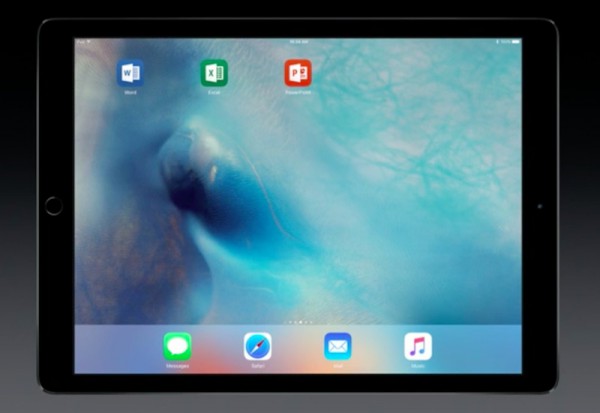
Starting with the homescreen, the company's decision to show just 20 apps on a page is a big design flaw. Just look at the image above and try to appreciate the amount of whitespace that has been thrown your way. Compare that with the Surface Pro 3, the device to which the iPad Pro will be largely competing against. The company seems to have completely missed out on a huge opportunity here.
 
The second issue is apps. The company noted that the iPad Pro comes with a desktop-class processor (which is faster than more than 80 percent of laptops that shipped last year), but what are you going to do with that high-end chipset? Apart from Office suite, which arguably offers sub-par experience to its desktop counterpart, there aren't many apps that could come together to replace the experience that its desktop counterpart offers. The operating system just doesn't seem to be designed for such a large screen.
 
Coupling that to the $799 starting price point, and an additional $169 for the Smart Keyboard, there are plenty of better laptops out there including company's own MacBook Air lineup, and a plethora of laptops running Windows and Linux builds.
 
What's your take on the iPad Pro? Will you be purchasing one?
 
~ Max Nottingham

8.23.2015

Windows 10: Pushing my MacBook and iPad aside

The versatility of Windows 10 is gradually pushing my MacBook Air and iPad Air 2 to the side. This was unexpected and a testament to how good Windows 10 has become in such a short time.

 
I bought the Surface 3 primarily because it shipped with Windows 10. I wanted to get serious hands-on time with the latest version of Windows and the hardware of the Surface 3 seemed to be a good way to do that. A long-time MacBook user, what I didn't expect to happen was Windows 10 pushing the MacBook aside.
 
I now use the Surface 3 every day, and while I haven't retired the iPad or the MacBook Air I find I don't miss them when using Microsoft's device. I've given a lot of thought as to why that is, and it comes down to the versatility of Windows 10.
 
Windows 10 has grown on me rapidly. This may be partly because it's the shiny new OS on the block, but only to a small degree. The bigger factor is how I can interact with Windows 10 in a variety of ways that fits my mobile routine.

A touch of versatility

I can use the Surface 3 by touch, with the keyboard and trackpad, with a mouse, and with the Surface Pen. When it's better to reach up and touch the display I can do that. I can run Windows with the trackpad when that better fits what I am doing. When precision is the call of the day I unfold the Arc Touch Mouse and get busy. While I don't do so as much as I thought I might, the pen is always there for handwritten input.
 
This versatility works so well because it is natural in practice. I don't have to think about it; I just do things the best way at the time. This is due to the wide range of capability that Microsoft has built into Windows 10. There are several ways to do most things, and the Surface 3 takes full advantage of them. To quote a common statement about the Apple world, Windows 10 "just works".
 
Regularly used features -- e. g. Start Menu, Settings, Task View -- can be invoked in multiple ways. Tapping on the screen, entering a key command, or making a gesture on the trackpad all become second nature quickly. It's not only efficient, it's fun to use.
 
The Edge browser in Windows 10 was pretty buggy at first, but it's evolved nicely. I now use it almost exclusively, with only the rare jump into Chrome for a couple of sites that have trouble in Edge. The poor situation with Windows apps is largely offset by the web versions of the ones I need, and Edge fills that void.

Taking over the work desk and the gear bag

While I am carrying the Surface 3 daily instead of an iPad or MacBook, it's not just mobile use that it's taking over. I have traditionally used the MacBook Air as my desktop system, but now find I miss the Surface and Windows 10 when doing so. I am regularly putting the OS X system aside and using Windows in that role.
 
This surprises no one more than it does me. When I started using the Surface 3 and Windows 10 I figured it would be just another device in my daily mobile gear rotation. I like using a variety of gadgets in this role and to keep familiar with advances in all of the mobile platforms. I never thought I would head out to work nearly every day with the Surface 3 in the bag, but that is what is happening.
 
Microsoft has done a great job with Windows 10, especially with how it has integrated with the Surface 3. It's not perfect but then it's early days in the evolution of the OS. It is already surprisingly good, and that has gotten my full attention.
 
I'm not going to dump OS X nor iOS; covering them is what I do. I am looking forward to El Capitan, and find the iOS 9 public beta to be a great update on the iPad. But I don't miss them when I leave them behind, and that indicates a big step forward for Windows.

5.12.2015

At $145, Cube i6 Air sports Retina display and dual boots Android and Windows

 
Every once in a while we come across a few exciting gadgets that stand out from the crowd. We’ve seen a dirt-cheap phone, a dirt-cheap TV, a dual-OS capable smartphone, and today we’re learning of another similar gadget. Called the Cube i6 Air, the $145 tablet runs both Android and Windows while sporting an impressive set of hardware.
 
This is a modified version of the Cube i6 Air 3G which was launched earlier this year in China. As the name gives away, the tablet supports 3G connectivity, but only supports Chinese bands. The Cube i6 Air fixes that problem introducing universal supported Wi-Fi. It’s also cheaper.
 
Hey, and don’t write it off as a cheap, and mediocre-specced tablet! The Cube i6 Air sports a 9.7-inch display with 2048 x 1536 screen resolution. (Same as iPad Air 2.) It is powered by an Intel Atom Z3735F Bay Trail processor coupled with 2GB of RAM, and 32 gigs of internal storage, which could be expanded using a microSD card should you need more storage.
 
The Cube i6 Air runs both Windows 8.1 and Android KitKat software. The device comes with an option “OS Switch/InsydeQ2S”, in the settings letting users quickly switch from one operating system to another. It is available for purchase in China from popular shopping portal JD.com. Elsewhere, you'll be required to look at unofficial channels like AliExpress, and portals like eBay to purchase the device.
 
~ Manish Singh

11.11.2014

Best Buy takes $100 off iPad Air 2, $75 off iPad mini 3 tablets for Black Friday 2014

Summary: The retailer has the best deals on iPads so far, plus at least $100 off Microsoft Surface 2 and 3 tablets.
 
While tech buyers have increasingly abandoned Best Buy over the years as online shopping has increased in popularity, it's still the bellweather for Black Friday deals on PCs and tablets, especially for mainstream consumers. This year, it managed to avoid an early leak of its deals, and has just launched its ad on its website. Look for the laptop and desktop sales in a separate post; we'll cover the tablets here.
 
The thing that jumps out at you first about Best Buy's ad is its iPad sales are the most aggressive to date. While Sam's Club dropped the price on the older iPad Air, and Target is resorting to store gift cards as a reward for buying the Apple tablets at full price, Best Buy is actually selling new iPads at discounted prices. One is a doorbuster, however, so quantities may be limited: the new iPad Air 2 will be sold for $100 off starting at 5 p.m. on Thanksgiving when the retailer's doors open. It appears that the deal -- which is for any iPad Air 2, not just the base 16GB model -- will be good online all Thanksgiving day, which points to the increasing importance of multichannel sales this holiday shopping season.
 
Best Buy will also take $75 off the price of the new iPad mini 3, with the 16GB version running $324.99 through November 29. Finally, there will be an additional sale the weekend before Black Friday where the retailer will have a first-generation iPad Air special, though you'll have to wait until November 20 to find out just how much less they will cost during that weekend.
 
Those looking for a Microsoft Surface rather than an iPad are also being catered to, with $150 lopped off the price of the Surface 2 models as a doorbuster (like the 32GB version for $299.99) and either $100 or $150 off 128GB or larger Surface 3 tablets, depending on the model. (Best Buy doesn't provide specifics.) There are also a couple of "unbranded" Windows slates being advertised, a 10.1-inch one available for $149.99 or with a detachable keyboard for $199.98.
 
Finally, Android lovers can select tablets from a range of price points, from a 7-inch Asus MeMo Pad with Intel processor for $99.99 to a 10.5-inch Samsung Galaxy Tab S with 32GB of storage for $449.99, or $100 off. The 8.4-inch Galaxy Tab Pro for $199.99 appears to be an especially good deal, as it's not only $100 less than the usual Best Buy, but $200 less than the current price on the Samsung website. Like some other retailers, Best Buy is also reducing the price of Amazon's cheapest Kindle Fire HD -- the 6-inch 8GB version -- by $20 to $79.99 for Black Friday.
 
~ Sean Portnoy

11.02.2014

iPad Air 2: Overkill and underwhelming

Summary: Apple's newest tablet is their thinnest and most powerful yet. So why am I disappointed?

They've reduced the form factor and it's faster!
As I mentioned a few weeks ago, I sold my original iPad Air back to Amazon, and ordered the new iPad Air 2.
 
I knew at the time that it was going to be thinner and the processor would be more powerful and have more memory.
 
It has the Touch ID and the anti-reflective coating. It has new cameras.
 
All of this is great, right? Well, mostly, I guess.
 
It's not like the original iPad Air was a slow tablet or not thin enough. Frankly, the Air was already too thin for my tastes, if they had stuck with the thickness of the iPad 4, the tablet could have accommodated a much larger battery.
 
My only major complaint about the iPad and the iPhone is that the designs are overall too fragile and require highly protective cases to prevent them from being damaged with regular use. But this is true of most tablet and smartphone designs, including Android ones, although Apple products are particularly susceptible to damage.
 
When friends and family have asked me about which iPad they should buy -- the Air 2 or the original Air, I ask them about what they actually do with the things. Many, if not all of them answer "Use email, Facebook, browse websites, play casual games and watch Netflix."
 
My answer is almost always "You don't even need an iPad for that." But if they press, I tell them they could probably get a nice deal on a previous generation device at Apple Outlet. If you are in the market for an iPad (or even a Mac) but don't need the latest and greatest, you can buy certified and refurbished stuff there that is good as new.
 
So what has my practical experience with the Air 2 been like? Well, first of all, before I even opened the packaging I did a Dremel job on a hard shell Trident Aegis iPad Air case, along with some cardboard for padding, to protect the new device until I could get one of the current generation hard shell cases in.
 
The volume controls don't work because their position has been moved and the mute button is now gone (I have it pre-set to an acceptable volume) and the camera is out of alignment and partially blocked. But the power button works ok and I have access to the charger port and with the Dremel job, the Touch ID.

That's not a major complaint though. I understand why Apple changes designs. And there's a whole accessories industry to keep alive.
 
The endless pursuit of thinness though is becoming a bit ridiculous. And it has had a detrimental effect on battery life, never mind the need to produce thicker and tougher case accessories.
 
I used to be able to get a solid 10 hours of use on an iPad Air. Now, I'm maybe getting eight, best case scenario. Other reviewers have reported they used to get around 12, but now get get 10.
 
The variation has to do likely with how bright you set the display (I like mine brighter than most) and how CPU and graphics-intensive the apps you use are. But the general consensus is that the iPad Air 2 has a worse battery life than its predecessor.
 
It's true that the CPU is faster. There is some improvement in how the Safari web browser responds and how fast pages load, and in the performance of a number of apps. However, it isn't like the performance of the previous generation was bad. It was excellent.
 
So while the Air 2 is faster, it doesn't feel so much faster that most people will notice a difference with the mix of apps they normally use.
 
What is worth mentioning, however, is that there are only a scant few apps for iPad that can actually fully exploit the power of the Air 2. There are some games I play that are probably the most graphically and CPU intensive you can find on the iOS platform, such as Real Racing 3, Asphalt 8, X-Plane 9, Infinity Blade 2, and Godus.

Most iPad games I play, though, are not super CPU or graphics intensive. Boom Beach, which is one of the highest grossing games on the platform, plays just as well on an Air, or an iPad 4th Generation. You could say the same for This is War! which is similar "attack the base" sort of isometric game.
 
Of all of those, only Asphalt 8 is iOS 8 "Metal" enhanced, and there are only 7 Metal-enhanced games for iPad in the App Store today. So if you have an iPad Air 2, chances are, there are only few apps that can actually take advantage of the thing. I expect this to change over time, but right now, most of the horsepower of the Air 2 (and even the iPad Air, for that matter) is wasted.
 
By far the most popular apps on the iOS platform do not require an iPad Air 2, or even an iPad Air to run well, and that's because of the very modest memory capabilities of the earlier devices the developers have to shoot for.
 
Don't get me wrong, it's nice to have the additional RAM, the 2GB on the Air 2 versus the 1GB on the original Air. There's less chance of stuff crashing, particularly with more resource-intensive games like Godus or Real Racing 3, should you have other processes running in the background.
 
What about the faster networking, the 802.11ac MIMO? Well, I have a 3000 square-foot, 5 bedroom home. I never had serious reception issues using 5Ghz bands on the previous model.
 
Although 802.11ac MIMO is a nice to have, and I have an 802.11ac router here, it's not like I can exceed the throughput of my broadband connection anyway, which is 50Mbps.
 
Even the previous Air was able to push it to near-wireline speeds on a good day. So unless Google Fiber comes to town, I'm probably not taking full advantage of that either. However, if an Apple TV 4th-Generation makes an appearance that permits the Air 2 and iPhone 6 to do AirPlay and screen mirroring at those speeds, that's another story.
 
Am I disappointed that I upgraded? For the time being, yes.
 
I'm sure that at some point, we'll see some apps that can actually put this device through its paces. But for now, until those apps materialize, I'm underwhelmed by the iPad Air 2, and I'm convinced the product is overkill for most folks who would be better served by previous generation devices, especially if they haven't done an upgrade in several years.
 
What do you think of your iPad Air 2? Talk Back and Let Me Know.
 
~ Jason Perlow

10.26.2014

AT&T will lock universal Apple SIM if you activate on their network

 
During Apple’s recent iPad media event, the company was quick to glance over a feature that could have massive implications on the wireless industry. Those who purchase a cellular version of the iPad Air 2 or iPad mini 3 will receive what’s called the Apple SIM.
 
Essentially, it’s a universal SIM card that works with a variety of wireless carriers. It eliminates the hassle of having to switch SIM cards each time you want to use your device on a different network (while traveling or in areas where service is poor on a certain carrier but better on another, for example).
 
 
Instead, you simply select the cellular data account you want to use in the setting menu.
 
Apple lists AT&T, Sprint and T-Mobile as participating carriers in the US although early user reports suggest AT&T isn’t exactly playing by the rules.
 
Multiple users have noted that once you activate the Apple SIM on AT&T’s network, it can only be used on AT&T’s network and you’ll need a new Apple SIM if you want to change carriers in the future. Or in other words, AT&T is basically eliminating the entire point of the new SIM technology.
 
Apple has acknowledged this behavior in a new support document, highlighting the fact that AT&T dedicates Apple SIM to their network only and that you’ll need to buy a new Apple SIM if you want to use your iPad on another carrier.
 
When asked why they're locking the SIM card to their network, AT&T spokesperson Mark Siegel said it's just simply the way they've chosen to do it.
 
At this point, there’s no evidence that suggests other carriers are planning to do the same.
 
~ Shawn Knight

10.23.2014

3 reasons to invest in a Surface Pro 3 instead of an iPad Air 2

Dollar for dollar, the Surface Pro 3 is a more capable device and a much better value than the Apple tablet.  

Last week Apple unveiled its new tablet lineup and introduced the iPad Air 2. The Apple iPad is still the de facto leader of the tablet market, but it's now only marginally compelling in a market saturated with a wide variety of alternative devices. The Surface Pro 3, on the other hand, includes some unique features and capabilities that make a persuasive case for why it should be the tablet you purchase.

Don't get me wrong -- I'm a huge fan of the iPad, and I love my iPad Air. That said, since I began using a Surface Pro 3, I've found that my iPad is getting less use -- and if I already owned the Surface Pro 3, I'm not sure I would have invested the money in the iPad Air. Frankly, it's a bit redundant.

Microsoft has a whole campaign of ads pitting the Surface Pro 3 against the iPad, plus ads that put Cortana head-to-head with Siri. Last week, Microsoft launched a new commercial on the web that illustrates why the Surface Pro 3 is such an awesome device, without comparing it directly to any competing or rival tablet.
 
I still disagree with focusing attention on the Surface Pro 3 as a tablet. In my opinion, Microsoft should be marketing the Surface Pro 3 as the most versatile Windows PC -- with its tablet form factor being one of the features -- as opposed to marketing it as a tablet that can also run Windows and the full desktop Microsoft Office suite. However, as long as Microsoft and the rest of the world insist on looking at the Surface Pro 3 first and foremost as a tablet, and pitting it directly against devices like the iPad Air 2, here are three reasons you should invest your money in a Surface Pro 3 if you're in the market for a new tablet.

1. It's a PC

Have I mentioned that it's a PC? This means that it runs the full Windows operating system and all of your traditional Windows software. Functionally, it's no different than any other Windows desktop or laptop PC. It just happens to be a PC that is also a tablet, one that has touch-enabled apps like Facebook, Twitter, Netflix, and Kindle, so it fills most of the same reasons why you might typically use a device like an iPad.

2. Flexibility

The Surface Pro 3 has a built-in multi-position kickstand. It also has connectivity options that enable you to expand its capabilities -- USB 3.0, mini DisplayPort, microSD card reader. You can connect the Surface Pro 3 to an external monitor or add additional storage through a microSD card or USB hard drive. Ultimately, any device you can connect via USB to a Windows desktop or laptop PC can be connected to a Surface Pro 3.

3. Surface Pen

The Surface Pen gives you a simple, intuitive way to work with the Surface Pro 3 without a traditional keyboard and mouse. The Surface Pen can act as a mouse-alternative, with buttons for left and right-clicking. You can select and drag items, and you can draw or write on the glass display. This enables you to mark up documents and photos or take handwritten notes. The purple button on the end of the Surface Pen allows you to instantly open OneNote (even when the device is locked) or capture screenshots.
 
There's no 16 GB Surface Pro 3, so you have to look at the 64 GB models if you want a somewhat even cost comparison. The 64 GB iPad Air 2 is $599, while a 64 GB Surface Pro 3 -- with an Intel Core i3 processor -- costs $799. You have to look beyond that basic price comparison, though. If you buy an iPad Air 2, you'll also most likely still want or need a PC, so you'll have to make an additional investment in a computer. However, if you buy a Surface Pro 3, there's a good chance you won't need an additional computer. Therefore, $799 for a Surface Pro 3 will most likely cost less in the long run.
 
Do you think the Surface Pro 3 is a better device that the iPad Air 2? Why or why not? Share your opinion in the discussion thread below.

~ Tony Bradley

10.18.2014

The iPad Air 2 is why tablet sales are falling

 
So two days ago Apple announced the latest iteration of its hugely popular iPad. I own a fourth gen model, and as someone who likes to be on the cutting edge, I was all set to snap up the new device. Except, what I saw didn’t excite me or give me a killer reason to drop $600+.
 
Tablet sales are slowing, and a large chunk of the reason for that can be laid squarely at Apple’s door. While the iPad Air 2 will appeal to first time buyers, businesses, or people looking to upgrade from inferior tablets, it just doesn’t offer enough to get existing iPad owners like me to upgrade. But it’s thinner! It’s lighter! So what? I’m not a frail old lady, or cursed with a muscle wasting disease. My iPad 4 is hardly a major weight, and to be honest, I like my devices to have a bit of heft to them anyway.
 
The new iPad comes with improved cameras! So what? I will never be the sort of person who takes meaningful photos with a tablet. If I’m somewhere amazingly picturesque, there’s a good chance I’ll have my Canon DSLR with me, and that takes far superior photos. And if I need to take a casual snap of something, my phone’s camera is all I need. People who take photos with an iPad are special. Let’s say no more.
 
It’s faster! Yes, this is the one selling point that means anything to me. I upgrade my PC on a regular basis in the vague hope that one day I’ll have a system that can keep up with me and do everything I want it to, so a speedier tablet is something that appeals. But the weird thing is, my iPad 4 never feels particularly slow. I’ve never cursed or shouted "come on!" at it. It does misbehave occasionally, forcing a reboot to teach it a lesson, but that’s about it. If I switched to an iPad Air 2 I would notice the difference I’m sure, but my iPad runs all the apps I throw at it without issue, and of course it runs the latest version of iOS, so I have nothing to lose by not upgrading.
 
It’s available in gold! I shove my iPad in a case, so it could be maroon and I wouldn’t know.
 
It’s got Touch ID! I like this feature on my iPhone, and I can appreciate it on the iPad, but am I prepared to spend $600+ to get it? Er… no.
 
So what was I hoping for? What would make me upgrade? Storage. The iPad Air 2 comes in three storage sizes -- 16GB, which is essentially worthless (buy that and you’ll regret it in a week), 64GB, which is the minimum you’ll need, and 128GB, which is the one you really want. If Apple had offered the 128GB model for a lower price, and chucked in a ton of iCloud storage, and just for once added the option to upgrade the internal storage in some way (a proprietary Apple expansion card of sorts would be fine), then I’d have sat up and listened. My iPad is always full, despite regularly copying photos off of it and deleting apps. Storage could have been the iPad Air 2’s killer feature. Not weight or thickness. Who the hell cares about weight or thickness?
 
A better screen would have been welcome. Sure, the new one is less reflective, but it offers the same 2048 x 1536 pixel resolution found on my iPad 4, the same 264ppi count, and the same Retina display. I can’t complain about my iPad screen, but a better one would be a reason to upgrade.
 
Any kind of innovation would have helped. Before the launch there was talk of Apple rolling out a giant iPad Air Pro capable of running iOS and OS X. That was never going to materialize, but if it had, at least we’d have something more interesting to talk about, and consider buying.
 
Adding something different to the iPad Air 2 -- some kind of built-in kickstand, a range of stunning accessories, anything -- would all have given me a reason to upgrade, except we got a refreshed Air and little else.
 
Don’t get me wrong -- if I was in the market for a new tablet, I would buy the iPad Air 2 in a heartbeat. I own a Nexus 7, and I’ve played around (briefly) with a Surface Pro 3, but neither device can compare with the iPad.
 
But the trouble is, I’m not in the market for a new tablet and so, like the vast majority of existing iPad owners, I won’t be upgrading to the iPad Air 2.
 
Maybe the iPad Air 3 will be the device I’ve been waiting for. I guess I’ll meet you back here next year to find out.
 
Photo credit: shpock/ Shutterstock
 
~ Wayne Williams

10.17.2014

iPad Air 2 vs iPad Air: What's the difference?

 
Apple has released the much-anticipated iPad Air 2, updating its beloved iPad Air with an all-new look and beefed-up specs.
 
But how does the iPad Air 2 compare against its insanely successful predecessor, the iPad Air? Let's break down the specs and take a look.
 
Display
  
Ok, on paper, there is really very little in the way of resolution improvements for the new iPad Air 2. It has exactly the same 2048 x 1536 pixel resolution as its predecessor, the same 264ppi count, and the same Retina display.
 
But, that's not to say that Apple hasn't innovated. For starters, the iPad Air 2's screen has been imbued with an anti-reflective coating that claims to reduce reflections by 56 percent.
 
More impressively, however, is the fact that despite the fact that this new tablet is an eye-watering 18 percent thinner than the first generation iPad Air (more on that below,) its managed to maintain the same quality display. That's because it has a laminated screen, with an optically bonded touch sensor, LCD and glass -- that means no air gaps and a lot more room.
 
Camera
 
Apple has bumped up the camera specs on the iPad Air 2, from 5 to 8 megapixels, with a whole host of image optimization tools. If you were hoping for a higher resolution selfie-snapper, though, you're out of luck. Apple has stuck with its proprietary FaceTime camera, at 1.2-megapixels -- though let's remember megapixels aren't everything in this race.
 
It's a big bump up though from the 5-megapixel offering of the previous generation iPad Air. Photos on the new tablet are, in a word, crisp. Tablet photography has famously lagged behind its smartphone cousin. Could the iPad Air 2 be the one to even out the deficit?
 
Size & weight
 
Apple has made the iPad Air 2 even thinner than its extremely svelte predecessor. At 6.1mm thick, the iPad Air 2 is definitely one of the thinnest tablets on the market. Even though both generations sport the same 9.7in screen, the iPad Air 2 measures just 6.1mm to the old one's 7.5mm.
 
That's a big difference, and makes the Apple's new slate one of the most elegant on the market. It's also a lot lighter, weighing just 437g to the first iPad Air's 469g.
 
Under the hood
 
Apple has brought the beef with its new A8X processor, specially designed for the new iPad Air 2. This is meant to make the iPad Air 2 40 percent faster than its predecessor, which wasn't a sluggish machine to begin with.
 
Verdict
 
Thinner, lighter, and... gold-er, the new Apple iPad Air 2 is a worthy step up from its predecessor. Not only that, but it matches the original iPad Air in price, meaning it's also one of the most competitive Apple slates we've seen.
 
With added features like the long-awaited TouchID, the second generation iPad Air is bound to be a crowd-pleaser that ties in with a rapidly expanding Apple ecosystem.
 
 
Published under license from ITProPortal.com, a Net Communities Ltd Publication. All rights reserved.
 
~ Team ITPP

Apple's new iPads sport modest upgrades but short on 'wow'

Phil Schiller, Apple's Senior Vice President of Worldwide Product Marketing speaks during a presentation at Apple headquarters in Cupertino, California October 16, 2014.
Credit: Reuters/Robert Galbraith
 
(Reuters) - Apple Inc's (AAPL.O) faster, slimmer iPads come with modest improvements, such as a fingerprint sensor, but some analysts say it offers few other features to wow consumers ahead of a holiday shopping season expected to be swamped by mobile devices.
 
At a launch event on Thursday, Chief Executive Tim Cook called Apple's new line-up, which includes a new iMac computer with a "5K retina" or high-end display, the company's best ever. But analysts say Apple may struggle to arouse the same passion for its tablets as in past years among consumers faced with an abundance of hand-held, touch-screen devices. 
 
Apple CEO Tim Cook holds an iPad during a presentation at Apple headquarters in Cupertino, California October 16, 2014.
Credit: REUTERS/Robert Galbraith
  
"I've got to be honest and say, the only impressive thing was the 5K retina display on the iMac," said Gartner analyst Van Baker, who attended the show at Apple's headquarters in Cupertino, California. "The other things we saw (included) just iterative improvements on the iPad."
 
Marketing chief Phil Schiller called the larger tablet the world's slimmest and described several new features such as an anti-reflective screen. He also confirmed the inclusion of the "Touch ID" sensor, already available on the latest iPhones.
  
Phil Schiller, Apple's Senior Vice President of Worldwide Product Marketing speaks during a presentation of the new iPad at Apple headquarters in Cupertino, California October 16, 2014.
Credit: REUTERS/Robert Galbraith
  
Pre-orders start Friday for the larger iPad Air 2, priced at $499 and up, with shipping beginning next week. The smaller iPad mini 3 will be about $100 cheaper.
 
The new iMac, which sports the new "Yosemite" operating system, will go for $2,499.
 
Tablet sales are set to rise only 11 percent this year, according to tech research firm Gartner, compared to 55 percent last year, even as smartphone sales continue to soar and personal computer sales are waning. 
 
DEFINING MOMENT
 
Tablet sales for Apple, which defined the category with the iPad just four years ago, have fallen for two straight quarters. Investors remain focused on the iPhone, Apple's main revenue generator, but a prolonged downturn in iPad sales would threaten about 15 percent of the company's revenue.
 
The new iPads will go up against recently introduced tablets from Amazon.com Inc (AMZN.O) and Google Inc (GOOG.O) in coming months. Shares of Apple slid 1 percent to $96.57 shortly before the close.
 
Apple CEO Tim Cook speaks about the Apple Pay service during a presentation at Apple headquarters in Cupertino, California October 16, 2014.
Credit: REUTERS/Robert Galbraith
  
Apple also said it will launch its new electronic payments service on Monday, after the iPhone maker signed up another 500 banks to support a feature that competes with eBay Inc's (EBAY.O) PayPal and other online systems.
 
Cook said developers were beginning to design apps for its upcoming Watch.
 
Apple last month introduced the Watch, its first new device since the iPad in 2010. The company's entry into the rapidly expanding wearable computing arena will be available only from 2015, but Cook said software development kits for the device will be available from November.
 
Missing on Thursday was a larger, 12-inch-plus iPad, the subject of industry speculation ahead of Apple's event.
 
"It is disappointing, particularly to enterprise buyers, that there wasn't a 12.9 inch iPad model," said Forrester Research analyst J.P. Gownder. "To return iPad to high growth, form factor innovation will be required. We'll have to wait until 2015 to see if Apple addresses this issue."           
 
~ Christina Farr

10.16.2014

Apple announces iPad Air 2, iPad mini 3: Faster, thinner designs; Touch ID included

Summary: Apple let slip that it had two new iPads to unveil a little sooner than it would've liked, but still had a few tablet-related surprises up its sleeve.
 
(Image: Apple live stream)
Apple had a surprise (two, in fact) up its sleeve for Thursday's event, but let slip a little earlier than it would've liked.
 
At an event at Apple's headquarters in Cupertino, California, the technology giant revealed — technically for the second time this week — the iPad Air 2, and the iPad mini 3.
 
Why for the second time? Because on Wednesday it accidentally published a new user guide which leaked details of the two new full-sized and shrunk-down tablets.
 
Starting with the full-sized but super thin iPad Air 2, it sports an improved 9.7-inch Retina display. It also lands with an anti-reflective coating, making it about 56 percent less reflective to outdoor conditions.
 
According to Apple's marketing chief Phil Schiller, it's 18 percent thinner than its predecessor at just 6.1 millimeters — and thinner than a pencil.
 
"It's the world's thinnest tablet," Schiller said.
 
It also lands with an improved 64-bit A8X processor — so about 40 percent faster than the iPhone 6 and iPhone 6 Plus — for those intensive large-display apps. Graphics are now 180 times faster than the original tablet, Schiller said. The new A8X chip also includes an M8 processor, which supplies walking, running, and climb data.
 
The rear-facing camera has been improved, now able to take 8-megapixel photos and 1080p video, and the front-facing FaceTime camera has a 1.2-megapixel sensor for 720p high-definition video calling.
 
LTE networking has also been improved, allowing for up to 150Mbps. The battery life, however, remains at 10 hours.
 
(Image: Apple live stream)
But the flagship feature, just as it was with the iPhone 5s, is the addition of the Touch ID fingerprint sensor.
 
It took Apple a little longer to port the long-awaited security feature over to its tablet range, but it's now included as standard on its tablet line-up for the coming holiday season.
 
It's available at $499 for the base 16GB Wi-Fi only version. The 4G LTE version enabled costs a little more at $599 on AT&T, Verizon, Sprint, and T-Mobile.
 
The new tablet, which lands with iOS 8.1, is available October 17 for pre-order in silver, space greyand for the first time in gold, as previously rumored.
 
For those who aren't willing to shell out for a full-priced iPad Air, the slimmed down 7.9-inch iPad mini 3 is a little cheaper at $399 for the base 16GB Wi-Fi version. The 4G LTE enabled costs a little more at $529 on selected U.S. carriers.
 
Like its larger sibling, the iPad mini 3 comes with Touch ID.
 
~ Zack Whittaker