Cisco Learning Network Store Promotions Page
Showing posts with label Bill Gates. Show all posts

5.16.2016

Terrorist group Al-Qaeda threatens to murder Microsoft founder Bill Gates

 
When Al-Qaeda destroyed two World Trade Center buildings, it felt like everything changed. Seemingly overnight, the citizens of the USA went from being fairly care-free to having to constantly look behind their collective backs. It is now 2016 and when I go to Penn Station in New York City, I still see military people with assault rifles. Sadly, this is apparently the new reality.
 
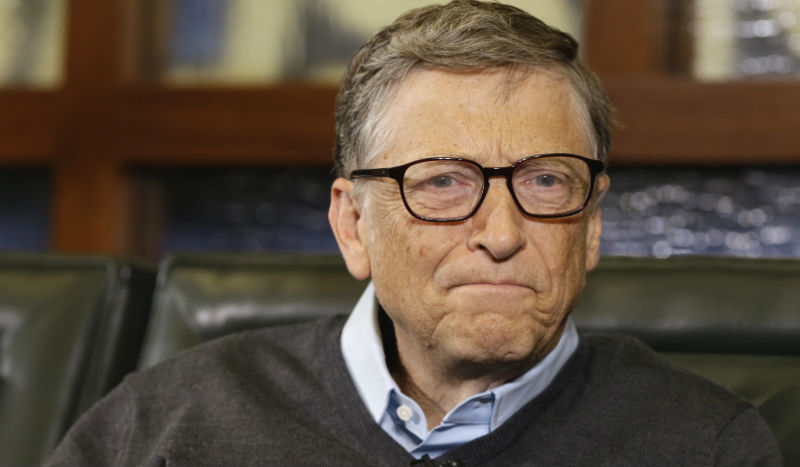
Now, that same terrorist group is threatening business men and women in America. It is particularly sad that a person must live in fear because of their success. One particular person being threatened is Microsoft's founder, Bill Gates.
 
According to The Washington Times, Al-Qaeda's official online propaganda magazine Inspire, contains a montage of violent images -- things like guns and blood -- next to an image of Bill Gates. The terrorist group is calling for home invasion murders of successful business folks, like Gates, which is absolutely sickening.
 
Regardless of your feelings towards Microsoft, I am sure you agree that its founder does not deserve a target on his back -- no one does. Quite frankly, Mr. Gates' work with that company has contributed greatly to improving the world. Windows alone is a large factor in the advancement of the personal computer.
 
Now semi-retired, the man has become a philanthropist, donating resources to helping humanity. His foundation has even developed a machine that turns waste into clean drinking water. He should be admired, not threatened.
 
 
It is easy to see why a group that hates the USA and its freedom would target Bill Gates. Not only is he one of the richest people in the world, but a symbol of the American dream. Even as an older man, the image of a young and bright technology success is still ingrained in our society. Even presidential hopeful Donald Trump thinks Gates is powerful enough to close down the entire internet!
 
Feel free to leave a message of support for Bill Gates in the comments below.
 
~ Brian Fagioli

2.24.2016

Bill Gates is wrong

 
I see something disingenuous about Microsoft cofounder Bill Gates supporting the government's demands that Apple selectively unlock an iPhone used by one of the San Bernardino, Calif. shooters. The former CEO turned philanthropist spoke to the Financial times in an interview posted today. The implications for Microsoft cannot be overstated, and the company's current chief executive should state corporate policy.
 
Gates' position aligns with the government's: That this case is specific, and isolated, and that the demand would merely provide "access to information". Here's the thing: The interviewer asks Gates if he supports tech companies providing backdoors to their smartphones. The technologist deflects: "Nobody's talking about a backdoor". Media consultants teach publicly-facing officials to offer non-answers exactly like this one. The answer defines the narrative, not the interviewer's question.
 
Foot in Mouth
 
Except this: Gates suffers interviewee foot-in-mouth disease in the worst way, as his response, or lack of it, puts him on the government's side. He later tries to backpedal in an interview with Bloomberg, stating he is "disappointed" with the FT report and "that doesn’t state my view on this". Thing is: Financial Times posts a video of the interview that clearly gives context. The philanthropist's selective, deflective answer to the backdoor question is unambiguous.
 
In  followup question during the FT interview, Gates states—and I'd argue without the technical trade secret expertise about iOS and iCloud encryption—that "Apple has access to the information. They're just refusing to provide the access". He likens the government demands to a bank :tying a ribbon around a disk drive. "Don't make me cut this ribbon, `cause you'll make me cut it many times".
 
But that response diminishes the encryption technology, which is a helluva lot more like a fortress than a "ribbon" tied around a disk drive.
 
FBIOS
 
Quick recap: Law enforcement classifies the Dec. 2, 2015 San Bernardino shooting as an act of terrorism. The  county health department owned the iPhone 5c and granted access to it. But a four-digit numerical passcode was needed, and in the hours following the attack an official reset the associated iCloud account, eliminating that as means of getting to the "information".
 
The Feds want Apple to create custom software, which I've seen on the InterWebs sarcastically called FBIOS, to turn off the security measure that wipes data after 10 failed password attempts and to enable a means for automating a "brute force" attack to uncover the correct combination. Apple contends that complying would undermine security, create a backdoor for accessing any iPhone, and would undermine customer trust. The DOJ disagrees.
 
In a legal filing, the agency asserts that the so-called FBIOS wouldn't need to come into "government custody...Just as with Apple's already-existing operating systems and software, no one outside Apple would have access to the software required by the order unless Apple itself chose to share it".
 
Possession doesn't change this: Encryption must be bypassed.
 
"Complying with this particular FBI request would set a damaging precedent", Stephen Cobb, senior security researcher for ESET, says. "If Apple were to comply with this court order, the ramifications for U.S. companies and consumers would be significant, from undermining international commerce to eroding trust in the technology on which so much of daily life and business in North America depends".
 
Who Benefits?
 
In news reporting, my first question always is this: Who benefits? When Gates was Microsoft CEO, I listened to him testify in open court claiming that the company could not remove Internet Explorer from Windows; that such action would break the operating system. The company took a firm position during antitrust cases on two continents that the government shouldn't dictate how software is developed. That is the core issue here with respect to Apple unlocking the iPhone 5c.
 
But now Gates is a philanthropist, who travels the globe, and many of his operations require government cooperation. Taking a position against the FBI and U.S. Justice Department could undermine his efforts here and abroad. Perception matters as much in philanthropy as business.
 
I wonder if his answers would be dramatically different and more aligned with past positions if answering for Microsoft. As a journalist covering the tech sector for more than 20 years, and Microsoft for much of that time, I see this: Gates' response to the first interview is appallingly contradictory and his backpedaling in the second bewilderingly undermines his authority as successful entrepreneur and philanthropist.
 
But matters are worse. During the Windows NT 4 release cycle two decades ago, rumors started circulating that Microsoft had created a backdoor for the NSA. The accusations resurfaced for Windows 2000 and XP. By failing to directly answer FT interviewer Stephen Foley's direct question about allowing government backdoors and by taking a neutral to pro-FBI position with respect to Apple's refusal, Gates appears to support selective government access by way of a backdoor. What he thinks is immaterial to the perception he creates as former Microsoft CEO during the time period in question about the alleged NSA backdoor.
 
From a Microsoft public relations perspective, Gates' answers in booth interviews are a catastrophic occurrence that demands current chief executive Satya Nadella's official response. There needs to be clear policy about government backdoors and the position with respect to the San Bernardino shooting iPhone. If Microsoft corporate policy aligns with Gates' statements, say so. If not, state the position for the benefit of the large IT organizations that are the company's core customer base.
 
If not, rumors run wild will set the narrative, causing potential harm to Microsoft's brand.
 
~ Joe Wilcox

10.17.2014

Flashback Friday: How two university dropouts created Microsoft

 
Bill Gates is a legendary figure, and not just in the world of technology. With countless awards and titles attached to his name, he has over the years been consistently recognized as one of the world's wealthiest, most powerful and most influential individuals. Also, anybody who can call themselves a 'philanthropist' in today's world has, more often than not, probably achieved something pretty grand.
 
However, back in the day, Gates was merely a university dropout with a thirst for hacking computer systems. True, the university was Harvard, but Gates wasn't exactly on course to becoming the multi-billionaire entrepreneur he is today.
 
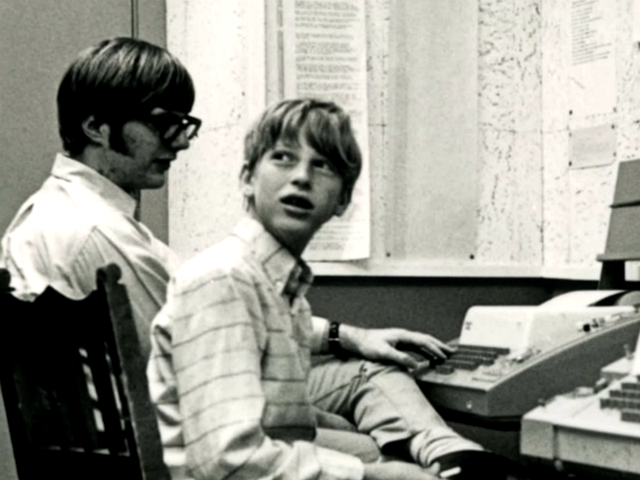
As a schoolboy, he and his friend Paul Allen (who was three years his senior) were a pair of whipper-snapping computer geeks, in an age where computers were pretty difficult to come by. According to Microsoft's website, the "two young computer enthusiasts ...[saw] that personal computing [was] a path to the future". If you believe that the storyline was so straightforward, you'll probably also think that the NSA does indeed have our best interests at heart or that the latest iPhone is indeed the best mobile the world has ever seen.
 
The duo grew up in Seattle and created their first joint-venture in 1972, called Traf-O-Data, which was used for tracking and analyzing traffic. The system was so effective that they even managed to sell a computer to the City of Seattle.
 
Upon leaving school, Gates and Allen tried to go down the route of most school-leavers: Allen went off to study computer science at the University of Washington and Gates opted for law. Both dropped out of their respective courses, with Allen getting a job at Honeywell in Boston so that he could be closer to his friend (who was still at Harvard at the time). This, however, is when things really started to come together. Believe it or not, Allen and Gates were inspired by an article in a magazine.
 
After the former showed the latter a piece about Micro Instrumentation and Telemetry Systems' (MITS) Altair 8800 microcomputer in a January 1975 edition of 'Popular Electronics' magazine, the two friends cooked up a plan. Gates rang MITS, saying that Allen and himself would develop a version of the BASIC programming language. Needless to say, MITS was interested and, within eight weeks, Gates and Allen had achieved their goal.
 
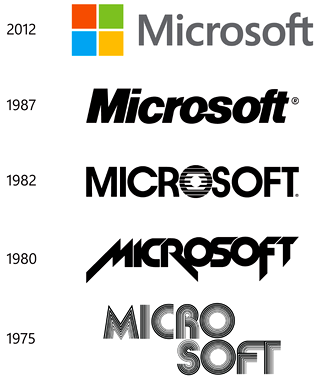
After the pair successfully demonstrated the product to MITS in Albuquerque, the company agreed to start distributing it under the Altair BASIC name. Allen and Gates proceeded to move from Boston to Albuquerque and co-founded an organization called 'Micro-Soft' on 4 April 1975. Where exactly the name came from is a disputed matter.
 
It is common knowledge that 'Micro' was taken from 'microcomputer' and 'Soft' came from 'software', but whether Gates or Allen conjured up the name is a little bit murky. The most prevalent theory, at least as far as the Internet is concerned, is that of Gates referring to his partnership with Allen as 'Micro-Soft' in a July 1975 letter.
 
However, this story was debunked by Allen and Gates themselves in a 1995 interview. The duo told Fortune magazine:
Gates: When we signed that first contract with MITS, we referred to ourselves as 'Paul Allen and Bill Gates doing business as Micro-Soft'. I don't remember why we spelled it with a hyphen and a capital 'S'. We put a credit line in the source code of our first product that said, "Micro-Soft BASIC: Bill Gates wrote a lot of stuff; Paul Allen wrote some other stuff." We never officially incorporated until 1981.
Allen: We had talked about a lot of different names back in Boston, and at some point I said, "Well, the totally obvious name would be Microsoft".
Gates: We also had mentioned names like Outcorporated Inc. and Unlimited Ltd., but we were, you know, joking around. We talked a lot about whether we should call it Allen & Gates, but decided that was not a good idea.
Allen: Yeah. Because companies like DEC and IBM weren't named after personalities, they would have a longevity and identity way beyond the founders...
Gates: ...and it seemed like a law firm or like a consulting company to call it Allen & Gates. So we picked Microsoft even before we had a company to name.
 
The company name (complete with hyphen), was registered with the Secretary of State of New Mexico by late November 1976. The following year, Micro-Soft opened its first international office in Japan, and in 1979, it moved its headquarters to Bellevue, Washington, since top programmers were generally unwilling to relocate to Albuquerque.
 
On 25 June 1981, the company became an incorporated business and changed its name to 'Microsoft Corporation Inc'. It's been through some drastic changes in the 30-odd years since -- Allen was unfortunately diagnosed with Hodgkin's lymphoma in 1982 and has left the company, Gates has taken a backseat role, Steve Ballmer (who Gates met at Harvard) has been and gone and Satya Nadella is now making his mark -- but has established itself as one of the most important companies in the world.
 
I wonder if Allen & Gates would ever have made it so big?
 
Published under license from ITProPortal.com, a Net Communities Ltd Publication. All rights reserved.
  
~ Aatif Sulleyman

10.13.2014

The Cornerplay: The passing of an era -- Microsoft's rise, fall and reboot

 
Vanity Fair has a fascinating piece on the rise, fall and reboot of Microsoft. The story is really about leadership; from the days of Bill Gates and Steve Ballmer; to Ballmer succeeding as CEO; and finally to Satya Nadella. It's a great piece and definitely worth reading.
 
I'm a big admirer of Ballmer, but must call him out on something he was quoted on in the article:
“The worst work I did was from 2001 to 2004,” says Ballmer. “And the company paid a price for bad work. I put the A-team resources on Longhorn, not on phones or browsers. All our resources were tied up on the wrong thing.” Who shoulders the blame is a matter of debate, but the fact is neither Ballmer nor Gates stopped the failure from happening, even as almost everyone else saw it coming.
 
It's not fair to say everyone saw it coming. It wasn't until the second iPhone and the arrival of the App Store that the larger tech press realized something game changing was about to happen; before then, the narrative was still that Blackberry and Microsoft had the lead in mobile.
 
Ballmer's comment that they missed on mobile because the company's resources were tied in Longhorn and Vista has merit. What the Vanity Fair article didn't mention was that Microsoft practically scrapped Longhorn and started over on Vista. After the Longhorn debacle, the Windows team went on a three year sprint to get Vista done and in the process burned a lot of good people out.
 
 
However, as I pointed out in this column's inaugural post, Ballmer didn't really have a resource issue -- he had a resource allocation problem. Ballmer underestimated the importance of mobile. The industry had shown little profit potential up to that point and Microsoft already had second place share with arguably the best product and rapid growth; was there an imperative to invest so heavily in it?
 
What he missed was a tectonic shift in computing. Not just in terms of computers shrinking to pocketable devices, but what it meant to win in that environment. Tech pundits have written ad naseum how Microsoft, obsessed with preserving its hegemony in Windows, was ill-equipped to win in mobile. I think that's right, but it goes a lot deeper than that.
 

It wasn't just misdirected ambition, it was about Microsoft's very identity.
 
 
The history of PCs can be roughly divided into three phases: the rule of geeks, the rise of IT and finally, the realm of the every-person.
 
The rule of geeks is obvious. Those are the days of command line prompts, beige colored shells and glowing green screens. Computers were the exclusive domain of techies who played with electronics more out of passion than profit.
 
Then, with the help of the Macintosh and Windows, PCs became a real business -- a whole new industry called "Information Technology" was born where none existed before. You had cadres of IT professionals and engineers who built their lives on PCs. You had office workers listing Microsoft Office as a skill on their resume. Eventually it became a world that Microsoft absolutely ruled.
 
Microsoft did the best job developing platforms for IT professionals and engineers. PC interfaces didn't need to look pretty; it was better to have extensive feature sets and endless customization options even if it meant only the most committed could learn it all. That's what IT support and training sessions are for anyway.
 

It was more important to make the platform open and malleable than stable and intuitive.
 
Apple, on the other hand, made better looking computers with closed environments that IT workers didn't particularly appreciate. Those who weren't interested in tech but used computers for work didn't really care either. Doing the most basics of tasks -- work with office documents most probably -- and nothing more.
 
Computers weren't lifestyle products; they weren't things the average person played with for fun; and outside of artsy circles like graphic design, they certainly didn't care whether the computer was Dell or Apple as long as it got the job done.
 
Electronic brands were more functional than emotional or symbolic. It was a world where Dell was more influential than Apple.
 
 
Those of you too young to remember may forget, but back then, computers costed thousands of dollars. It was a big purchase and often the most expensive item in the living room. It was an era where "a computer on every desk" was not just a mission but an ambitious one.
 
It was an environment that favored Microsoft, a tribe of engineers and office workers who made products for themselves. And they thrived.
 
Then something strange happened: technology became mainstream. First it was the Internet, which brought so much value -- in particular, communication and news -- that a wider audience was pulled in. Then we had the crazy Internet bubble of the late 90s that caught the world's attention. It seemed like everyone had at least a distant relative that had raised millions based on an idea they sketched on a napkin.
 

Then it was music. Free music.
 
 
Services like Napster and later on iPods made music so easy to get and share, everybody looked for it. More people got comfortable with using technology beyond CD players, like downloading software to your PC, searching websites, syncing the MP3 player. A generation of people learned to use technology for fun because of music.
 
Then it was Friendster, MySpace and Facebook. Social networking became so prevalent that it became strange for someone not to be on one. Grandmas asked younger relatives to help set up a profile. The world was flipped upside down: no longer was it about IT workers and engineers, computers became a realm for the every-person.
 
 
Phones were of course the clearest harbinger of this sea-change, especially when they became powerful enough to be used more like computers and great cameras than actual phones.
 
Microsoft went from being the most popular kid in the room -- the leader goth at the goth party -- to the most uncool person in the fraternity house. Their traditional strengths of enterprise-ready platforms, targeted for IT workers, were handicaps in creating for the every-person. The every-person didn't care about feature sets; they wanted intuitive, simple and beautiful products.
 

Windows is ugly. Windows is messy. Windows has too much stuff.
 
 
It is in this realm that, conversely, Apple's strengths finally matter. Their emphasis on clean, controlled interfaces and sleek hardware is one that the new, bigger market actually appreciates.
 
Apple built a cult of want where people lust after Apple products -- if they can afford it. Every time iPhones and iPads launch to long lines and go out-of-stock only serves to reinforce that power, and which the press are happy to broadcast. The Apple brand is one that people feel proud to associate with.
 

Technology today is more about how it makes you feel than about what it does.
 
 
This brand advantage has become a real problem for Microsoft. When something goes wrong in Apple's world, suspicion is first directed towards the third party. When something goes wrong in Microsoft's world, blame is immediately placed on brand associated with malware and viruses. I've seen this over and over -- it's a quicksand Microsoft can't seem to get out of.
 
So when the iPhone debuted, it clearly outclassed everyone else's. The first iPhone had enough limitations (such as price) that people weren't quite sure whether it was the next iPod or the next Apple Lisa; but the iPhone 3G laid those doubts to rest.
 
 
Give credit to Ballmer: he had the intellectual honesty and balls to restart Longhorn as Vista, and Windows Mobile as Windows Phone once he saw the former had a limited lifespan in the iPhone world. He was just too late.
 
Google jumped in with Android where Microsoft should have -- not innovating much at first, content to follow iOS' lead though now Android is arguably ahead -- and the rest is history.
 
 Source: Business Insider
 
Not only was Microsoft distracted by Longhorn -- and subsequently Bing -- but Ballmer underestimated mobile; Microsoft simply lacked the DNA to win the every-person.
 
Even if Ballmer was keyed in to the mobile opportunity, I don't know that the outcome would be different. Microsoft would have continued to refine a product for the IT worker and not the every-person; Apple would still be the first to make waves and earn enormous profits; and Google would have surfed in to rule in market share.
 
Of course, the last chapter on Microsoft hasn't been written yet. They may have lost on mobile, but another tectonic shift is well announced: cloud computing. That's a story for another day.
 
~ Jeffrey Yuwono

6.12.2013

Mark Zuckerberg can take his billions to hell, I'm done with Facebook

I joined Facebook on Sept. 30, 2006 -- that's four days after opening to the public. The service promised so much, and I was excited by this compelling competitor to MySpace, which let customization run amok. But within short time, my interested declined; over the years I've come to loathe Facebook, which user interface is among the worst ever, as the site increasingly clutters with distracting elements. MySpace is now clean by comparison. Far worse: Privacy settings too often change, and what's different is often lost, even if temporarily, in the grotesque layout.

Overnight, Instagram, which Facebook now owns, announced radical rights policy changes starting in
mid-January. The photo-sharing service grants itself a perpetual license to use and to sell your content. No permission required. That's one policy change too many for me. On December 9, I posted to Google+ my intentions to give up Facebook on the last day of the month. I thought more to empty the account of friends, information and content but not cancel -- for sentimental reason of having joined so much earlier than most everyone else. My intentions changed. I'm done with Facebook on December 31. I'd cancel today, but want intimates -- family and close friends -- to have forewarning.
 
Changing Mores
 
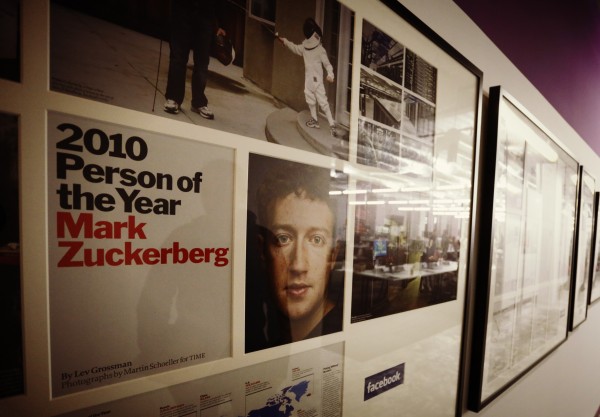
Facebook isn't a social network. It's a philosophy that reflects CEO Mark Zuckerberg's personal attitudes about privacy and his inability to operate within the confines demanded by social norms. Over the years, he has repeatedly affirmed that privacy doesn't matter -- that "he doesn't believe in it". His stance is advocacy, seeking to upend longstanding privacy mores by way of Facebook.
 
Yet there's something seemingly insincere about Zuckerberg's privacy stance, because Facebook stands to profit so much from content posted for free by users and the mining of the personal data, behavior and activities for profit by way of advertising and third-party relationships.
 
Facebook's CEO reminds me of young Bill Gates. Both men launched globally-influential companies. They're cunning and competitive programmers with shrewd business sense, questionable social skills (about the same age) and tenacious drive. Microsoft built an operating system for PCs, while Facebook is an operating system in the cloud. Developers write applications for both. Both men benefitted from timing -- Gates the shift from mainframes to PCs and Zuckerberg cloud-connected social sharing.
  
Anti-Social
  
Zuckerberg's privacy philosophy and easy willingness to exploit others for profit says something about his own social skill set and how well he fits in with others. Think about it. Why do you need Facebook if you can easily make and maintain relationships? The service is supposed to be a social network, but in many ways it's anything but. There's something very anti-social about Facebook, or perhaps it's better to say "awkward social" or socially awkward
-- like it's for people who don't easily make or maintain relationships.
  
For the socially awkward, where distance is an advantage and the person engaged reads the intelligence of their writing rather than hears them or sees their uncertain facial and body expressions, Facebook is pure empowerment. What irony! A super smart but socially awkward geek creates the global watering hole for making and maintaining relationships. Perhaps because they're not so easy for him.
  
Should the truly socially inept, particularly those lacking empathy for others, have as much influence as Zuckerberg does through Facebook? Answer that question in context of the service's brazen privacy changes, which are frequent. On the one hand, the frequency of them reflects social awkwardness -- that Facebook the entity doesn't understand how to relate well to others; so it tries new things. On the other hand, the changes create confusion about what is and isn't private, which disrupts behavior (and the mores behind them) and opens corridors for quick profits from personal information.
  
Facebook privacy changes are seemingly endless. The service proposed some new ones late last month, including combining personal information with Instagram that Electronic Privacy Information Center opposes.
  
The Long Goodbye
  
Anyone reading my stuff over the years knows I have no qualms making radical changes to my computing lifestyle, with the Apple boycott being one of the most recent. Leaving Facebook, I find unexpected irony, because my first post, on Oct. 1, 2006, was about giving up something else. Excerpt:
I’ve been increasingly unhappy with the amount of DRM-protected music that I have amassed...My silent stewing over DRM content is a months’-long process...My problem with DRM is how it creates unnecessary 'pay for performance' dilemmas for us consumers. I can watch a DVD on the TV or PC, but I’ve got to buy the movie again to watch it on a portable device like iPod. Some content is transferable, but only by accepting newer DRM mechanisms. Additionally, technologies like HDCP and HDMI will limit consumption of high-definition content to specific DRM-supporting devices.
 
No pay, no play.
 
I don’t expect most other consumers to follow my lead: Make another choice. Neither Hollywood nor the music industry is the only source of good entertainment. Books, local plays or even YouTube offer loads of enjoyment. Some of the amateur YouTube stuff is a hoot (and you maybe thought I meant the uploaded copyrighted TV shows; naw). There are podcasts and video blogs (check out the Scoble Show; he really needs an editor, but he’ll learn). There is plenty of enjoyable and entertaining content available out there—and
most of it is free. No pay. Do play. Share away.
I achieved DRM freedom in early October 2007, so almost a year later.
 
As for social networking, I have been more active on Google+, which is where you can find me henceforth.
 
~ Joe Wilcox