Cisco Learning Network Store Promotions Page
Showing posts with label Hewlett Packard. Show all posts

4.20.2016

HPE focuses on diversity with 2016 Scholarship for Women Studying Information Security

Diversity is a tricky conversation. While everyone should have a fair chance at a job despite skin color, disability, gender, or sexual orientation, you can't force a certain group to enter an industry. In other words, percentages in a diversity report don't really tell the whole story.
 
The best approach to diversity is simply fostering opportunities for those that want it. Scholarships are a great option as it simply opens a door -- the recipient must walk through it. Hewlett Packard Enterprise has been supporting such a thing -- the Scholarship for Women Studying Information Security -- and today, it announces the number of 2016 recipients.
 
"Now in its third year of funding by HPE, the scholarship program has supported 46 collegiate women working to join the growing security industry, which is faced with a significant talent gap. In fact, the lack of access to skilled security resources was the number one concern of Security Operations Center leaders interviewed in a 2016 report from HPE. This ongoing scholarship reinforces the company's dedication to addressing that challenge by supporting talented women interested in building a career in IT security through academic funding and hands-on internship opportunities", says Hewlett Packard Enterprise.
 
HPE further says, "while the volume and cost of enterprise security breaches rise2, security and business leaders struggle to fill positions that allow them to better defend and protect their organizations. HPE is committed to doing its part to address these industry-wide challenges by providing resources in support of both education and training initiatives. To simultaneously ensure diversity, as women only represent ten percent of the information security workforce, 4 HPE committed a $250,000 four-year grant to the SWSIS scholarship program, initiated in 2014".
 
Hewlett Packard Enterprise shares the following schools where women are taking advantage of this scholarship.
  • California Polytechnic State University -- San Luis Obispo
  • California State University, Northridge
  • Carnegie Mellon University
  • Cornell University
  • Dakota State University
  • DePaul University
  • Eastern Michigan University
  • Embry Riddle Aeronautical University
  • Ferris State University
  • George Mason University
  • Indiana University at Bloomington
  • Marshall University
  • Pennsylvania State University
  • State University of New York at Albany
  • University of Colorado at Boulder
  • University of Maryland Baltimore County
  • University of Maryland University College
  • University of North Texas
  • University of Northwestern
  • University of South Florida
  • Wilmington University
  • Youngstown State University
In 2016, there are 16 new recipients, plus eight other women that are continuing from years past. This means there are 24 women that are gaining knowledge and becoming prepared to work in information security this year thanks to the scholarship. True, that number alone won't move the dial, but every bit counts.
 
Are you glad that Hewlett Packard Enterprise is creating opportunities for women in this industry? Tell me in the comments.
 
Photo credit: YURALAITS ALBERT / Shutterstock
 
~ Brian Fagioli

3.21.2015

Fully patched versions of Firefox, Chrome, IE 11 and Safari exploited at Pwn2Own hacking competition

 
As in years past, the latest patched versions of the most popular web browsers around stood little chance against those competing in the annual Pwn2Own hacking competition. The usual suspects – Apple Safari, Google Chrome, Mozilla Firefox and Microsoft Internet Explorer – all went down during the two-day competition, earning researchers a collective total of $557,500 in prize money.
 
The event, which took place at the CanSecWest conference in Vancouver, was sponsored by the Hewlett-Packard Zero Day Initiative. During the first day, HP awarded $317,500 to researchers that exploited flaws in Adobe Flash, Adobe Reader, Internet Explorer and Firefox.
 
eWeek notes that the first reward, paid to a hacker by the name of ilxu1a, was for an out-of-bounds memory vulnerability in Firefox. It took less than a second to execute which earned him a cool $15,000.
 
Firefox was exploited twice during the event. Daniel Veditz, principal security engineer at Mozilla, said the foundation was on hand during the event to get the bug details from HP. Engineers are already working on a fix back at home, he added, that could be ready as early as today.
 
Another security researcher, JungHoon Lee, managed to demonstrate exploits against Chrome, IE 11 and Safari. As you can imagine, he walked away with quite a bit of money: $75,000 for the Chrome bug, $65,000 for IE and $50,000 for the Safari vulnerability. He also received two bonuses totaling $35,000.


~ Shawn Knight

10.24.2014

Flashback Friday: How Disney's Fantasia led to the foundation of HP

 
HP is one of the oldest and largest IT corporations in the world. It also happens to be one of the most interesting. Now largely associated with enterprises and hardcore business technology, it's a little-known fact that HP was actually the driving force behind the establishment of Silicon Valley.
 
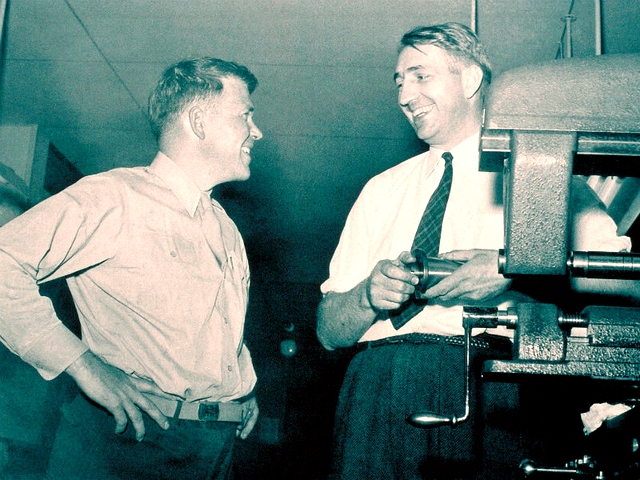
Way back in the early 1930s, Bill Hewlett and David Packard were engineering students -- and friends -- at Stanford University. Upon graduation, however, they went in separate directions; Packard headed to New York State, securing a job with General Electric, while Hewlett took his studies further, at MIT and then Stanford again.
 
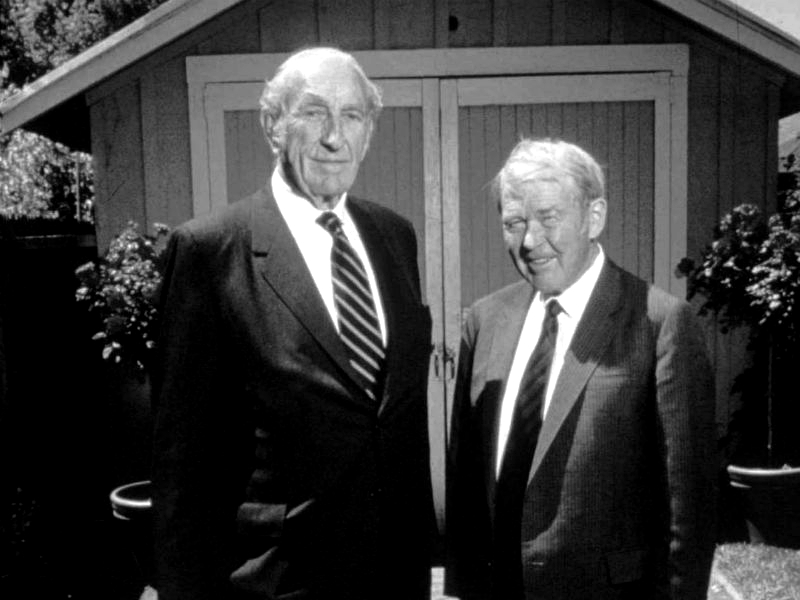
However, they stayed in touch, and in 1938 Packard returned to California with his new wife, Lucile. Hewlett found a property in Palo Alto that the trio could afford to rent and they subsequently all moved in, paying $45 per month. The newlyweds stayed in the downstairs flat, while Hewlett set up base in the backyard shed. The landlady gave them permission to use the property's 18 x 12ft garage as a workshop.
 
Hardly the most glamorous of arrangements, but the fact that 367 Addison Avenue's humble little garage is now an official California Historical Landmark, featuring a plaque that reads "Birthplace of 'Silicon Valley'", tells you everything about what the young entrepreneurs achieved there.
 
Hewlett and Packard made themselves busy over the following months, creating a series of prototype electronic devices, such as a harmonica tuner, a diathermy machine and a foul-line indicator to be used in a bowling alley. Their big break was just around the corner, though.
 
Under the guidance of Professor Fred Terman at Stanford, Hewlett developed a resistance-tuned audio oscillator, which was able to measure sound frequencies. The duo built a device in their garage and named it the Model 200A, in order to give the impression that it was manufactured by a company with a strong product line.
 
Crucially, their oscillator was, according to HP, significantly cheaper than rival devices on the market, and soon enough Disney came knocking on the door. The company, which at the time was working on the 'Fantasia' movie, ordered eight units of the 200B (an improved version of 200A).
 
 
This deal led Hewlett and Packard to formally establish their little business on 1 January 1939, but the duo ran into trouble when they came to naming it. After tossing a coin, they decided to go for Hewlett-Packard, rather than Packard-Hewlett.

In 1940, having picked up two new employees, HP relocated to Page Mill Road, in Palo Alto. The following few years were eventful. In 1942, Hewlett was called up to fight in World War II, leaving Packard to run the company alone. During this period, the company manufactured oscillators that were used in radar equipment by the US army.
 
In 1947, Hewlett-Packard incorporated. A few years later, it got involved in conflict again (the Korean War this time), and found more and more success, as the demand for electronics skyrocketed. Over the years, the company has built a huge range of products, including printers, calculators, medical equipment, business software and, of course, computers.
 
Aside from its devices and solutions, HP became renowned for one thing in particular: its culture. "The HP Way" was described by Hewlett as, "The policies and actions that flow from the belief that men and women want to do a good job, a creative job, and that if they are provided with the proper environment they will do so". This led Apple co-founder Steve Jobs -- who was incidentally offered a summer job by Hewlett as a precocious 12-year-old -- to single out HP (along with Disney and Intel) as a company he admired.
 
David Packard passed away on 26 March 1996 and Bill Hewlett died on 12 January 2001.
 
Published under license from ITProPortal.com, a Net Communities Ltd Publication. All rights reserved.

~ Aatif Sulleyman

6.17.2014

HP's The Machine kicks Microsoft to the curb in favor of Linux

Jack Wallen offers a few pieces of advice for the development of The Machine, a new HP device that will run an OS that's based on Linux instead of Microsoft.  

My how the times have changed. At one point, HP and Microsoft were sharing friendship bracelets and having slumber parties. In fact, over the last decade, HP was a major player with Microsoft. Those days are gone. The juggernaut that was once Microsoft is slowly toppling and companies like HP are seeing the writing on the wall. That writing includes the likes of Android, Linux, iOS -- platforms perfect for mobile and embedded systems.
 
To that end, Hewlett Packard has decided to kick Microsoft to the curb and develop their own operating system that will power all of their future devices. In particular, HP is working on a device they call "The Machine." This new device will be made up of several new technologies -- including a new type of memory -- and will run a new operating system based on...
 
Wait for it...
 
Linux.
 
This is a rather bold move. HP is placing all of its eggs in a single, open-source basket. Should this succeed, Meg Whitman will look like a genius. Should it fail... I think we know where that leads.
 
This new operating system will be based on Linux and designed from the ground up to work with non-volatile memory. HP plans on stripping away everything unnecessary to the new devices so the platform is perfectly streamlined for all new hardware.
 
To HP, I have a few pieces of advice for the development of this new platform.

Place high priority on the design of the desktop

Think about it this way -- it was the interface that ultimate caused the failure of Windows 8. HP needs to really up the ante on the interface and ensure whatever they create does the following:
  • Works flawlessly on both desktop and mobile devices
  • Offers a modern look yet zero learning curve
  • Keep it clean
  • Use a stable compositor
  • Design for end users, not developers
One of the problems that plagued the GNOME 3 was that it seemed to never take into consideration the end users. Developing for designers, programmers, and elite users will get you nowhere in the grand scheme of things. All user interfaces must be created with the average user in mind. In other words -- make it beautiful and intuitive.

Market, market, market

If I've learned anything over the years, it's that an average product is greatly improved by amazing marketing. Apple is the king of marketing. In fact, their marketing team is so good that they managed to convince a vast user base that they needed, not just wanted, their products. To one up themselves, Apple managed to convince the user base that Apples way was the only way. HP needs to think along those lines. Without that level of marketing, this new HP initiative will fail. Why? Look at the competition. If "The Machine" is a convergent mobile device, they already are climbing an uphill race that Apple is winning (unfortunately, Canonical has yet to produce a viable product).

Pre-install everything

As this will be a Linux-based operating system, make sure to include everything the user will need out of the starting gate. Windows users are accustomed to getting their machines and then installing everything they need to get their work done (along with paying the price for that software). Make sure to include the standard fare for a Linux install. Leave nothing behind in this venture. With just a few inclusions (such as LibreOffice and GnuCash), end users will be shocked to see they have an out-of-the-box product that's ready to go and ready to work.

Make it cloud-friendly

This should go without saying. Make sure The Machine works flawlessly with the likes of Google Drive, Dropbox, and all of the other major cloud players. This should be the case for both desktop and mobile versions.

Don't skimp on the hardware

Another reason Apple has succeeded as well as it has is hardware. They've gone to great lengths to design beautiful hardware. Do not just crank out standard-issue gray or black boxes to house The Machine. You are going to need to make a serious mark. This will be an opportunity to take the reigns of a fast-moving, hip stagecoach and move it into a completely different direction. The company that designs the next "it" product will win. That may well be Apple. It could, however, be HP. If The Machine winds up the next "it" product, HP will have done for Linux what other companies have tried for over a decade and failed.
 
There should also be high importance placed on the design of a laptop -- better yet, an ultrabook. Closely examine what Google did with the Pixel. Make sure that the hardware can be seen as highly functional, technological works of art.
 
HP could be on the verge of changing the very landscape of technology. They not only have the know-how, but the capital and street cred to pull this off. I've been saying, for years now, that if any company could bring Linux to the average user's desktop -- it's Canonical. They've tried, but they haven't succeeded on a level necessary to take over the desktop. HP, on the other hand, might well be able to pull this off.
 
What do you think? Is HP capable of taking a Linux-based platform and turning it into the next must-have piece of tech?
 
~ Jack Wallen