Cisco Learning Network Store Promotions Page
Showing posts with label Ransomware. Show all posts

6.27.2016

New ransomware targets Office 365 users

 
A new zero-day malware has been discovered in Australia that affects all of Microsoft’s Office 365 products including Word, Excel, PowerPoint and Outlook.
 
The malware was discovered by the cyber security company Check Point and comes in the form of an invoice sent by email. The attack is designed to catch unsuspecting victims according to security analyst Raymond Schippers who said: "The email sent to Office 365 users via Outlook gives the appearance of an invoice in the form of an Office document. When they go to open it, a message will appear telling people the document was created with a previous version of the software, so they will need to click something to enable the content".
 
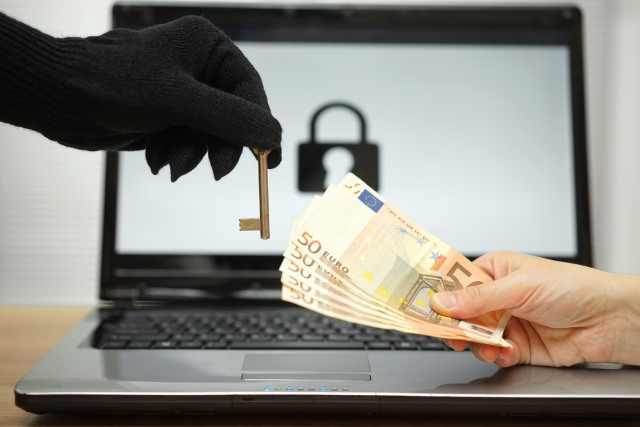
If a user does click on the message it will run ransomware that locks all of their files and, in order to unlock them, they will have to make a payment of a few hundred Australian dollars. However Schippers strongly recommends against complying and advises anyone who has opened the email to close the document and delete it.
 
Afterwards it will be necessary to restore the computer from a backup if available or entirely reinstall the OS in order to entirely remove the ransomware from the system.
 
This latest malware could be particularly devastating due to how it is designed to trick everyday users into opening a document that appears to be legitimate. Attachments sent from unknown email addresses should always be viewed with caution and should rarely be opened.
 
Consistently backing up one’s system is an absolute necessity to prevent the productivity loss that could occur from a malware infection.
 
Published under license from ITProPortal.com, a Net Communities Ltd Publication. All rights reserved.
 
dennizn / Shutterstock.com
  
~ Anthony Spadafora

4.27.2016

Remove CryptXXX ransomware with Kaspersky's free decryption tool

 
Security firm Kaspersky has released a tool that can be used to decrypt files on computers hit by the CryptXXX ransomware. Rather than paying the ransom demanded to regain access to files, victims are now able to turn to the free RannohDecryptor utility.
 
CryptXXX had been identified by ProofPoint earlier in the month and described as being closely linked to the Reveton ransomware operation and Angler/Bedep. The ransom of $500 is considered to be quite high, but Kaspersky's free decryption tool means that files can be retrieved without having to part with a cent.
 
CryptXXX uses RSA4096, but Kaspersky's John Snow says that it is "very curious and greedy: not only does it encrypt the files, but it also steals bitcoins kept on victims’ hard drives and copies other data, which can be useful for cybercriminals". The ransomware encrypts not only local files, but those on attached storage devices, and there is a delay between infection and encryption to make detection trickier.
 
Despite the use of RSA4096, CryptXXX is "not that difficult to crack". Kaspersky had previously created the RannohDecryptor tool to decrypt files on computer hit by Rannoh ransomware. Now the company has updated the tool so it can also handle CryptXXX files.
 
Kaspersky explains:
If CryptXXX ransomware has found its way into your system, not everything is lost. To recover your files we will need the original (not encrypted) version of at least one file, which suffered from CryptXXX. If you have more files like this backed up, this will work. Then you need to do the following:
  1. Download the tool and launch it.
  2. Open Settings and choose drive types (removable, network or hard drive) for scanning. Don’t check the "Delete crypted files after decryption" option until you are 100% that decrypted files open properly.
  3. Click the "Start scan" link and choose where the encrypted .crypt file lies (that file, for which you have an unencrypted copy as well).
  4. Then the tool will ask for the original file.
  5. After that RannohDecryptor starts searching for all other files with ".crypt" extension and tries to decrypt all files, which weigh less than your original. The bigger file you’ve feed to the utility -- the more files would be decrypted.
If you've been struck by a CryptXXX infection, grab yourself a copy of the decryption tool from Kaspersky.
 
Photo credit: Bacho / Shutterstock
 
~ Mark Wilson

3.31.2016

FBI issues warning over MSIL/Samas ransomware

 
The FBI has began seeking the assistance of companies in the US to streamline its investigation on an increasing ransomware threat in the country.
 
The FBI is looking into a strain of ransomware called MSIL/Samas, which has been encrypting data across entire networks rather than single computers, Reuters reports. The ransomware infects machines before encrypting data and asking for money in return of the access.
 
The investigating agency found that the group behind MSIL/Samas used Jexboss, a publicly available security program, to scan for vulnerable versions of the JBoss software, which will be followed by a malware attack on the vulnerable network, according to information Reuters has gathered.
 
To the dismay of companies, the malware, called Peyta, also finds and deletes the back-up files firms could use to restore data by overwriting a key Windows system file called the Master Boot Record, and includes ransomware variants that use different methods to lock up systems and force victims to pay.
 
IT firm Cisco said it saw Samas targeting firms involved in healthcare, wherein early versions of the malware charged a ransom of one bitcoin (£300) for every machine hit. This amount was later increased later to 1.5 bitcoins.
 
Cisco security analyst Nick Biasini said: "It is likely the malware author is trying to see how much people will pay for their files. They even added an option for bulk decryption of 22 bitcoin (£6,600) to decrypt all infected systems".
 
Published under license from ITProPortal.com, a Net Communities Ltd Publication. All rights reserved.
 
Photo Credit: bahri altay/Shutterstock
  
~ Phoebe Jennelyn Magdirila

2.24.2016

CrowdStrike improves ability to combat breaches

 
Effective cyber security is all about seeing threats and being able to respond to them quickly and effectively. Increasingly this means using the cloud to deliver intelligence.
 
CrowdStrike, a specialist in cloud-delivered protection, is launching a new version of its Falcon platform to deliver endpoint, detection and response functions along with advanced antivirus capabilities.
 
CrowdStrike's fully cloud-based Threat Graph model analyzes and correlates billions of events in real-time, spots anomalies, and detects behavioral patterns to track and stop both known and unknown threats. This model allows Falcon Host to act like a 'DVR,' providing retrospective visibility and unlimited cloud-recall capabilities. This forensic capacity helps cut the time and cost of incident response, while increasing the chances of containing and mitigating damage by allowing customers to search and query all endpoints in seconds.
 
Extension of the platform's APIs means customers can integrate existing third party intelligence and so don't waste their current security investments. Falcon Connector can also transmit Threat Graph information to a customer's preferred SIEM system.
 
There's a new ransomware blocking feature too, and added protection for Linux systems with Linux-specific behavioral defenses based on indicators of attack.
 
"Our enhancements of CrowdStrike's Falcon Platform reflect our core customer value for redefining next generation endpoint protection to stop breaches," says Dave Cole, CrowdStrike's chief product officer. "Continuing to advance IoA-based prevention with ransomware exploit blocking and machine learning capability are just a couple of the new features that we are announcing today. Expanding CrowdStrike Falcon’s sensor coverage to Linux platforms, combined with our established support for Windows and Mac, is another significant market-leading accomplishment that allows us to provide protection across all mainstream endpoint operating systems. We are committed to continuing to build new innovative capabilities to change the game in endpoint security and ensure that CrowdStrike customers are able to protect themselves against all threats, known and unknown, in the most effective and efficient manner possible".
 
You can find out more about the latest release on the CrowdStrike website.
 
Image Credit: Balefire / Shutterstock
 
~ Ian Barker

10.14.2015

Ransomware: To pay or not to pay

There is no need to tell victims of digital extortion how successful it is. What is needed is a way to help victims respond to the ransom demands. 

 
"Never before in the history of humankind have people across the world been subjected to extortion on a massive scale as they are today."
 
That introduction to Symantec's August 2015 report The evolution of ransomware (PDF) certainly grabs one's attention. I have been writing articles about ransomware since 2010, and looking back at my 2010 notes I noticed a comment of mine: "Ransom on the internet may not garner much money per incident but patient extortionists can cast a wide net and haul in many innocent victims who have no recourse other than to pay."
 
I wish I had been wrong; however, evidence offered in the following reports suggest otherwise.
  • In 2012, close to 3% of victims paid ransom demands. Symantec reported one small-time operator managed to infect 68,000 computers in one month, resulting in potentially $400,000 USD being extorted.
  • In March 2014, Dell SecureWorks reported CryptoWall earned $34,000 USD in its first month of operation. By August 2014, CryptoWall had earned more than $1.1 million USD.
  • In June 2015, the FBI's Internet Crime Complaint Center published that 992 CryptoWall-related complaints were filed, and the resulting losses from these cases amounted to more than $18 million USD.
  • Currently, the going ransom is $300 USD. The two favored payment methods are payment vouchers and bitcoins.

Price sweet spot

Like any business, those running a cyber extortion ring understand the importance of finding the price sweet spot, which is probably why pricing per incident has not changed much since 1989 when ransomware first reared its ugly head.
 
"Taking inflation into account, 189 US dollars in 1989 is now worth 368 US dollars in 2015," explain the report's authors Kevin Savage, Peter Coogan, and Hon Lau. "Looking at the initial ransomware from various malware families from the start of 2014 to June 2015, we can see the ransom demand has ranged from 21 US dollars up to 700 US dollars, with the average being just over 300 US dollars."

Location affects pricing

Victims' locations are another consideration. The amount of money that can be excised from victims in one country may be way too much to charge victims in a different area of the world. The report mentions, "To tackle the issue of international purchasing power, we can see that the idea of dynamic geographical pricing is employed by some ransomware."
 
CryptoWall is one such example. The ransomware, using an automated process, alters prices depending on geographical location. When a computer compromised with CryptoWall reports back to the command and control server, the server checks a database, determines what country the IP address is from, alters pricing based on location, and returns the ransom note with an adjusted price to the compromised computer.

Hit the jackpot

Cyber extortionists that focus on businesses cast a smaller and more sophisticated net, but if successful, the dividends are huge. The Symantec report discusses a Forbes article by Thomas Fox-Brewster. In the article, Brewster refers to one particular cyber extortion, mentioning, "Employees at the financial services firm were sent emails from a Gmail account, demanding the firm pay 50,000 US dollars to get their website back. They threatened to increase the price by 10 percent with every passing week."  

The tough question

There are myriad articles describing what ransomware is and how to avoid it. All of which means nothing when you are staring at a digital ransom note. Now it's up close and personal. 
 
Do you take the high road and not pay? Supposedly, paying reinforces that digital extortion does indeed work. Authors Savage, Coogan, and Lau have this to say about not paying: "While law enforcement officials will advise victims not to pay the ransom, there are several documented cases where they have paid the extortion demand to get their files back."
 
The authors mention that both the victims and the extortionists are walking a trust tightrope. Why should the victim trust that access to the data will be returned? The Symantec report suggests one reason: "They (extortionists) realize that without their reputation of being trusted to decrypt the files after the ransom demand is paid, no new victims will pay the ransom demands, which is bad for business."

There is no right or wrong answer

I asked numerous experts what they would do. Dismissing those who say it will never happen to them, responses vacillated evenly between pay and not pay. The sincere answer seems to be, "I will not truly know what to do until it happens to me."
 
I count myself in that group. 
 
~ Michael Kassner 

7.01.2014

Latest ransomware, Cryptolocker, hits systems and pocketbooks hard

Cryptolocker, a ransomware Trojan virus, encrypts a victim's files and then demands payment for the key, and is indicative of the lengths nefarious types will go to for a few dollars of ill-gotten gains. 

Ransomware is on the rise and thanks to more than a few nefarious types and their victims, is proving to be an all too common way for electronic extortion to move into an enterprise. In many cases, it proves to be cheaper to pay for the privilege to unlock your data than it would be to remediate the impacted system, which only makes matters worse.
 
 
Take for example Cryptolocker, a ransomware Trojan that encrypts files and can spread in many ways, including in phishing emails that contain malicious attachments or links, or via drive-by download sites. Often, Cryptolocker arrives as a file with a double extension, such as *.pdf.exe and can be hard to recognize, simply because Windows hides file extensions by default - that file may look like a PDF file rather than an executable.
 
Double clicking on the Cryptolocker infected file launches an executable, which infects computers just like any other malware by placing its files in Windows directories and creating registry entries that allow it to restart after a reboot. Cryptolocker also attempts to contact its command and control (C&C) server using a random domain name generation algorithm to try and find a current C&C server. Some sample Crytpolocker domains might look like this:
 
jkamevbxhupg.co.uk
 
uvpevldfpfhoipn.info
 
Once Cryptolocker contacts its C&C, it generates a public/private cryptographic key for the specific computer, using very strong and standard RSA and AES 2048-bit encryption. The private key is only stored on the attacker's C&C servers, but the public key is saved in a registry entry on the computer. Cryptolocker then uses that key pair to encrypt many different types of files on the computer, including 
 
*.odt, *.ods, *.odp, *.odm, *.odc, *.odb, *.doc, *.docx, *.docm, *.wps, *.xls, *.xlsx, *.xlsm, *.xlsb, *.xlk, *.ppt, *.pptx, *.pptm, *.mdb, *.accdb, *.pst, *.dwg, *.dxf, *.dxg, *.wpd, *.rtf, *.wb2, *.mdf, *.dbf, *.psd, *.pdd, *.pdf, *.eps, *.ai, *.indd, *.cdr, *.jpg, *.jpe, *.jpg, *.dng, *.3fr, *.arw, *.srf, *.sr2, *.bay, *.crw, *.cr2, *.dcr, *.kdc, *.erf, *.mef, *.mrw, *.nef, *.nrw, *.orf, *.raf, *.raw, *.rwl, *.rw2, *.r3d, *.ptx, *.pef, *.srw, *.x3f, *.der, *.cer, *.crt, *.pem, *.pfx, *.p12, *.p7b, *.p7c.
 
After the encryption process completes, Cryptolocker displays screen with a warning that requires a payment of either $300 or £200 within 72 hours to regain access to the files.

What should I do if I get infected?

If you are infected with Cryptolocker, the first thing you should do is disconnect the infected PC from the internet. If Cryptolocker can't access its C&C, it can't encrypt files. Disconnecting the machine may prevent further files from being encrypted.
 
There are many tools that will totally clean a Cryptolocker infection, but most victims are more concerned with recovering encrypted files. Unfortunately, you will not be able to crack Cryptolocker's encryption. It uses a very strong and reliable public/private key implementation that is similar to what commercial encryption products use. It would take decades to centuries to crack today.
 
If Cryptolocker encrypts some of your files, you should check if you have a backup, which would be the best chance for recovering the lost data. Adding insult to injury is that there are reports claiming Cryptolocker's decryption does work, and paying the ransom may only result in the loss of your money.

How can I avoid Cryptolocker?

Most commercial antivirus (AV) products can detect many variants of Cryptolocker, which means protection starts with using both host-based and network-based AV products that are kept up to date. However, Cryptolocker's authors are very aggressive at re-packing their malware to make the same executable file look different on a binary level, which helps it evade some AV solutions. In short, though AV helps, some variants may get past some AV solutions. Other defenses are becoming a must as well, such as reputation based defense systems that keep track millions of malicious URLS and web sites. That means access to sites that distribute or support malware can be blocked, effectively preventing infected hosts from reaching C&C servers. 
 
Awareness proves to be one of the best defenses, Cryptolocker typically spreads via some obvious phishing emails. The emails may pretend to be FedEx or UPS related messages, which contain zip files that hide a double-extension executable. Training users to recognize some of the common phishing and malware signs, such as unsolicited emails from shipping providers, double-extension files, links that point to the wrong sites, and so on should prove to be an effective first line of defense. 
 
~ Frank Ohlhorst