Cisco Learning Network Store Promotions Page
Showing posts with label Oracle. Show all posts

1.22.2016

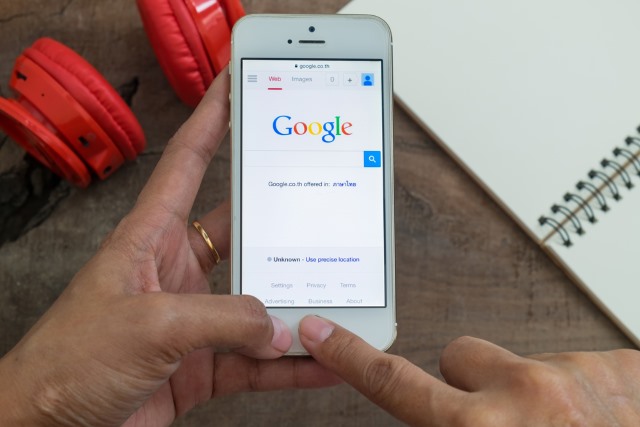
Google paid $1 billion to Apple so its search would stay on iPhones


In the smartphone arena, Apple and Google are rivals -- but that doesn't mean they can't have a symbiotic relationship. Longstanding rivalry in mind, many people have questioned why Apple has retained Google as the default search choice on iPhones. The reason is that money talks.

Transcript of a copyright case involving Google and Oracle show that the search giant paid Apple $1 billion in 2014. An agreement is in place that sees Google paying Apple a percentage of the revenue it generates through iOS devices. This is something that has been rumored for some time, but neither Apple nor Google has commented on.

The news comes via Bloomberg which claims Google shares up to 34 percent of its revenue with Apple. Court transcripts from last week show that the arrangement was revealed by Oracle attorney Annette Hurst. Court papers also show that Google tried to get the judge to strike details of the arrangement from the records. The transcript shows that lawyer Robert Van Nest said:
That percentage just stated, that should be sealed. We are talking hypotheticals here. That's not a publicly known number.
The request was blocked, but Apple and Google made a separate appeal on 20 January, saying that: "The specific financial terms of Google's agreement with Apple are highly sensitive to both Google and Apple. Both Apple and Google have always treated this information as extremely confidential".

Bloomberg reports that:
The transcript vanished without a trace from electronic court records at about 3 p.m. Pacific standard time with no indication that the court ruled on Google’s request to seal it.
Apple and Google remain tight-lipped about their relationship.

Photo credit: NuOilSuwannar / Shutterstock

~ Mark Wilson

3.06.2015

Oracle: How about some adware to go with that new Java for Mac?

 
One of the things I -- and I assume a lot of fellow users -- like about using a Mac is that most OS X programs do not try to trick the user into installing adware. In fact, a lot of the programs I use do not even feature a typical setup, as they can be installed simply by copying them to the Applications folder. For someone coming from Windows, it may feel impossible to grasp at first -- yes, you can actually enjoy the install process. Wow!
 
Of course, there are developers who do not care about the experience their users have during and after the setup, so they bundle adware with their programs. Thankfully, on Macs it's easier to spot, but it's still something to look out for at times, especially if you wish to install Oracle's latest Java release.
 
Oracle is resorting to the same old tactics that Windows power users are well familiar with to trick OS X users into installing Ask's browser extensions and set its search engine as default, alongside Java 8 Update 40.
 
Prior to the release of Java 8 Update 40, Java was made available through standard installer packages. However, with the latest release, Oracle switched to an app-based installer, which makes it easy to bundle such adware. (That said, the "old" package installer, called JavaAppletPlugin.pkg, can be extracted from the new installer, allowing users to install Java 8 Update 40 as before.)
 
Before running the setup, the latest Java requires OS X users to enter their system password. This makes it easy to install Ask's crap down the road, unless the user deselects the "Set Ask.com as my browser homepage" box and clicks on "Don't Install" when presented with the option to install the Ask browser extension, the latter of which appears following the Java setup. Which is what, of course, I wholeheartedly recommend.
 
Since Mac users are accustomed to install methods akin to what I described in the first paragraph, they make easy targets. That said, I don't believe many non-experienced users will run into Java, as it is geared towards more advanced users -- like developers (Java is used, for instance, to make Android apps). They are, hopefully, likely to pay more attention to what's going on during the setup. Still, shame on you, Oracle!
 
Photo Credit: Leszek Glasner/Shutterstock
 
~ Mihaita Bamburic

2.20.2013

Exclusive: Apple, Macs hit by hackers who targeted Facebook

(Reuters) - Apple Inc was recently attacked by hackers who infected Macintosh computers of some employees, the company said Tuesday in an unprecedented disclosure describing the widest known cyber attacks targeting Apple computers used by corporations.

Unknown hackers infected the computers of some Apple workers when they visited a website for software developers that had been infected with malicious software. The malware had been designed to attack Mac computers.

The same software, which infected Macs by exploiting a flaw in a version of Oracle Corp's Java software used as a plug-in on Web browsers, was used to launch attacks against Facebook, which the social network disclosed on Friday.

The malware was also employed in attacks against Mac computers used by "other companies," Apple said, without elaborating on the scale of the assault.

Twitter, which disclosed that it had been breached February 1 and that hackers might gave accessed some information on about 250,000 users, was hit in the same campaign, according to a person close to the investigation.

Another person briefed on the case said that hundreds of companies, including defense contractors, had been infected with the same malicious software. Though this person said that the malware could have originated from China, there was no proof.

"This is a new campaign. It's not like the other ones you read about where everyone can tell it's China," the first person said.

Investigations into the breaches are ongoing. It was not immediately clear when the attacks had begun, the extent to which the hackers had succeeded in stealing data from targeted systems, or whether all infected machines have been identified.

The malware was distributed at least in part through a site aimed at iPhone developers, which might still be infecting visitors who haven't disabled Java in their browser, the person close to the case said. There is a version that infects computers running Microsoft Windows as well.

Security firm F-Secure wrote that the attackers might have been trying to get access to the code for apps on smartphones, seeking a way to infect millions of end-users. It urged developers to check their source code for unintended changes.

Apple disclosed the breach as tensions are heating up over U.S. allegations that the Chinese military engages in cyber espionage on U.S. companies.

U.S. cyber security firm Mandiant reported over the weekend that it has uncovered evidence that the Chinese military is behind a slew of cyber attacks on U.S. businesses. The White House said it has repeatedly raised concerns about Chinese cyber theft with Beijing.

The breaches described by Apple mark the highest-profile cyber attacks to date on businesses running Mac computers. Hackers have traditionally focused on attacking machines running the Windows operating system, though they have gradually turned their attention to Apple products over the past couple of years as the company gained market share over Microsoft Corp.

"This is the first really big attack on Macs," said the source, who declined to be identified because the person was not authorized to discuss the matter publicly. "Apple has more on its hands than the attack on itself."

Charlie Miller, a prominent expert on Apple security who is co-author of the Mac Hacker's Handbook, said the attacks show that criminal hackers are investing more time studying the Mac OS X operating system so they can attack Apple computers.

For example, he noted, hackers recently figured out a fairly sophisticated way to attack Macs by exploiting a flaw in Adobe Systems Inc's Flash software.

"The only thing that was making it safe before is that nobody bothered to attack it. That goes away if somebody bothers to attack it," Miller said.

NATIONAL SECURITY

Cyber security attacks have been on the rise. In last week's State of the Union address, U.S. President Barack Obama issued an executive order seeking better protection of the country's critical infrastructure from cyber attacks.

White House spokesman Jay Carney told reporters on Tuesday that the Obama administration has repeatedly taken up its concerns about Chinese cyber theft with Beijing, including the country's military. There was no indication as to whether the group described by Mandiant was involved in the attacks described by Apple and Facebook.

An Apple spokesman declined to specify how many companies had been breached in the campaign targeting Macs, saying he could not elaborate further on the statement it provided.

"Apple has identified malware which infected a limited number of Mac systems through a vulnerability in the Java plug-in for browsers. The malware was employed in an attack against Apple and other companies, and was spread through a website for software developers," the statement said.

"We identified a small number of systems within Apple that were infected and isolated them from our network. There is no evidence that any data left Apple," it continued.

The statement said Apple was working closely with law enforcement to find the culprits, but the spokesman would not elaborate. The Federal Bureau of Investigation declined to comment.

Apple said it plans to release a piece of software on Tuesday that customers can use to identify and repair Macs infected with the malware used in the attacks.

~ Jim Finkle and Joseph Menn


4.15.2012

Iceland swaps Windows for Linux in open-source push

NEWS  Iceland's push to move its public sector to open-source software has made some headway, with most of the shift seeing Windows swapped for Linux.

However, the scheme faces hurdles with other enterprise software, as some government ministries are firmly locked into a web of proprietary technologies from companies such as Oracle, according to Tryggvi Bjorgvinsson, the project leader of Iceland's open-source project.

"Cost is one thing, one of the prime motivators today, but we also want more equality between software," Bjorgvinsson told ZDNet UK on Thursday. "The government needs to back open-source software, as there aren't that many service providers actively selling free and open-source software."

The hope is that Iceland can, through a series of pilot projects, lay out how a public-sector organisation can move to open source and pass this information on to other organisations and even other countries. Bjorgvinsson is leading the initiative, which aims to analyse migrations as they happen and be a clearinghouse for information on open-source migrations for other institutions.

The scheme has been running for a few months and will continue for a year in total, according to Bjorgvinsson. So far, five of Iceland's 32 secondary schools have moved from Windows to Ubuntu Linux, he said. Some of these have also migrated from Microsoft Word to open-source document software, and from proprietary course-management systems to an open-source equivalent named Moodle.

Along with these, a number of fringe publicly funded institutions have made the jump. These include the country's media commission, which has moved from Windows to Fedora, and the Icelandic Arts Centre, which decided that instead of upgrading its Windows computers it would simply wipe them and install Ubuntu.

"Ubuntu runs better [than Windows] on older hardware, so they saved money and got more lifespan out of their computers," Bjorgvinsson said.

Additionally, Iceland's Soil Conservation Service — an important organisation, as the country has very little topsoil — has moved its PBX phone software to Asterisk. But the transition has not been without problems, Bjorgvinsson admitted.

"The biggest problems come from open standards," he said. "Those who have moved to free and open-source software are sending, for example, ODF documents, which not everyone can handle [when using proprietary software]. There were some schools that couldn't send documents to the Minister of Education."

Lock-in problems

A thornier problem could be moving some of Iceland's core government ministries away from their net of proprietary software.

"The big public institutions are pretty locked in to some systems," Bjorgvinsson said. "The government has set up a pretty tightly interwoven set of proprietary software which will be hard to untangle."

As an example, he noted that in one government ministry, "the mail system is linked to our Oracle databases, which are also linked to our case management system, which is also linked to websites".

Iceland launched its public-sector open-source policy in 2008, just before a financial crisis damaged the country's economy. In the intervening four years, the government has taken steps toward the move, as first noted by the European Commission's JoinUp site. However, the transition will take a long time, Bjorgvinsson indicated.

"I don't have any time estimates. We are doing it slowly, just to be absolutely sure [and] to reduce the risk of migration failure," Bjorgvinsson said. "We're trying to document everything which is being done in order to speed up future migrations."

Iceland's open-source efforts are based partly on the UK government's own open-source strategy, he acknowledged. 

"Our policy was based on the UK policy, the only thing we added to it was that students should have the opportunity to learn about [open source]", he said.

~


4.13.2012

Apple works on Mac malware fix but takes heat

(Reuters) - The cybersecurity community raked Apple Inc over the coals on Wednesday, saying the company had dragged its heels on eradicating malware that experts say may have infected up to 600,000 Macintosh computers and can be used to ferret out sensitive user information.

The consumer electronics company said it was working on finding and ridding "Flashback" malware that exploits a flaw in Oracle Corp's Java software. Apple has issued patches and is now developing software to detect and eliminate Flashback, it said on its website. The company declined to elaborate.

But Apple is catching heat for not having quickly addressed the issue, even after Oracle distributed its own patch in February.

Several security blogs accused Apple of having not been forthcoming in the past about security issues, but gave the company credit for stepping forward now.

"Someone in Apple has broken ranks following the recent revelations of a Jolly Big OS X botnet," Paul Ducklin at security specialist Sophos wrote. "Apple has -- apparently for the very first time -- talked about a security problem before it had all its threat response ducks in a row."

Trojans and other malware typically target Microsoft Windows, long the dominant PC operating system. Flashback stands out in that it represents one of the largest-scale invasions of Apple computers, which are gaining ground on Windows PCs.

Antivirus specialists Symantec Corp said the malware surfaced last summer or early fall. It said the number of infected computers, which hackers link into botnets to access private information, had dropped to 270,000 as of this week.

FLASHBACKS

A "Trojan" is a software program that looks and acts like a regular program but opens backdoors into a user's computer systems.

The Flashback software, also known as "Flashfake", advertises itself for download on infected websites as a Java software add-on or applet, experts said.

According to Kaspersky Labs' Igor Soumenkov, more than half of the over 600,000 initially infected computers, or bots, originated from the United States, and he estimated more than 98 percent could be Macs.

The software can be used to modify Internet pages, for example by adding a field asking users to type private information such as bank account data, said Michael Sutton, VP of Security Research at Zscaler ThreatLabZ.

Apple has issued patches and is now developing software to detect and eliminate Flashback, it said on its website.

"While it's encouraging to see Apple taking steps to eradicate the Flashfake Trojan, they're late to the party," Sutton said. "Unfortunately, Apple has a long history of putting blinders on when it comes to dealing with security researchers."

~ Edwin Chan    
        

3.30.2012

Red Hat: Open source's first billion dollar company

Shares of Red Hat rose 17 percent to $60.12 in heavy midday trading. Yesterday, after the bell, the company reported $1.13 billion revenues for fiscal 2012, ended February 29. Red Hat is the first open-source based company to post $1 billion in revenues.

Quite a feat for a platform Microsoft CEO Steve Ballmer once called a "cancer" and has repeatedly questioned the security of. One has to wonder if Ballmer might be reconsidering the parnership Microsoft penned with Red Hat back in February 2009.

Much of the company's revenue comes from its subscription products: $952 million in fact. Red Hat says it sees a high rate of renewals, and its top five customers have over $1 million in subscriptions, with one exceeding $5 million dollars.

Red Hat successfully fended off challenges from Oracle, which had taken the strategy of offering support for Linux at half the price. While Oracle has done a good business with its offering, by and large IT decision makers appear to have stuck with Red Hat even at a higher cost.

"This achievement will finally put to bed the argument that 'nobody can make money with open source'," Linux Foundation executive director Jim Zemlin writes in a blog post. "Credit where credit is due: Red Hat has worked extremely hard and extremely smart to leverage open source to make a billion dollars".

Zemlin notes that the collective investment in Linux surpasses $10 billion dollars, and top tech companies like Facebook have leveraged the platform to build businesses worth tens of billions of dollars. Is Linux coming of age? You could argue that it is.

Red Hat has certainly spurred much of this development. Since its software is offered under the General Public License (GPL), competitors have been free to pillage its work. That taken into consideration, Red Hat's $1 billion in revenue is all the more astounding.

"The open source technologies which we provide are being selected by more customers every day as they re-architect the infrastructure of their data centers for greater efficiency, agility and cloud enablement", CEO Jim Whitehurst boasts of the company's achievement.

~ Ed Oswald