Cisco Learning Network Store Promotions Page
Showing posts with label iPhone 5C. Show all posts

3.29.2016

Apple responds to FBI iPhone hack, but questions remain

 
Yesterday, the FBI announced that it had managed to break into the San Bernardino shooter's iPhone sans help from Apple. The iPhone manufacturer will undoubtedly be pleased that the court case has come to an end without the company having to cave in and assist the agency.
 
In a statement, Apple said: "From the beginning, we objected to the FBI’s demand that Apple build a backdoor into the iPhone because we believed it was wrong and would set a dangerous precedent. As a result of the government’s dismissal, neither of these occurred. This case should never have been brought". But with the FBI's previous insistence that help from Apple was absolutely essential, some serious questions remain.
 
The secrecy surrounding the case means that, however loudly the company shouts about being opposed to helping the FBI, we'll never really know if, behind the scenes, Apple was in fact offering help. To publicly admit helping would be a PR -- and financial -- disaster, so it makes perfect sense to be vocally against the idea. It's entirely possible, of course, that the FBI achieved its aim with the assistance of Israeli security firm Cellebrite, but the point is: we'll never know.
 
If Apple was not involved in cracking the iPhone 5c, the company's customers will want it to press the FBI for details of the technique used to access the data. If one iPhone 5c running iOS 9 can be cracked, so can others -- it's a potential security nightmare when there's no way of containing who has access to the software or tools that were used in the successful hack. Apple and its customers will want to know what security flaw was exploited to gain access so that it can be plugged.
 
Without details from the FBI and its helpers, it's impossible to know whether the technique used only worked on the San Bernardino iPhone, or whether it could be applied to others. With the technology world currently focused on privacy and security it's important that this is made abundantly clear -- but who do you trust enough to believe?
 
Apple's full response statement clearly chalks this up as a win:
From the beginning, we objected to the FBI's demand that Apple build a backdoor into the iPhone because we believed it was wrong and would set a dangerous precedent. As a result of the government's dismissal, neither of these occurred. This case should never have been brought.
We will continue to help law enforcement with their investigations, as we have done all along, and we will continue to increase the security of our products as the threats and attacks on our data become more frequent and more sophisticated.
Apple believes deeply that people in the United States and around the world deserve data protection, security and privacy. Sacrificing one for the other only puts people and countries at greater risk.
This case raised issues which deserve a national conversation about our civil liberties, and our collective security and privacy. Apple remains committed to participating in that discussion.
It seems that the FBI has achieved its goal. What's needed now is an element of transparency. As suggested by the Electronic Frontier Foundation, concerns will almost certainly mount around the government's ability to access data on other iPhones:
[...] this new method of accessing the phone raises questions about the government’s apparent use of security vulnerabilities in iOS and whether it will inform Apple about these vulnerabilities. As a panel of experts hand-picked by the White House recognized, any decision to withhold a security vulnerability for intelligence or law enforcement purposes leaves ordinary users at risk from malicious third parties who also may use the vulnerability. Thanks to a lawsuit by EFF, the government has released its official policy for determining when to disclose security vulnerabilities, the Vulnerabilities Equities Process (VEP).
If the FBI used a vulnerability to get into the iPhone in the San Bernardino case, the VEP must apply, meaning that there should be a very strong bias in favor of informing Apple of the vulnerability. That would allow Apple to fix the flaw and protect the security of all its users.
A final thought: can you imagine any other technology company having its security bypassed and then calling it a win?
 
Photo credit: Yeamake / Shutterstock
 
~ Mark Wilson

2.24.2016

Bill Gates is wrong

 
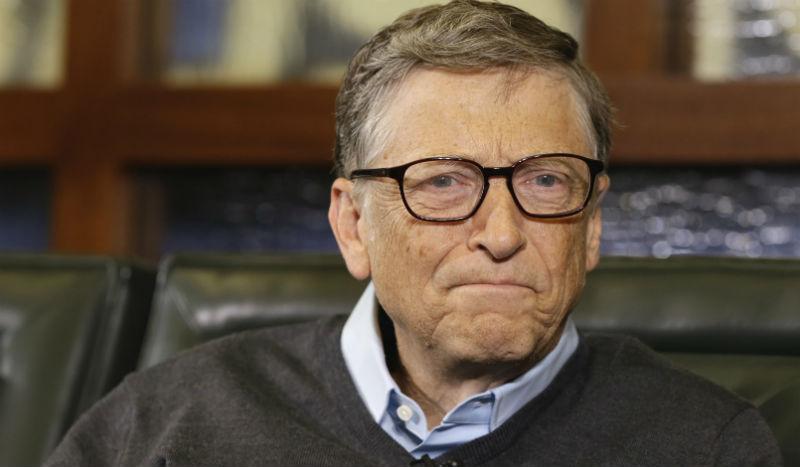
I see something disingenuous about Microsoft cofounder Bill Gates supporting the government's demands that Apple selectively unlock an iPhone used by one of the San Bernardino, Calif. shooters. The former CEO turned philanthropist spoke to the Financial times in an interview posted today. The implications for Microsoft cannot be overstated, and the company's current chief executive should state corporate policy.
 
Gates' position aligns with the government's: That this case is specific, and isolated, and that the demand would merely provide "access to information". Here's the thing: The interviewer asks Gates if he supports tech companies providing backdoors to their smartphones. The technologist deflects: "Nobody's talking about a backdoor". Media consultants teach publicly-facing officials to offer non-answers exactly like this one. The answer defines the narrative, not the interviewer's question.
 
Foot in Mouth
 
Except this: Gates suffers interviewee foot-in-mouth disease in the worst way, as his response, or lack of it, puts him on the government's side. He later tries to backpedal in an interview with Bloomberg, stating he is "disappointed" with the FT report and "that doesn’t state my view on this". Thing is: Financial Times posts a video of the interview that clearly gives context. The philanthropist's selective, deflective answer to the backdoor question is unambiguous.
 
In  followup question during the FT interview, Gates states—and I'd argue without the technical trade secret expertise about iOS and iCloud encryption—that "Apple has access to the information. They're just refusing to provide the access". He likens the government demands to a bank :tying a ribbon around a disk drive. "Don't make me cut this ribbon, `cause you'll make me cut it many times".
 
But that response diminishes the encryption technology, which is a helluva lot more like a fortress than a "ribbon" tied around a disk drive.
 
FBIOS
 
Quick recap: Law enforcement classifies the Dec. 2, 2015 San Bernardino shooting as an act of terrorism. The  county health department owned the iPhone 5c and granted access to it. But a four-digit numerical passcode was needed, and in the hours following the attack an official reset the associated iCloud account, eliminating that as means of getting to the "information".
 
The Feds want Apple to create custom software, which I've seen on the InterWebs sarcastically called FBIOS, to turn off the security measure that wipes data after 10 failed password attempts and to enable a means for automating a "brute force" attack to uncover the correct combination. Apple contends that complying would undermine security, create a backdoor for accessing any iPhone, and would undermine customer trust. The DOJ disagrees.
 
In a legal filing, the agency asserts that the so-called FBIOS wouldn't need to come into "government custody...Just as with Apple's already-existing operating systems and software, no one outside Apple would have access to the software required by the order unless Apple itself chose to share it".
 
Possession doesn't change this: Encryption must be bypassed.
 
"Complying with this particular FBI request would set a damaging precedent", Stephen Cobb, senior security researcher for ESET, says. "If Apple were to comply with this court order, the ramifications for U.S. companies and consumers would be significant, from undermining international commerce to eroding trust in the technology on which so much of daily life and business in North America depends".
 
Who Benefits?
 
In news reporting, my first question always is this: Who benefits? When Gates was Microsoft CEO, I listened to him testify in open court claiming that the company could not remove Internet Explorer from Windows; that such action would break the operating system. The company took a firm position during antitrust cases on two continents that the government shouldn't dictate how software is developed. That is the core issue here with respect to Apple unlocking the iPhone 5c.
 
But now Gates is a philanthropist, who travels the globe, and many of his operations require government cooperation. Taking a position against the FBI and U.S. Justice Department could undermine his efforts here and abroad. Perception matters as much in philanthropy as business.
 
I wonder if his answers would be dramatically different and more aligned with past positions if answering for Microsoft. As a journalist covering the tech sector for more than 20 years, and Microsoft for much of that time, I see this: Gates' response to the first interview is appallingly contradictory and his backpedaling in the second bewilderingly undermines his authority as successful entrepreneur and philanthropist.
 
But matters are worse. During the Windows NT 4 release cycle two decades ago, rumors started circulating that Microsoft had created a backdoor for the NSA. The accusations resurfaced for Windows 2000 and XP. By failing to directly answer FT interviewer Stephen Foley's direct question about allowing government backdoors and by taking a neutral to pro-FBI position with respect to Apple's refusal, Gates appears to support selective government access by way of a backdoor. What he thinks is immaterial to the perception he creates as former Microsoft CEO during the time period in question about the alleged NSA backdoor.
 
From a Microsoft public relations perspective, Gates' answers in booth interviews are a catastrophic occurrence that demands current chief executive Satya Nadella's official response. There needs to be clear policy about government backdoors and the position with respect to the San Bernardino shooting iPhone. If Microsoft corporate policy aligns with Gates' statements, say so. If not, state the position for the benefit of the large IT organizations that are the company's core customer base.
 
If not, rumors run wild will set the narrative, causing potential harm to Microsoft's brand.
 
~ Joe Wilcox

2.22.2016

Why Apple's shameless fight with the FBI is all about ego, not just cause

After spending the last few days soaking up as much as possible on the Apple-FBI San Bernardino iPhone spat, the evidence -- in my eyes -- has become crystal clear. Apple's planted itself on the wrong side of history here for numerous reasons, and is using nothing less than a finely scripted legalese tango in defending its ulterior motives.
 
As a part time, somewhat auxiliary member of the tech media at large, I'm a bit embarrassed at how poorly this story has been covered by my very own colleagues. Many of those who should undeniably have a more nuanced, intricate understanding of the technical tenets being argued here have spent the last week pollinating the internet with talking point, knee-jerk reaction.
 
Inadvertently, this groupthink is steering Apple's misguided arguments forward to a populace that otherwise relies on the tech media's prowess in unearthing the truth in such matters. This is one such case where technical altruism is blinding the real story at play here, which are Apple's design flaws -- in other words, inadvertent insecurity bugs -- found in the older iPhone 5c.
 
For those that haven't kept up on this story, you can get a great primer on where the Apple vs FBI situation stems from and its surrounding core facets. ZDNet's Zack Whittaker has a great FAQ post that digs into the major topics at hand in an easy to understand manner. No need to retread already covered ground in this post.
 
Apple's Framed Narrative in Twisted Prism of Encryption
 
The tech media is writing story upon story that makes mention of supposed backdoors the FBI is requesting, which entail things like "master keys" which could potentially unlock any encrypted iOS device. While there are far too many media stories I could link to which prove such misinformation dissemination, I'll point to posts like this one on Venturebeat and even coverage on the otherwise usually judicious podcast, This Week in Enterprise Tech (episode 177 is where the Apple/FBI case was dissected at length).
 
While this self-absolving narrative is making its rounds, let's not forget where this all began. It was Apple itself, in its now famous open letter which was published on Apple's website and signed off by no less than Tim Cook himself. And for that, shame on him.
 
 
Many in the media have mistaken this to be a case about phone encryption, due to Apple's framing of the discussion in such a light. In reality, the FBI is merely asking Apple to help create a special iOS firmware for a single iPhone 5c which could disable forced-wiping after 10 entries, and altering the timeout delay between entries. Apple's attempt to sway the narrative leads me to believe it is more concerned about corporate image than public safety. (Image Source: Mercury News)
 
I know very well that as the leader of a massive publicly traded company, Cook has a duty first and foremost to his most critical stakeholders, those being Apple shareholders. But the finer point which Apple forgets in its shameless fight with the FBI is that the very sacred tenets of American democracy and capitalism have allowed his firm to grow to such unprecedented levels. There is very well a balancing act which needs to be distinguished in a free society that stands at the folds between security and privacy.
 
The FBI is not asking for any kind of encryption "master key" here, let's be very clear. Such a request would be an overreach of the inherent division that is required to ensure the greater security of data for the masses in question here. And such a request would be one that I would, as an IT professional, yet more importantly, a member of this society, be very succinctly be opposed to.
 
But this is not what has been asked of Apple, and not what's at stake for the company. This move is driven by a PR objective aimed at keeping Apple's ego and image in something it preaches so dearly: security.
 
FBI's Request Indirectly Forces Apple to Admit iPhone 5c Insecurity
 
If you're curious as to how I could come to such a conclusion, you can feel free to glean through the same well written, and lengthy, expose on this situation which convinced me on the subject with clear technical validation and reasoning -- not purely emotional knee-jerk reaction. The post is on the blog for a company called Trail of Bits which has noted deep expertise in security research.
 
Much of my very stance on the subject is also reflected in Mark Wilson's post from a few days ago right here on BetaNews. Even Trevor Pott of The Register penned a rather wordy, but pointedly accurate piece that confirms what the Trail of Bits blog post puts forth as a theory.
 
"What appears to be involved is a design flaw. Something about the iPhone 5C in question is broken," says Pott in his Register article.  That's right, a design flaw which happens to be the complete lacking of the "secure enclave" which is detailed at length in the Trail of Bits blog piece.
 
If this were a newer A7 or newer powered iPhone, the FBI's chances of getting in without asking for the dreaded pandora's box "master key" (which doesn't exist) would be next to zero. But Apple never included this security facet on its earlier phones, and herein lies the very nuanced tenet of what the FBI truly wants to be able to leverage.
 
The FBI doesn't want and has never asked Apple for any kind of master key. It's asking for mere assistance in re-engineering its way through a known security flaw in Apple's iPhone 5c device which doesn't tie PIN entry and authentication to the internal data through the use of this secure enclave. While Apple won't admit as much, this is very much so a security flaw that Apple obviously will never be able to fix for iPhone 5c owners, and naturally, has every intention to re-architect the argument on this situation to deflect any potential for this criticism to reach critical mass.
 
And even more acutely, the FBI and Justice Department aren't asking Apple to make this available to "all" future iPhone 5c devices recovered in the course of policing. The DOJ says Apple has the free will to "keep or destroy" this special firmware after its purpose is rendered for the FBI's requests. So Apple's consumer-focused defense that it is being asked to "hack its own users" is just another attempt to misconstrue the real intentions of law enforcement here.
 
One important fact which some of the media has glossed over is that the iPhone in question was not even a personal phone of the shooter. The device was actually a work-issued device that was handed out by the San Bernardino County Department of Public Health, and in turn, is considered employer property with all accompanying rights that employers have over the data stored on those devices.
 
 
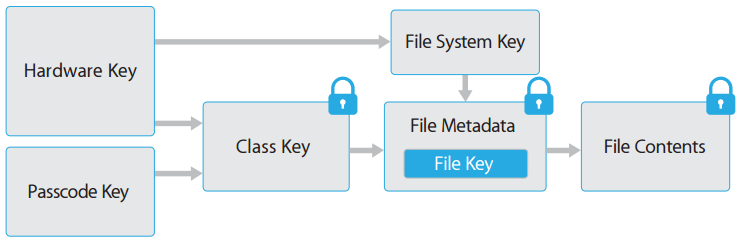
Apple's A7-powered and newer iOS devices all employ an internal lockbox known as the "Secure Encalve" which broker access to encryption keys used to access user data. The iPhone 5c lacks this very item, which makes the FBI's chances at getting into the San Bernardino shooter's iPhone very possible -- and technically proven feasible by security experts. But Apple's ego, partially built on an image of security, naturally forces its arm in trying to trump the FBI's request. (Image Source: Troy Hunt)
 
I'm not here to use Apple as a pincushion, as the industry at large needs to double down in its attempts to put its actions where its words are about security. But Apple deserves heat here, not only because it's putting shareholders first above national security, but because it has previously been guilty of trumpeting "security through obscurity" as I've covered at length in previous posts.
 
Any reasonable technology company is going to have bugs and defects in its devices and code. That's the nature of the beast, and understood by IT pros like myself. But Apple has built an empire in part by its clever marketing teams that have flaunted layers of security which supposedly beat and exceed those of any other company's competing products.
 
Sometimes, it is in the right and marketing matches reality.
 
But many times, like with the now-dead claims that OS X doesn't get malware which I fought against for years, Apple put greenbacks before fiduciary responsibility to be honest about its software and device capabilities. And while the cessation of the famous "I'm a MAC" advertising campaigns signaled a more subdued competitive standing on the OS X front, Apple's big moneymaker isn't in desktop computers anymore, it's in iPhones that it sells by the millions.
 
How does this round back to its reluctance to work with the FBI? Very simply, doing so would inadvertently admit that the iPhone 5c indeed has the security flaw which the FBI and the industry has exposed. And the problem for Apple is that it has created an ego bubble for itself which fans have bought into that has security as a notable keystone.
 
If that keystone falls here, Apple's back to square one with winning back its fans that place i-Devices on a pedestal most other manufacturers only wished they had.
 
Put in other words, it's Apple's ego at stake here. And it takes that very, very seriously if you haven't noticed.
 
Apple Has an Undeniable Duty to the Society it Built its Fortunes On
 
We've clearly established some very agreeable, black and white, facts surrounding this situation based on everything I've linked to above:
  1. This is not a debate or court-order surrounding any kind of encryption "backdoor" or "master key."
  2. The FBI is asking for acute access into a single iPhone based on a design flaw which has been exposed.
  3. Apple has the proven technical ability to render this special firmware locked to the iPhone in question.
  4. Apple has the court-ordered right to perform the procedures needed in its own facilities, and destroy the software created once complete.
As such, I'm convinced beyond any doubt that the abilities to get into this phone exist, and can be done so in a way to protect the universe of iPhone users at large from massive data grabs by legal overreach. Apple's denial in helping the FBI, as described earlier, is not grounded in technical validity, but rather being driven by a corporate ego that has grown too large for its own good.
 
Apple's feelgood and impenetrable stances on its device security are at risk of being exposed to the masses. For a company that has built its fortune around peddling a larger-than-life notion about its own security prowess, this would spell downright disaster in the marketplace, especially in the newfound re-emergence it has found in the previously reluctant Enterprise market towards its products.
 
But let's go beyond profitability reports and corporate egos, as the larger extrapolation here is Apple's duty that it owes to the citizens of this very nation. A country that is now in need of a compassionate about face by Apple so we can connect the dots on a terrorist situation that will not only help explain the events leading up to the San Bernardino massacre, but likely expose critical nuggets of information about other future plots or combatants.
 
Apple's attempt to paint this discussion in a sea of technicalities and promotion of the privacy of its users at large ends up falling on its face when the facts are dissected in sunlight. If that very sunlight means Apple's design flaws must be vaulted into public discussion, so be it. That's the duty it owes its users in being assured that its designs are not merely existing in a lab -- but being tested, sifted, and penetrated to make future generations of hardware better on the whole.
 
While our democracy has been historically opposed to gross intrusion of privacy, as seen in opposition to ad-hoc phone record dredging, a common sense approach towards nuanced security needs is something we cannot become blind to. Companies and advocates like Apple will try to smokescreen their intentions with public decrees like Tim Cook's in a blanket position on privacy, but even its future has just as much at stake if the terrorists can use an over-extended privacy veil as its own.
 
The day the Justice Department calls for blanketed  encryption"master keys" from Apple is the day I will stand with Apple. But that day is not today, as Apple has not and is not being asked as much.
 
Do the right thing, Tim Cook. Your company enjoys prosperity through the same democratic society that is pleading with you to put the future of our nation ahead of personal or corporate motives.
 
If future deaths could have been prevented acutely via that iPhone 5c you refuse to help unlock, what kind of responsibility will fall on Apple's shoulders? Only history will be the judge of that.
 
Image Credit: klublu/Shutterstock
 
~ Derrick Wlodarz
10.09.2014

Apple sends out invites for October 16 media event, new iPads and Macs expected

 
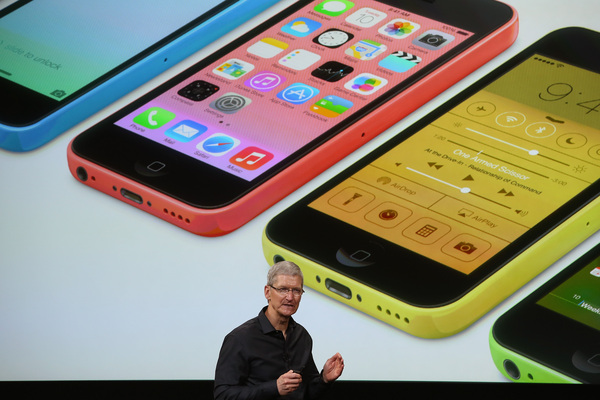
Apple’s next media event is now official. The company has issued media invites to an event scheduled to take place on Thursday, October 16, at the Town Hall auditorium on Apple’s campus in Cupertino, California, which is the same venue that was used to debut last year’s iPhone 5s and 5c.
 
The tagline on the invitation reads, “It’s been way too long” which doesn’t immediately give any hints as to what we might see.
 
Most expect to see Apple unveil updates to its iPad and iPad mini line as well as new Macs. Furthermore, Tim Cook and company will likely launch the public release of OS X Yosemite.
 
Specifically, we’re likely to see an iPad Air that is thinner than the current generation with an A8 chip inside and support for Touch ID. The same can probably be said about the next generation iPad mini and if rumors prove accurate, at least one of the new iPads may see a new gold color option.
 
As for the rumored 12.9-inch iPad that would compete with Microsoft’s Surface Pro 3, there’s no indication that it’ll show but you never know.
 
The general consensus for Macs is that we may see the first Retina display on a desktop in the form of a new iMac.
 
Given the smaller venue, the event is likely to be a more exclusive affair than the massive unveiling that delivered the iPhone 6, iPhone 6 Plus and Apple Watch last month. The 2013 event wasn’t live streamed over the Internet; no word yet if Apple will have a live stream this year.
 
~ Shawn Knight

3.18.2014

Apple introduces 8GB iPhone 5c, brings iPad 4 back to life

 
It’s fair to say the iPhone 5c hasn’t been a major success for Apple so far. Rumors prior to its launch suggested it would be a cheap iPhone, and while it is more affordable than the flagship 5s, it certainly isn’t "cheap". Those low cost expectations coupled with the actual price have affected the iPhone 5c’s sales -- with many buyers preferring to spend a little extra to get the 5s.
 
That might change soon though, as Apple has rolled out an 8GB variant of the iPhone 5c, making it available across Europe and China from today.
 
UK purchasers can pick up an unlocked model from the Apple Store for £429 ($713), £40 ($66) cheaper than the 16GB model. If you’d rather not pay a chunk upfront, you can get it from UK operator O2 for free on a multi-year contract. The 8GB phone is also available in China, priced at RMB 4,088 ($660). There are no signs, as yet, of the new iPhone in the US Apple store.
 
That’s not the only big Apple news today. The iPad 2, which was offered as a more affordable alternative to the flagship iPad Air, is being retired, and in its place comes the fourth generation iPad, complete with Retina display and Lightning connector.
 
Interestingly, the "new" iPad is priced from $399, which is the same as the iPad mini, making choosing which model to go for that bit trickier. The fourth gen iPad is available across all of the world’s Apple stores now.
 
Will you be buying the 8GB iPhone 5c or iPad with Retina Display?
 
~ Wayne Williams

12.02.2013

iPhone 5c is a flop? According to one report, it’s just what Apple needed

iPhone 5c is a flop? According to one report, it’s just what Apple needed
Imagine a device that would allow Apple to eat into Android’s market share in several key markets, and yet only have a minimal negative impact on Apple’s margins. While early reports suggested the new iPhone 5c might be a flop when Apple had to cut orders with its manufacturing partners, new data from market research firm Kantar Worldpanel suggests that “the other high-end iPhone” might be just what Apple needed to pull in new business without sacrificing the average selling price (ASP) of its iPhone lineup.
 
The Telegraph on Monday covered a new report issued by Kantar that suggests Apple’s flagship iPhone 5s outsold the iPhone 5c by three to one in the UK during the three-month period that ended on October 31st. That news is hardly a shock. What is extremely interesting, however, is the firm’s note on who bought the iPhone 5c.
 
According to Kantar’s data, 80% of iPhone 5s sales were made to people who were upgrading from earlier iPhone models. Keeping customers onboard is obviously hugely important for Apple, just as it is with any company, but bringing in new business is a necessity for continued growth — and the iPhone 5c is doing just that. Kantar says that nearly 50% of 5c sales were made to people coming from other mobile platforms; namely Android, of course.
 
“The good news for Apple is that this wider appeal is attracting significant switching from competitors,” Kantar analyst Dominic Sunnebo said. ”Almost half of iPhone 5c owners switched from competitor brands, particularly Samsung and LG, compared with 80 per cent of 5s owners who upgraded from a previous iPhone model.”
 
Android is still the top mobile platform in the world by a sizable margin, but Apple’s new iPhone 5c could be the start of a slow and steady gnawing that helps Apple gain some ground. The device will obviously never compete with dirt-cheap phones in emerging markets, but it is apparently eating away at Android in a number of more developed smartphone markets where consumers spend more on mobile devices.
 
“Generally, Apple’s share of the market still remains lower than when the iPhone 5 was released, although this is not wholly unexpected as shoppers tend to react more positively to ‘full’ releases than incremental improvements such as the 5s and 5c,” Sunnebo added. “Momentum for Windows Phone is continuing, although its growth remains reliant on low-end handsets. In Britain, almost three quarters of Nokia Lumia sales in the latest period were low-end devices such as the Lumia 520 and 620 – a pattern that is similar across other EU markets.”
 

10.17.2013

Apple cuts orders of iPhone 5C as consumers prefer 5S

By Clare Jim and Paul Carsten
(Reuters) - Apple Inc is cutting production orders for its plastic-backed iPhone 5C a month after launch, a source familiar with its supply chain said on Wednesday, fueling speculation the cheaper model of its main gadget may have been priced too high.
 
Apple has asked one of its largest suppliers to increase production of the top-tier 5S, which went on sale at the same time, the Wall Street Journal reported. said. Analyst said this allayed concerns that the cheaper 5C will eat into premium sales and erode margins.
 
Apple has told manufacturers it will reduce orders for the 5c smartphone in the final three months of the year, the source told Reuters. The company added the 5C to the lineup in September along with the flagship iPhone 5S.
 
Pegatron Corp, which assembles many of Apple's iPhone 5Cs, had seen orders reduced by less than 20 percent, said the source, who asked not to be identified because the information is sensitive.
 
Hon Hai Precision Industry Co another major assembly contractor for the 5C, had its orders for the same period reduced by a third, the Wall Street Journal reported.
 
But at the same time, Apple raised orders for the 5S in the fourth quarter, the newspaper said, quoting two Hon Hai executives.
 
Analysts said the decision by consumers to spend more on the pricier 5S benefits Apple. The company's shares rose on Wednesday, touching a one-month high above $502. Canaccord Genuity analyst Michael Walkley estimated that the iPhone 5S is outselling 5C by 2.5 times to 1.
 
Canaccord Genuity's "survey work indicates a significantly higher sell-through mix of iPhone 5s versus 5c that should benefit near-term Average Selling Prices and margins," Walkley said.
 
In the United States, the 5C is $100 cheaper than the premium 5S, which starts at $649 for the 16 GB model.
 
Spokespersons at Pegatron, Hon Hai and Apple declined to comment.
 
Analysts and Apple executives have cautioned against reading too much into supply chain adjustments, which are common in the fast-moving electronics industry.
 
Investors will get some idea of the demand for the two phones when Apple reports its fiscal fourth quarter results later this month. But the iPhones numbers from July-September will include sales of only a month of the new models.
 
HOLIDAY QUARTER BOOST          
 
Apple is expected to sell 33 million to 36 million iPhones in its fiscal fourth quarter, rising to over 50 million in the typically strong holiday quarter, which will mark the first full quarter of sales of the new iPhones.
 
The holiday quarter may also feature a new lineup of iPads.
 
Next week, Apple is expected to introduce a updated version of the tablets that compete with Amazon.com Inc's Kindle Fire and tablets made by Samsung Electronics.
 
Apple has come under pressure over the past year to bolster sales of its iPhones and iPads and defend its market share against rivals that are rapidly raising capabilities and lowering prices.
 
The reception for the 5c has been lukewarm in China, which Chief Executive Tim Cook has identified as one of Apple's most important markets. Some local bloggers say the price difference between the 5C and 5S is too narrow.
 
The price difference could widen next year as Apple is known for cutting prices of older models to drive volume.
 
"We're not especially concerned with 5C order cuts at this point because they appear to be offset by strong demand and increased production for the 5S, said Brian Colello, analyst with Morningstar said. "As far as emerging markets, the 5C is simply not cheap enough to gain traction with customers that can buy $150 Android devices."
 
Previously, Apple had said sales for the 5S and 5C in the first three days of their launch in September totalled 9 million, and that demand for the 5S exceeded initial supplies. It did not give separate figures for the 5C and 5S.
 
Prudential, which does not own Apple shares, forecasts assemblers will ship around 23 million 5C units in the final three months of this year and 10 million in the first three months of next year.
 
Apple shares rose as high as $502.53 at the open on the Nasdaq on Wednesday and was up 0.6 percent at $501.63 in afternoon trading.      
 
~ Poornima Gupta and Soham Chatterjee     

9.25.2013

IHS teardown finds iPhone 5S costs $199 to build, 5C even less

A recent teardown of Apple’s latest iPhones from IHS found that Apple spends at least $191 on components to build a 16GB iPhone 5S and up to $210 for a 64GB model. Factor in assembly cost and you’re looking at between $199 and $218 for a phone that sells for either $649 or $849, respectively.
 
This year’s flagship is actually a little cheaper to build than the iPhone 5 last year even with some new components like the Touch ID fingerprint sensor. If you recall, IHS pegged the original iPhone 5 at around $207.
As we have seen in the past, the phone’s display is the most expensive component of them all – accounting for about $41 when all associated parts are included. Displays were likely sourced from several vendors including Sharp, LG Display and Japan Display Inc.
 
The colorful iPhone 5C is believed to cost Apple between $173 and $183 to build which is said to include a $7 assembly fee. These handsets (16GB and 64GB) retail for between $549 and $649 off contract, respectively.
 
IHS analyst Andrew Rassweiler oversaw the teardowns and said the two different models are almost the exact same phone. The key differences of course being that the 5S has the A7 processor, some newer memory chips that consume less power and the fingerprint sensor. Beyond that, the two are basically the same, he said.
 
IHS’ report isn’t due out until tomorrow but they granted All Things D early access to their findings.
 
~ Shawn Knight

9.11.2013

iPhone 5c not cheap enough for emerging APAC markets

Summary: Compared to its rivals' offerings, the new iPhone targeting emerging markets is a "disappointment" for consumers in developing markets such as China and India, and Apple is losing its "wow factor".
 
The iPhone 5c is not cheap enough to attract consumers in emerging Asia-Pacific markets, especially with the lack of reliable 3G and 4G networks in the region, while the incremental improvements in the iPhone 5s do not appeal to customers of the developed markets.
 
According to Phil Harpur, senior research manager of Frost & Sullivan's ICT practice, the iPhone 5c is a "disappointment" for emerging markets in the region such as China and India. These markets are price-sensitive and look for cheaper options, and this does not fit with Apple's brand, Harpur said, speaking to ZDNet Asia in an interview following the iPhone launch on Wednesday.
Apple unveiled the iPhone 5s, its lower end iPhone 5c, as well as the latest version of its mobile platform iOS7. With a 2-year telco service contract, the iPhone 5s 16GB model costs US$199, while the 32GB is priced at US$299 (32GB), and the 64GB is US$399. The iPhone 5c 16GB model costs US$99, while the 32GB model is priced at US$199. Within Asia, the new iPhone 5s will be available in Japan, China, Hong Kong, and Singapore from September 20, 2013.
 
Harpur pointed out that the lack of reliable 3G and 4G networks in emerging Asian markets also made it less compelling for consumers to pay a premium price for smartphones.
It is becoming difficult for Apple to have any real competitive advantages, he said, adding that rivals such as Samsung, HTC, and LG all offer smartphone models at lower pricepoints and which are taking off in emerging Asia-Pacific countries.
 
In markets that are less price-sensitive such as Singapore, Australia, and New Zealand, while the price tag does not make the latest iPhones less attractive, the new smartphone models do not have anything new to offer the market, Harpur pointed out.
 
Even though the iPhone 5c is slightly more price-competitive, there is a lack of innovation so it is "equally disappointing" to developed markets in the region, he said.
 
Singapore-based engineer Shawn Lee, too, told ZDNet Asia the incremental changes in iPhone 5S were expected, apart from the fingerprint sensor and large-camera sensor, and hopes iPhone 6 will come with more major changes.
 
"Apple is already pretty far down the path of incremental improvements. They seem to be losing the innovativeness and the 'wow' factor that was key to their rise," Lee said.
 
"There's no denying Apple takes the cake in industrial and product design, but I'm an advocate of change and the lack of change in Apple's design is a turn-off for me," said the engineer, who is a Samsung smartphone user. "The iPhone 5s looks good but boring after being in the market for so long. And even though the iPhone 5c adds color, it sticks to the same design language." 

Higher security could offer enterprise potential

However, the iPhone 5s offers increased security which can offer enterprise potential, observed Carolina Milanesi, Gartner's research vice president of consumer technologies and markets, referring to the new biometric function as an example.
Jan Dawson, chief telecoms analyst of devices and platforms at Ovum, added that the new fingerprint scanner should make the device more appealing as it marked the first time a big-selling device offers such a feature.
 
However, overall, there are no other features that make the phone better or more attractive than its predecessor the iPhone 5, especially when BYOD and the use of high-end devices already have been generally accepted by most organizations, Harpur pointed out. 

Consumers unimpressed, unwilling to switch

Consumers with Android devices and older generations of the iPhone told ZDNet Asia they had no plans to switch over to the iPhone 5s or 5c.
 
Lin Surong, who currently owns a HTC phone, said while the iPhone does not become laggy after prolong use, it still has features that "irk [her] as a consumer" such as the non-expandable storage and built-in internal battery. And she is not impressed by the fingerprint sensor, which she described as "dodgy" since such features often do not work properly on laptops that offer them.
 
Lee added he would not switch over to iOS as he liked the customization and open source nature of Android.
 
Peace Chiu, an iPhone 5 user, too noted that while Apple made an effort to make iPhone 5s more visually appealing and added features such as the fingerprint scanner, she would not be considering an upgrade. "I don't think it's enough to convince me to switch to iPhone 5s since I find my current phone adequate. The switching process tends to be quite troublesome as well," Chiu said.
 
Joey Chapman, another iPhone 4 user, added the changes to iPhone 5s and 5c were insignificant and her current phone still works well.
 
"It [also] looks like a phone for kids because of the stupid colors," Chapman said.
~ Ellyne Phneah

Apple reveals iPhone 5S -- the rumors were true

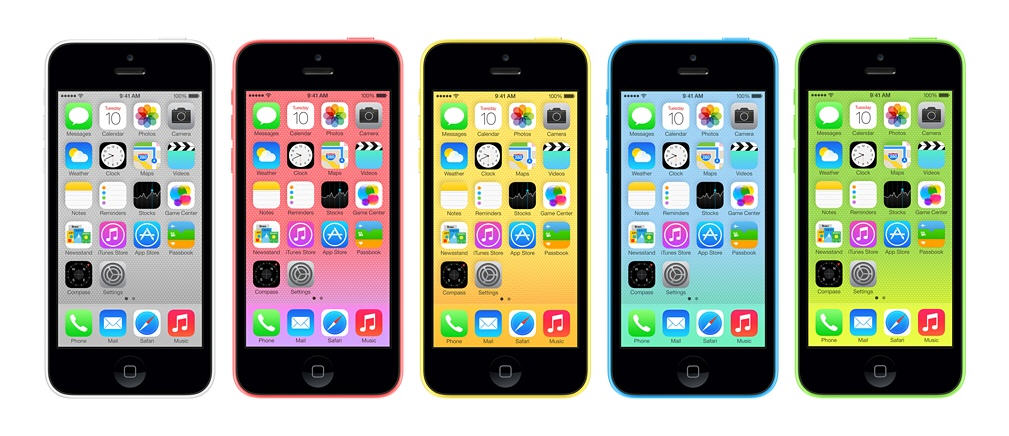
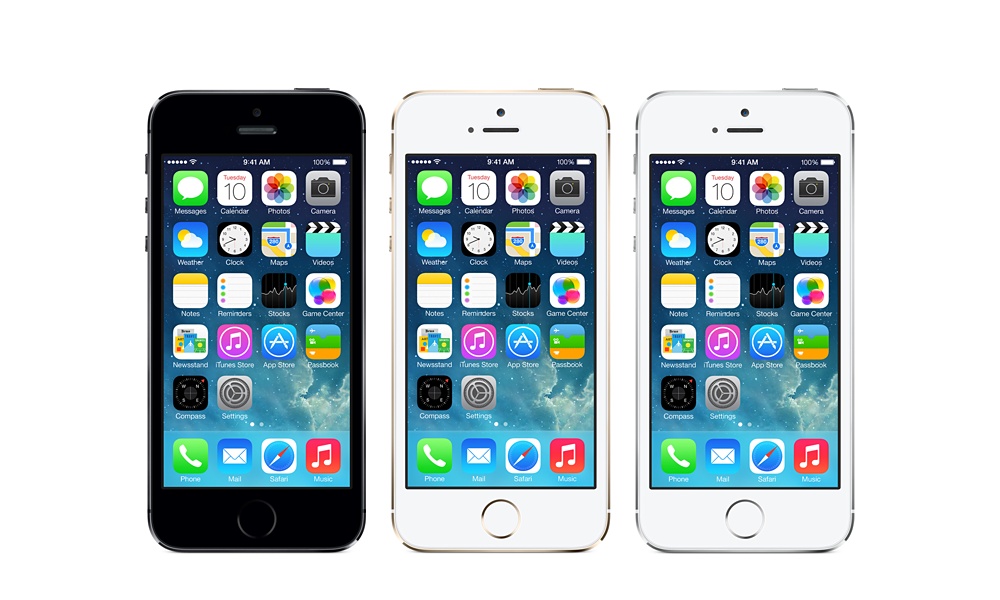
There were so many leaks prior to yesterday's announcements at Cupertino that we pretty much already knew what to expect. Apple has taken the wrapper off the latest version of the iPhone and the company has stuck to its recent release schedule of following up a major iPhone with an S edition -- the iPhone 5S. Visually, things are very much the same as before, but in addition to black and white models, there's also the light gold colored model -- colors we now know should be referred to as space gray, silver and gold.
 
The promise to "brighten everyone's day" seems to have meant not only an addition to the color options for the iPhone 5C and 5S, but also new features. While the 5C retains the same processor as in the 5, the 5S boasts a new A7 processor which is the world's only 64-bit chip in a smartphone. iOS 7 has been re-engineered as a 64-bit operating system, but the chip is capable of running 32-bit and 64-bit apps. Apple claims the processor is double the speed of the iPhone 5 according to the graph they showed. And the processor now supports OpenGL|ES 3.0, the same as Nexus 7.
 
There's also a new M7 co-processor which measures the accelerometer, compass, and gyroscope which Apple claims will lead to a new breed of health and fitness apps. In terms of battery life, iPhone 5S users can expect 10 hours of talk time and 120 hours of standby. As with previous S models, there are other upgrades to the hardware to be found inside the case. The phone's camera has come a long way in recent years, and the 5S take things further boasting an F2.2 aperture lens.
 
The 8 megapixel camera takes multiple photos when the shutter is pressed, processes them and combines the elements of each for the best results. Two LED flashes -- one warm, one cool -- help to create a better light balance in shots, and there is a new burst mode than can take up to 10 shots per second. There's also double-speed video capture to experiment with thanks to 120 FPS video capture at 720p.
 
The rumoured fingerprint reader has indeed materialized, despite the fact many commentators thought it fantastical ahead of today. The Touch ID reader can be used to unlock the iPhone as well as confirming identifies when making a purchase. Forget typing a password or tapping a PIN, your finger is all you need. Orientation is not important as the reader, which is built in to the home button, and can scan at 500ppi in 360 degrees. Talking of the home button, it is now made of sapphire to eliminate the risk of scratches. If you're concerned about security, Apple assures users that fingerprint data is never shared with other apps, or even Apple.
 
Those all-important dimensions? Height: 4.87 inches (123.8 mm), Width: 2.31 inches (58.6 mm), Depth: 0.30 inch (7.6 mm) and Weight: 3.95 ounces (112 grams).
 
Of course, there's also iOS 7. As this had already been previewed there were few surprises here. You don’t have to be packing an iPhone 5S to take advantage of the updated operating system, it can be installed on everything back to the iPhone 4 and iPad 2. There's the new, flat look, improvements to Siri, the addition of iTunes Radio and AirDrop and a new multi-tasking view as well as easy search access and more. Get downloading on 18 September.
 
So we now know the details, we've got the full rundown. When can we get our hands on the iPhone 5S? Not long to wait -- the device will be available from 20 September. Expect to pay $199 for the 16GB model and $299 for the 32GB version and $399 for 64GB -- all on a two-year contract. There are also multi-colored cases available for $39 a piece.
 
Ordering starts 20 September, in the meantime you can check out the iPhone 5S website.
 
~ Mark Wilson

9.07.2013

Bigger iPhone: Apple said to be testing up to 6-inch screens

The iPhone 5S and 5C haven’t even been announced yet but that isn’t stopping Apple from looking to the future. That future reportedly includes larger displays ranging in size from 4.8-inches up to six inches according to "people familiar with the matter" as reported by the Wall Street Journal.
 
The current iPhone 5 ships with a 4-inch display, the first handset from Apple to include a bump in display size since the release of the original iPhone way back in 2007. An iPhone with a six inch display would put the handset among the largest on the market, rivaled only by phablets like Samsung’s Galaxy Mega and perhaps a small handful of international devices.

It’s not uncommon for Apple and several other tech firms to test multiple variants of a product before it hits retail. Whether or not Apple would ultimately release devices in multiple sizes remains to be seen but it doesn’t seem likely. Unlike Samsung that’s content to throw everything at the wall to see what sticks, Apple has up to this point been very calculated with their product releases.
 
If true, however, such a move would mark a turning point for Apple as they continue to explore options to remain relevant in a red hot smartphone market that’s now dominated by Korean rival Samsung. It can be argued that Apple’s last truly innovative product was the iPad which singlehandedly spurred the lucrative tablet market we all know today.
 
~ Shawn Knight