Cisco Learning Network Store Promotions Page
Showing posts with label iPhone. Show all posts

10.27.2016

Apple unveils new TV App for Apple TV, iPhone and iPad

 
We were expecting Apple to release a new app for Apple TV at its "Hello Again" event, and that was the first thing that the tech giant showed off.
 
Called simply TV, the new app lets you discover and watch TV shows and movies from multiple apps on Apple TV, iPhone and iPad. There’s also a new Siri feature for Apple TV that lets viewers quickly tune in to live news and sporting events.
 
Siri is aware of where sports events and news are being shown, and users can simply say things like, "Watch the Stanford game", "Which football games are on right now?" or "Watch CBS News" (all Apple's own examples) and Siri will switch to the relevant live broadcast.
 
"Using apps on Apple TV, iPhone and iPad has become the primary way for so many of us to watch television", said Eddy Cue, Apple’s senior vice president of Internet Software and Services. "The TV app shows you what to watch next and easily discover TV shows and movies from many apps in a single place".
 
 
Apple showed off the following key features:
  • Watch Now: Watch Now is where viewers will see their collection of available shows and movies from iTunes and apps. From Watch Now, viewers can then go to Up Next or Recommended to choose what to watch.
  • Up Next: Users can enjoy the shows and movies they are currently watching, including recent iTunes rentals and purchases -- all presented in the order they are most likely to watch first. For example, when viewers finish an episode, the next one will automatically appear at the start of the Up Next queue, as will any new episodes as they become available. At any time, users can simply ask Siri to continue watching a show and immediately pick up where they left off.
  • Recommended: Viewers can explore a great selection of curated and trending shows and movies, including collections handpicked by Apple’s curators, and dedicated categories and genres such as kids, sci-fi and comedy.
  • Library: Viewers can access their entire collection of iTunes movies and TV shows that they have rented or purchased on iTunes.
  • Store: If users are looking for something new, they can check out the Store to discover great new content across video services that they have not yet downloaded or are not yet subscribed to, along with the latest releases on iTunes.
  • The TV app will allow users to begin watching on one device and pick up where they left off on another.
 
In addition to the new TV app, customers in the US will have a simplified way of enjoying their pay-TV video apps by using single sign-on. Starting in December, subscribers to DIRECTV, DISH Network and others will be able to sign in once on Apple TV, iPhone and iPad to access apps that are part of their pay-TV subscription.
 
The TV app and single sign-on will be available in December as free software updates for Apple TV (4th generation), iPhone and iPad customers in the US. Live tune-in with Siri is available today.

~ Wayne Williams

9.21.2016

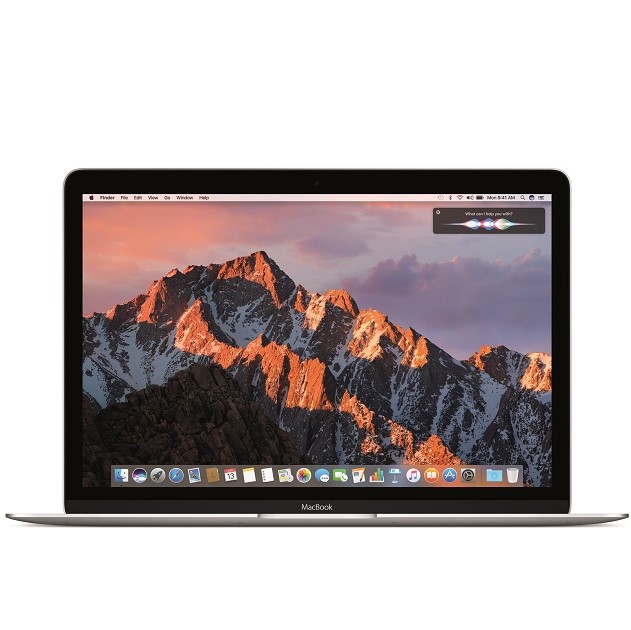
Apple releases macOS Sierra as free upgrade

Apple's Mac computers -- MacBook, iMac, Mac Pro, and Mac mini -- are works of art. Not only is the hardware beautiful, but the included operating system is visually impressive too. Today, after a series of Beta releases, the final 10.12 version of the desktop operating system formerly known as OS X -- now known as 'macOS' -- is available for download. Apple dubs the latest version of the desktop operating system 'Sierra', after a mountain range in the company's home state of California.
 
While Windows 10 is a great operating system for productivity, Microsoft simply cannot match the visual beauty of macOS. Still, Microsoft's latest operating system does offer some unique features, such as the voice assistant Cortana -- something that Apple's desktop did not offer. Today, this changes, as the legendary Siri comes to macOS Sierra. Best of all? As usual, this is a free upgrade for owners of compatible Mac computers!
 
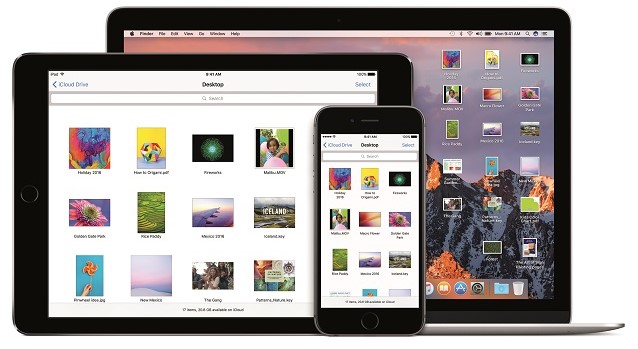
"Siri on the Mac can help send messages and email, find documents, look up information, search a user’s photo library, adjust system preferences and more. Users can also drag and drop Siri results into documents or pin them into their Today view for later reference. Universal Clipboard allows users to copy content from an app on one Apple device and paste it into another app on a different Apple device. With iCloud Desktop and Documents users can now access the files on their Desktop from iPhone and iPad. And Auto Unlock lets users automatically log into their Mac when they are wearing an authenticated Apple Watch", says Apple.
 
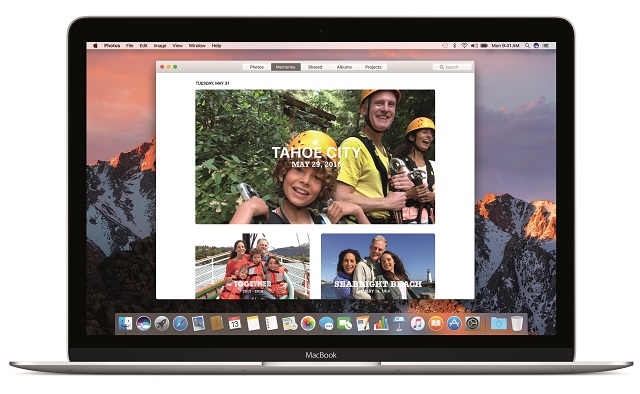
The iPhone-maker further says, "Photos introduces Memories, which highlights favorite and forgotten moments in users’ photo libraries by automatically creating curated collections of occasions like birthday parties or family vacations. Photos uses advanced computer vision to identify faces, objects and scenes in your images, so photos can be searched by who and what is in them. An all-new Brilliance editing tool brightens dark areas and pulls in highlights to make photos look richer and more vibrant".
 
 
One of the biggest pain points of online shopping is the need to enter your information, such as name and address, on every merchant you use. Then, you have to find your credit card and enter those numbers too. It is a real chore. Sometimes I will buy a product on Amazon as opposed to saving money on a new site, simply because it is easier.
 
 
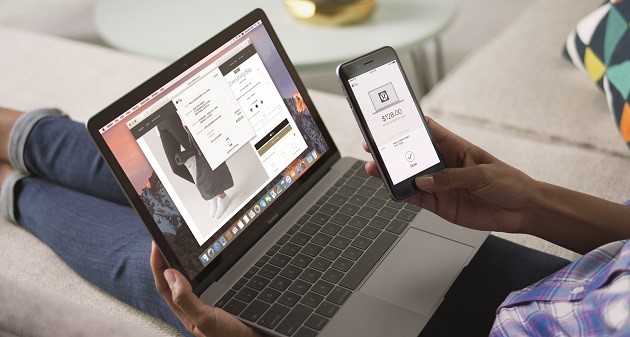
Apple Pay on the web for Safari, new to macOS Sierra, solves this dilemma as it makes shopping even easier. If a merchant supports the feature, you can checkout and pay using your Apple Pay information -- creating an account with the online retailer is not necessary. For added security, the transaction must be verified using an iPhone or Apple Watch. By leveraging a second device, it arguably makes the overall experience safer.
 
 
What else is new in the operating system? Apple shares the following.
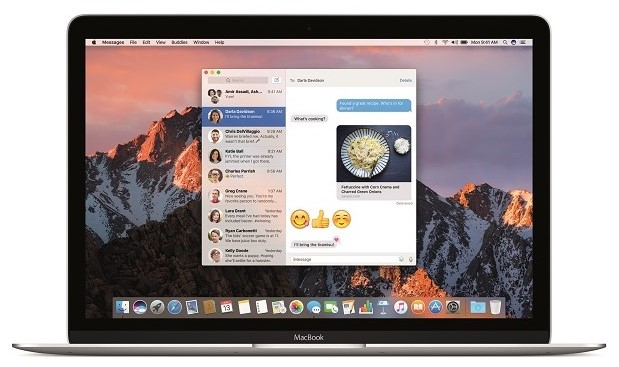
  • Messages makes conversations more interesting, allowing users to preview web links and play video clips from right within the app; respond to messages with a Tapback like a heart, thumbs up and more directly onto a message bubble; and send bigger emoji for more message impact.
  • Tabs are now available across Mac apps that support multiple windows, including Maps, Mail, Pages, Numbers, Keynote, TextEdit, and even third-party apps.
  • Picture in Picture floats video from Safari or iTunes in a window over the desktop. The window can be resized, dragged and pinned to any corner of the screen so users can watch video while they work.
  • Optimized Storage frees up space when a Mac starts getting full by storing infrequently used items in the cloud and helping users remove apps and files they no longer need.
  • Apple Music in iTunes makes it even easier to discover new music and browse exclusives and new releases.
 
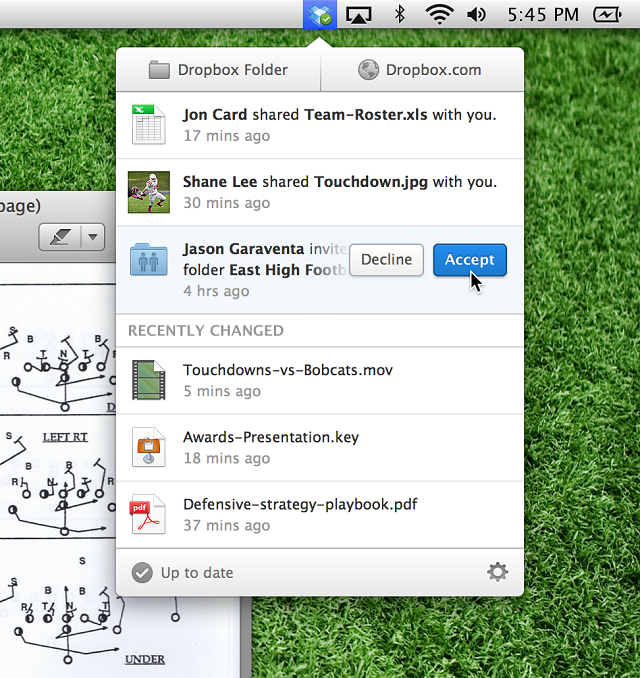
This upgrade also blocks applications from improperly accessing the accessibility settings in the operating system. This was most infamously leveraged by Dropbox, and you can read more about it here. While the cloud storage company had good intentions, there was fear that it could be used as a loophole for more nefarious apps -- Apple is wise to close it. If you are a Dropbox user, do not worry -- the company addresses macOS Sierra here.
 
If you own a compatible Mac, you can download macOS Sierra immediately from the App Store here. It looks incredible, so you should definitely not hesitate. Once you download it, please tell me what you think in the comments below.
  
~ Brian Fagioli

6.10.2016

People are stealing iPhones from Apple stores by dressing like employees

 
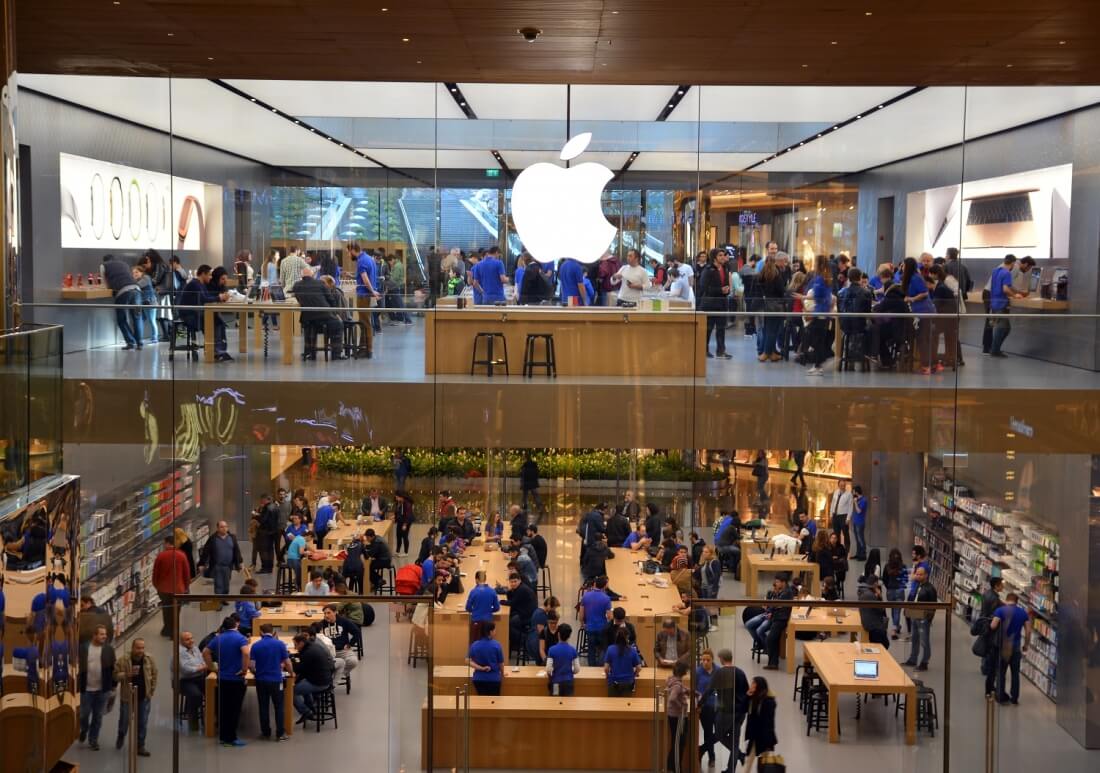
Walk into any Apple store and you can easily identify an employee by their blue shirts. But it turns out that while this recognizable attire may be helpful to customers, it has enabled thieves to steal thousands of dollars worth of iPhones, simply by dressing in similar clothes and taking goods from the stores.
 
According to DNA Info, a man wearing a blue shirt resembling those worn by official Apple store employees walked into a New York City SoHo outlet on June 1. He then entered the electronics repair room, grabbed 19 iPhones - worth over $16,000 – and passed them to an accomplice to hide under his shirt. The pair proceeded to walk casually out of the store without anyone realizing what had happened.
 
But this wasn’t the first time the method had been used. Earlier in the year, three individuals stole eight iPhones from an Upper West Side Apple outlet. Reports state that a male distracted staff while a woman – dressed as an Apple worker – grabbed the devices. A second male kept lookout during the robbery.
 
A month after this incident, the trio hit the shop for a second time using the same ruse. On this occasion, they managed to make off with 59 iPhones. In total, the 67 stolen handsets amount to almost $50,000.
 
One of the reasons why the criminals targetted the store is because it’s used as a training location where new workers come and go all the time.
 
Gizmodo points out that Apple’s 2015 ‘Back to Blue’ campaign, which stated that variations of the blue shirts were to be worn all year round - rather than staff changing uniforms seasonally - could have made the heists easier to pull off, as the clothes are easy to replicate or buy online.
 
Image credit: endermasali / shutterstock
 
~ Rob Thubron

5.17.2016

5 hidden iOS 9 features that will save you time and space

Cory Bohon shows often overlooked and hidden features of iOS 9 on the iPhone that will help you save some time and space. 

Image: Cory Bohon/TechRepublic
The iPhone regularly gets software updates to add new features and change settings; however, many of these features go overlooked by users. Because of this, there are a lot of hidden features or features that are not so well known. In this article, we'll introduce you to five of these features that can make your iPhone workflow much easier, and even free up your device when it's sluggish. All of the tips in this article work with the latest versions of iOS 9, so continue reading to learn more.

Free up RAM

We've all been there: After using a bunch of apps, or perhaps leaving a lot of background downloads on, your device gets sluggish. And, sure, restarting the device will often fix this, but there's another way that doesn't involve interrupting your current workflow. 

iOS devices running iOS 9 have the ability to free up memory by simply performing these steps:
  1. Navigate to the device Home Screen
  2. Press and hold the Sleep/Wake button on the device
  3. When the Power Off screen appears, release the Sleep/Wake button and press the Home button (Figure A)
  4. After a few seconds, the device will show the Home Screen again.
 Figure A
Image: Cory Bohon/TechRepublic
By doing these steps, you can often speed up a sluggish device by removing all the caches from memory and freeing up resources.

Remove downloaded software updates

Whenever a new version of iOS is available, Apple automatically downloads it to your device in order to make the update faster from the point you click the Install button. Until you install, this download will take up space and keep nagging you to install. Fortunately, you can delete the update from your device, saving space and keeping iOS from prompting you to install the latest update. 

To remove the update, follow these steps:
  1. Open Settings | General | Storage & iCloud Usage
  2. Manage Storage under the "Storage" heading (Figure B)
  3. When an update has been stored on the device an item will appear called "iOS [Version Number]" tap it.
  4. In the view that appears, tap the "Delete Update" button, and then confirm by tapping "Delete Update" in the prompt again
Figure B
Image: Cory Bohon/TechRepublic
This will remove the update from your device, clearing the space that was taken up by those update files. Note that when you go to update your device, the files will need to be re-downloaded again, taking up valuable time.

Reset the store apps

Sometimes the App Store, iTunes Music Store, or iBook Store can get hung in a state that wasn't intended, or perhaps display incorrect information or images. In those cases, you can easily reset the App Store cache and reload the store pages.  

To do this, open the store, then tap once and continue to tap on the first "Featured" tab in the tab bar of the store. You will notice the screen flash white after about 10 consecutive taps, and the store page will reload. When this flash occurs, the store has been reset and the cache emptied, possibly fixing any issues you were experiencing with the App Store.

Text-based Emoji Keyboard

The Emoji keyboard has long been enjoyed by iOS users and has become so popular that it is enabled by the majority of users as soon as they unbox their iOS devices. But, did you know there's another emoji keyboard that is completely text-based? It's true, and it is even more hidden than the standard Emoji keyboard.  

To enable this keyboard:
  1. Open Settings | General | Keyboard | Keyboards
  2. Select "Add New Keyboard..."
  3. Select Japanese | Romaji
Whenever you want to enter a text-based emoji: 
  1. Open iMessage, Notes, or any other app with text entry
  2. Select the Keyboard button and the Japanese keyboard
  3. Select the Number button for the number keys
  4. Select the face button that appears (Figure C)
  5. Select the up arrow on the small strip that appears above the keyboard (Figure D)
  6. Tap on a text-based emoji from the list that appears to enter it just like the standard emoji keyboard
Figure C
Image: Cory Bohon/TechRepublic
Figure D
Image: Cory Bohon/TechRepublic

Redial Last Used Phone Number

The iPhone is a great phone, but if you receive and make a lot of calls to the same number, then it may be a pain to redial a number that isn't in your contacts list. Fortunately, this hidden shortcut makes it easy to redial a number from your recent calls list without having to poke around in the Phone app. 

Figure E
Image: Cory Bohon/TechRepublic
To do this, open the Phone app, tap on the Dial tab, and then tap on the green Call button. After doing this, the last dialed number will appear in the dialer area and tapping the green Call button again will Initiate a call to the number.
 
~ Cory Bohon

4.21.2016

SanDisk unveils next-generation iXpand Flash Drive for iPhone, iPad, and iPod touch

Storage for iPhone and iPad can be costly. Since you cannot realistically add more inside later, you must decide at purchase how much you will need. Then, each bump up will cost you about $100. This can make an iOS device purchase a very costly affair.
 
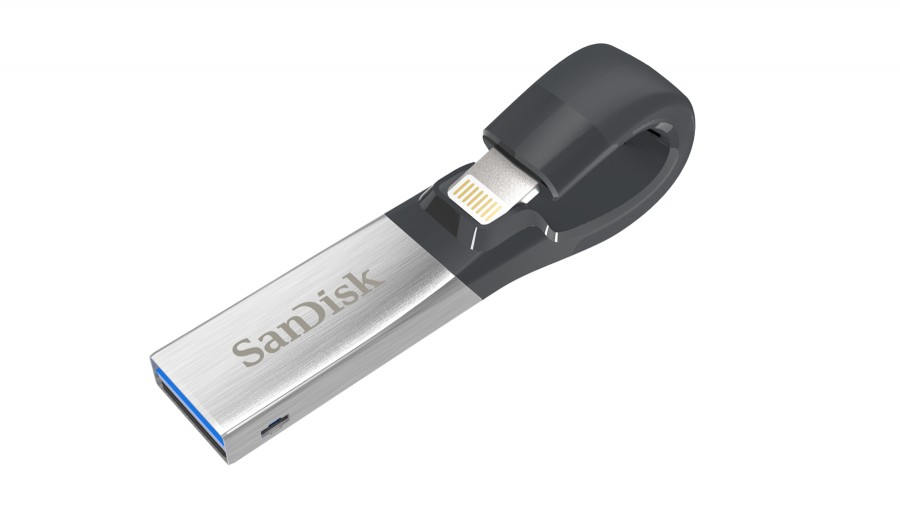
As an alternative, however, you can use flash drives on the iPhone, iPod touch and iPad, but there is a catch; you will need to buy a lightning to USB type A cable, or a flash drive with a lightning connector. While not usually an elegant solution, today, SanDisk unveils an intriguing such product -- the next-generation iXpand Flash Drive -- and it looks really cool.
 
"Designed to be the perfect storage companion for iPhone and iPad, the reinvented iXpand Flash Drive features a flexible Lightning connector and now a USB 3.0 connector so users can quickly and easily move photos and videos between their iPhone and iPad and Mac or PCs. The iXpand Flash Drive allows users to automatically back up their camera roll and contacts, and watch popular video formats straight from the drive. The new drive also includes encryption software that password-protects files, allowing people to share their content while keeping sensitive files secure across devices", says SanDisk.
 
The company further says, "the product features a redesigned app, the iXpand Drive app, which offers new features and an improved user experience. Giving users the option to save space instantly, the app now has a camera function so users can shoot and save photos or videos directly to the drive instead of on their iPhone or iPad. The app also allows users to automatically back up content from popular social networking sites, as well as play back music within the app".
 
What's really cool about the app, is that it will detect the drive being plugged in, and automatically launch. This makes using the iXpand Flash Drive seamless. There is no need to manually launch the app each time. Both the drive and app should work fine on any device that has both a lightning connector and is running iOS 8.2 or higher.
 
The design of the flash drive is quite genius -- the USB Type A connector will fold behind the device when not in use. This should limit the potential of breaking it, as can happen when something -- like the Apple Pencil -- sticks out straight.
 
If you want to buy it, it is available now, starting at $49.99 for 16GB. The highest capacity 128GB variant is $129. The  middling 32GB and 64GB models are $69 and $79, respectively.
 
Will you buy it? Tell me in the comments.
 
~ Brian Fagioli

4.08.2016

FBI briefs senator about how it cracked San Bernardino iPhone, but keeps Apple in the dark

 
It turned the case of the century in to the case that didn’t really happen. The battle between Apple and the FBI came to a sudden end last month when the US Justice Department said it didn’t need the iPhone manufacturer's help, and then successfully hacked its way into the iPhone in question.
 
With the San Bernardino shooter's iPhone seemingly successfully cracked, the FBI last night revealed to Senator Dianne Feinstein just how it managed it. There are no current plans to share this information with Apple, but FBI Director James Comey revealed that the tool that was brought in only works on the iPhone 5c.
 
Apple will almost certainly be disappointed that the FBI is choosing not to share the cracking method, but it's not yet clear whether the company plans to take legal action to obtain this information. The fact that Comey has said the method will not work on the iPhone 5s or iPhone 6 will come as some comfort to those concerned about security and privacy, but Apple will be keen to patch any vulnerabilities exploited by the FBI so that other parties may be prevented from using the same technique to access different iPhone 5c handsets.
 
As reported by the National Journal, speaking at Kenyon College's Center for the Study of American Democracy last night, Comey said "we just haven't decided yet" in reference to coming clean with Apple. The agency has not said whether or not it managed to garner any useful information from the phone by hacking into it, saying:
We're still working on that, I guess is the answer. It was worth the fight to make sure that we have turned over every rock that we can with respect to the investigation. We owe it to the victims and the families to make sure that we pursue every logical lead.
It's not clear what happens next. There is unspoken, and spoken, pressure on the FBI to reveal all to Apple, and iPhone users will be keen for the company to pursue this in the interests of their security. With the incredible public interest not just in this case specifically, but also privacy, security and encryption more generally, Apple will also be feeling the pressure from its customers, particularly in light of Tim Cook's proclamations of fighting for its user base.
 
Photo Credit: Shutterstock/ymgerman
 
~ Mark Wilson

4.01.2016

Apple demands to know how FBI cracked San Bernardino iPhone

The FBI recently dropped its case against Apple after a third-party was able to break into the iPhone used by Syed Farook. Now, Apple is demanding to know how they did it. 

 
In the Apple vs FBI controversy, the roles have officially been reversed.
 
On Monday, the Justice Department dropped its case against Apple after it was able to unlock the iPhone used by San Bernardino shooter, Syed Farook, with the help of an "outside party." Now, Apple wants to know just how they did it.
 
The controversy around the phone began when Apple refused a court order to unlock the phone for the FBI to assist with their investigation. Apple would have been required to rewrite its OS with fewer security measures in place so that it could be accessed by the authorities.
 
However, a filing posted by the FBI on Monday stated: "The government has now successfully accessed the data stored on Farook's iPhone and therefore no longer requires the assistance from Apple Inc. mandated by Court's Order Compelling Apple Inc. to Assist Agents in Search dated February 16, 2016."
 
"It's the best and worst case scenario for [Apple]," said John Pironti, of IP Architects. "The best case scenario is that they can continue to say that they're doing everything they can do, and that they did not support law enforcement in this way."
 
Apple didn't have to create any custom code to help the authorities, nor did it have to violate its own ethical standards. But, the fact that the FBI and its unknown partner were able to unlock the phone means that there is a security flaw that Apple may be unaware of. 
 
The FBI has yet to disclose who helped them crack the iPhone's security, or what measure was used to accomplish the task. And, if the potential vulnerability goes unchecked, it could be leveraged by malicious hackers to steal information from other iPhones.
 
So far, most people can only guess how the phone was unlocked. Some reports have indicated that Israeli company, Cellebrite, may be the unknown party that assisted the FBI. Others have speculated that the limit on incorrect password guesses was lifted, allowing the FBI to run software that eventually guessed the correct passcode. Another method, Pironti said, would be through using copied images on an emulator.
 
"You would take an image of the actual device, recreate the image into an emulator and then, using the emulator, you would run permutations against emulated devices," Pironti said. 
 
The core device would still be safe and you would just keep making copies and running number combinations on those copies—almost like a virtual machine. At the time of this writing, though, nothing has been confirmed.
 
So now, Apple needs the FBI's help. Or, at least, its sympathy. Although, that it may be difficult for Apple to convince the FBI of its plight, as it continually pushed back against the FBI's orders—going as far as to increase the encryption on their devices in light of the FBI's original case.
 
This brings a new question, will the FBI ever help Apple out? If we are simply counting an eye for an eye, there is no reason for the FBI to explain its tactics. But, there are also more strategic reasons for refusing Apple's request.
 
It makes sense that the FBI would like to keep its method under wraps. For one, if they disclose the method (and subsequently, the flaw it exploits) Apple will remedy the issue, and the FBI will no longer have a way into future iPhones. And, as some have pointed out, the FBI's current contention with Apple involve about 15 other iOS devices that they want access to. So, if they found a way in, why would they give it up? 
 
Also, the U.S. government has a history of keeping these kinds of capabilities hidden.
 
"The Snowden releases released ways that the NSA had been able to compromise iPhones for years, and that was never disclosed to Apple, at least that I know of, until the Snowden releases," Pironti said. 
 
Apple took direct action immediately after the Snowden releases to improve the iPhone's security, and their stance has continued to focus heavily on encryption.
 
The LA Times reported that Apple's attorneys are researching ways that they could legally compel the FBI to reveal the method used to hack the phone, but no updates have been released. Benjamin Wright, an attorney and instructor at the SANS Institute, isn't convinced that Apple would have much of a case if they did pursue a legal avenue.
 
"It just feels like quite a stretch for Apple to use some mechanism of law to force the police to reveal what they did, when Apple wasn't involved," Wright said. 
 
At the time of the investigation, the phone was owned by the county of San Bernardino, and the county gave permission to the FBI to do whatever they needed to do in order to gather evidence. There could be some language in the end-user license agreement regarding IP or reverse engineering, that could potentially be used in a legal case, but Wright said that would likely be a stretch as well. There's also another option, Wright said.
 
"To get information about how the FBI cracked the iPhone, Apple might allege that the third party who did the work violated an Apple patent or stole a trade secret from Apple," Wright said. "A substantiated allegation like that might justify a lawsuit by Apple against the third party. Such a lawsuit might justify legal discovery of the technique used by the third party."
 
Jay Edelson of Edelson PC, which does privacy class action work in the tech sector, said that the legal situation shouldn't be taken lightly by either party.
We do not believe the government has a legal duty to tell Apple the details about the backdoor it found. However, we believe it is in the nation's security interests that the government start working with the private sector to identify and close cyber vulnerabilities. Right now, the government has inconsistent interests. On the one hand, it doesn't want to see companies get hacked, and knows that cyber terrorism is aimed at private companies, along with the government. On the other hand, it does not tolerate the idea that systems are totally secure because it always wants to maintain the option of gaining access for law enforcement, anti-terrorism, or other purposes. We believe the government cannot straddle the fence on this issue—it should be helping companies prevent hacks, even if it means that increased security will make their job harder in certain instances.
Additionally, Wright said, the timing for the news about the iPhone being unlocked was a little suspicious. Wright said he felt the FBI's original legal case was weak, and its agenda wasn't so much to procure specific data from one phone, but to set precedent for law enforcement to force Apple to cooperate. However, the FBI didn't realize how weak its case was until Apple pushed back as hard as it did.
 
"The FBI realized it was about to get a judge ruling against the FBI, and they didn't want that precedent so, magically, they produced some other third party who's come out of nowhere to save the day," Wright said. 

The 3 big takeaways for readers

  1. The FBI has officially unlocked the iPhone 5C of San Bernardino shooter Syed Farook, with the help of an unknown third party. Now, Apple is working to find out how they were able to access the information.
  2. There is no official statement on exactly how the phone was unlocked, or by whom, but some reports indicate that Israeli company Cellebrite helped the FBI bypass the number of passcode attempts on the phone.
  3. The FBI has many reasons to keep its methods secret, if it can. By not disclosing the flaw that allowed access to the phone, the FBI has a better chance of unlocking iPhones in the future if the need arises.
~ Conner Forrest

3.05.2016

Police say criminals like Apple iPhones because of encryption

3D printed Apple logo are seen in front of a displayed cyber code in this illustration taken February 26, 2016.
Reuters/Dado Ruvic/Illustration
Some criminals have switched to new iPhones as their "device of choice" to commit wrongdoing due to strong encryption Apple Inc has placed on their products, three law enforcement groups said in a court filing.
 
The groups told a judge overseeing Apple's battle with the U.S. Department of Justice on Thursday that, among other things, they were aware of "numerous instances" in which criminals who previously used so-called throwaway burner phones had switched to iPhones. They did not list a specific instance.
 
The brief by the Federal Law Enforcement Officers Association and two others also cited a jailhouse phone call intercepted by New York authorities in 2015, in which an inmate called Apple's encrypted operating system a "gift from God."
 
The government obtained a court order last month requiring Apple to write new software to disable passcode protection and allow access to an iPhone used by one of the shooters in the December killings in San Bernardino, California.
 
Apple asked that the order be vacated, arguing such a move would set a dangerous precedent and threaten customer security.
 
Tech industry leaders including Google, Facebook and Microsoft and more than two dozen other companies filed legal briefs on Thursday supporting Apple. The Justice Department received support from law enforcement groups and six relatives of San Bernardino victims.
 
The law enforcement groups said in their brief that Apple's stance poses a grave threat to investigations across the country.
 
The FBI says Rizwan Farook and his wife, Tashfeen Malik, were inspired by Islamist militants when they shot and killed 14 people on Dec. 2 at a holiday party. The couple later died in a shootout with police and the FBI said it wants to read the data on Farook's work phone to investigate any links with militant groups.
 
In a filing on Thursday, the San Bernardino County District Attorney's Office said at least two 911 calls from the time of the shooting reported three assailants, not two. 
 
Even though those reports were "not corroborated," if in fact there were three attackers it would be important to crack open the iPhone "to identify as of yet unknown co-conspirators," the District Attorney's filing stated. 
 
Apple has said it respects the FBI and has cooperated by turning over data in its possession. 
 
The latest request is different, Apple says, because it requires them to crack a phone with a software tool that does not currently exist.          

2.27.2016

Samsung wins appeal in patent dispute with Apple

3D-printed Samsung and Apple logos are seen in this picture illustration made in Zenica, Bosnia and Herzegovina on January 26, 2016.


2.09.2016

Samsung inspired by Apple Purchase Plan

Samsung is planning to bring out their take on the iPhone Upgrade Plan. Jack Wallen believes this heralds a major shift in the mobile landscape and will wind up a win for the consumer.
Image: Jack Wallen
No matter how you feel about their products, if there's one almost universal truth in mobility, it's that Apple knows business...knows it quite well. Facing what looked like could be an Android singularity in the world of mobile devices, back in September, 2015, the Cupertino company introduced a carrier-free upgrade program, dubbed the iPhone Upgrade Program. With this program, consumers could pay for their iPhones through Apple (as opposed to their carriers) in installments (as low as $32.41/month USD).
  Since then, iPhone sales have skyrocketed. While Apple has witnessed a major uptick in sales, Samsung has watched its numbers tumble. That is precisely why the Korean tech juggernaut is planning their own purchase plan. The details of Samsung's plan have yet to be released, but you can be sure it will look similar to that of Apple's...consumers will be able to purchase Samsung devices, directly from the company, in installments.
  This comes on the heels of nearly all carriers dropping their subsidized contracts (where the cost of new devices is actually hidden in monthly fees), as well as the massive growth of low-cost, unlocked Android devices. It is that latter issue, I believe, which has many of the bigger Android manufacturers concerned. When the likes of OnePlus can crank out near-flagship devices and sell them at low-end prices, Samsung, HTC, LG, and Lenovo will take notice. And now, with iPhone sales increasing (thanks to the Upgrade Program), things are about to change.
  And change they will.

Win for the consumer

It would not surprise me to see every major manufacturer hopping onto the good ship upgrade sometime before 2016 is over. That, my friends, would be a big win for consumers. How? Because in the world of mobility, consumers have been gouged and locked in by carriers for years. You wanted a specific device, you most likely would have to switch to a different carrier...which, of course, would either cost you in terms of dollars or time. But this move (this mimic of Apple) by Samsung should be a warning to carriers of things to come. What things? That the mobility landscape is drastically changing and the power will soon be totally in the hands of the consumer.
 
That sounds kinda nice doesn't it?
All because Apple saw slumping sales and decided to sell their products directly...and Samsung saw the new program succeed and opted to follow in their footsteps. Now? We win. Thank you, Apple. Thank you, Samsung.

The caveat

There is, of course, a caveat to these programs. If you do that math, you can see there is zero cost savings for the consumer. After the requisite twenty four months of payments (on a 16 Gb iPhone 6S), you will have paid $777.84 USD. If you want a 128 Gb iPhone 6S+, that payoff is $1077.84 USD.

Make sure you take those numbers in for a moment...remembering, all the while, you're still paying your carrier monthly fees. All of a sudden, that payment plan doesn't sound so wonderful...especially considering you can opt for an unlocked Android device for around $200-$300.00 USD.

Even so, to many consumers cutting the carrier ties is worth it. This means Samsung needs to roll this upgrade plan on sooner rather than later. And while they're busy creating this plan, they need to make sure their model allows for users to upgrade...even before they've reached that blessed payoff. That means: Two year payoff, one year upgrade. But let's consider this option:


  • 2 Year payoff
  • 1 Year upgrade
  • 1 Year trade-in
In that 1 Year trade-in, users can (should their original devices be in good shape) get a portion of their payoff deducted. How would that be fair to Samsung? In many cases, those trade-ins can be refurbished and sold to second-tier carriers. Everyone wins.

I strongly believe that, in the future, the carrier is going to be responsible for two things: Voice and data. That is as it should be. Allow the consumer to purchase the device they want, from the OEM they want, and use them on the carrier they want.

Viva la upgrade!

~ Jack Wallen 

2.07.2016

Apple says it is bricking iPhones with Error 53 for security reasons


You wouldn't expect a simple iOS update to completely kill your iPhone, but this is exactly what is happening. Users who took their handsets to a third party for repair and subsequently updated their software have run into error 53 and a bricked handset. Apple is not only aware of the problem, but says that it is intentional.

As we learned the other day, the problem seems to arise for people who have had their home key (specifically) fixed by a non-Apple-authorized repairer. Apple has now admitted that iOS detects the home key has been tinkered with, and says that Error 53 is a move to 'protect our customers' -- customers who will, presumably, think twice before upgrading to an iPhone 7.

The reason for the extreme security measures taken by Apple is that the home key houses the Touch ID sensor. The fear is clearly that the button could be replaced with one that includes a hacked sensor so Apple has decided that in order to prevent unauthorized access to iPhones and iPads, all access will be blocked -- and this is achieved by unceremoniously bricking said devices.

In a statement to the Guardian, Apple defended what is happening by saying:
We take customer security very seriously and Error 53 is the result of security checks designed to protect our customers. iOS checks that the Touch ID sensor in your iPhone or iPad correctly matches your device’s other components.
If iOS finds a mismatch, the check fails and Touch ID, including for Apple Pay use, is disabled. This security measure is necessary to protect your device and prevent a fraudulent Touch ID sensor from being used. If a customer encounters Error 53, we encourage them to contact Apple Support.
It’s hard to imagine a comparable scenario in which the arbitrary disabling of an expensive device, that has not been reported stolen, would be deemed acceptable. Upon contacting Apple Support, an admission by customers that a third party repairer has been used is an admission of violating the company's terms and conditions. This means that Apple charges customers handsomely for the privilege of replacing their bricked handsets, magically recouping the money -- and more -- lost to the third party.

Photo credit: Petlia Roman / Shutterstock

~ Mark Wilson

2.05.2016

Here's how to bypass the iOS lock screen passcode


There are numerous ways to keep your smartphone safe from prying eyes, and a lock screen protected with a passcode is a popular choice. But a newly discovered vulnerability in iOS 8 and iOS 9 means that iPhones and iPads could be accessed by attackers.
  The vulnerability was discovered by security analyst Benjamin Kunz Mejri and it has been assigned a Common Vulnerability Scoring System (CVSS) count of 6.0, as well as a 'high' severity rating. Apple has been aware of the issue since late last year, but has yet to issue a patch.
  Vulnerability Laboratory has issued a security advisory that warns: "An application update loop that results in a pass code bypass vulnerability has been discovered in the official Apple iOS (iPhone 5 & 6 | iPad 2) v8.x, v9.0, v9.1 & v9.2. The security vulnerability allows local attackers to bypass pass code lock protection of the Apple iPhone via an application update loop issue. The issue affects the device security when processing to request a local update by an installed mobile iOS web-application".
  As explained by security expert Graham Cluley, the exploit works by taking advantage of a brief period after rebooting during which passcode authentication is disabled. Vulnerability Laboratory details how to exploit the security hole (text is produced verbatim with the original typos and grammatical oddities):

  • First fill up about some % of the free memory in the iOS device with random data
  • Now, you open the app-store choose to update all applications (update all push button)
  • Switch fast via home button to the slide index and perform iOS update at the same time. Note: The interaction to switch needs to be performed very fast to successfully exploit. In the first load of the update you can still use the home button. Press it go back to index
  • Now, press the home button again to review the open runnings slides
  • Switch to the left menu after the last slide which is new and perform to open Siri in the same moment. Now the slide hangs and runs all time in a loop
  • Turn of via power button on the ipad or iphone ....
  • Reactivate via power button and like you can see the session still runs in the loop and can be requested without any pass code. Note: Normally the pass code becomes available after the power off button interaction to stand-by mode
  • Successful reproduce of the local security vulnerability!
Check out the video below to see the exploit in action:

  Physical access to the device is required, so the advice is to make sure you do not leave your iPhone or iPad unattended.

Photo credit: Twin Design / Shutterstock

~ Mark Wilson

1.26.2016

Joe Belfiore is using an iPhone, and that's not OK


Joe Belfiore is now on a break from his job at Microsoft, taking an "educational trip" across the globe with his family. Given that Belfiore "runs the team building Phone/Tablet/PC versions of Windows" you might expect him to use a Windows phone to share updates with his followers as, after all, most are Windows enthusiasts.

However, Belfiore is publicly using an iPhone, and he expects his fans to be OK with it. You do not see Jony Ive, for instance, rocking an Android smartphone or a Windows 10 Mobile device, because that would not make the iPhone look like the best smartphone there is. So why would it be fine for Belfiore to use a rival's device?

Yes, Microsoft supports Android and iOS, on top of its own operating system, but Belfiore is not just any employee, so when he decides to use a device from one of his company's rivals it tends to make Windows look bad, as if it is lacking something.

Belfiore has tried to defend his choice by saying that the vacation presents a huge opportunity to test the other (more popular) platforms, and that "it’d be crazy not to [do it]".

Belfiore apparently believes that it is too difficult to experience all the benefits that Android and iOS have to offer in a short period of time, which, to be perfectly honest, is a ridiculous explanation. It sounds as if Belfiore is a stranger to Windows' rivals, and he is only now getting the proper chance to see what all the fuss is about.


This is actually not the first time that Belfiore has been "caught" using an iPhone to tweet, but it should be the last. It gives consumers more reasons to dismiss Windows Phone/Windows 10 Mobile, which hurts the platform's chances of regaining some of the market share it recently ceded to Android and iOS, while making it look like a subpar option in today's market. And none of that helps, Joe.

Photo Credit: PathDoc / Shutterstock

~ Mihaita Bamburic

1.23.2016

Fewer orders at Apple suppliers could signal first iPhone sales decline

Some of Apple Inc's main Asian suppliers expect revenues and orders to drop this quarter, indicating iPhone sales are almost certain to post their first annual decline since the flagship product was launched almost a decade ago.

The forecasts of lackluster sales by companies including Taiwan Semiconductor Manufacturing Co (TSMC), the world's biggest contract chipmaker, and smartphone camera lens producer Largan Precision Co Ltd add to concerns about Apple's outlook amid slowing global demand for smartphones.

Industry executives say the latest iPhone did not have enough new features from the previous model to tempt users, raising fears that Apple's innovative streak - and the profits it has generated - may be running its course.

Apple, which reports December-quarter results on Tuesday, declined to comment on its sales outlook.

"Visibility is only a month at a time and demand is quite weak," Largan Precision Chief Executive Adam Lin told an earnings briefing, referring to his company's overall business.

Other suppliers said Apple now only gave them orders one month in advance, instead of the usual three months.

"We have to be very flexible in terms of capacity," said an executive at one of those firms, declining to identify their company or be named due to a confidentiality agreement that prevents Apple suppliers from discussing its order book.

Apple has previously said that individual data from its supply chain was not an accurate reflection of its outlook.

But TSMC, which makes some of the chips that go into iPhones, forecast this month that first-quarter revenues would likely fall by up to 11 percent year-on-year, adding that demand for high-end smartphones would also be weak.

An 11 percent quarterly decline would be the steepest revenue drop for TSMC in almost 7 years, Thomson Reuters data shows.

Earlier this month, people familiar with the matter told Reuters that Taiwan-based Foxconn, which assembles most iPhones, had taken a rare decision to cut working hours over a major holiday during which workers usually rack up overtime.

Foxconn, the trade name for Hon Hai Precision Industry Co Ltd, saw its December revenues slump by a fifth and 2015 sales miss expectations.

A more detailed picture about Apple's outlook could emerge next week if key suppliers including LG Display Co Ltd, SK Hynix Inc and Samsung Electronics Co provide first-quarter forecasts when they report December-quarter earnings.

First-quarter revenues at both LG Display and Hynix are expected to fall around 10 percent, according to Thomson Reuters I/B/E/S data.

Analysts say iPhone sales could pick up during the second half of the year, when the company usually launches new products, but with competitors such as Samsung Electronics and Huawei Technologies Co Ltd sharpening their edge, some suppliers are not so sure.

"The pace of innovation has slowed. Apple is going toward the same direction as other brand names," said another Taiwanese Apple supplier.

(Additional reporting by Se Young Lee in SEOUL and Miyoung Kim and Aradhana Aravindan in SINGAPORE; Editing by Miral Fahmy)

An iPhone 6S Plus is seen at the Apple retail store in Palo Alto, California September 25, 2015.
REUTERS/ROBERT GALBRAITH

~ J.R. WU