Cisco Learning Network Store Promotions Page
Showing posts with label Steve Jobs. Show all posts

10.27.2016

Could Apple make Mac laptop buying any more confusing?

 
The Mac laptop line, following today's new announcements, looks lots less like Apple and more like Compaq—where Tim Cook worked much earlier in his career, incidentally, long before the original IBM PC clone-maker's demise. Confusing. Complicated. These are apt descriptions that might just send the ghost of Steve Jobs skyward on either—take your pick—Halloween or Day of the Dead.
 
Among Apple cofounder's first tasks when returning to the chief executive's chair in 1997: Simplifying product families. Jobs cut the deadweight, surprising many people by killing off Newton, for example. Complex product lines define Apple under successor Cook, by contrast.
 
Gauging only by base models, without enclosure hues, Apple offers 11 different laptop SKUs: Two 12-inch MacBook (times four color combinations); two 13-inch MacBook Air (one color); four 13-inch MacBook Pro (three two-colors); and three 15-inch MacBook Pro (two two-colors). Granted, rivals like Lenovo offer way more SKUs. But the Chinese manufacturer isn't Apple and the expectations that come with the name.
 
Problem isn't so much number of base models—before they can be configured, adding many more—is the overlap of prices and capabilities among the different Mac laptops.
 
MacBook Pro 13
 
The cheapest MacBook Pro 13 is $1,299 for 2.7GHz Intel i5 processor, 8GB RAM, 128GB SSD, and Intel Iris Graphics 6100. But, wait, that's an older model. To get the new thang announced today, price is $1,499—and that's without the hottest new feature: TouchBar.
 
You do get a 2GHz Core i5 chip, 256GB SSD, Iris Graphics 540, brighter display, and newfangled Butterfly keyboard. But some buyers should rightly wonder why a 2GHz laptop costs more than a 2.7GHz one. Apple could argue it's a generational thing between Intel chips, and addition of extras like double the storage and thinner design. Something else: You keep your USB ports on the older and lose them on the newer (in favor of Thunderbolt 3 ports). Buy more, and you pay more to add adaptors and dongles, too.
 
What I have long called the Apple Pay-more Principle applies. The current generation MacBook Pro 13 sold for $1,299 yesterday—and core capabilities were same as costlier models. That's no longer the case. Entry-level is now last-year's MBP, and something newer costs $200 more. But don't be confused, and mistakenly buy the $1,499 model wanting TouchBar. To get the newest tech, the starting price is $1,799, making the true entry level $500 more than before today's big Apple media event.
 
For that $1,799 you get 2.9GHz Core i5 processor, 8GB RAM, 256GB HD, Iris Graphics 550, TouchBar and TouchID, and four Thunderbolt 3 ports. Honestly, for this price, 8 gigs is stingy. Doubling the storage costs $200 more. The three costlier MBPs are available in two colors, space gray and silver, while the $1,299 laptop is silver only.
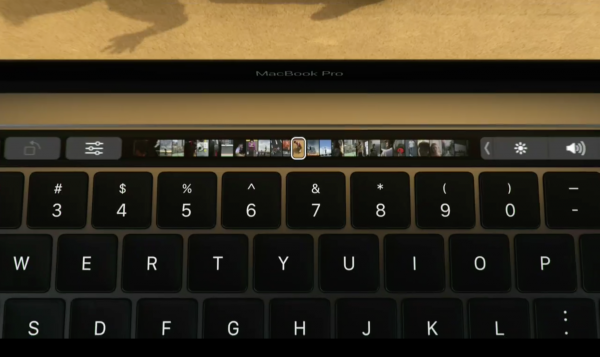
 
MacBook Pro's compelling new feature is the TouchBar.
 
MacBook
 
Speaking of that price, and some buyer confusion, is 12-inch MacBook, which also starts at $1,299, but is grossly underpowered compared to MBP 13: 1.1GHz Core m3 processor, 8GB RAM, 256GB SSD, and Intel Graphics 515. Before today's new laptop unveiling, small size, display quality, and Butterfly keyboard were capabilities that set apart MacBook. That's still true when comparing entry-prices, given the 2.7GHz MBP is vintage March 2015 and is 14 percent larger and consumes 20 percent more volume than its successor.
 
Jump up in price to $1,499 and 13-inch MBP looks lots more attractive than the high-end 12-inch MacBook selling for $100 more. MBP now has a next-generation Butterfly keyboard and super-bright screen, all packaged into a considerably smaller enclosure. Neither laptop has the TouchBar. MacBook config: 1.2GHz Core m5 chip, 8GB memory, 512GB SSD, and Intel Graphics 515.
 
MacBook is lighter at 2 pounds, versus 3 lbs for MBP 13 but bulk and breath matter more. Comparative sizes: .52 x 11.07 x 7.74 inches versus .59 x 11.97 x 8.36 inches, respectively. Size is no longer much of a differentiator.
 
MacBook Air
 
Comparing screens, at 13 inches, there also is MacBook Air, which costs considerably less. Starting price is $999 for 1.6GHz Core i5 processor, 8GB RAM, 128GB SSD, and Intel Graphics 6000. This is Apple's value laptop, if you don't mind non-Retina Display. Before today's MBP announcement, the Air filled a niche for thin-and-light 13-inch Apple laptops. No longer. Price is its only compelling attribute—and only below $1,000.
 
The costlier $1,199 config is a real loser compared to $1,299 MBP 13, which weighs about the same but is smaller, while offering many more benefits, such as better screen, keyboard, processor, and speakers. MBA measures .68 x 12.8 x 8.94 inches. Why not pay another 100 bucks and get so much more from MBP 13? Some confused buyers may not see the difference.
 
MacBook Pro 13 (right) is smaller and thinner than MacBook Air.
 
There are good reasons to ask why Apple offers either 12-inch MacBook or MBA 13. Apple knows. During today's keynote, Phil Schiller, who heads up marketing, explained the rational for the $1,299 Pro without TouchBar: "We think that a lot of potential MacBook Air customers will be very excited about this product, too". He then went on to basically make a sales pitch for MBP 13, by pointing out the size advantages—12 percent thinner and consuming 13 percent volume than the Air. He described MBP 13 as "smaller" and "better in every way".
 
MacBook Pro 15
 
MacBook Pro 15 stands apart from the other laptops such that most buyer's shouldn't be confused. The laptop is considerably larger than the others, packs dedicated graphics, and is considerably more expandable with respect to external devices, like monitors. There is price differentiator, too: $2,399 and $2,799 base models.
 
That said, the Pay-more Principle once again applies. Like MBP 13, yesterday the entry-level 15-inch MacBook Pro offered same core features as the higher-end models. No longer. For the same $1,999, buyer's get vintage May 2015 laptop with 2.2GHz Core i7 processor, 16GB RAM, 256GB SSD, and Iris Pro Graphics. The newest thang now costs $2,399, which arguably is 100 bucks less than what it replaced. Config: 2.6GHz Core i7 chip, 16GB RAM, 256GB SSD, and Radeon Pro 450 graphics. All the goodies come too: Butterfly Keyboard, TouchBar and TouchID, etc. A $2,799 model doubles the storage, notches up to 2.7GHz chip, and bumps up to 455 graphics.
 
MBP, like Microsoft Surface Book targets a creative professional with specific computing-task needs. The buyer pays more and gets more, and benefits for the capabilities are clearer. However, Apple laptops with small screeners and lower selling prices crowd together, presenting somewhat confusing benefits for the cost.
 
Imagine the savings that Apple could pass on to customers or higher margins to its bottom line by streamlining manufacturing to MacBook Pro 13 and 15—particularly at a time when PC sales are falling. During Q3, shipments fell for the eighth consecutive quarter, according to Gartner. The new MBP makes the Air obsolete and gives little compelling reason to buy 12-inch MacBook. They're both dead weight.
 
Keep Steve Jobs' ghost in the grave and simplify, Apple.
 
Image Credit: Creativa Images / Shutterstock
 
~ Joe Wilcox

5.29.2014

Upcoming Apple products are the best yet

SVP Eddy Cue promises that Apple's upcoming product pipeline is the best that he's seen during his 25 years with the company. 

 Image credit: Recode/Asa Mathat
Steve Jobs used to be the public face of Apple, but over the years, he began to give more executives stage time at the company's media events. One of those executives is Eddy Cue, Apple's senior vice president of Internet Software and Services -- basically, Apple's iTunes and iCloud products. He will also take charge of the Beats music subscription service when that acquisition closes later this year.
 
At the Code Conference yesterday, Cue and Beats co-founder Jimmy Iovine sat down with Walt Mossberg and Kara Swisher to discuss the future of Beats, the music industry, and Apple.
 
One of the most interesting statements came from Cue, who has been at Apple for 25 years and created Apple's online store in 1998, the iTunes Store in 2003, and then the App Store in 2008.
 
Surprising even the usually unflappable Walt Mossberg, Cue said that "we've got the best product pipeline that I've seen at Apple in my 25 years" with the company.
 
Mossberg noted that Eddy Cue's tenure covers Apple's rollouts of the iMac, iPod, iPhone, iPad, and MacBook Air -- "all widely recognized as pretty good products."
 
"I agree with you," Cue responded. But he reiterated his initial statement, saying "I believe... the products that are coming are great."
 
This isn't the first time that an Apple executive has made a bold proclamation about upcoming products. Earlier this year, CEO Tim Cook said the company was working on "really great stuff," and that it was planning to enter new product categories during 2014.
 
Among other things, Apple is rumored to be working on a wearable iWatch product that could have extensive health and medicinal tracking purposes. It has also been examining television for years and could be looking at launching a new Apple TV set-top box complete with an App Store.
 
For business customers, recent rumors have said the company will roll out its Touch ID fingerprint security system to all iOS products, including iPads, in its yearly refresh this fall. The Touch ID feature built into the iPhone 5s makes it easy for users to lock down their devices with little to no time lost, in comparison to entering passwords and PIN numbers. Though the feature currently only unlocks the phone itself and speeds app and music purchases through Apple's digital stores, it's easy to see how Touch ID could be expanded to unlock VPN and other secure protocols.
 
Expanding Touch ID would be key for business customers looking to maximize security on mobile devices. For this reason, it might be beneficial to hold off purchasing Apple equipment until September or October, when new models are expected to be introduced.
 
Separately, Cue was asked about the legacy that Steve Jobs left at Apple. He was slightly defensive at the idea that Apple needed to have a "reset" after he left, saying that Jobs had left the company in good hands.
 
"I think he'd be extremely proud of all the work that we're doing today and the products that we're building," Cue said. "I think we're continuing a lot of the legacy that he built."
 
Will you be waiting to buy new Apple gear until the annual fall refresh? Let us know in the comments below.
 
~ Jordan Golson


3.17.2013

Samsung Galaxy S 4 is better than you think

I was wrong about the Galaxy S 4. Last week, I asserted that brand sentiments had changed enough here -- given Samsung's rising popularity, Apple's image problems and high-profile iPhone-to-Android switchers -- that the South Korean electronics giant could launch the S 4 in the United States. Nope. Reception among bloggers, journalists and the Technorati is largely ice cold. Most first-takes I see call the handset a S 3s and no better than iPhone 5. Idiots.

If Steve Jobs was still alive and introduced a Star Trek-like universal translator for iPhone, there would be cries: "Apple does it again". Tell me what's not innovative about translation from, say, English to Chinese or Japanese to French. In real time. On your phone. Or text-to-speech and speech-to-text translation capabilities? Imagine Jobs demonstrating the "Eraser" feature by taking a photo and jokingly removing marketing executive Phil Schiller from the photo. He could demonstrate dual-mode video by initiating a call with Schiller that includes members of the audience, which I promise would roar and clap.

There's No Magic without a Magician

But Jobs is no longer with us. Apple and not Samsung created these amazing software/cloud services features. The South Korean company doesn't have a spokesman of Jobs' caliber, while cultural etiqutette demands the stilted JK Shin, speaking in a foreign language, deliver the key intro. If Samsung marketers had any sense, Galaxy S IV would have introduced itself, by Shin speaking in Korean and the phone translating. Now that would have had impact.

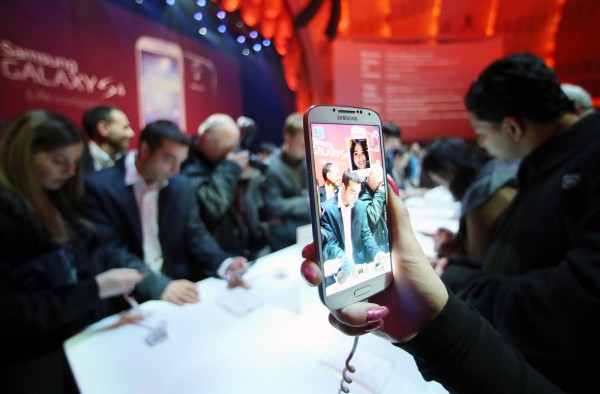
Still, Samsung did something amazingly right in S 4's unveiling (live stream archive), which is unsurprisingly lost on the bloggers and journalists writing about the smartphone. The launch focused on benefits, rather than features, which was the whole point of the different scenarios acted live from Radio City Music Hall.

Samsung rightly focused on what the phone can do for you rather than hardware features, something Apple often did under Jobs. Now iPhone launches focus too much on hardware specs and, doing so, look too much like competing devices. You don't feel the innovation, something Samsung tried to convey about Galaxy S IV.

Tech Elitists aren't Smarter than You

Based on the demos, Galaxy S IV is an amazing smartphone, jam-packed with lots of promising innovations -- mostly software and supporting cloud services. Conveying S 4's benefits, Samsung has three problems:

1. Presentation. For all the pomp and pace of the launch event -- hell, with actors and live orchestra performing -- S 4's special qualities didn't come through enough. Samsung needed what Apple used to have -- a masterful marketer standing on stage performing magic tricks, by making benefits come to life in the most aspirational way.

People buy products that make them feel good, about themselves or their future. During the best product launches Jobs made the audience feel like their lives would be better for purchasing the new thing and, occasionally if in the zone, got those watching feeling their lives would be worse should they not buy.

2. Pack mentality. Jobs' magical touch is widely-known as the "reality-distortion field". The afterglow of a keynote carried through in the stories written about new products -- luster lost without him, based on cooler reception to more recent Apple product announcements.

Make no mistake, there is peer influence among tech writers, which you can measure yourself by doing a few Google News searches. If the first stories praise, the ones that follow tend to have the same tone. Sadly, too many bloggers or journalists look to what others write and deliberately or subconsciously tailor tone accordingly. Haven't you noticed how many stories about tech this or that are similar?

Samsung's "Unpacked" event had no Jobs-like after-glow, even though innovation and benefits are oh-so Apple-like -- and even more. The first stories, coming from the U.S. market, where iPhone is the most popular smartphone, and widely-used by bloggers and reporters, set more of a negative tone. The majority that followed simply echoed criticisms. Too few writers broke from the mob, dared to stand apart, risked being wrong. They formed opinions based on that of others. Shameful. But commonplace.

3. Unrealistic expectations. Strangely, Samsung is like Apple in another way, although twisted. Rumor and hype set expectations high, and that's a problem Apple encountered many times, too. As such, many early blogs, news stories or product previews say the S 4 falls short, but based more on expectations set by rumors than any meaningful measure.

Unsurprisingly, too many writers fixate on form factor (like Galaxy S III but larger) and hardware specs, while ignoring the stunning software and services benefits. Tech writers obsessed about speeds and feeds often don't have the right priorities. They don't use products like you do. They're fussy and entitled. You're smarter than they are. You're who Samsung sells smartphones to. Tech elitists are gatekeepers to early information, because they have access and you don't.

"Life Companion" is a Development Philosophy

The people who get Galaxy S IV, really do, by understanding the pervasive design philosophy. "The S 4 demonstrates extensive innovation by Samsung", Ian Fogg, IHS Screen Digest principal analyst, opines. He focuses on something I also see, not just from this handset but its predecessor.

Two characteristics define Samsung's design philosophy, which sets it apart from every other handset manufacturer on the planet -- and that includes Apple: Context and humanness. I'll start with the latter, looking back to my analysis of Galaxy S III following its launch last year.

Recapping, the original iPhone stood apart from all other mobiles, not just smart ones, for its humanness. Touch, and its intimacy, and the way the handset responded to your proximity gave it a human quality. Suddenly the phone wasn't an inanimate object but more living thing. Apple extended humanness with each new model. Siri is best representation in iPhone 4S and 5.

The S3 extends this responsiveness, by, for example: the front camera detecting whether you are looking at the phone and keeps the screen lit. How many times has your display gone dark while reading a website or ebook? The phone also can automatically turn on, if recognizing your face. Another example: You're in the middle of texting someone and decide to call instead. Lifting the phone to your face places a call to the recipient.
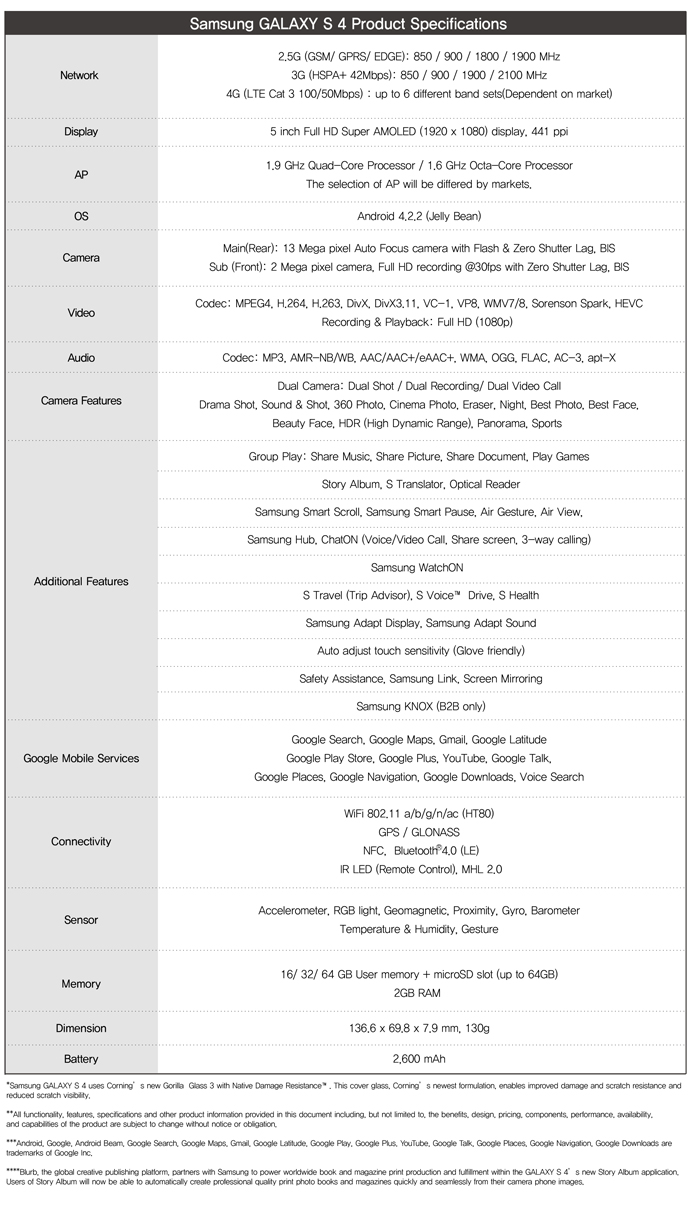
Those are last model's features and all designed to make the phone more responsive to you -- more human-like. Samsung carries the design philosophy forward. Galaxy S 4 packs eight different sensors and uses them to make the phone highly responsive. Wearing gloves or have chocolate on your hands? Wave instead of touch. Watching a movie and turn your eyes away? Playback stops until you look at the screen again. But this responsiveness is much more.

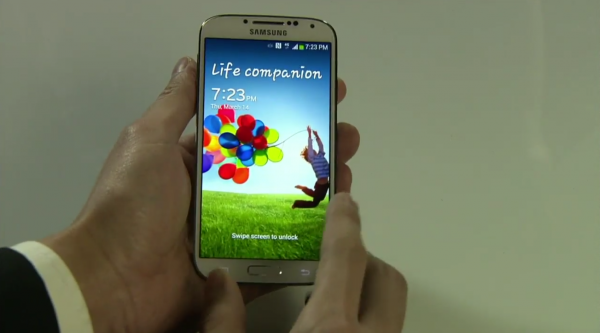
"The reason for Samsung's choice of Galaxy S 4 tagline, 'Life companion' is because the word 'mobile' in mobile phone is highly misleading", Fogg explains. "Smartphones are most importantly about personal experiences, not mobile ones. Many of the new features that Samsung is adding into the S 4 are about the immediate vicinity and even inside the home, and not focused on really mobile life". Stated differently: The phone is highly contextual.

I have repeatedly asserted that Jobs was wrong to call this the post-PC era. We live in the contextual cloud computing era, where software and connected services matter more than the devices. Samsung's emphasis on "personal experiences" is dead-on right. The South Korean vendor is surprisingly focused on software and services, which I wouldn't have expected from a hardware manufacturer. Galaxy S IV adapts based on context.

Want to share the party with a distant friend? Use both cameras for the video call. Want to check your messages while driving? Let the S 4 read them to you. Snapped a great picture of your kids at the park and some guy in a trench coat in the background makes a face? Remove him immediately. You're with school friends at the park and want to party but have no speakers? Connect each smartphone and use them as a single 5.1-speaker system.

Context is about adaptability. At home, you want to play music on your fancy speakers. At the park, when you don't have them, the multiple-S 4 speaker is good enough -- in that context. At the office, you might read and respond to your messages on the PC. In the car, your hands need to be on the wheel, so you have the phone read them.

Samsung's software and services design approach is all about making the smartphone more human, more responsive, more contextually relevant and more like a personal assistant.

Most every story written about Galaxy S IV so ignores these key benefits, which can change people's lives. I'm appalled by the writers complaining about the lack of innovation here. Many of the most-obvious benefits are like science fiction, which ironically is what most stories slamming the S 4 are: fiction.

~ Joe Wilcox