Takeaway: If you’re thinking about buying a Galaxy S III, be forewarned. This phone offers some incredibly cool features — but you’ll want to factor in a few gotchas.
When it was time to upgrade from my Galaxy Nexus (in part because my husband was anxious to get my hand-me-down), the choice seemed obvious. I liked the Nexus a lot, but there were a couple of things I didn’t like about it. One biggie was the lack of a microSD card slot for expanding storage. I also longed for even more screen real estate than I got with the Nexus’s 4.65 inch screen (which includes the onscreen buttons). Finally, the camera quality on the Nexus, although much better than many phones, wasn’t up to what I had come to expect from my previous (HTC) Androids.

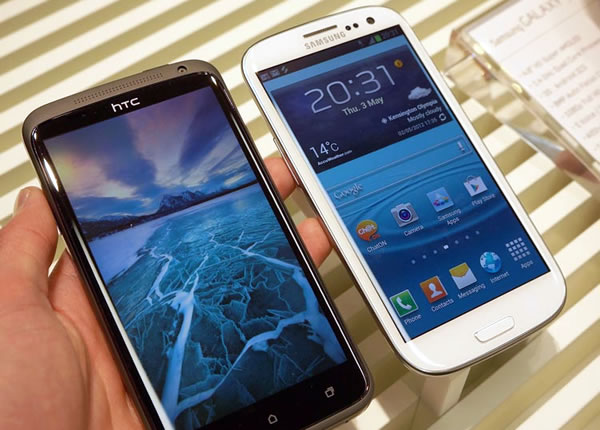
The Galaxy S III seemed to fulfill my wish list, and more. With a gorgeous 4.8 inch Super AMOLED screen (and the buttons beneath the display so they don’t take up any of that space), microSD support, and a reportedly excellent camera, it was my dream come true. Or was it? I got my S III more than a week ago, and I’ve played with it enough to discover both some pleasant surprises and a few gotchas. If you’re thinking about getting an S III, and especially if you’re trading up from a Nexus, here are a few things you might want to know to help you make the decision.
The good
First, let’s look at a few things you might not know about the S III that will come as pleasant surprises.
1: MicroSD on steroids
You probably know that the S III, unlike the Nexus, has a microSD slot so you can add storage space. What you might not know is that it isn’t limited to the 32 GB maximum card capacity like most phones. Not only does it support microSD and SDHC, it also supports SDXC, which have a theoretical capacity of up to 2 TB. Transfer speed is also faster.
The Galaxy S III specs say it supports up to a 64 GB card, but it’s unclear whether that’s because that is currently the largest size available or there is a software limitation. In practical usage right now, you can add a whopping 64 GB of storage to the S III for around $55.
2: Motion controls
The Nintendo Wii popularized the concept of interacting with an interface via motion on a gaming device, and Microsoft’s Kinect took it to the next level and expanded it from the game console to the PC. Now Samsung has brought motion control to the phone, in a big way.
There’s a whole set of gestures you can use with the S III that you won’t find on the Nexus or most other phones. You can double tap the top of the device to go to the beginning of a list. You can tilt the phone forward or back to zoom in or out of a picture or Web page. Simply by placing the phone to your ear, you can call the currently displayed contact. You can shake the phone to update (refresh a Web page, rescan for Wi-Fi devices, etc.). You can pan (move the phone left or right or up or down) to move around a large onscreen image. You can briefly pause a video or mute sound by placing your hand over the screen.
If you
don’t want your phone doing things because of the way you hold it, don’t worry. You have to activate the motion feature in Settings before you can use these and other built-in gestures.
3: Pop-up Play
This was another pleasant surprise. It works like the picture-in-a-picture feature on TVs. A limitation of smartphone screens has been the inability to display more than one app at a time. With the tiny screens of the past, it just wasn’t practical. With a screen this big, it starts to make sense. The Galaxy S III doesn’t go as far as I’d like in this department (side-by-side display of any running apps would be awesome) but the Pop-up Play feature does let you play an HD video in a small window while you use another app (email, Web, etc.) on your phone.
4: Camera bonuses
I care about the camera quality in my smartphone, because I take a lot of impromptu photos. Sure, if I know I’m going to be taking pictures, I’ll load up one of the high-end Nikon DSLRs — but often, I’m out and about with no intention of playing photographer and I want a phone cam that can give me a decent shot of that once-in-a-lifetime photo op.
The Nexus was a big step forward, with its quick shutter, but the pictures weren’t always as sharp as I wanted. Part of that was “operator error” — it’s hard to hold a little phone steady as you tap the onscreen button. That’s why I prefer hardware buttons. Well, the S III doesn’t have that, but it does have the next best thing. You can delay the shot after you tap, giving you time to steady the phone/camera, or you can use S Voice to take the picture (just say “cheese”), so you don’t even have to tap at all.
There’s more to it than stability, though. The S III provides an 8 MP camera in contrast to the Nexus’s 5 MP, and noise levels are lower, too. Photos simply look better, especially those taken in low light. And videos are sharper and more fluid.
There are some interesting shooting modes. In addition to the (now fairly standard) smile detection and panorama, there’s a “beauty” mode that automatically smoothes facial features, a “cartoon” mode (that I’ve not found very useful) and “buddy photo share” that will use facial recognition to match up people in your photos to the pictures of your contacts and automatically send people pictures of themselves. A nice bonus is that you can edit the shortcuts to make it more convenient to get to the controls you use often.
Another photo feature might not matter a lot to the average phone user, but for those of us who write about phones, or to a lesser extent IT pros who support phones and may need to remotely demonstrate to a user how to configure something, the ability to take screenshots of the phone’s display is important.
Once upon a time, getting a screenshot on an Android device was surprisingly difficult. Some phones had to be rooted before you could install screen capture software. Some of us even resorted to taking pictures of the screen with a camera (which presented the challenge of dealing with the glare on the glass).
Samsung made it a lot easier with the Nexus: You could do it by pressing and holding the volume down button and the power button simultaneously. You had to do it just right, though, or you might end up turning the phone off. With the S III, taking a screenshot is as simple as swiping your palm across the screen. Amazing. If you want to illustrate how Android and its apps work, this is the phone for you.
5: Great phone
A problem with some smartphones is that they’re heavier on the “smart” than on the “phone.” That’s okay if you want to use your device primarily as a miniature computer, but if you plan to talk on it a lot (or even a little), it’s nice if it also functions as a better-than-average phone.
The S III does. Call quality is crystal clear, and you can customize it with personalized equalization settings. This feature actually tests your ears with different frequencies and tones, measuring how well each ear hears them, and creates an equalization curve for each ear.
But that’s not all. The whole calling experience has been improved. Lots of phones let you set custom ringtones for different contacts, but that doesn’t help if you have the ringer turned off. The S III lets you set customized vibrations for different contacts. How cool is that? You can also answer (or reject) a call by voice command, and you can set up a rejection list to automatically reject those numbers you never want to hear from.
If you leave the phone app to go back to the home screen to check mail, look up a contact, or whatever, the status bar turns green so you won’t forget you’re in a call. Can’t hear the caller? There’s an Extra Volume button on the screen during a call, that lets you increase it beyond the maximum you get from pressing the up/down volume hardware key. There’s even a key to let you create a memo from within a call.
The not-so-good
These are some cool features, and there are more (such as the Siri-like S Voice application that goes way beyond Google’s voice search) But the S III still isn’t quite the perfect phone. Here are some of the not-so-good things I’ve encountered in making the transition from the Nexus.
6: Speaking of that microSD card
It’s great to have the extra storage space of a massive 64 GB card, but what exactly did you want to do with that space? If you only wanted to put your pictures, videos, music, etc., on it, no problem. But if you thought you’d be installing apps on it, think again. The S III doesn’t support moving apps to the external microSD card, as you could do with most previous Android phones.
It
can be done — by rooting the phone and using a third-party app, such as links2sd or Directory Bind. But many folks don’t want to root their phones because it voids the warranty. The 16 GB version of the S III has about 11 GB available on its internal storage disk (sd). That’s probably enough app space for most people, but some are going to run out of room.
7: No USB mass storage mode
If you’re upgrading from an older (pre-ICS) Android phone or you got your start with Windows Mobile, you’re probably used to being able to plug your phone into a PC via USB and seeing it pop up in Windows Explorer as a hard drive. Unfortunately, the UMS (Universal Mass Storage) mode that enabled that isn’t supported in the Galaxy S III.
Apparently, you’re supposed to use the Samsung Kies app instead. That’s going to make a lot of people unhappy; it requires installing software on your computer (like syncing an iPhone via iTunes or a Windows Phone 7 via Zune — ugh), and it’s slow as molasses. Sure, it has an “easier” interface that those moving from an iPhone might like. But many Android users prefer power and more control over “simple.”
The alternative to installing Kies is to use MTP (Media Transfer Protocol) or PTP (Picture Transfer Protocol) mode. This has advantages (you can still use the phone while it’s connected to the computer), but it’s not as easy to use. If you’re willing to root your phone, you can use an app like Easy UMS to enable USB Mass Storage. It would have been nice if the S III just supported both UMS and MTP/PTP.
8: S Voice tries hard, but…
Samsung’s answer to Apple’s Siri suffers from some of the same problems I’ve heard iPhone users complain about. It works fine for simple things (and I do love that ability to use voice to trip the camera shutter), but it gets easily confused if you ask it to do something complex. Making a call by voice takes me three times as long as doing it the old fashioned way, since you go through the “found more than one match” business. Trying to search the Web with it proved to be a bit of a pain. And it seems to get frustrated with you when you don’t like its results and keep trying — it froze up on me a few times and I had to kill the process.
Voice recognition is getting better, but in my opinion it’s not ready for prime time yet for most uses. I’m sure my Texas accent doesn’t help. If you’re getting the phone primarily for this voice feature, prepare to be disappointed (or maybe not, if you have a perfect Midwestern non-accent that it can understand).
9: Missing photo options
Even though there’s a lot to love about the S III’s camera, there are also some things I miss about my Nexus camera. Mostly, I miss the great editing tools that were built in. You could adjust the brightness and contrast, add a vignette, and achieve all sorts of additional effects right there in the camera.
With the S III, unless I’m just not finding it (in which case they should make it a lot more obvious), the only editing options are to crop and rotate. Sure, I can download a photo editing app, but that involves extra steps. I really liked the simple but comprehensive set of editing tools in the Nexus. This isn’t a deal breaker, but it’s something that’s good to know when you’re considering the switch.
10: Wi-Fi connectivity problem
Overall, despite the small complaints above, I was immediately impressed with my Galaxy S III and loved using it — except for one very big problem. It was blazing fast and reliable on 4G, but I soon noticed that Wi-Fi was just plain wacky. It would load a page quickly, and then the next page would take forever and/or time out completely. S Voice would give me “Network error. Try again.” messages. The Facebook app would give me “Connection Lost” errors. Often.
My old Galaxy Nexus (now my husband’s) sitting right beside it, connected to the same wireless network, had no such problems. I started researching and found out this is a fairly common problem with the S III. There is a fix that works for some, which involves going into service mode and turning off power saving in the Wi-Fi settings. It doesn’t work for everybody, though, and if you discover the problem during the return period, I’d recommend taking the phone back to the carrier and telling them it has a defective Wi-Fi radio. Although a number of people are reporting this problem, it seems to be a small percentage, so your chances of getting another one with the problem are low. Still, the possibility that you’ll encounter this is something to be aware of if you’re thinking about getting an S III.
~ Debra Littlejohn Shinder