Cisco Learning Network Store Promotions Page
Showing posts with label Macintosh. Show all posts

1.27.2015

Apple preparing fix for Thunderstrike malware in upcoming OS X 10.10.2 release

A powerful low-level malware vulnerability in Macs will soon be patched in an upcoming OS release. 

 
It's long been said, both by Apple and independent security experts, that Apple's computers are more secure than those running Windows. That does not mean, however, that Macs are invulnerable to malware threats.
 
One particularly terrifying example is called Thunderstrike. It allows a malicious actor to replace the firmware in Macs with something much more nefarious. The firmware controls extremely low-level functions of the computer, everything that happens from the moment the power button is pressed.
 
On a Macintosh, it's normally completely invisible to the user -- part of Apple's quest to keep things simple. And, as long as everything works, it's not a big deal.
 
Thunderstrike allows someone to use a Thunderbolt device, perhaps something as simple as a Thunderbolt-to-HDMI dongle, to reboot the computer and replace its firmware with custom designed backdoors. It could, in theory, completely bypass any existing protections on the computer. It would also survive reformatting of the hard drive and reinstallation of the OS X operating system, because it would be installed at the very lowest levels of the computer. Ars Technica has much more on exactly how it works.
 
It only requires brief physical access to the machine, say from someone posing as a hotel maid or a customs agent inspecting a computer at a border crossing, to plug in the compromised Thunderbolt attachment and restart the computer.
 
Without a fix from Apple, the only viable protection was to either permanently disable Thunderbolt entirely (not easy, since you'd need to do bad things to the main logic board) or keep ironclad control of your Mac at all times. Those really aren't the greatest options.
 
Apple has already rolled out temporary fixes to the Retina 5K iMac and new Mac Mini, which was introduced late last year. According to iMore, a more permanent solution is coming in OS X Yosemite 10.10.2, and it's expected to be released soon.
"To secure against Thunderstrike, Apple had to change the code to not only prevent the Mac's boot ROM from being replaced, but also to prevent it from being rolled back to a state where the attack would be possible again. According to people with access to the latest beta of OS X 10.10.2 who are familiar with Thunderstrike and how it works, that's exactly the deep, layered process that's been completed."
Luckily, no malicious versions of Thunderstrike have been discovered in the wild, but given the disclosures of US intelligence activities that have come from Edward Snowden, it wouldn't be surprising for the NSA to be examining the vulnerability for potential intelligence uses.
 
It's a good reminder that just because we use Apple products, that doesn't mean we're immune from security concerns -- and it's always a good idea to make sure you're running the latest versions of Apple's operating systems on all your devices.
 
How do you protect your Apple products from potential security vulnerabilities? Let us know in the comments below.
 
~ Jordan Golson 

2.27.2014

Apple issues fix for glaring security flaw on Mac computers

An Apple logo is seen at an Apple store in Pudong, the financial district of Shanghai February 29, 2012.
 
(Reuters) - Apple Inc has issued fixes for a security flaw in its Macintosh computers that allows hackers to intercept data such as email, patching a major and embarrassing glitch that came to light several days ago.
 
The security update for users of Apple's OS X computer operating software follows a fix issued for iPhones last week, meaning all Apple device users now have access to the patch.
 
The flaw allowed attackers with access to a mobile user's network, such as a shared unsecured wireless service offered by a cafe, to see or alter exchanges between the user and protected sites such as Google Inc's Gmail or Facebook.
 
Governments with access to telecom carrier data could do the same, experts said.
 
On Tuesday, Apple said in a statement that the Mac security update also improved features such as its FaceTime videoconferencing service and email.

The flaw appeared related to the way in which well-understood protocols were implemented, and how Apple's software recognizes digital certificates used by websites to establish encrypted connections.
 
Researchers have said the bug could have been present for months. Apple has not said when or how it learned about the flaw in the way iOS handles sessions, in what are known as secure sockets layer (SSL) or transport layer security. Nor has it said whether the flaw was being exploited.
 
A spokesman for the company declined to comment on Tuesday.
 
~ Edwin Chan       

8.13.2013

Hackintosh -- a meager man finally gets his Mac

I’ve never owned a Mac before, but I’ve secretly wanted one since the release of OS X. The first time I tried the operating system was at CompUSA where I was a salesman. I regularly sold iMacs, iBooks, PowerBooks, Mac Minis and eMacs. The people that came to the Apple section of the store always seemed very odd -- they dressed weird and were loyal to Macintosh as if it were a religion. However, as odd as the people were, they were also very computer literate -- the same could not be said for the average eMachines or Compaq buyer.
 
Sadly, like many people, Apple hardware has always been too expensive for me -- I live meagerly. And so, I had to settle for Windows. There was nothing bad about Windows per se, but it lacked the cool-factor that the Apple computers had. Plus, I like to build computers and upgrade them. Something like a Mac Mini was affordable but not upgradeable -- a major turnoff.
 
Over the years, I slowly transitioned to using Linux in a dual-boot with Windows. It felt more like Mac since OS X and Linux distributions are both Unix-like operating systems. Linux allowed me to continue building my computers while taking advantage of free operating systems. While I learned to love Fedora and Gnome 3, it just wasn’t the super-cool OS X that I pined for.
 
Earlier this year, I decided to try Windows 8 despite the poor press and reviews it received. I surprised myself and actually liked it! I decided to make it my daily-driver. In fact, I liked it so much that I declared I was leaving Linux for it. However, truth be told, I still kept Linux on a partition for dual-boot purposes.
 
Unfortunately, my Windows 8 love affair was short lived. While the Modern UI and Start screen were great for casual home use, they really got in my way when trying to do actual work. I even installed Windows 8.1 to see if it could help but it couldn’t -- Windows 8 is just a productivity killer.
 
I decided I wanted a Mac. However, I had built a very nice Ivy-Bridge desktop last year -- I simply could not buy another computer when I had a perfectly good one already. I considered selling it but desktops are very hard to sell online due to the large size. I decided to head into the deepest and darkest sections of the Internet to investigate building a Hackintosh.
 
A Hackintosh is a run-of-the-mill PC that is made to run Apple’s Mac OS X. This is where things get a bit tricky from a legal standpoint. Technically, the EULA for OS X prohibits the operating system from being installed on non-Apple hardware. So, are Hackintosh computers illegal? Yes and no. In my case, I have an Apple Wired keyboard plugged into my desktop -- this is Apple hardware. In my opinion, I am fine.
 
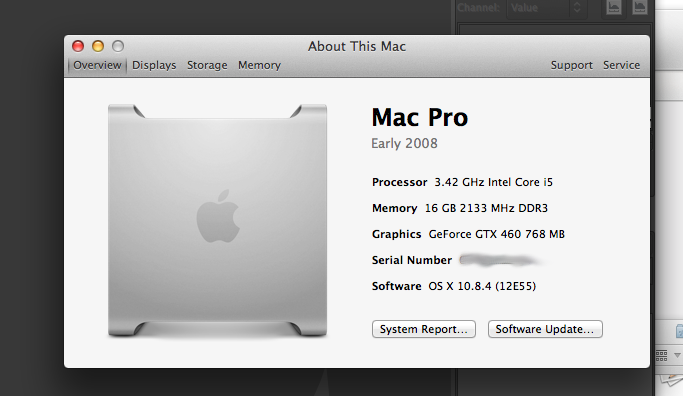
After much research, I determined that my desktop was very compatible. Below are some of the specs:
  • RAM -- G.SKILL Ripjaws Z Series 16GB (4 x 4GB) 240-Pin DDR3 SDRAM DDR3 2133
  • Motherboard -- ASUS P8Z77-V LE LGA 1155 Intel Z77
  • CPU -- Intel Core i5-3570K Ivy Bridge 3.4GHz Quad-Core
  • SSD -- Corsair Force Series GT CSSD-F90GBGT-BK 2.5" 90GB
  • HDD -- Hitachi GST Deskstar 7K3000 HDS723020BLA642 2TB 7200 RPM
  • Video Card -- Asus ENGTX460 DirectCU TOP 768MB
  • Power Supply -- OCZ ModXStream Pro 700W Modular
  • Bluetooth -- IOGEAR GBU521W6 Bluetooth 4.0 USB Micro Adapter
  • Soundcard -- FiiO E10 USB DAC
  • Wi-Fi -- Intel Centrino Advanced-N 6205
Sadly, in my research, I found the Intel Wi-Fi card (which I love) was not compatible. And so, I bought a TP-LINK TL-WDN4800 Dual Band Wireless N900 PCI Express Adapter. This card is very popular with the Hackintosh community as it works out of the box without any hacks.
 
Building The Beast
 
I obtained OS X Mountain Lion and made a bootable drive for the installation -- using a SanDisk Extreme 16GB USB 3.0 flash drive. Unfortunately, for legal reasons, I cannot tell you how to do this step. However, you should be able to figure it out if you look hard enough.
 
With the flash drive plugged in, I started my computer and entered the BIOS. I selected the flash drive as the boot drive and it began to boot. I was presented with the Clover Bootloader, which passed me through to the OS X installation. I was very impressed and surprised that it actually worked -- I expected problems and headaches.
 
Once in the OS X installation, I went to the Mac Disk Utility and formatted the SSD with Mac OS X file format. This deleted both Windows 8 and Fedora -- there was no turning back! I then selected the SSD as the installation destination.
 
The installation went very smoothly. I set up my profile, answered some questions and was off to the races. Once on the desktop I had one last thing to do -- install Multibeast. This is a special utility that will install the necessary drivers for your hardware plus the Chimera Bootloader. This bootloader is necessary if you want to boot directly from your hard drive or SSD. Without it, you would need to boot from a special CD or flash drive.
 
It's Alive!
 
Once Multibeast was complete, I rebooted my computer and selected the SSD as the new default boot device. I was presented with a very cute boot screen -- a picture of a lion cub. After about 30 seconds I was presented with the OS X login screen. After logging in, I found that everything worked -- App store, Messages, Facetime, iTunes…everything. I was overwhelmed with joy -- I finally had my Mac!
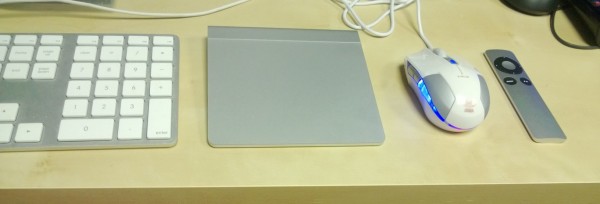
I quickly and excitedly drove to Best Buy and bought an Apple Magic Trackpad and Apple Remote to complement my Apple wired keyboard. I got both of them to work with ease. The trackpad paired with BlueTooth flawlessly and worked with all multi-touch gestures. The remote, which is infrared, worked with an old Windows Media Center USB receiver once I installed a free program called Mira.
 
While this entire project was very smooth, I did encounter one bug. After about an hour of use, my computer would just freeze requiring a reboot. I tracked the issue to a bug with NVidia Fermi-based graphics cards. The Hackintosh community already had a fix, which I installed -- no more freezes.
 
Now that my 10.8.4 Hackintosh was rock-solid and working flawlessly, I decided to seek some software. I installed Chrome, Gimp, Adium, Transmission, VLC and doubleTwist from the Internet. As a Linux-user (and lover) I was particularly happy to use Gimp for my photo editing. While LibreOffice is available for OS X, I opted to buy Microsoft’s Mac Office 2011 -- productivity and compatibility is paramount.

Overall, I am extremely happy with my new self-built Mac. It is a dream come true and very fun to use. If you choose to criticize me for bypassing Apple’s protection, I respect that. However, I do plan on making my next computer an actual Mac (probably a Macbook Air) -- Apple will get my money eventually.
 
This time, I am not declaring that I am leaving any OS behind, I will continue to use Windows and Linux. I recently ordered another SSD, which I will use for those operating systems. In other words, I will have a tri-boot computer with OS X Mountain Lion, Windows 8.1 and Fedora 19 -- the best of all worlds.
 
If you are interested in building your own Hackintosh, I suggest you start by going here.
 
~ Brian Fagioli


2.20.2013

Exclusive: Apple, Macs hit by hackers who targeted Facebook

(Reuters) - Apple Inc was recently attacked by hackers who infected Macintosh computers of some employees, the company said Tuesday in an unprecedented disclosure describing the widest known cyber attacks targeting Apple computers used by corporations.

Unknown hackers infected the computers of some Apple workers when they visited a website for software developers that had been infected with malicious software. The malware had been designed to attack Mac computers.

The same software, which infected Macs by exploiting a flaw in a version of Oracle Corp's Java software used as a plug-in on Web browsers, was used to launch attacks against Facebook, which the social network disclosed on Friday.

The malware was also employed in attacks against Mac computers used by "other companies," Apple said, without elaborating on the scale of the assault.

Twitter, which disclosed that it had been breached February 1 and that hackers might gave accessed some information on about 250,000 users, was hit in the same campaign, according to a person close to the investigation.

Another person briefed on the case said that hundreds of companies, including defense contractors, had been infected with the same malicious software. Though this person said that the malware could have originated from China, there was no proof.

"This is a new campaign. It's not like the other ones you read about where everyone can tell it's China," the first person said.

Investigations into the breaches are ongoing. It was not immediately clear when the attacks had begun, the extent to which the hackers had succeeded in stealing data from targeted systems, or whether all infected machines have been identified.

The malware was distributed at least in part through a site aimed at iPhone developers, which might still be infecting visitors who haven't disabled Java in their browser, the person close to the case said. There is a version that infects computers running Microsoft Windows as well.

Security firm F-Secure wrote that the attackers might have been trying to get access to the code for apps on smartphones, seeking a way to infect millions of end-users. It urged developers to check their source code for unintended changes.

Apple disclosed the breach as tensions are heating up over U.S. allegations that the Chinese military engages in cyber espionage on U.S. companies.

U.S. cyber security firm Mandiant reported over the weekend that it has uncovered evidence that the Chinese military is behind a slew of cyber attacks on U.S. businesses. The White House said it has repeatedly raised concerns about Chinese cyber theft with Beijing.

The breaches described by Apple mark the highest-profile cyber attacks to date on businesses running Mac computers. Hackers have traditionally focused on attacking machines running the Windows operating system, though they have gradually turned their attention to Apple products over the past couple of years as the company gained market share over Microsoft Corp.

"This is the first really big attack on Macs," said the source, who declined to be identified because the person was not authorized to discuss the matter publicly. "Apple has more on its hands than the attack on itself."

Charlie Miller, a prominent expert on Apple security who is co-author of the Mac Hacker's Handbook, said the attacks show that criminal hackers are investing more time studying the Mac OS X operating system so they can attack Apple computers.

For example, he noted, hackers recently figured out a fairly sophisticated way to attack Macs by exploiting a flaw in Adobe Systems Inc's Flash software.

"The only thing that was making it safe before is that nobody bothered to attack it. That goes away if somebody bothers to attack it," Miller said.

NATIONAL SECURITY

Cyber security attacks have been on the rise. In last week's State of the Union address, U.S. President Barack Obama issued an executive order seeking better protection of the country's critical infrastructure from cyber attacks.

White House spokesman Jay Carney told reporters on Tuesday that the Obama administration has repeatedly taken up its concerns about Chinese cyber theft with Beijing, including the country's military. There was no indication as to whether the group described by Mandiant was involved in the attacks described by Apple and Facebook.

An Apple spokesman declined to specify how many companies had been breached in the campaign targeting Macs, saying he could not elaborate further on the statement it provided.

"Apple has identified malware which infected a limited number of Mac systems through a vulnerability in the Java plug-in for browsers. The malware was employed in an attack against Apple and other companies, and was spread through a website for software developers," the statement said.

"We identified a small number of systems within Apple that were infected and isolated them from our network. There is no evidence that any data left Apple," it continued.

The statement said Apple was working closely with law enforcement to find the culprits, but the spokesman would not elaborate. The Federal Bureau of Investigation declined to comment.

Apple said it plans to release a piece of software on Tuesday that customers can use to identify and repair Macs infected with the malware used in the attacks.

~ Jim Finkle and Joseph Menn