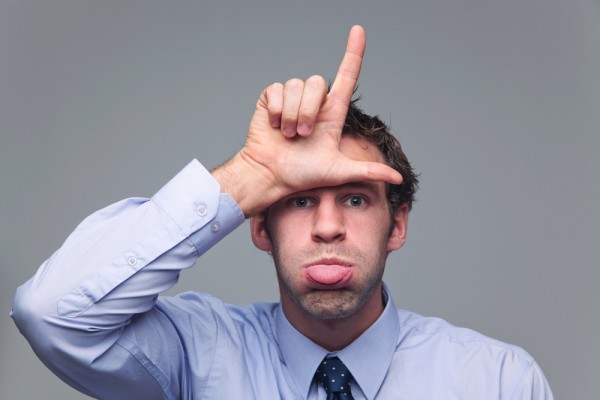
Apple has finally conceded that big screens are better, as its new
iPhones offer 4.7-inch and 5.5-inch displays. It has also finally
conceded that a mobile operating system is better when it's more open,
as iOS 8 supports third-party keyboards and inter-app communication.
It's almost like Apple is saying that Steve Jobs was wrong while rival
Android manufacturers and Google were right all along. Oh, the horror.
How will Apple fanbois be able to explain this?
But, even as Apple is doing all these things, that some of us have
already been enjoying for too many years to count, iPhone 6 and iPhone 6
Plus are still outclassed by rival Android flagships. In fact, the new
iPhones are not much different than Samsung Galaxy S3 or Galaxy Note 3,
and, as you may know, neither of the two is the latest incarnation in
their respective series. Ouch!
Before seeing the new iPhones, I imagined that Apple would reveal
something truly special this year (no, Watch isn't it either), that
would make buying an Android flagship a silly idea. Apple could have
stunned us with high-resolution displays and cameras that at least rival
what the Android fold can offer, designs better optimized for big
screens, much better battery life, more storage in the entry-level
models and, you know, other features which are to be expected out of a
high-end device unveiled in 2014, like being able to see more than one
app on the screen, access to internal storage for apps and, who knows,
maybe even something a bit more modern than a grid of icons on every
single homescreen. As it turned out, old habits die hard.
Of the two new iPhones, only iPhone 6 Plus manages to impress,
and that's by iPhone standards. The normal iPhone 6 is outdated before
it even hits store shelves. Compared to it, iPhone 6 Plus offers a much
more impressive resolution (1,080 by 1,920), better camera (because of
optical stabilization) and better battery life (no doubt because of a
bigger battery), which are features many wanted to see introduced in
iPhone 6 too. Tough luck. Maybe next time. Hey, Apple has to make money
somehow, right? Why not save modern features for next year?
On the other side of the fence, what the Android fold offers is so much
better. First of all, there are so many good options to choose from. If
you want a great design, the best in its class, look no further than
HTC's One (M8). Heck, the new iPhone design is reminiscent of it, so why
not get the real deal, which also packs a bigger, much-higher
resolution screen than iPhone 6?
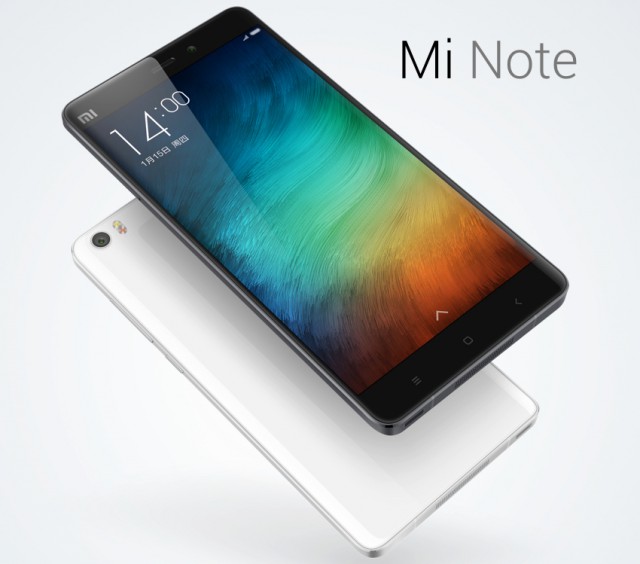
Even China's Xiaomi with its Mi 4 is no slouch; same goes for the
upcoming Galaxy Alpha. There's something for everyone, even for those
who believe that having a metal-made smartphone is not a priority --
that would be all of Samsung's customers, who far exceed iPhone users.
Polycarbonate (or, plastic, if you will) has its perks; one of its
advantages is its resilience, which is superior to metal. If you drop or
scuff your phone, a plastic shell will look better over time than a
metal one.
If you want a really big display in a manageable body, then LG's G3 is
the first device to consider. I owned one for a brief period of time,
and was impressed by how small it feels in the hand considering its
5.5-inch panel, which is as large as iPhone 6 Plus' screen (except with a
much higher 1,440 by 2,560 resolution, compared to the latter's 1,080
by 1,920).
Just take a look at these numbers -- 146.3 x 74.6 x 8.9 mm and 158.1 x
77.8 x 7.1 mm -- and guess which ones are for iPhone 6 Plus. I'll give
you a hint -- it's sure not the first set, as that would be G3. G3 is
also much lighter at 149 grams, compared to iPhone 6 Plus' 172 grams. In
all fairness, Apple's use of the word "Plus" is telling. But, it's not
fair to pick on iPhone 6 Plus for being fluffy anyway. I should know
better.
If you want a great camera, then Samsung's Galaxy S5 with its 16 MP
shooter, which uses phase-detection, will take some great pictures, with
a lot -- and I mean a lot -- of nice detail. I am impressed by how good
they look, considering it was a smartphone which took them. On the
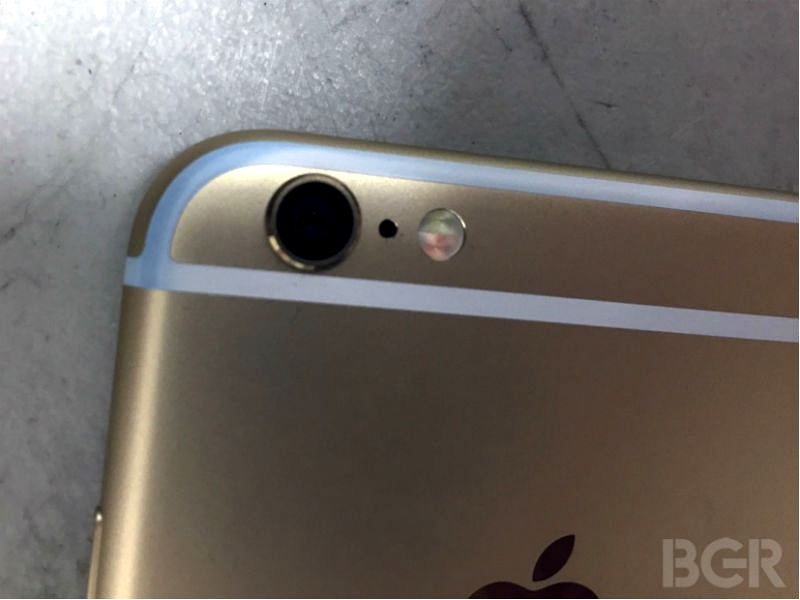
other hand, the 8 MP snapper on the back of the new iPhones will fail to
capture as much detail. Does it matter? Yes, yes it does, because the
advancements in display technology are giving us higher and higher
resolutions. In fact, today's 4K displays have more pixels than the new
iPhones' camera.
If you want a great camera, then Samsung's Galaxy S5 with its 16 MP
shooter, which uses phase-detection, will take some great pictures, with
a lot -- and I mean a lot -- of nice detail. I am impressed by how good
they look, considering it was a smartphone which took them. On the
other hand, the 8 MP snapper on the back of the new iPhones will fail to
capture as much detail. Does it matter? Yes, yes it does, because the
advancements in display technology are giving us higher and higher
resolutions. In fact, today's 4K displays have more pixels than the new
iPhones' camera.
Ever wondered why the new iPhones can't record 4K video? Well, that's
because the sensor is too darn small for it. Not so with G3 or Galaxy
S5, both of which can record 4K video. Heck, even the year-old Galaxy
Note 3 can record 4K video. Optical image stabilization? Well, it's an
old trick by now. Android smartphones have had it for at least a year,
with Google's Nexus 5, One (M8), G3 and Galaxy Note 4 being prime
examples of OIS-equipped Android smartphones.
I suppose that at this point I should not even mention the elephant in
the room -- Nokia Lumia 1020 -- which will humiliate iPhone 6 and iPhone
6 Plus without breaking a sweat when it comes to imaging quality. Don't
get me wrong, it's a Windows Phone, and we are not talking about
Windows Phones here.
But, if you want a great phablet? Well, then the Android fold is once
again happy to oblige. The upcoming Galaxy Note 4 appears to be the most
competent device in its class; its specs are far superior to any of the
new iPhones, and its stylus adds real value for those who treat their
phablet as a small PC. It can do proper multitasking, as more than one
app can be displayed on the screen, has very powerful internals, a
monster battery and, on top of this, a really nice external design.
Should I also mention that it offers expandable storage and a removable
battery, two features which no iPhone has ever had?
Someone will surely point out that the new iPhones finally have NFC and
it's as huge as the Second Coming. Well, so what if they have NFC? Other
than Apple Pay, which is useless right now for everyone living outside
of the US (that is most of the world's population), there is nothing
else that Apple wants to use this newfound hardware for. Android
flagships at least give users the ability to transfer files, which,
believe it or not, is still kinda cool and useful at times. Oh, wait,
Apple doesn't think that's a thing yet, right? Darn! Let's wait a few
more years, maybe it will happen.
And, despite the improvements made to iOS 8, Android is still the more
advanced operating system of the two. Sure, iOS 8 supports third-party
keyboards and inter-app communication, but Android has had that and more
advanced notifications, widgets, the option to change default apps
(which works for built-in apps too) and the launcher, access to internal
storage (which means it's very easy to save stuff for offline viewing),
seamless Google Now integration, file managers and much, much more. It
will take iOS years to catch up. And we have yet to see what Android L
brings to the table.
Don't get me wrong. The new iPhones are not bad, but they are not great
either. They're the jack of all trades, master of none. Apple should
look across the fence to see just how far its rivals are nowadays, and
stop thinking that we are all living in a time when modest upgrades give
us orgasms. While iPhones finally look to the recent past, doing what
the competition has been able to do for years, Android smartphones are
too far ahead.
Photo Credit: RTimages/Shutterstock
~ Mihaita Bamburic